






On this page you will learn:
- What this pattern means from the perspective of TCM and Western medicine
- Where your complaints come from and how they are connected
- Which specific treatment methods may help you now
- How you can strengthen your Lung Qi, resolve Dampness and restore your breathing strength with TCM herbs, acupressure, Qi Gong and diet
The good news: With this pattern, the right measures can make a real difference. With Qi-strengthening foods, targeted acupressure, breathing exercises and time-tested TCM herbs, you can rebuild your Lung Qi and transform the Dampness.
Take your time, getting to know the different treatment approaches — you don't have to put everything into practice at once. Choose what feels right to you and what you can easily fit into your daily life.
Your treatment at a glance:
Which TCM pattern is really behind your complaints?
Degree of the
imbalance

Mild to moderate
Typical
Treatment duration

2–4 months
Self-treatment
Possible

Easy to treat yourself
Treatment
scope

2–3 methods
Suggested
methods

Extensive selection
Our free TCM Analysis shows you your personal TCM pattern in just 10 minutes.
What is Lung Qi Deficiency with Dampness?

When the lungs are weakened and phlegm makes breathing difficult
The TCM Perspective: The Lung as Ruler of the Breath
In Traditional Chinese Medicine, the Lung is called the "Canopy of the Organs" — it sits above all other organs and protects the body from above. Its main tasks are governing Qi and breathing, distributing defensive energy (Wei Qi) to the surface of the body, and controlling water metabolism.
With Lung Qi Deficiency and Dampness, two problems meet: On the one hand, the Lung Qi is too weak to carry out its functions. On the other hand, Dampness accumulates in the body and places additional strain on the Lung. The Lung can no longer properly distribute and lower body fluids, and the Spleen — the "Source of Phlegm" — produces excess Dampness through its own weakness, which rises up to the Lung.
In TCM, there is a saying: "The Spleen generates Phlegm, the Lung stores it." This means the Dampness often arises in the digestive system, but it manifests in the Lung — as coughing with phlegm, shortness of breath and congested airways.
The consequences of Lung Qi Deficiency with Dampness: Breathing becomes shallow and labored. The body feels heavy and tired. Defensive strength is weakened, so you become prone to colds. The phlegm weighs on the Lung and obstructs the free flow of Qi.
The typical signs of Lung Qi Deficiency with Dampness:
- Shortness of breath and difficulty breathing, especially during exertion
- Chronic cough with white, thick, or clear phlegm
- Fatigue and exhaustion, heavy limbs
- Frequent colds and susceptibility to infections
- Spontaneous sweating, especially during the day
- Quiet, weak voice
- Feeling of fullness and loss of appetite
- Pale complexion with slight swelling
The good news: Lung Qi Deficiency with Dampness can be treated very well. Through Qi-strengthening nutrition, breathing exercises, phlegm-resolving TCM herbs, and targeted acupressure, you can rebuild your Lung Qi and transform the Dampness in a lasting way.
The Western perspective: chronic respiratory problems and mucus formation
From a Western perspective, Lung Qi Deficiency with Dampness corresponds to a state that is associated with chronic respiratory problems, excessive mucus production, and a weakened immune system. The body produces more mucus than it needs, and the airways cannot clear it effectively.
Imagine your lungs as a well-ventilated room: normally fresh air flows in and used air flows out. With Lung Qi Deficiency and Dampness, it is as if this room were damp and poorly ventilated — the walls fog up, condensation forms, and the air becomes heavy and stuffy. The "ventilation system" (the Lung Qi) is too weak to keep the room dry and fresh.
Medically speaking, the mucous membranes of the airways are chronically irritated and produce excess mucus. Mucociliary clearance — the system that carries mucus and foreign particles out of the airways — does not work efficiently. At the same time, the immune defenses of the airways are weakened, which increases susceptibility to infections.
What does modern medicine show?
- Chronic bronchitis: Recurring cough with mucus production over months
- Allergic rhinitis: Chronically stuffy nose with clear discharge
- Weak immune system: Frequent upper respiratory infections
- Post-nasal drip: Mucus that runs from the nasopharynx down into the throat
- Fatigue and reduced performance: Due to insufficient oxygen uptake
- Digestive problems: Often accompanied by a disturbed Gut–Lung Axis
Modern research confirms: The so-called "Gut–Lung Axis" shows that digestion and breathing are closely connected — exactly what TCM has described for thousands of years through the Spleen–Lung relationship. Probiotics and a healthy gut flora are known to also strengthen the defenses of the airways. TCM herbs such as Huang Qi (Astragalus) have shown immunomodulating and anti-inflammatory effects on the airways in studies.
The TCM treatment starts exactly here: it strengthens the Lung Qi, dissolves the phlegm, fortifies the Spleen as the root of the problem, and restores your immune defenses — holistic, lasting and gentle.

The Yellow Emperor's team explains your pattern
Qi Bo | The Yellow Emperor | Dr. Lisa Weber
MASTER OF THE HEALING ARTS | FOUNDER OF TCM | MODERN PHYSICIAN
What happens when the legendary Yellow Emperor of Traditional Chinese Medicine sits down with his advisor Qi Bo and a modern doctor? They discuss your pattern—using 4,000-year-old knowledge AND the latest science.
Lung Qi Deficiency + Dampness — When the Lung is weakened and Dampness weighs on the breath
The Yellow Emperor: "Qi Bo, in my realm I observe people who cough constantly and are short of breath. Their breath is shallow, their voice weak, and they complain of a heaviness in the chest. Some produce a lot of thick phlegm and fall ill with every change in the weather. What is the cause of this suffering?"
Qi Bo: "Your Majesty, these people suffer from a deficiency of Lung Qi accompanied by an accumulation of Dampness, known as Fei Qi Xu Jia Shi. The Lung is the "canopy of the organs" — it sits above all the others and protects the body from above. It governs Qi and breathing, distributes the defensive energy to the body's surface and controls the water balance. When Lung Qi is weakened, it can no longer move the breath with strength. The defensive energy no longer fully reaches the surface, and water metabolism stalls. The fluids that would normally be distributed in a refined form gather as Dampness and phlegm."
Dr. Weber: "That describes a clinical picture we see frequently in modern medicine! Chronic respiratory problems with excessive mucus production and a weakened immune defense. The Lung actually has a dual function: gas exchange and immune defense. The airway mucosa normally produces a thin layer of mucus that traps foreign particles. With chronic weakness, this mucus production is disrupted — either too much or too viscous. The mucociliary clearance, that is, the ciliary system that carries the mucus away, then no longer works efficiently."
The Yellow Emperor: "You speak of Dampness and phlegm. Where does this Dampness come from?"
Qi Bo: "Your Majesty, in TCM we say: 'The Spleen produces the phlegm, the Lung stores it.' Dampness arises primarily from a weakness of the Spleen. The Spleen is responsible for transforming and transporting the body's fluids. When the Spleen is weak — through poor diet, excessive worry or constitutional weakness — it can no longer properly transform the fluids. The unused, turbid fluids accumulate as Dampness and rise to the Lung, where they manifest as phlegm. The weakened Lung in turn cannot expel this phlegm — a vicious cycle arises."
Dr. Weber: "That is fascinating, because modern research has discovered the so-called 'gut–lung axis' — a direct connection between the digestive system and the airways! The gut flora demonstrably influences the immune function of the lungs. Disturbed digestion can indeed lead to increased mucus formation in the airways. Studies show that probiotics can reduce the frequency of respiratory infections. The TCM insight about the Spleen–Lung connection is therefore highly relevant scientifically!"
The Yellow Emperor: "What role does Lung Qi play in defending against disease?"
Qi Bo: "Your Majesty, the Lung distributes the Wei Qi — the defensive energy — to the body's surface. The Wei Qi forms a protective mantle around the body that keeps out external pathogenic factors such as Wind, Cold and Dampness. When Lung Qi is weakened, the Wei Qi also becomes weak. The pores stand open, the body sweats spontaneously, and pathogenic factors easily penetrate. That is why these people catch colds often, and every infection lasts a long time and leaves traces. Dampness aggravates the problem further, because it blocks the circulation of Wei Qi."
Dr. Weber: “That fits perfectly with the concept of innate immunity! The airways are the first line of defense against pathogens. The airway epithelium produces antimicrobial peptides — that is essentially the ‘Wei Qi’ in modern language. When the airway mucosa is chronically weak, this defense is reduced. The spontaneous sweating you describe is what we call autonomic dysregulation — the autonomic nervous system no longer regulates sweat production correctly. And the susceptibility to infection is well documented by studies: people with chronic airway problems have a significantly higher risk of recurrent infections.”
The Yellow Emperor: “Which signs on the body reveal this suffering?”
Qi Bo: “The signs are clear to see, Your Majesty. The tongue is pale and swollen, often with teeth marks along the edges — a sign of Qi Deficiency and Dampness. The tongue coating is thick, white and sticky — it shows the accumulation of Dampness and Phlegm. The pulse is weak — Xu Mai — especially at the right Cun position, which corresponds to the Lung. It is also slippery — Hua Mai — which points to Dampness and Phlegm. The face is pale and may look slightly puffy. The voice is soft and lacks strength.”
Dr. Weber: “The swollen tongue with teeth marks is a sign of fluid retention — the tissue is storing too much water. The sticky coating could point to a change in the oral microflora, which in turn is connected to systemic health. The paleness shows reduced circulation, and the weak voice is a classic sign of reduced breathing capacity. In a lung function test, we might possibly find a reduced tidal volume.”
The Yellow Emperor: “How do we treat this double affliction — the weakness of Qi and the accumulation of Dampness?”
Qi Bo: “Your Majesty, the treatment principle is: Bu Fei Qi, Jian Pi Hua Tan — strengthen Lung Qi, fortify the Spleen and transform Phlegm. We must do two things at once: correct the deficiency and clear the excess. First: adjust the diet — warm, easily digested foods strengthen the Spleen and reduce Phlegm formation. Dairy products, raw food and sugar should be strictly avoided, because they generate Dampness. Second: Qi-tonifying herbs such as Huang Qi and Dang Shen, together with phlegm-resolving herbs such as Ban Xia and Fu Ling. Third: breathing exercises and Qi Gong — especially the exercise ‘Drawing the Bow’, which opens the chest and strengthens Lung Qi.”
Dr. Weber: “The dietary recommendations make scientific sense! Dairy products are suspected of promoting mucus production in some people — the exact mechanism is still being studied, but many patients report improvement after giving up dairy. Sugar promotes inflammation and can weaken immune defenses. Warm, cooked foods are easier to digest and put less strain on the digestive system. Huang Qi (Astragalus) shows immunomodulating effects in numerous studies — it strengthens defenses without overactivating them. Ban Xia shows mucolytic properties in studies — it helps dissolve thick mucus. And breathing exercises are a gold standard in pulmonology!”
The Yellow Emperor: „Which herbal formulas do you recommend?“
Qi Bo: “Your Majesty, the base formula is Liu Jun Zi Tang — the Six Gentlemen Decoction. It contains: Ren Shen (Ginseng) and Bai Zhu (Atractylodes) to strengthen Qi, Fu Ling (Poria) and Gan Cao (Licorice) to strengthen the Spleen and drain Dampness, as well as Ban Xia (Pinellia) and Chen Pi (Tangerine Peel) to transform Phlegm. When Lung Qi Deficiency is severe, we add Huang Qi (Astragalus) for powerful Qi strengthening. For frequent colds, we use Yu Ping Feng San — the ‘Windscreen Formula’ — which strengthens Wei Qi and protects the body like a jade windscreen.”
Dr. Weber: “Liu Jun Zi Tang is a well-researched formula! Studies show positive effects on gastrointestinal function and immune modulation. Ginseng and Astragalus are adaptogens — plants that help the body adapt to stress and strengthen resilience. Fu Ling (Poria) has documented diuretic and immunomodulating properties. Yu Ping Feng San was tested in clinical studies for allergic rhinitis and recurrent respiratory infections, with promising results in reducing the frequency of infections. Impressive how ancient formulas hold up in modern studies!”
The Yellow Emperor: „Then let us put this wisdom into a practical plan.“
THE 3 SAGES METHOD FOR LUNG QI DEFICIENCY + DAMPNESS
MORNING PROTOCOL (Strengthen the Lung):
- TCM: Warm breakfast with Qi-supporting ingredients — the Spleen needs warmth in the morning for Transformation
- Science: A warm breakfast gets your metabolism going and is easier on digestion than raw food
- Practical: Warm rice porridge with ginger and honey, or oatmeal porridge with steamed pear
- TCM: Deep belly breathing by an open window — take in fresh Qi, release spent Qi
- Science: Bewusste Bauchatmung aktiviert das Zwerchfell und verbessert den Gasaustausch um bis zu 30 %
- Practical: 5 minutes of deep belly breathing: inhale for 4 seconds, hold for 2 seconds, exhale for 6 seconds
- TCM: Ginger water in the morning — warms the Center and resolves Dampness
- Science: Ginger has been shown to have anti-inflammatory, phlegm-dissolving and digestion-supporting effects
- Practical: 2–3 slices of fresh ginger in hot water, steep for 5 minutes, drink warm
TAGS-STRATEGY (transform moisture):
- TCM: Avoid dairy products and raw foods, as they generate Dampness and burden the Spleen
- Science: Milk proteins may promote phlegm production in sensitive individuals
- Practical: Replace milk with plant-based alternatives, and eat salads only as a warm side dish
- TCM: Acupressure on Lu 09 (Tai Yuan) strengthens Lung Qi right at its source
- Science: Studies show that acupressure on Lung points may measurably improve respiratory function
- Practical: Locate the hollow on the thumb side of the wrist. Massage in circles on each side for 3 minutes
- TCM: Breathe in fresh air, since the Lung needs clear, clean Qi
- Science: Regular exercise in fresh air strengthens the immune system and improves lung function
- Practical: Walk for 20–30 minutes daily, preferably in nature or in a park
EVENING RITUAL (Dissolving Phlegm and Regenerating Qi):
- TCM: Qi Gong "Drawing the Bow" opens the chest and strengthens Lung Qi
- Science: Chest-opening exercises improve breathing capacity and help mobilize Phlegm
- Practical: 10–15 min. of Qi Gong focusing on the chest and deep breathing
- TCM: Steam inhalation with thyme — opens the airways and loosens phlegm
- Science: Thyme contains thymol, a natural antiseptic with documented phlegm-dissolving effects
- Practical: Pour 1 tbsp. dried thyme into hot water and inhale for 5–10 min. with a towel over your head
- TCM: A light, warm evening meal — the Spleen needs rest at night to regenerate
- Science: A light evening meal reduces the risk of reflux, which can worsen phlegm in the airways
- Practical: Warm vegetable soup or steamed vegetables with rice, at least 3 hours before bedtime
The Yellow Emperor: „Qí Bó, how long does it take until the Dampness is dissolved and the Lung Qi is restored?“
Qi Bo: „Your Majesty, Dampness takes patience, but it responds well to treatment. After 2–3 weeks of consistent practice, most people notice less phlegm in the morning, freer breathing, and a lighter feeling in the body. After 6–8 weeks, the improvements become clearer: the cough eases, energy returns, and resistance begins to stabilize. After 2–4 months, Lung Qi may be noticeably strengthened and the Dampness largely transformed. The key is to consistently change your diet and strengthen the Spleen, because as long as the Spleen produces Dampness, the Lung will remain burdened.“
Dr. Weber: „That matches our clinical experience! With chronic bronchitis or allergic rhinitis, we see initial improvements after 2–4 weeks of lifestyle changes. Mucus production slowly normalizes, and the frequency of infections decreases. Immunological studies show that the immune system measurably improves after about 3 months of consistent intervention. The combination of dietary changes, exercise, and breathing exercises in particular shows the best results — exactly what TCM has recommended for thousands of years!“
The Yellow Emperor: "What absolutely must be avoided?"
Qi Bo: „Your Majesty, the most important points are these: First, avoid dairy products — they are the greatest source of Dampness and phlegm. Second, avoid sugar and sweets — they weaken the Spleen and generate Dampness. Third, avoid cold and raw foods — they cool the Center and hinder transformation. Fourth, avoid damp environments — external dampness easily enters a weakened body. Fifth, do not talk too much — excessive speaking exhausts Lung Qi. And sixth, let go of grief and worry — these emotions are associated with the Lung and weaken it further.“
Dr. Weber: „All scientifically comprehensible! The link between milk consumption and mucus formation is being discussed — many patients report clear improvement after giving up milk. Sugar promotes systemic inflammation and weakens the immune response. Cold reduces blood flow to the mucous membranes and makes them more susceptible to infections. Damp environments promote mold and house dust mites — both triggers for respiratory problems. And the connection between emotions and lung function is well documented through psychoneuroimmunology — chronic stress measurably weakens the immune system!“
The Yellow Emperor: „Then the message is clear: the Lung is the canopy that protects the body. When it is weakened and burdened by Dampness, we must treat both at once — strengthen the Qi and dissolve the Dampness. With the right diet, breathing exercises, and proven herbs, we can raise the canopy again and protect the body.“
Qi Bo: [smiles] „So it is, Your Majesty. The Lung is like an autumn wind that cleanses the leaves — when it is strong and clear, it blows the Dampness away and brings fresh air. With patience, warm food, and the powers of nature, we strengthen this wind until it can blow freely and powerfully again.“
About our "3 Sages" story
Who are the Yellow Emperor and Qi Bo?
The Yellow Emperor (Huangdi) is said to have lived around 2600 BCE and is regarded as the mythical founder of Chinese culture and medicine. Qi Bo was his most important advisor and personal physician. Their conversations about health, illness, and the nature of human beings were recorded in the most important foundational work of TCM.
The book: Huangdi Neijing
The "Huangdi Neijing," also known as "The Yellow Emperor — The Foundational Work of Traditional Chinese Medicine," was probably written between 200 BCE and 200 CE. It is the oldest surviving work of Chinese medicine and consists of dialogues between the Yellow Emperor and his advisors — mainly Qi Bo.
For TCM, this work is what the Bible is for Christianity: the absolute foundation. All the key concepts — Yin and Yang, the 5 Elements, Qi, meridians, and acupuncture points — are described systematically here for the first time.
Our modern approach: The 3 Sages
In our series "The 3 Sages," we bring the Yellow Emperor and Qi Bo together with the fictional modern physician and microbiologist Dr. Weber.
Important note: All three characters and their conversations are purely fictional and invented by us.
We use this narrative style, similar to the dialogue form in the Huangdi Neijing, to explain the often complex connections within TCM in a way that is easy to follow and entertaining. When the 4,000-year-old emperor is confronted with modern science, illuminating "aha moments" arise that show: ancient wisdom and new research often speak the same language — just in different words.
This is how TCM comes alive, becomes easy to understand, and can be put into practice in your everyday life.
The dialogues are creative interpretations — not historical documents. For medical questions, please consult a qualified TCM practitioner or physician.
Your treatment options
Lung Qi Deficiency with Dampness is very treatable! TCM offers you a wide range of effective methods to strengthen your Lung Qi and dissolve Dampness. You do not have to do everything at once — choose the methods that fit you and your daily life.
Here you will find specific treatment approaches that have proven themselves in TCM over thousands of years and that you can mostly do yourself.
TCM Herbs
Herbal medicine (or, in modern terms, phytotherapy) is the MOST IMPORTANT tool of TCM. It is part of every classical TCM treatment. Today there is a suitable herbal blend for every TCM Pattern.

How to get your matching herbal blend
- Search online. Enter Lungen–Qi Mangel + Feuchtigkeit "TCM Kräutermischung" — with the quotation marks — into the search engine of your choice. If you like, add the form: Pressed tablets — in our experience the easiest to take — or Granules. That way you'll see several providers and can compare at your leisure.
- Our therapist directory. In TCM Therapist Directory you'll find TCM therapists near you who tailor a TCM herbal blend to your personal pattern.
- Your TCM pharmacy. Some pharmacies carry TCM herbal blends or will order them for you. Tell them your pattern — or show them this page.
In any case, pay attention to the quality of the TCM herbal blend, not the price — it's worth taking a look at the ingredient list.
Not sure which herbal blend fits your TCM pattern? Write to us. We'll tell you which classical formula traditionally belongs to this pattern and what to look for when choosing.
Request a herbal blend tip
TCM uses many tools. Which of them suit you is the question we hear most often. And it can't be answered in passing.
That's why we offer personal TCM guidance. It begins with a free, no-obligation ONLINE initial consultation with Wolfgang.
After that, you'll receive your personal guidance plan with all of its components and the costs as a proposal. If it feels right for you, we get started: in a second online session (about 30 minutes), Wolfgang goes over your path with you.
Acupressure
Acupressure is acupuncture without needles — du kannst sie jederzeit selbst anwenden. Durch gezielten Druck auf bestimmte Punkte stärkst du das Lungen–Qi und hilfst deinem Körper, Feuchtigkeit aufzulösen.
Diese drei Punkte bilden eine wirkungsvolle Kombination bei Lungen–Qi Mangel mit Feuchtigkeit. Regelmäßige Stimulation stärkt die Lungenkraft und unterstützt die Transformation von Schleim und Nässe — geduldige Pflege baut das Lungen–Qi systematisch wieder auf.
ACUPUNCTURE POINT: Lu 09
Lung 09
Great Abyss — Tai Yuan
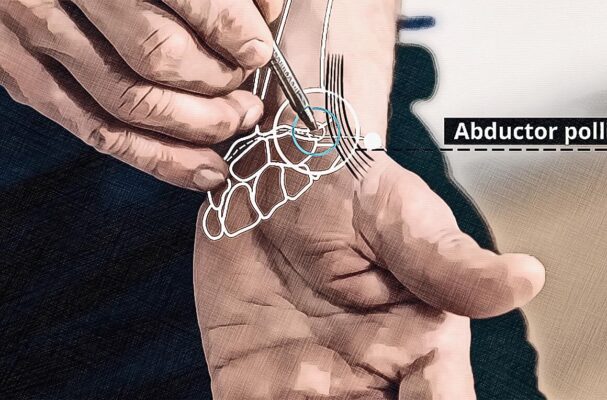
- Hauptpunkt zur Stärkung des Lungen–Qi
- Quell–Punkt des Lungen–Meridians
- Verbessert die Atemkraft und öffnet die Atemwege
- Lindert Husten und Kurzatmigkeit
- Stärkt das Lungen–Qi direkt an der Quelle
Location: An der Handgelenkfalte auf der Daumenseite, in der Vertiefung neben der Arteria radialis.
Use:
Massage in circles with medium pressure, 2 times daily for 2–3 minutes per side. Ideally in the morning and evening.
ACUPUNCTURE POINT: St 36
Stomach 36
Three Miles of the Leg — Zu San Li
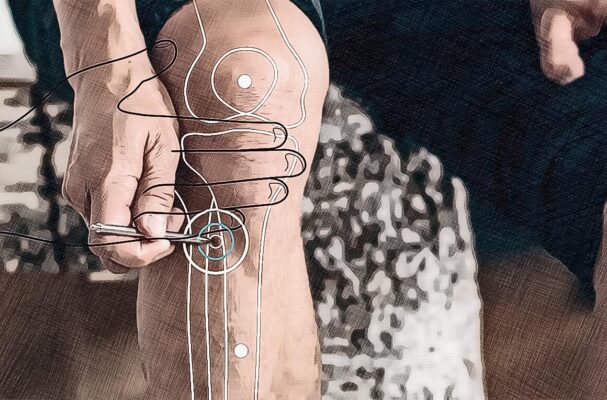
- Stärkt Qi und Milz umfassend
- Transformiert Feuchtigkeit und löst Nässe auf
- Stärkt das Immunsystem und die Abwehrkraft
- Fördert die Verdauung und gibt Energie
- Stärkt Milz und Magen als Quelle des Qi
Location: One hand's width below the kneecap, one thumb's width outward from the edge of the shinbone.
Use:
2x täglich für 2–3 Min. pro Seite kräftig drücken oder kreisend massieren. Besonders wirksam zusammen mit Lu 09.
ACUPUNCTURE POINT: Lu 07
Lung 07
Broken Sequence — Lie Que
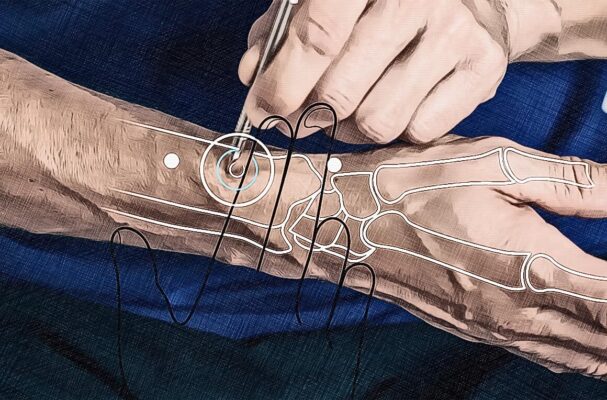
- Verbindungspunkt (Luo) der Lunge
- Löst Schleim und Feuchtigkeit in der Lunge
- Opens the nose and clears the airways
- Vertreibt Wind und stärkt das Wei–Qi
- Lindert verstopfte Nase und verschleimte Bronchien
Location: 1,5 Cun über der Handgelenkfalte auf der Daumenseite, in der Vertiefung zwischen Sehnen.
Use:
2x täglich für 2–3 Min. pro Seite mit mittlerem Druck massieren. Ideal morgens und abends.
Our app recommendation
Atemraum: your app for mindful breathing


Breathing is the foundation for physical and mental well-being — and in everyday life it is usually COMPLETELY underestimated. Yet hardly anything is as immediate: how we breathe shapes how we feel.
That's why we built Atemraum: an app with guided breathing exercises that you can take with you anywhere. Wolfgang put the exercises together — plus a 35-day course, quick help for the moment, and breath tests that let you see your progress.
A few minutes a day are enough. And if you use our personal guidance you already have Atemraum included.


You can try the app free for 7 days.
Qi Gong
Qi Gong is moving meditation — sanfte, fließende Übungen, die deinen Energiefluss harmonisieren und dein Lungen–Qi stärken. Bei einem Lungen–Qi Mangel mit Feuchtigkeit helfen diese Übungen, den Brustraum zu öffnen, die Lunge zu kräftigen und die Milz bei der Feuchtigkeitstransformation zu unterstützen.
Regelmäßiges Praktizieren von Qi Gong (schon 10–15 Min. täglich) zeigt nachweislich positive Effekte auf die Atemtiefe, Immunstärke und das allgemeine Wohlbefinden.
QI GONG: Exercise 1
Drawing the Bow
Öffnet den Brustraum, stärkt das Lungen–Qi
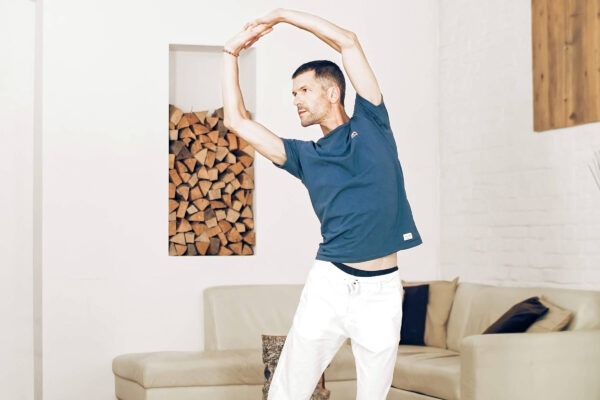
Especially helpful for:
- Shortness of breath
- Feeling of tightness in the chest
- Schwache Abwehrkraft
- Verspannte Schultern
Effect:
Diese Metall–Element–Übung öffnet den Brustkorb weit und stärkt gezielt das Lungen–Qi. Die Arme werden wie beim Bogenschießen ausgebreitet, was den Lungen–Meridian dehnt und das Qi im oberen Erwärmer zum Fließen bringt. Besonders wirksam zur Vertiefung der Atmung.
QI GONG: Exercise 2
Warming the Center
Stärkt die Milz, reduziert die Feuchtigkeitsbildung

Especially helpful for:
- Weak digestion
- Feeling of fullness
- Loss of appetite
- Tiredness after eating
Effect:
Diese Erde–Element–Übung wärmt und stärkt gezielt die Mitte — die Milz als Quelle der Feuchtigkeitsbildung. Durch die sanften, kreisenden Bewegungen wird die Verdauungskraft aktiviert und die Milz kann ihre Transformationsfunktion besser erfüllen — weniger Feuchtigkeit wird produziert.
QI GONG: Exercise 3
Regulating Qi
Harmonisiert den Qi–Fluss, löst Stagnation

Especially helpful for:
- Exhaustion
- Feeling of heaviness
- Unregelmäßigem Energiefluss
- Mood swings
Effect:
Diese Übung reguliert den gesamten Qi–Fluss im Körper. Sie harmonisiert die Verteilung des Qi zwischen den drei Erwärmern und hilft, Blockaden zu lösen. Bei Lungen–Qi Mangel mit Feuchtigkeit unterstützt sie die Lunge bei ihrer Verteilungsfunktion.
These Qi Gong exercises sind speziell für die Stärkung des Lungen–Qi und die Transformation von Feuchtigkeit ausgewählt. Sie öffnen den Brustraum, stärken die Milz als Wurzel der Feuchtigkeitsbildung und harmonisieren den gesamten Qi–Fluss.
Alle Übungen wirken besonders gut, wenn du sie zwischen 3 und 5 Uhr morgens praktizierst — das ist die Lungen–Zeit in der Organuhr. Da das für die meisten unpraktisch ist, eignet sich auch die Zeit zwischen 7 und 9 Uhr (Magen–Zeit) hervorragend, um die Mitte zu stärken und Feuchtigkeit zu transformieren.
QI GONG:
When and how often?
In the morning or late morning (ideal):
- All 3 exercises as a sequence: approx. 15–20 min.
- Or just 1–2 exercises: approx. 5–10 min.
- Best between 7 and 9 a.m. (Stomach time)
Throughout the day:
- Einzelne Übungen bei Bedarf (z. B. bei Kurzatmigkeit)
- „Den Bogen spannen“ für schnelle Brust–Öffnung
Consistency matters more than duration:
- It is better to exercise for 10 minutes every day than for 60 minutes once a week.
- After 2–3 weeks, you will notice your first changes
- Nach 2–3 Monaten regelmäßiger Praxis: deutlich mehr Atemkraft
Pro tip: Bei Lungen–Qi Mangel ist tiefe Bauchatmung während der Übungen besonders wichtig. Atme bewusst tief in den Bauch und lass den Atem langsam und vollständig ausströmen — das stärkt das Lungen–Qi und löst Schleim.
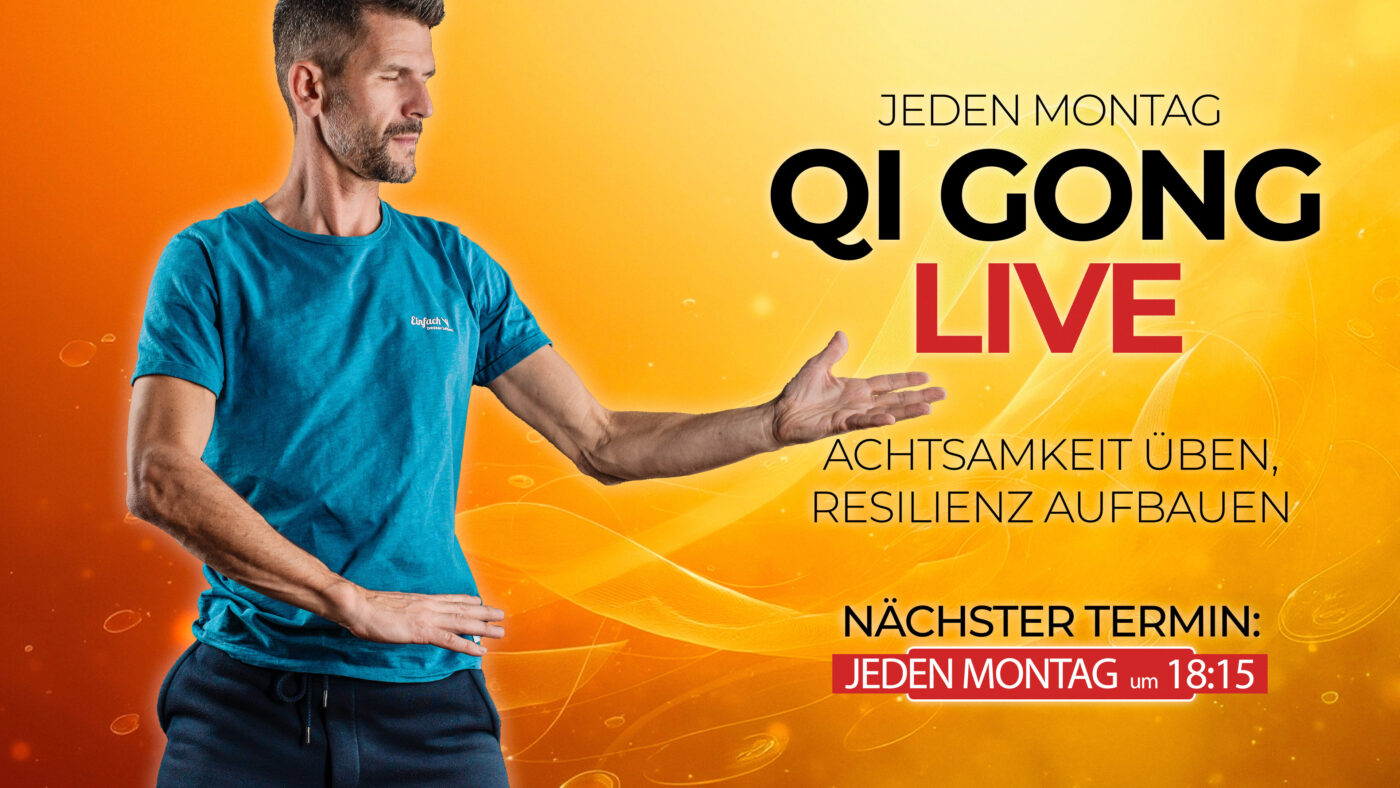
EVERY MONDAY LIVE: QI GONG WITH WOLFGANG
Every Monday at 6:00 p.m. we practice together live on YouTube. Among other things, Wolfgang guides you through a complete Qi Gong sequence — free of charge and suitable for all levels.
Why join live? ✓ Practicing together is motivating ✓ Wolfgang explains the exercises in detail ✓ You can ask questions in the live chat ✓ A fixed time gives your routine structure
More about Qi Gong LiveMeridian Yoga — The Yoga of TCM
Meridian Yoga combines yoga with Traditional Chinese Medicine. Die folgenden Übungen aktivieren gezielt den Lungen–Meridian — denn die Lunge regiert das Qi und die Atmung. Bei Lungen–Qi Mangel mit Feuchtigkeit helfen diese Übungen, den Brustraum zu öffnen, die Atmung zu vertiefen und den Schleim zu lösen.
MERIDIAN YOGA: Exercise 1
Makko Ho lung stretch for the lung meridian
Öffnet den Brustraum, dehnt den Lungen–Meridian

Especially helpful for:
- Shortness of breath
- Feeling of tightness in the chest
- Verspannte Schultern
- Schwache Abwehrkraft
Effect:
Die Makko Ho Übung für den Lungen–Meridian dehnt den gesamten Verlauf des Meridians von der Brust bis zu den Daumen. Sie öffnet den Brustraum, vertieft die Atmung und stärkt das Lungen–Qi. Besonders hilfreich, um Schleim zu lösen und die Atemwege zu befreien.
MERIDIAN YOGA: Exercise 2
Lung stretch for the lung meridian
Dehnt den Lungen–Meridian, fördert tiefe Atmung

Especially helpful for:
- Breathing problems
- Grief and letting go
- Hautprobleme
- Steifheit in den Schultern
Effect:
Der Lungenstretch dehnt sanft den Lungen–Meridian und den dazugehörigen Dickdarm–Meridian. Beide gehören zum Metall–Element. Die Übung fördert das Loslassen auf körperlicher und emotionaler Ebene — bei Feuchtigkeit hilft sie, den Schleim zu lösen und frisches Qi einzuatmen.
Beide Übungen aktivieren den Lungen–Meridian. Durch das Öffnen des Brustraums und die vertiefte Atmung während der Übungen kann Schleim mobilisiert und der Qi–Fluss gestärkt werden.
Especially effective: Halte jede Position für 3–5 Atemzüge und visualisiere dabei weiße, klare Energie, die durch deine Lungen strömt und Nebel und Feuchtigkeit auflöst.
MERIDIAN YOGA:
When and how often?
Best time:
- Zwischen 3–5 Uhr (Lungen–Zeit) oder morgens nach dem Aufwachen
- Oder morgens als erstes, um den Tag mit klarer Atemenergie zu beginnen
Duration:
- Hold each position for 3–5 breaths
- Complete sequence: 10–15 min.
- 3–5x per week for best results
Important:
- Practice in a quiet, warm atmosphere
- Breathe deeply and slowly during the positions
- Stretching should feel comfortable, never painful
Pro tip: Kombiniere Meridian Yoga mit Qi Gong–Atemübungen. Die Kombination aus Dehnung und bewusster Atmung ist besonders wirksam, um Feuchtigkeit und Schleim zu lösen und das Lungen–Qi zu stärken.
Nutrition according to TCM
"Let food be your medicine" — dieser Grundsatz gilt in der TCM seit Jahrtausenden. Bei einem Lungen–Qi Mangel mit Feuchtigkeit ist die richtige Ernährung besonders wichtig, um dein Lungen–Qi zu stärken und die Feuchtigkeit aufzulösen.
The lungs belong to the element Metal und ist eng mit der Earth (spleen) verbunden. Sie braucht warm, drying, easily digestible food, um das Qi zu stärken und Feuchtigkeit zu transformieren. Feuchtigkeit erzeugende Nahrung ist dabei der größte Feind — sie belastet die Milz und lässt Schleim in der Lunge entstehen.
What you eat, HOW you eat, and WHEN du isst — all das beeinflusst dein Lungen–Qi und den Feuchtigkeitshaushalt deines Körpers.
Ein Wort zu Honig und Birne: Beide beruhigen den Husten, befeuchten aber zugleich. Im Gespräch der 3 Weisen tauchen sie im Frühstücksvorschlag auf — solange dein Auswurf reichlich und dein Zungenbelag dick ist, stehen sie hier bewusst hinten an.
Die goldenen Regeln für starkes Lungen–Qi
What does you good:
Qi–stärkende warme Nahrung
- Reis — stärkt die Milz und trocknet Feuchtigkeit
- Hafer — wärmt und nährt das Qi
- Hühnerbrühe — das beste Qi–Tonikum
- Süßkartoffel und Kürbis — stärken die Mitte
Warme, gekochte Nahrung ist die Basis für starkes Lungen–Qi!
Schleimtransformierende Lebensmittel
- Rettich — löst Schleim und klärt die Lunge; gekocht essen und nicht direkt zur Kräutereinnahme, er schwächt sonst den Ginseng ab
- Birne — immer gekocht und mit Ingwer; sie löst zähen Schleim, befeuchtet aber auch, deshalb erst, wenn der Auswurf weniger wird
- Lauch — wärmt und vertreibt Feuchtigkeit
- Fenchel — stärkt die Verdauung
Diese Lebensmittel helfen der Lunge, Schleim aufzulösen!
Warm drinks
- Ingwertee — wärmt und löst Schleim
- Thymiantee — klärt die Atemwege
- Warmes Wasser mit Mandarinenschale (Chen Pi) — bewegt das Qi der Mitte und löst Schleim
- Fencheltee — stärkt die Mitte
Warme Getränke unterstützen die Lunge den ganzen Tag!
Gewürze als Medizin
- Ingwer — der König der Schleimlöser
- Thymian — öffnet die Atemwege
- Kardamom — trocknet Feuchtigkeit
- Garlic — warms and strengthens the body's defenses
Gewürze sind die einfachste Form der TCM–Medizin!
What you should avoid:
Milchprodukte — der größte Feuchtigkeitserzeuger!
- Milch — erzeugt massiv Feuchtigkeit und Schleim
- Käse (besonders weicher) — belastet die Milz
- Joghurt — kalt und verschleimend
- Cream and quark
Milchprodukte sind die größte Feuchtigkeitsquelle — konsequent meiden!
Raw food and cold dishes
- Salads as a main meal
- Smoothies with raw fruit
- Bananen — kalt und verschleimend
- Erdnüsse — erzeugen Feuchtigkeit
Rohkost schwächt die Milz und fördert Feuchtigkeitsbildung!
Cold drinks
- Iced drinks and ice cream
- Cold water from the refrigerator
- Soft drinks
- Bier — kalt und feucht
Kälte löscht das Verdauungsfeuer und erzeugt Feuchtigkeit!
Zucker, Weißmehl und fettige Speisen
- White sugar and sweets
- Weißmehlprodukte (Brot, Nudeln, Kuchen)
- Schweinefleisch — feucht und schwer
- Frittiertes und fettige Speisen
Zucker und Fett erzeugen Feuchtigkeit und blockieren die Lunge!
HOW YOU SHOULD EAT:
Cooked and warm
- Prefer warm meals
- Soups and stews — easy to digest
- Steamed or cooked vegetables
- Hot breakfast, too (congee!)
Regularly and in peace
- 3 regular meals a day
- Make lunch your biggest meal
- Light and early in the evening (before 7 pm)
- Eat slowly and chew well
The Spleen loves regularity and warmth!
Drinking the right way
- Warm water
- Ginger tea throughout the day
- Thymiantee bei Verschleimung
- Don't drink with meals
Warme Getränke unterstützen die Lunge und trocknen Feuchtigkeit
IDEAL MENU FOR ONE DAY:
Breakfast (7–9 a.m.):
- Reis–Congee mit Ingwer und Kürbis
- Along with it: Ginger tea or warm water
Lunch (12–1 p.m.):
- Hühnerbrühe mit Reis und gedämpftem Gemüse
- Along with it: Lauch, Fenchel oder Süßkartoffel
- Or: Kürbissuppe mit Ingwer und Kardamom
Dinner (6–7 p.m.):
- Light Vegetable Soup with Rice
- Or: Gedämpfter Fisch mit Fenchel
- Along with it: A small portion of rice
Snack if needed:
- Gekochte Birne mit Ingwer, Honig nur sparsam
- Or: Warmer Fencheltee
- Or: Ein Stück Süßkartoffel
The most important rule when changing your diet is:
Start with ONE step!
Don't change everything at once.
Our suggestion for getting started:
- Consistently avoid dairy products - 2 weeks
- Warmes Frühstück (Reis–Congee) einführen — 2 Wochen
- Cut back on raw foods and cold drinks — 2 weeks
Schritt für Schritt wirst du merken, wie die Verschleimung nachlässt und dein Atem freier wird.
Your Lung will thank you!
REZEPT: INGWER–BIRNEN–SUPPE MIT THYMIAN
Ingredients:
Serves 4
- 3 reife Birnen
- 3 cm frischer Ingwer
- 1 EL getrockneter Thymian
- 1 tbsp honey
- 750 ml Wasser
- Prise Zimt
Preparation:
- Birnen schälen, entkernen und in Würfel schneiden
- Ingwer schälen und fein reiben
- Bring water to a boil in a pot
- Birnen und Ingwer dazugeben, 15–20 Min. köcheln lassen
- Thymian und Honig einrühren
- Warm servieren — bei Bedarf leicht pürieren
Effect:
Beruhigt den Husten, wenn der zähe Auswurf schon weniger geworden ist
Ingwer, Thymian und Zimt wärmen die Mitte und gleichen die kühle Birne aus
Befeuchtet die gereizten Atemwege — das Gegenstück zum trocknenden Teil der Behandlung
1–2x pro Woche — und erst, wenn Zungenbelag und Völlegefühl nachlassen: Birne und Honig befeuchten, und Feuchtigkeit ist bei diesem Muster der Gegner.
REZEPT: REIS–CONGEE MIT KÜRBIS UND INGWER
Ingredients:
Serves 4
- 150 g Reis
- 300 g Kürbis (Hokkaido)
- 3 cm frischer Ingwer
- 1.5 L water
- Salt to taste
- Optional: Frühlingszwiebeln zum Garnieren
Preparation:
- Reis gründlich waschen
- Reis mit Wasser aufkochen
- Kürbis in kleine Würfel schneiden und dazugeben
- 45–60 Min. auf kleiner Flamme köcheln lassen (Reis soll breiig werden)
- Ingwer schälen, fein reiben und unterrühren
- Season with salt and serve warm
Effect:
Stärkt Milz und Magen — trocknet Feuchtigkeit
Leicht verdaulich und wärmend
Ideal als Frühstück oder leichtes Abendessen
3–4x pro Woche — das TCM–Basisfrühstück bei Feuchtigkeit!
Breathing
Breathing is the bridge between body and mind. In TCM it is said: "The Lung governs the Qi" — according to this idea, conscious breathing lets you address your Qi flow directly and settle into deeper calm.
Breathe calmly and slowly: Deep belly breathing noticeably calms many people — the breath becomes deeper, the shoulders drop, and the mind becomes clearer. The good news: Even 5–10 minutes a day can make a difference for your well-being.
Recommended breathing techniques
ABDOMINAL BREATHING — The foundation for every breathing technique
Natural breathing
Abdominal breathing is the most natural and calming form of breathing. According to TCM teachings, with every breath you bring Qi into your center (Dantian).
Wolfgang shows you step by step, how to learn abdominal breathing correctly — lying down at first, and later sitting and standing too.
Duration: 9 minutes

4–7–8 BREATHING — Settle into calm
The calming breath for the evening
In 4–7–8 breathing, you inhale for 4 seconds, hold for 7 seconds, and exhale for 8 seconds. Many people find that this steady rhythm helps them wind down in the evening — ideal when your mind just won't switch off at night.
Ideal for the evening or whenever you want to settle down quickly.
Duration: 9 minutes
To the follow-along videoBOX BREATHING — For inner coherence
The pro breathing technique for focus and calm
Box Breathing (4 sec. in, 4 sec. hold, 4 sec. out, 4 sec. hold) combines activation and relaxation in perfect balance. This method is used by elite soldiers, athletes, and executives to stay calm and focused even in extremely stressful situations.
A steady 4–4–4–4 rhythm of activation and calm — many people experience it as clearing and centering.
Duration: 9 minutes
To the follow-along videoCOHERENT BREATHING — Brings body & mind into harmony
The calming breath for balance
In coherent breathing you breathe in for 5.5 seconds and out for 5.5 seconds. This rhythm brings your Heart and breathing into an even beat — a state known as "coherence." Many people use it as a regular breathing break in their day.
A nice side effect: Heart and breath settle into a calm, shared rhythm.
Duration: 14 minutes
To the follow-along video
COHERENT BREATHING Around the clock
Our 24/7 livestream for coherent breathing runs non-stop. You can tune in at any time and join right away.
Perfect for:
✓ Spontaneous breathing breaks during the day
✓ If you would like calm breathing guidance
✓ As background while you work
✓ For the evening and for winding down
✓ For regular daily practice
Relaxation
When your body is relaxed, things flow more easily. Ongoing tension keeps you in constant stress mode. With targeted relaxation techniques, you signal to your body that it can settle down and gather new strength.
Progressive Muscle Relaxation is one of the best-known relaxation methods and has been practiced for over 100 years. It helps you notice tension, actively let go, and reach a state of deep relaxation — whenever you like.
Recommended relaxation technique
PROGRESSIVE MUSCLE RELAXATION (PMR)
The classic relaxation method
Progressive Muscle Relaxation according to Jacobson is one of the best-known relaxation techniques worldwide. By deliberately tensing and releasing individual muscle groups, you learn to consciously notice tension and let it go again.
This is how it feels:
Step by step, the body becomes heavier and calmer, and the breath more even. Many people use it as a regular part of their evening routine to help them fall asleep well.
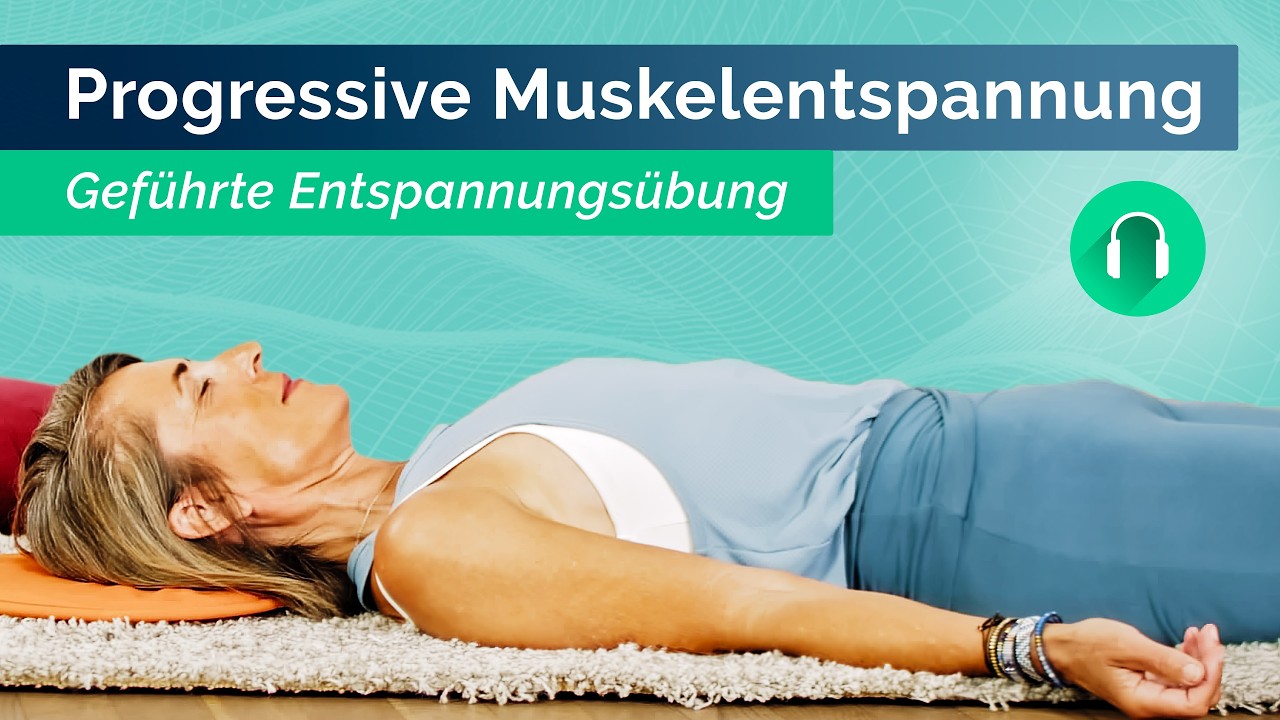
Maria guides you step by step through the complete exercise — perfect for beginners and advanced practitioners.
Duration: 23 minutes of complete instruction
To the guided PMRMeditation
Meditation calms the mind — and a calm mind is good for the whole person. In TCM, it is said that every emotion touches a particular organ. Through regular meditation, you learn to step out of circling thoughts, find emotional balance, and strengthen your inner center.
Just 10 minutes a day can do a lot for your inner calm. Many people find that it makes their everyday life feel more relaxed and clearer.
Recommended meditations
GUIDED MEDITATIONS FOR EVERY DAY
Your personal meditation library
We have put together a complete playlist with over 60 guided meditations, breathing exercises, and relaxation techniques for you — from short 5-minute meditations for in between to deep 30-minute sessions for intensive practice.
In the playlist you will find:
- Morning meditations for a mindful start to the day
- Sleep meditations for restful sleep
- Breathing meditations for inner calm
- Meditations for calm moments during stress and rumination
- TCM standing meditations for all 5 Elements
- Body scan and body journeys
- Calming meditations for body and mind
- Special breathing techniques (4-7-8, coherent breathing, bee breath)
Perfect for beginners and advanced practitioners. Choose the meditation that fits your time, time of day, and needs.
To the meditation playlistDie Lunge ist der Baldachin der Organe.
Sie regiert das Qi und den Atem, verteilt die Abwehrkraft und kontrolliert den Wasserhaushalt. Ist die Lunge stark, fließt das Qi frei und der Körper ist geschützt.
— Freely adapted from the HUANG DI NEI JING
(The Yellow Emperor's Classic of Internal Medicine)
More tips for your daily life
Alongside the classic TCM treatment methods gibt es viele kleine Alltagsgewohnheiten, die dein Lungen–Qi stärken und die Feuchtigkeit reduzieren können.
Atmung und frische Luft
Tiefe Bauchatmung
Bewusstes Atmen stärkt das Lungen–Qi:
- 5–10 Min. tägliche Atemübung — am besten morgens
- 4 Sek. einatmen, 2 Sek. halten, 6 Sek. ausatmen
- In den Bauch atmen — nicht in die Brust
- Bei geöffnetem Fenster oder draußen üben
- Regularity matters more than duration
Frische Luft
Die Lunge braucht saubere, frische Luft:
- Täglich 20–30 Min. an der frischen Luft spazieren
- Wohnung regelmäßig lüften — morgens und abends Stoßlüften
- Rauch und Abgase meiden — die Lunge ist empfindlich
- Waldluft ist besonders wohltuend für die Lunge
- Bei Kälte Nase und Mund mit Schal schützen
Steam inhalation
Bei Verschleimung hilft warmer Dampf:
- Mit Thymian oder Eukalyptus inhalieren
- 5–10 Min. über einer Schüssel mit heißem Wasser
- Löst festsitzenden Schleim und befreit die Atemwege
- Nicht bei akutem Fieber oder Hitze–Zeichen anwenden
- Alternativ: Nasenspülung mit Salzwasser
Die Milz stärken — die Wurzel der Feuchtigkeit
Warm meals
The Spleen loves warmth:
- Prefer cooked foods — they are easier to digest
- Eat a warm breakfast, too (porridge, congee)
- Raw foods only as a side dish, not as a main meal
- Avoid cold drinks, even in summer
- Suppen und Eintöpfe sind ideal — sie wärmen und nähren
Eat regularly
The Spleen likes rhythm:
- 3 meals at regular times
- Eat your largest meal at midday (when digestive strength is at its peak)
- Eat light and early in the evening (before 7 pm)
- Cut back on snacking between meals
- Don't eat too late — your Spleen needs rest at night
Avoid overthinking
Worry weakens the Spleen:
- Overthinking drains the Spleen energy
- Don't work or watch the news while you eat
- Break Out of Worry Spirals — Through Movement or Distraction
- Meditation and mindfulness help calm the mind
- Solve problems instead of endlessly brooding
Feuchtigkeit im Alltag reduzieren
Trockene Wohnung
Äußere Feuchtigkeit belastet die Lunge:
- Luftfeuchtigkeit unter 60 % halten
- Schimmel unbedingt vermeiden und beseitigen
- Regelmäßig lüften — besonders Bad und Schlafzimmer
- Wäsche nicht in der Wohnung trocknen
- Bei Bedarf einen Luftentfeuchter einsetzen
Kleidung
Trocken und warm halten:
- Nasse Kleidung sofort wechseln
- Füße warm und trocken halten — nasse Füße schwächen die Lunge
- Bei Regen wasserdichte Kleidung tragen
- Nieren– und Bauchbereich warmhalten
- Im Herbst und Winter einen Schal tragen — den Nacken schützen
Saunabesuche
Wärme hilft — aber richtig:
- Trockene Sauna ist gut — sie hilft, Feuchtigkeit auszuleiten
- Dampfbad und Dampfsauna meiden — sie verstärken die Feuchtigkeit
- Nach der Sauna gut abtrocknen und warmhalten — kein kaltes Tauchbecken, die Poren stehen bei diesem Muster ohnehin offen
- Nicht übertreiben — bei Schwäche kürzer saunieren und nie bis zur Erschöpfung schwitzen: Bei spontanem Schwitzen kostet jeder zusätzliche Schweiß Qi
- Ausreichend warmes Wasser nachtrinken
Emotionale Pflege — Trauer und Loslassen
Die Lunge und die Trauer
Unterdrückte Trauer schwächt die Lunge:
- Die Lunge ist in der TCM der Trauer zugeordnet
- Verdrängte Trauer kann zu Atembeschwerden und Verschleimung führen
- Trauer zulassen und durchleben — weinen befreit die Lunge
- Gespräche mit Vertrauten oder Therapeuten suchen
- Auch kleine Verluste bewusst betrauern und loslassen
Loslassen üben
Bewusstes Ausatmen als Metapher fürs Loslassen:
- Beim Ausatmen bewusst loslassen — Anspannung, Gedanken, Altes
- Aufräumen und Ausmisten schafft Klarheit — auch innerlich
- Vergebung üben — Groll belastet die Lungen–Energie
- Abendrituale: den Tag bewusst abschließen und loslassen
- Journaling kann helfen, Gedanken zu ordnen und freizusetzen
Natur genießen
Die Natur stärkt die Lungen–Energie:
- Herbstspaziergänge im Wald stärken die Lunge — der Herbst ist die Lungen–Jahreszeit
- Waldbaden (Shinrin–Yoku) — die Waldluft reinigt die Atemwege
- Bewusst die Schönheit der Natur wahrnehmen
- Gartenarbeit erdet und verbindet mit dem Rhythmus der Natur
- Frische Bergluft oder Meerluft sind besonders wohltuend
Important to know
Die Stärkung des Lungen–Qi braucht Geduld, besonders wenn Feuchtigkeit im Spiel ist. Der Schlüssel: konsequent Feuchtigkeit erzeugende Nahrung meiden und die Milz stärken. Schritt für Schritt wirst du spüren, wie dein Atem freier wird, der Schleim sich löst und deine Energie zurückkehrt.
When to see a doctor? Die Zeichen, bei denen du nicht abwartest, stehen oben in der roten Liste. Chronischer Husten mit weißem Auswurf und wiederkehrende Erkältungen gehören dagegen zu diesem Muster selbst; sie sind der Grund, warum du hier bist — einen Husten, der schon über acht Wochen besteht, lass trotzdem einmal ärztlich anschauen, damit Asthma, Reflux oder ein Medikament als Ursache nicht übersehen werden. TCM und westliche Medizin ergänzen sich hier optimal.
For the best possible course of treatment
TCM is not a quick fix for symptoms, but a holistic path to healing. You will get the best results when you consistently build the treatment into your daily life and give your body time to regenerate.
Integrating it into your daily life
Start with ONE step
Don't try to change everything at once! That is overwhelming and
usually leads to giving up. Instead:
- Woche 1–2: Ernährung umstellen — Feuchtigkeit erzeugende Lebensmittel meiden; und mit deiner TCM–Kräutermischung beginnen
- Woche 3–4: Akupressur Lu 09 und Ma 36 täglich
- Weeks 5–6: Qi Gong "Drawing the Bow" for 10 minutes daily.
- Woche 7–8: Zwischenbilanz — Zungenbelag, Auswurf und Völlegefühl sollten sich zuerst bewegt haben; vergleiche jetzt Atem, Stimme und Infekthäufigkeit mit dem, was am Anfang stand
- From week 9: Add further methods as needed
Realistic expectations
After 2–3 weeks: First improvements noticeable
- Weniger Verschleimung
- Freiere Atmung
- A lighter feeling in your body
After 6–8 weeks: Clear improvements
- Deutlich weniger Husten und Schleim
- Mehr Energie und Ausdauer
- Stabilere Abwehrkraft
After 3–6 months: Lasting healing
- Lungen–Qi spürbar gestärkt
- Feuchtigkeit weitgehend aufgelöst
- Kräftiger Atem und stabile Gesundheit
TCM vs. Western Medicine
TCM and Western medicine do not exclude each other — they complement each other!
When Western medicine is important:
- In acute emergencies
- In cases of structural damage
- In cases of infection
- For precise diagnoses (lab work, imaging)
Where TCM has its strengths:
- For functional disorders
- For chronic complaints
- For prevention
- For holistic healing
Ideal: Combine both systems! Use Western medicine for
acute treatment and precise diagnostics, and TCM for lasting healing
and for strengthening the body's self-healing powers.
Important: Never stop taking prescribed medications on your own!
Talk to your doctor when you begin TCM treatment.
Do you have questions?

Wolfgang from meine-tcm.com
TCM is a broad field. Much of it sounds unfamiliar at first, and the real question often comes up only once you start trying some of it out in everyday life.
That's exactly what I'm here for. Write to me — no matter whether your question is big or small, whether it relates to this page or to something else entirely from TCM. I read every message myself and will get back to you. Calmly, clearly, and without a sales pitch.
P.S. There are no silly questions. So write to me.
Ask your questionEvery step counts
Your body strives for balance — you just need to create the right conditions for it.
Remember:
👣 Every small step counts
You don't have to be perfect. Even one warm meal a day is better than none. Even 5 minutes of Qi Gong is better than no movement at all.
⏳ Patience pays off
Your body took years to get into this state. Give it time to find its balance again. Change takes time, but it comes.
🎯 Focus on what you CAN do
Don't concentrate on everything you're doing "wrong." Focus on every positive step you take.
💚 Be good to yourself
There's no such thing as perfection. You're allowed to have a bad day now and then. Tomorrow is a new day, and you can pick up where you left off.
🤝 You are not alone
Thousands of people are walking this path with you. For over 2,000 years, TCM has been guiding people like you on their journey toward greater well-being.
Track your progress

To track your progress, we recommend repeating the TCM analysis after about 3 months.
Why is this useful?
- You see how your pattern has changed
- You can adjust your support as needed
- It motivates you to keep going
- You recognize which measures suit you best
⚠️ Important: Your answers from today are stored in encrypted form in a code that you received by e-mail. ONLY with this code can you follow your progress later on. Keep the e-mail in a safe place!
🔒 YOUR DATA IS SAFE
We store:
✓ Only your email for the reminder
✓ The date for sending
We do NOT store:
✗ Your analysis results
✗ Your personal data
✗ The link between e-mail and pattern
All analysis data is completely anonymous and is not linked to your e-mail address.

Newsletter
Stay up to date with our newsletter. Along with helpful tips and tricks for your training and your everyday life, you won't miss any of our new releases.