






On this page you will learn:
- What this pattern means from the perspective of TCM and Western medicine
- Where your complaints come from and how they are connected
- Which specific treatment methods may help you now
- How you can rebuild your Liver Blood with TCM herbs, acupressure, Qi Gong, and nutrition, and restore the nourishing power of your Liver
The good news: Liver Blood Deficiency responds very well to the right measures. With a Blood-nourishing diet, targeted acupressure, and proven TCM herbs, you can rebuild your Liver Blood and gain new vitality.
Take your time, getting to know the different treatment approaches — you don't have to put everything into practice at once. Choose what feels right to you and what you can easily fit into your daily life.
Your treatment at a glance:
Which TCM pattern is really behind your complaints?
Degree of the
imbalance

Mild to moderate
Typical
Treatment duration

2–4 months
Self-treatment
Possible

Easy to treat yourself
Treatment
scope

2–3 methods
Suggested
methods

Extensive selection
Our free TCM Analysis shows you your personal TCM pattern in just 10 minutes.
What is Liver Blood Deficiency?
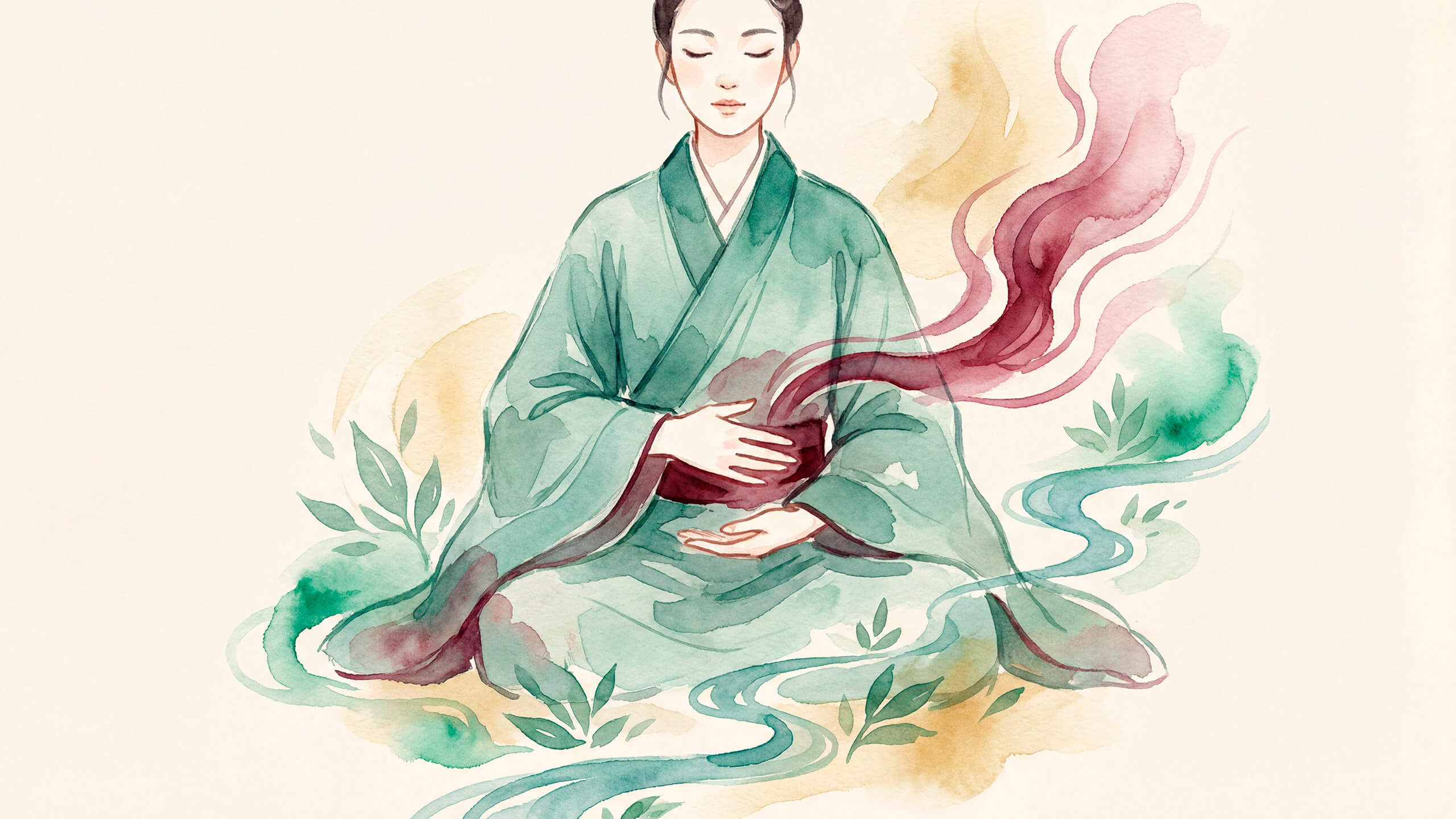
When the Liver has too little Blood and vision problems, numbness, and brittle nails develop
The TCM perspective: when the Liver doesn't have enough Blood
In Traditional Chinese Medicine, the Liver (Gan) has a very special relationship with Blood: it stores it. When a person rests — especially at night during sleep — the Blood returns to the Liver and is regenerated. When a person becomes active, the Liver releases the Blood so that it can nourish the sinews, muscles, and eyes. This is why the Liver is also called "the Sea of Blood.".
When the Liver doesn't have enough Blood, we speak of Liver Blood Deficiency (Gan Xue Xu). The Liver can no longer fulfill its nourishing functions — and this shows up in very specific places: the eyes become dry and vision gets blurry, the sinews and muscles become stiff and prone to cramps, the nails become brittle and pale, and the skin loses its suppleness.
The Liver belongs to the Wood element — like a tree, it needs nourishing sap to stay supple and flexible. Without enough Blood, the Liver "dries out" like a tree without water: the branches (sinews) become brittle, the leaves (hair) fall, and the tree loses its vitality.
The typical signs of Liver Blood Deficiency:
- Blurry vision, dry and tired eyes, sensitivity to light
- Numbness and tingling in the hands and feet
- Brittle, pale nails with ridges or spots
- Muscle cramps and muscle weakness, especially in the legs
- Dizziness, especially when standing up
- Pale face, pale lips
- Irregular, light, or absent menstruation
- Dry skin and brittle, dull hair
The good news: Liver Blood can be rebuilt very well with the right measures. Through a Blood-nourishing diet, special TCM herbs, enough rest, and gentle movement, you can replenish your Liver Blood and restore the suppleness of your whole body.
The Western perspective: anemia, iron deficiency, and nutrient deficits
From a Western perspective, Liver Blood Deficiency corresponds to a state associated with iron deficiency anemia, vitamin B12 deficiency, and the neurological symptoms that go along with them. The Liver also plays a central role in blood formation in Western medicine: it stores iron, vitamin B12, and folic acid — the most important building blocks for new blood cells.
Imagine your Liver as a warehouse: it stores the raw materials your body needs to produce Blood. When this storage runs empty, the building blocks are missing — and the body can't make enough new blood cells. The result: all the tissues that need a lot of blood and oxygen — eyes, nerves, muscles — suffer first.
Especially noteworthy: the TCM observation that Liver Blood Deficiency affects the eyes is confirmed by modern medicine. The retina has the highest oxygen consumption of all tissues in the body — in anemia, it suffers particularly early.
What does modern medicine show?
- Iron deficiency: Reduced hemoglobin formation, fatigue, pallor and difficulty concentrating
- Vitamin B12 deficiency: Neurological symptoms such as tingling and numbness in the hands and feet
- Folate deficiency: Impaired cell division, especially in the formation of blood cells
- Dry eyes and vision problems: Reduced circulation and oxygen supply to the retina
- Brittle nails (koilonychia): A classic sign of iron deficiency
- Muscle cramps: Due to electrolyte shifts and insufficient oxygen supply
What the research says: The complaints that TCM groups together as Liver Blood Deficiency overlap with what medicine describes in connection with low ferritin (iron stores), reduced hemoglobin, and vitamin B12 deficiency. Two herbs from Bu Gan Tang — Dang Gui and Bai Shao — are well studied pharmacologically; studies describe, among other things, liver-protective properties.
TCM treatment of Liver Blood Deficiency starts right here: It nourishes the Blood directly with special herbs, strengthens the Spleen as the source of Blood formation, supports the Liver in its storing function, and gives the "starving" tissues — eyes, tendons, nails and skin — nourishing substance again.

The Yellow Emperor's team explains your pattern
Qi Bo | The Yellow Emperor | Dr. Lisa Weber
MASTER OF THE HEALING ARTS | FOUNDER OF TCM | MODERN PHYSICIAN
What happens when the legendary Yellow Emperor of Traditional Chinese Medicine sits down with his advisor Qi Bo and a modern doctor? They discuss your pattern—using 4,000-year-old knowledge AND the latest science.
Liver Blood Deficiency — When the Liver has too little Blood, and vision problems, numbness and brittle nails develop
The Yellow Emperor: "Qi Bo, some of my subjects report blurred vision, numb fingers and brittle nails. Their muscles cramp easily, and they look pale and exhausted. What causes this affliction?"
Qi Bo: "Your Majesty, these people suffer from Liver Blood Deficiency — Gan Xue Xu. The Liver has a very special task: it stores the Blood. When a person rests, the Blood returns to the Liver and is renewed. When he becomes active, the Liver releases the Blood so that it nourishes the tendons, muscles, nails and eyes. But when the Liver does not have enough Blood, all these tissues can no longer be adequately supplied. The eyes become dry and dull, the tendons stiff and prone to cramping, the nails brittle and pale. It is as if a tree were not getting enough water — the branches become brittle and the leaves wither."
Dr. Weber: "That is an excellent description! In Western medicine, too, the liver is a central organ for the body's blood balance. It stores up to 500 ml of blood as a reserve and regulates blood flow according to activity — exactly what Qi Bo describes! The liver also stores the most important nutrients for blood formation: iron, vitamin B12 and folate. When these stores are depleted, the body cannot produce enough red blood cells — this corresponds to the "Liver Blood Deficiency" of TCM."
The Yellow Emperor: "Why are the eyes especially affected?"
Qi Bo: "Your Majesty, in TCM we say: 'The Liver opens into the eyes' — Gan Kai Qiao Yu Mu. The eyes are nourished directly by Liver Blood. When Liver Blood flows abundantly, the eyes are clear and moist and vision is sharp. When Liver Blood is lacking, the eyes become dry, vision blurs and the eyes tire quickly. Particularly striking: many of these people have trouble seeing at night — for at night the Blood should return to the Liver and regenerate. If it is depleted, this regeneration is missing."
Dr. Weber: "Remarkable! The retina of the eye has the highest oxygen consumption of all tissues in the body — it is extremely sensitive to anemia. In iron deficiency, studies show measurably reduced circulation in the retina. The dry eyes occur because the tear glands also produce less in anemia. And the night blindness? Vitamin A is stored in the liver and needed for the visual pigments — when the liver is weak, vitamin A utilization is disrupted. So the statement 'The Liver opens into the eyes' has a solid physiological basis!"
The Yellow Emperor: "And the numb fingers and muscle cramps — how are they connected?"
Qi Bo: "Your Majesty, the Liver governs the tendons — Gan Zhu Jin. The tendons need Liver Blood to stay supple and elastic. Without enough Blood, they become stiff like dry branches and are prone to cramps, especially in the legs and calves. The numbness occurs because the Blood nourishes the meridians and nerves. When it is lacking, the nourishing substance no longer reaches the limbs — especially the fingertips and toes, which are farthest from the center. The nails — the 'remnants of the tendons' — also show the deficiency: they become thin, brittle and pale, and develop ridges."
Dr. Weber: "That matches modern neurology exactly! Iron deficiency and vitamin B12 deficiency cause peripheral neuropathy — numbness and tingling in the extremities, starting in the fingers and toes. The muscle cramps result from electrolyte disturbances and a reduced oxygen supply to the muscles. And brittle nails — medically called koilonychia — are a classic clinical sign of iron deficiency. In severe iron deficiency, the nails even become spoon-shaped and concave! The TCM observations are clinically highly precise."
The Yellow Emperor: "What are the causes of Liver Blood Deficiency?"
Qi Bo: "Your Majesty, there are several ways in which Liver Blood becomes depleted. First: chronic blood loss — especially heavy or prolonged menstruation in women. Second: Spleen Qi weakness — the Spleen forms new Blood from food. If it is weak, too little Blood is produced. Third: excessive mental work — reading, screen work and intense thinking use up Liver Blood, because the eyes and the mind are heavily taxed. Fourth: emotional stress — suppressed emotions and frustration make the Liver Qi stagnate and hinder Blood formation. Fifth: chronic illnesses — long-lasting illnesses consume the body's substance."
Dr. Weber: "Fascinating how this lines up with the modern understanding of the causes of anemia! Menstrual blood loss is the most common cause of iron deficiency in women of childbearing age. Malabsorption due to gut problems — the "weak Spleen Qi" — leads to insufficient nutrient uptake. And the point about screen work is very timely: Hours of staring at screens considerably increases oxidative stress in the retina and the nutrient demands of the eyes. Chronic emotional stress raises the cortisol level, which inhibits nutrient absorption and increases iron consumption. Ancient wisdom meets modern reality!"
The Yellow Emperor: "How do we treat Liver Blood Deficiency?"
Qi Bo: "Your Majesty, the treatment principle is Bu Gan Xue — to nourish and replenish the Liver Blood. This happens in several ways. First and most important: a Blood-nourishing diet — red and dark foods such as goji berries, dates, beets, black sesame, and liver nourish the Blood directly. Second: the classic formula Si Wu Tang with Dang Gui, Bai Shao, Shu Di Huang, and Chuan Xiong — it nourishes the Liver Blood in particular. Third: acupressure on Le 08 (Qu Quan) — the He point of the Liver, which directly tonifies the Liver Blood. Fourth: enough rest and sleep — because at night the Blood returns to the Liver and renews itself. Going to sleep before 11 p.m. is especially important!"
Dr. Weber: "The dietary recommendations are excellent! Beets contain iron, folate, and betaine, which supports liver function. Goji berries provide iron, zeaxanthin, and lutein — carotenoids that specifically promote eye health. Black sesame is rich in iron, calcium, and vitamin E. Liver is the most concentrated natural source of iron, vitamin B12, and vitamin A — all three are essential for blood formation and eye health. And sleep before 11 p.m.? Between 1 and 3 a.m., the Liver is at its most active in the organ clock — which matches the maximum nighttime blood flow through the liver!"
The Yellow Emperor: "Wonderful! Let's put this wisdom into a practical plan."
THE 3 SAGES METHOD FOR LIVER BLOOD DEFICIENCY
MORNING PROTOCOL (Building Blood):
- TCM: A warm, nourishing breakfast — in the morning the Spleen needs warmth to form Blood from food
- Science: A warm, iron-rich breakfast optimizes nutrient absorption in the intestine
- Practical: Warm oatmeal with goji berries, dates, and black sesame
- TCM: Care for your eyes gently in the morning — after getting up, rub your palms together until warm and rest them over your closed eyes
- Science: Warmth promotes circulation in the eye area and stimulates tear production
- Practical: Rub your palms together 10 times, hold them over your closed eyes for 30 sec., repeat 3 times
- TCM: Goji berry tea in the morning — nourishes Liver and Kidney Blood and strengthens the eyes
- Science: Goji berries provide iron, zeaxanthin, and lutein — nutrients for Blood and eyes
- Practical: Pour hot water over 15–20 goji berries, let steep for 10 min., and eat the berries too
DAYTIME STRATEGY (protecting Liver Blood):
- TCM: Take regular eye breaks — the eyes use up Liver Blood. Screen work depletes it especially strongly
- Science: The 20-20-20 rule reduces eye strain: every 20 min., look at something 20 feet (6 m) away for 20 sec.
- Practical: Every 30 min., take your eyes off the screen, look into the distance, and blink consciously
- TCM: Acupressure on Le 08 (Qu Quan) — the He point of the Liver, nourishes the Liver Blood directly
- Science: Stimulating this point on the inner side of the knee activates circulation in the Liver meridian
- Practical: On the inner side of the knee, in the crease when the knee is bent. Press gently in circles for 3 min. per side
- TCM: Don't overwork — too much work uses up Qi and Blood, and the Liver suffers from exhaustion
- Science: Chronic stress increases iron consumption and inhibits nutrient absorption
- Practical: Take a short break every 90 min., don't work straight through lunch, and build in conscious relaxation
EVENING RITUAL (guiding Blood back to the Liver):
- TCM: Qi Gong "Looking Backward" — this Wood element exercise nourishes the Liver and relaxes the sinews
- Science: Gentle rotating movements of the spine improve circulation to the internal organs
- Practical: 10–15 min. of gentle Qi Gong exercises before dinner
- TCM: Acupressure on MP 06 (San Yin Jiao) — the meeting point of the three Yin meridians, nourishes Blood and Yin
- Science: This point lies over the tibial nerve and influences circulation in the lower extremities
- Practical: 4 finger widths above the inner ankle bone, on the back edge of the shinbone. Press gently for 3 min. on each side
- TCM: Go to sleep before 11 p.m. — between 1 and 3 a.m. is Liver time on the organ clock, when the Blood regenerates
- Science: Peak blood flow to the liver occurs during deep sleep, and growth hormone promotes cell regeneration
- Practical: Be in bed by 11 p.m. at the latest, aim for 7–8 hours of sleep, and no screens after 9 p.m.
The Yellow Emperor: "Qi Bo, how long does it take until the Liver Blood is rebuilt?"
Qi Bo: "Your Majesty, building Blood takes patience — but less than Yin or Essence. After 2–3 weeks of consistent practice, most people notice: less fatigue, eyes that feel less dry, and a healthier complexion. After 6–8 weeks the improvements become clearer: less dizziness, less numbness, better sleep, and stronger nails. After 2–4 months the Liver Blood may be noticeably rebuilt — the eyes are clearer, the sinews more supple, and the whole body feels nourished. Important: make use of Liver time from 1–3 a.m. — whoever sleeps deeply during this time gives the Blood the best chance to regenerate."
Dr. Weber: "That fits well with our clinical experience! With iron deficiency anemia, first improvements in symptoms often appear after 2–3 weeks of iron supplementation. Hemoglobin values typically normalize within 2–3 months. Replenishing the iron stores takes 3–6 months — that's why sticking with it is so important! Neurological symptoms such as numbness can even take somewhat longer, because nerve tissue regenerates slowly. The TCM recommendation of 2–4 months is therefore very realistic."
The Yellow Emperor: "What absolutely must be avoided with a Liver Blood Deficiency?"
Qi Bo: "Your Majesty, the most important points are these: First, too much screen work — the eyes use up Liver Blood and deplete it further. Second, too little sleep — whoever is still awake after 11 p.m. robs the Liver of its time to regenerate. Third, overly spicy seasonings — they create Wind and Heat in the Liver and use up Blood. Fourth, too much alcohol — it harms the Liver directly and depletes Liver Blood. Fifth, excessive physical exertion — it uses up Qi and Blood before they can be built up. And sixth, emotional tension — anger and frustration cause Liver Qi to stagnate and prevent the free distribution of Blood."
Dr. Weber: "All of it is scientifically sound! Intensive screen work increases oxidative stress in the retina and the consumption of lutein and zeaxanthin. Lack of sleep reduces nighttime blood flow to the liver and its capacity for regeneration. Alcohol is directly hepatotoxic — it damages liver cells and disrupts the storage of iron and vitamins. Excessive exercise in the presence of existing anemia can even lead to so-called athlete's anemia, because red blood cells are destroyed by mechanical stress. And chronic emotional stress raises cortisol levels, which inhibits iron absorption."
The Yellow Emperor: "Then the message is clear: Liver Blood is the nourishing fluid that keeps our sinews supple, our eyes clear, and our mind calm. With patient care — Blood-nourishing food, enough sleep, the right herbs, and gentle movement — we can rebuild the Liver Blood and give the body its suppleness back."
Qi Bo: [smiles] "So it is, Your Majesty. The Liver is like an old tree — when its roots get enough water, the branches become flexible again, the leaves green, and the fruits sweet. With the gifts of nature, nourishing food, and loving rest, we replenish the Liver Blood. Then clarity returns to the eyes, strength to the sinews, and peace to the mind."
About our "3 Sages" story
Who are the Yellow Emperor and Qi Bo?
The Yellow Emperor (Huangdi) is said to have lived around 2600 BCE and is regarded as the mythical founder of Chinese culture and medicine. Qi Bo was his most important advisor and personal physician. Their conversations about health, illness, and the nature of human beings were recorded in the most important foundational work of TCM.
The book: Huangdi Neijing
The "Huangdi Neijing," also known as "The Yellow Emperor — The Foundational Work of Traditional Chinese Medicine," was probably written between 200 BCE and 200 CE. It is the oldest surviving work of Chinese medicine and consists of dialogues between the Yellow Emperor and his advisors — mainly Qi Bo.
For TCM, this work is what the Bible is for Christianity: the absolute foundation. All the key concepts — Yin and Yang, the 5 Elements, Qi, meridians, and acupuncture points — are described systematically here for the first time.
Our modern approach: The 3 Sages
In our series "The 3 Sages," we bring the Yellow Emperor and Qi Bo together with the fictional modern physician and microbiologist Dr. Weber.
Important note: All three characters and their conversations are purely fictional and invented by us.
We use this narrative style, similar to the dialogue form in the Huangdi Neijing, to explain the often complex connections within TCM in a way that is easy to follow and entertaining. When the 4,000-year-old emperor is confronted with modern science, illuminating "aha moments" arise that show: ancient wisdom and new research often speak the same language — just in different words.
This is how TCM comes alive, becomes easy to understand, and can be put into practice in your everyday life.
The dialogues are creative interpretations — not historical documents. For medical questions, please consult a qualified TCM practitioner or physician.
Your treatment options
Liver Blood Deficiency is very treatable! TCM offers you a wide range of effective methods to rebuild your Liver Blood and nourish your Liver. You don't have to do everything at once — choose the methods that fit you and your daily life.
Here you will find specific treatment approaches that have proven themselves in TCM over thousands of years and that you can mostly do yourself.
TCM Herbs
Herbal medicine (or, in modern terms, phytotherapy) is the MOST IMPORTANT tool of TCM. It is part of every classical TCM treatment. Today there is a suitable herbal blend for every TCM Pattern.

How to get your matching herbal blend
- Search online. Enter Liver Blood Deficiency "TCM herbal blend" — with the quotation marks — into the search engine of your choice. If you like, add the form: Pressed tablets — in our experience the easiest to take — or Granules. That way you'll see several providers and can compare at your leisure.
- Our therapist directory. In TCM Therapist Directory you'll find TCM therapists near you who tailor a TCM herbal blend to your personal pattern.
- Your TCM pharmacy. Some pharmacies carry TCM herbal blends or will order them for you. Tell them your pattern — or show them this page.
In any case, pay attention to the quality of the TCM herbal blend, not the price — it's worth taking a look at the ingredient list.
Not sure which herbal blend fits your TCM pattern? Write to us. We'll tell you which classical formula traditionally belongs to this pattern and what to look for when choosing.
Request a herbal blend tip
TCM uses many tools. Which of them suit you is the question we hear most often. And it can't be answered in passing.
That's why we offer personal TCM guidance. It begins with a free, no-obligation ONLINE initial consultation with Wolfgang.
After that, you'll receive your personal guidance plan with all of its components and the costs as a proposal. If it feels right for you, we get started: in a second online session (about 30 minutes), Wolfgang goes over your path with you.
Acupressure
Acupressure is acupuncture without needles — you can use them yourself at any time. By applying targeted pressure to certain points, you nourish the Liver Blood and strengthen Blood formation.
These three points form the classic combination for nourishing the Liver Blood and strengthening Blood formation. Regular stimulation supports the building of Blood — this way, symptoms such as pale skin, brittle nails and blurred vision can be relieved in the long term.
ACUPUNCTURE POINT: Le 08
Liver 08
Crooked Spring — Qu Quan

- He-Sea point of the Liver — nourishes the Liver Blood directly
- Strengthens the tendons and eases knee problems
- Regulates menstruation in Blood Deficiency
- Moistens the eyes and improves eyesight
- The most important point for nourishing the Liver Blood
Location: On the inner side of the knee, at the medial end of the knee crease when the knee is bent.
Use:
Massage in circles with gentle to medium pressure, 2 times a day for 2–3 minutes per side. Ideally in the morning and evening.
ACUPUNCTURE POINT: MP 06
Spleen–Pancreas 06
Meeting Point of the 3 Yin — San Yin Jiao
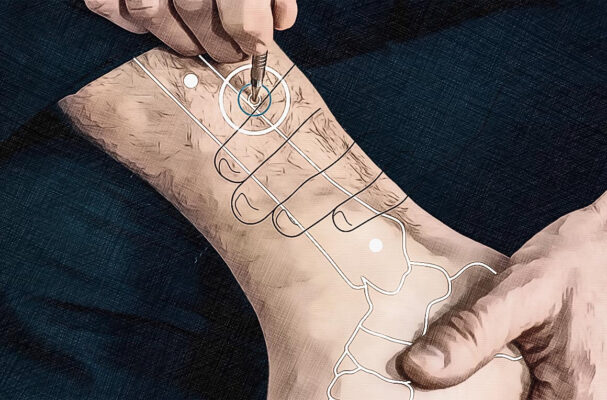
- Meeting point of the three Yin meridians — nourishes Blood and Yin
- Regulates menstruation and eases menstrual pain
- Strengthens the Spleen and promotes Blood formation
- Calms the spirit and promotes sleep
- One of the most important points for nourishing Blood
Location: 4 finger widths above the inner ankle bone, on the back edge of the shinbone.
Use:
Massage in small circles with gentle pressure for 2–3 minutes per side, 2x daily. Do NOT use during pregnancy!
ACUPUNCTURE POINT: MP 10
Spleen–Pancreas 10
Sea of Blood — Xue Hai
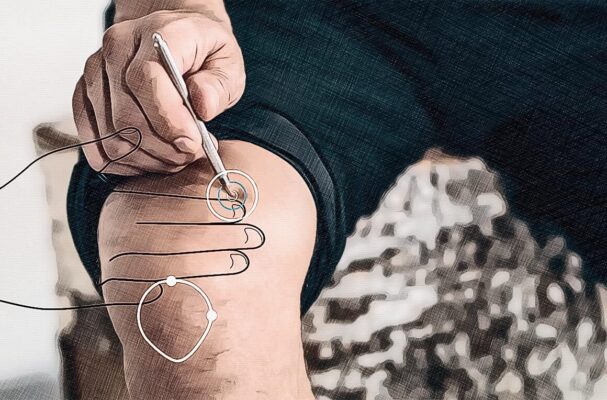
- "Sea of Blood" — the most important point for Blood Deficiency
- Nourishes and invigorates the Blood throughout the body
- Regulates menstruation and strengthens the cycle
- Eases skin problems caused by Blood Deficiency
- Promotes Blood formation and improves circulation
Location: 2 thumb widths above the kneecap, on the inner side of the thigh.
Use:
Massage in circles with gentle to medium pressure, 2 times a day for 2–3 minutes per side. Ideally in the morning and evening.
Our app recommendation
Atemraum: your app for mindful breathing


Breathing is the foundation for physical and mental well-being — and in everyday life it is usually COMPLETELY underestimated. Yet hardly anything is as immediate: how we breathe shapes how we feel.
That's why we built Atemraum: an app with guided breathing exercises that you can take with you anywhere. Wolfgang put the exercises together — plus a 35-day course, quick help for the moment, and breath tests that let you see your progress.
A few minutes a day are enough. And if you use our personal guidance you already have Atemraum included.


You can try the app free for 7 days.
Qi Gong
Qi Gong nourishes your Liver Blood — through gentle, flowing movements that improve circulation and support the Liver's function of storing Blood. In Liver Blood Deficiency, these exercises help rebuild the Blood, relax the Liver, and bring the Wood element into balance.
Practicing Qi Gong regularly (even just 10–15 minutes a day) has been shown to have positive effects on Blood formation, inner calm, and general well-being. In Liver Blood Deficiency, gentle exercises are especially important — no strenuous or sweat-inducing movements.
QI GONG: Exercise 1
Looking Backward
Nourishes the Liver, stretches the flanks, and opens the Liver meridian
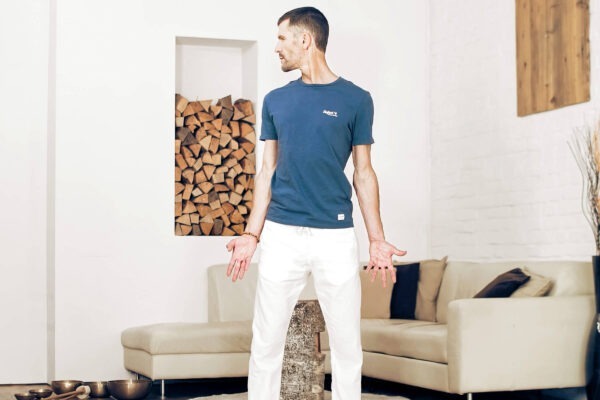
Especially helpful for:
- Tense neck and stiff shoulders
- Tired, dry eyes and vision problems
- Liver Qi Stagnation and a feeling of tension
- Limited mobility of the cervical spine
Effect:
This Wood element exercise specifically supports the Liver and the Gallbladder meridian. The gentle twisting movement stretches the flanks and opens the Liver meridian — this promotes the flow of Blood to the Liver. In Liver Blood Deficiency, this exercise is especially valuable because it improves circulation to the Liver and thus strengthens its function of storing Blood.
QI GONG: Exercise 2
Open the Heart
Opens the chest, promotes Blood circulation
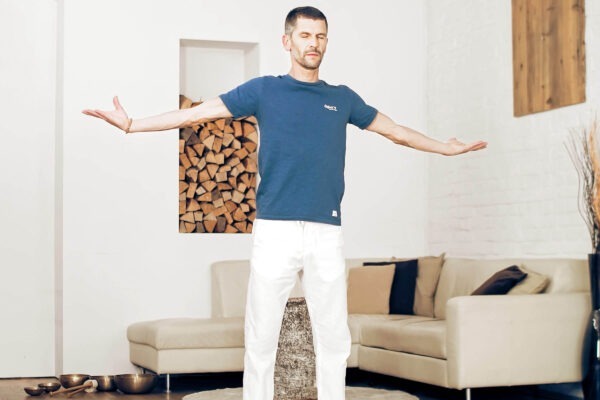
Especially helpful for:
- Inner restlessness and anxiety
- Sleep disturbances and restless sleep
- Emotional exhaustion and low mood
- Heart palpitations and a feeling of tightness
Effect:
The Heart governs the Blood — this Fire element exercise opens the chest and encourages Blood circulation throughout the body. The Heart and Liver share the Blood function: the Heart moves the Blood, and the Liver stores it. With Liver Blood Deficiency, this exercise is especially helpful because it strengthens the Heart–Liver axis and thereby improves the Blood supply to all organs.
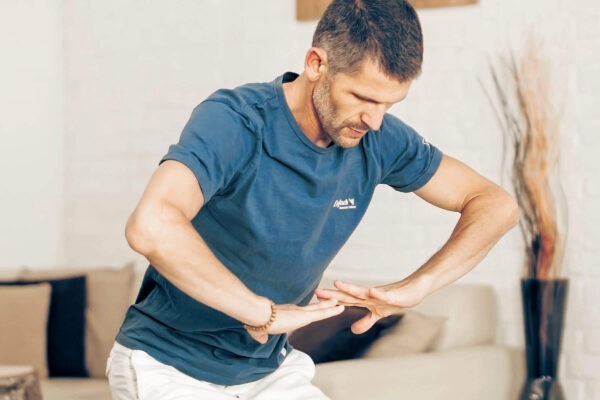
QI GONG: Exercise 3
Gathering Qi
Gathers and consolidates Qi and Essence, strengthens the Heart–Liver axis
Especially helpful for:
- General exhaustion and low energy
- Dizziness and light-headedness
- Inner emptiness and a lack of grounding
- Weak constitution and paleness
Effect:
This centering exercise gathers and consolidates Qi and Essence — the foundation for forming Blood. Qi is the driving force behind Blood production: without enough Qi, no new Blood can be formed. With Liver Blood Deficiency, this exercise builds the energetic foundation your body needs to produce and store enough Blood again.
These Qi Gong exercises have been chosen specifically for Liver Blood Deficiency. They nourish the Liver Blood, encourage circulation and strengthen the Heart–Liver axis.
All of the exercises work especially well when you practice them in the morning or evening. The Liver time on the organ clock falls between 1 and 3 a.m. — a time when you are ideally already asleep, so that the Liver can regenerate the Blood. Morning and evening are therefore the best times for gentle Qi Gong practice.
QI GONG:
When and how often?
Morning or evening (ideal):
- All 3 exercises as a sequence: approx. 15–20 min.
- Or just 1–2 exercises: approx. 5–10 min.
- Gentle, flowing movements — not too strenuous
Throughout the day:
- Individual exercises as needed (e.g., for dizziness, tired eyes, or exhaustion)
- "Looking backward" for quick Liver relaxation
Consistency matters more than duration:
- It is better to exercise for 10 minutes every day than for 60 minutes once a week.
- After 2–3 weeks, you will notice your first changes
- After 2–3 months of regular practice: noticeably more energy and better circulation
Pro tip: With Liver Blood Deficiency, gentle, slow exercises are essential. Avoid intense exercises that make you sweat — they use up additional Blood and Yin. Qi Gong helps to move the Blood gently and nourish the Liver without exhausting the body.
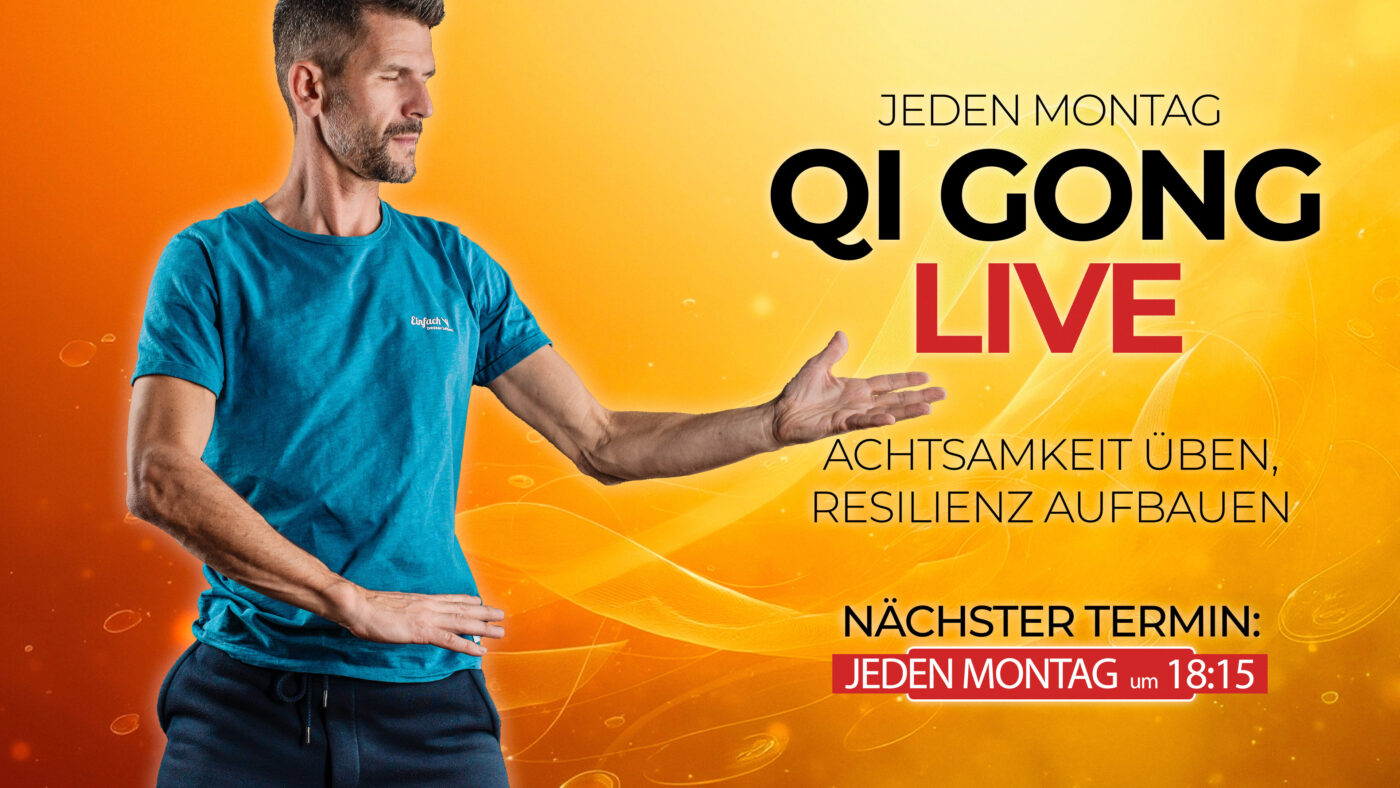
EVERY MONDAY LIVE: QI GONG WITH WOLFGANG
Every Monday at 6:00 p.m. we practice together live on YouTube. Among other things, Wolfgang guides you through a complete Qi Gong sequence — free of charge and suitable for all levels.
Why join live? ✓ Practicing together is motivating ✓ Wolfgang explains the exercises in detail ✓ You can ask questions in the live chat ✓ A fixed time gives your routine structure
More about Qi Gong LiveMeridian Yoga — The Yoga of TCM
Meridian Yoga combines yoga with Traditional Chinese Medicine. The result is a holistic movement concept for more health and energy.
With Liver Blood Deficiency, the Heart meridian exercises are especially valuable — because in TCM the Heart governs the Blood and the Liver stores it. Both organs work as a team: only when the Heart Blood flows freely can the Liver store and distribute enough Blood. The following gentle exercises open the Heart meridian, encourage Blood formation and nourish the Liver at the same time. What matters here: no intense exercises or ones that make you sweat — because sweating uses up valuable Blood and Yin.
MERIDIAN YOGA: Exercise 1
Opening the Heart for the Heart Meridian
Opens the chest and encourages the Blood supply

Especially helpful for:
- Emotional tension and inner restlessness
- A feeling of tightness in the chest and shallow breathing
- Anxiousness and nervousness due to Blood Deficiency
- Poor circulation and cold hands
Effect:
This exercise opens the chest and the Heart meridian, which carries the Blood through the whole body. In TCM, the Heart governs the Blood — when the chest is open and relaxed, the Blood can flow freely and also nourish the Liver well. With Liver Blood Deficiency, this exercise strengthens the Heart–Liver axis and supports the natural distribution of Blood in the body.
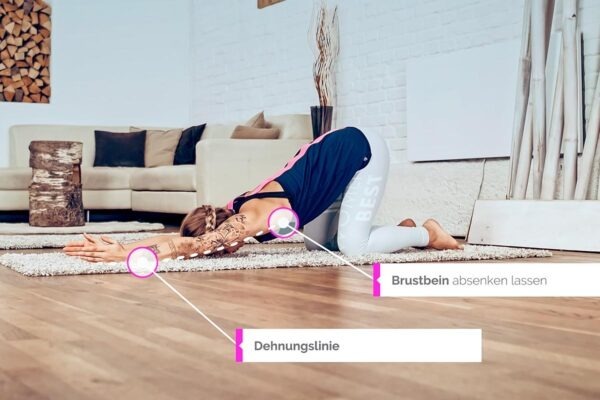
MERIDIAN YOGA: Exercise 2
Shell Stretch for the Heart Meridian
Calms the Heart and nourishes the Blood from within
Especially helpful for:
- Sleep problems and a restless mind
- Anxiousness and a racing mind
- Numbness and tingling in the limbs
- Exhaustion and a pale complexion
Effect:
The Shell Stretch is a gentle forward bend that stretches the Heart meridian and calms the mind. The curled-up position directs the Blood inward — toward the organs and especially the Liver, which stores the Blood. With Liver Blood Deficiency, this exercise helps guide the available Blood to where it is needed most. At the same time, it calms the Heart and promotes restful sleep — because during sleep, the Blood returns to the Liver.
Both exercises activate the Heart meridian and in this way strengthen the Blood supply of the whole body. In TCM, the Heart and Liver form a close partnership — the Heart moves the Blood, the Liver stores it. When you open and stretch the Heart meridian, you also support the Liver in its nourishing function.
Especially effective: Hold each position for 3–5 calm breaths and imagine warm, nourishing Blood flowing to your Liver and gently replenishing it. Practice consciously slowly and without strain — because calm nourishes the Blood.
MERIDIAN YOGA:
When and how often?
Best time:
- In the evening between 7 and 9 p.m. (Pericardium time on the organ clock)
- Or in the morning right after getting up — gently and without hurry
- Not when you are very exhausted — rest instead, so the Blood can regenerate
Duration:
- Hold each position for 3–5 calm breaths
- Complete sequence: 10–15 minutes
- 3–5x per week for best results
Important:
- Practice gently and without strain — sweating uses up Blood
- Breathe deeply and slowly into your belly
- The stretch should feel pleasant and nourishing, never painful
Pro tip: Combine Meridian Yoga with the Qi Gong exercises "Looking Backward" and "Opening the Heart." This combination of gentle stretching and calm movement nourishes the Liver Blood and strengthens the Heart–Liver axis — ideal for building your Blood.
Nutrition according to TCM
"Let food be your medicine" — this principle has held in TCM for thousands of years. With Liver Blood Deficiency, the right diet is a decisive lever for building up your Blood again and nourishing your Liver.
The Liver belongs to the element Wood and needs warm to neutral, Blood-nourishing foods, to replenish its reserves. Red and dark foods in particular provide the strength your Liver Blood needs right now.
What you eat, HOW you eat, and WHEN you eat — all of this determines whether your Blood can rebuild itself or whether the Deficiency remains.
The Golden Rules for Liver Blood Deficiency
What does you good:
Blood-nourishing vegetables
- Beets — the classic for building Blood!
- Spinach — nourishes the Blood
- Kale — powerful and Blood-strengthening
- Swiss chard — rich in iron and folate
Red and dark green vegetables are your best allies when it comes to building Blood!
Blood-nourishing fruits
- Goji berries — the TCM superfood for Liver Blood
- Dates — sweet, nourishing and Blood-building
- Pomegranate — strengthens the Blood and invigorates
- Blueberries and mulberries — dark and powerful
Dark and red fruits nourish your Liver Blood in a natural way
Protein sources
- Liver — the best natural source of iron!
- Beef — warms and deeply nourishes the Blood
- Eggs — nourish Blood and Yin at the same time
- Black beans — a powerful plant-based Blood tonic
High-quality protein provides the building blocks for new Blood
Nuts, seeds, and grains
- Black sesame — nourishes Liver Blood and strengthens hair
- Walnuts — gently warm and strengthen Essence
- Pine nuts — moisten and nourish
- Millet, oats, and black rice
Black sesame and dark grains are powerful Blood nourishers
What you should avoid:
Raw foods in large amounts
- Raw vegetables and salads — weaken the Spleen
- Smoothies with cold ingredients
- Raw food diets — block the formation of Blood
- Frozen foods and cold leftovers
Raw food weakens the Spleen — and the Spleen forms your Blood!
Cold drinks and ice cream
- Ice-cold drinks — slow down Blood production
- Ice cream and sorbet
- Cold water straight from the refrigerator
- Frozen fruit shakes
Cold blocks the Spleen and stops the building of Blood!
Coffee and alcohol
- Coffee — significantly inhibits iron absorption!
- Alcohol — directly damages the Liver
- Black tea with meals — also inhibits iron
- Energy drinks
Coffee and alcohol are the biggest enemies of your Liver Blood!
Spicy foods and dairy products
- Hot spices in large amounts — generate Wind
- Chili and pepper in excess
- Dairy products in excess — generate Dampness
- Cheese and cream in large amounts
Spiciness generates internal Wind, and dairy products block the Spleen!
HOW YOU SHOULD EAT:
Eat warm and cooked
- Cooked meals — strengthen the Spleen for Blood formation
- Soups, stews and congee — easy to digest and nourishing
- A warm breakfast — gives the Spleen the best start
- Chew slowly and thoroughly
Vitamin C with iron-rich meals
- A squeeze of lemon over spinach or beets
- Bell pepper as a side with meat
- Vitamin C significantly improves iron absorption
- Oranges or kiwi for dessert
Vitamin C is the turbo boost for your iron absorption!
Coffee and tea NOT with meals
- Wait at least 1 hour after iron-rich meals
- Green tea and black tea inhibit iron absorption
- Have coffee no sooner than 1 hour after eating
- Instead: warm water or goji berry tea
The right timing decides whether your body can absorb the iron!
IDEAL MENU FOR ONE DAY:
Breakfast (7–9 a.m.):
- Goji berry and jujube congee with black sesame
- Or: Warm oatmeal with jujubes and walnuts
- Along with it: Goji berry tea or warm water
Lunch (12–1 p.m.):
- Beef with spinach and black rice
- Or: Liver with beets and millet
- Along with it: A squeeze of lemon for iron absorption
Dinner (6–7 p.m.):
- Beet and spinach soup with black sesame
- Or: Stew with black beans and kale
- Along with it: Warm water or herbal tea
Snack if needed:
- A handful of goji berries and jujubes
- Or: Walnuts with a little honey
- Or: Warm mulberry tea
The most important rule when changing your diet is:
Start with ONE step!
Don't change everything at once.
Our suggestion for getting started:
- Eat a handful of goji berries and 3 jujubes every day — 2 weeks
- Stop drinking coffee with meals — 2 weeks
- Switch your breakfast to warm congee or oatmeal — 2 weeks
Step by step, you'll notice your Blood rebuilding, your eyes becoming clearer, and your energy returning.
Your Liver will thank you!
RECIPE: GOJI BERRY AND JUJUBE CONGEE
Ingredients:
Serves 2
- 100 g rice
- 1 L water
- 2 tbsp goji berries
- 5 dates (pitted, chopped)
- 1 tbsp black sesame seeds
- Optional: a little honey
Preparation:
- Rinse the rice and put it in a pot with 1 L of water
- Bring to a boil, then reduce to low heat
- Simmer for about 45 minutes, until it becomes a creamy porridge
- Add the goji berries and dates 10 minutes before the end
- Stir briefly and let steep for another 10 minutes
- Sprinkle the black sesame seeds on top and serve
Effect:
Nourishes Liver Blood deeply and lastingly
Strengthens the Spleen and improves Blood formation
Improves your complexion and gives it a fresh glow
3–5 times per week — ideal for building Liver Blood!
RECIPE: BEET AND SPINACH SOUP WITH BLACK SESAME SEEDS
Ingredients:
Serves 4
- 2 beets (about 400 g)
- 200 g fresh spinach
- 1 onion
- 750 ml vegetable broth
- 1 tbsp black sesame seeds
- 1 piece of ginger, about the size of your thumb
- Optional: 1 tbsp olive oil, salt and pepper
Preparation:
- Peel the beets and cut them into cubes
- Finely chop the onion and ginger and sauté in olive oil
- Add the beets and sauté briefly
- Deglaze with vegetable broth and simmer for about 25 min.
- Add the spinach 3 min. before the end and let it wilt
- Purée everything and sprinkle black sesame seeds on top
Effect:
A powerful Blood tonic — nourishes Liver Blood directly
Provides iron, folate and vitamin C in an ideal combination
Black sesame strengthens the Blood-nourishing effect
2–3x per week — perfect for building up your Liver Blood!
Breathing
Breathing is the bridge between body and mind. In TCM it is said: "The Lung governs the Qi" — according to this idea, conscious breathing lets you address your Qi flow directly and settle into deeper calm.
Breathe calmly and slowly: Deep belly breathing noticeably calms many people — the breath becomes deeper, the shoulders drop, and the mind becomes clearer. The good news: Even 5–10 minutes a day can make a difference for your well-being.
Recommended breathing techniques
ABDOMINAL BREATHING — The foundation for every breathing technique
Natural breathing
Abdominal breathing is the most natural and calming form of breathing. According to TCM teachings, with every breath you bring Qi into your center (Dantian).
Wolfgang shows you step by step, how to learn abdominal breathing correctly — lying down at first, and later sitting and standing too.
Duration: 9 minutes

4–7–8 BREATHING — Settle into calm
The calming breath for the evening
In 4–7–8 breathing, you inhale for 4 seconds, hold for 7 seconds, and exhale for 8 seconds. Many people find that this steady rhythm helps them wind down in the evening — ideal when your mind just won't switch off at night.
Ideal for the evening or whenever you want to settle down quickly.
Duration: 9 minutes
To the follow-along videoBOX BREATHING — For inner coherence
The pro breathing technique for focus and calm
Box Breathing (4 sec. in, 4 sec. hold, 4 sec. out, 4 sec. hold) combines activation and relaxation in perfect balance. This method is used by elite soldiers, athletes, and executives to stay calm and focused even in extremely stressful situations.
A steady 4–4–4–4 rhythm of activation and calm — many people experience it as clearing and centering.
Duration: 9 minutes
To the follow-along videoCOHERENT BREATHING — Brings body & mind into harmony
The calming breath for balance
In coherent breathing you breathe in for 5.5 seconds and out for 5.5 seconds. This rhythm brings your Heart and breathing into an even beat — a state known as "coherence." Many people use it as a regular breathing break in their day.
A nice side effect: Heart and breath settle into a calm, shared rhythm.
Duration: 14 minutes
To the follow-along video
COHERENT BREATHING Around the clock
Our 24/7 livestream for coherent breathing runs non-stop. You can tune in at any time and join right away.
Perfect for:
✓ Spontaneous breathing breaks during the day
✓ If you would like calm breathing guidance
✓ As background while you work
✓ For the evening and for winding down
✓ For regular daily practice
Relaxation
When your body is relaxed, things flow more easily. Ongoing tension keeps you in constant stress mode. With targeted relaxation techniques, you signal to your body that it can settle down and gather new strength.
Progressive Muscle Relaxation is one of the best-known relaxation methods and has been practiced for over 100 years. It helps you notice tension, actively let go, and reach a state of deep relaxation — whenever you like.
Recommended relaxation technique
PROGRESSIVE MUSCLE RELAXATION (PMR)
The classic relaxation method
Progressive Muscle Relaxation according to Jacobson is one of the best-known relaxation techniques worldwide. By deliberately tensing and releasing individual muscle groups, you learn to consciously notice tension and let it go again.
This is how it feels:
Step by step, the body becomes heavier and calmer, and the breath more even. Many people use it as a regular part of their evening routine to help them fall asleep well.
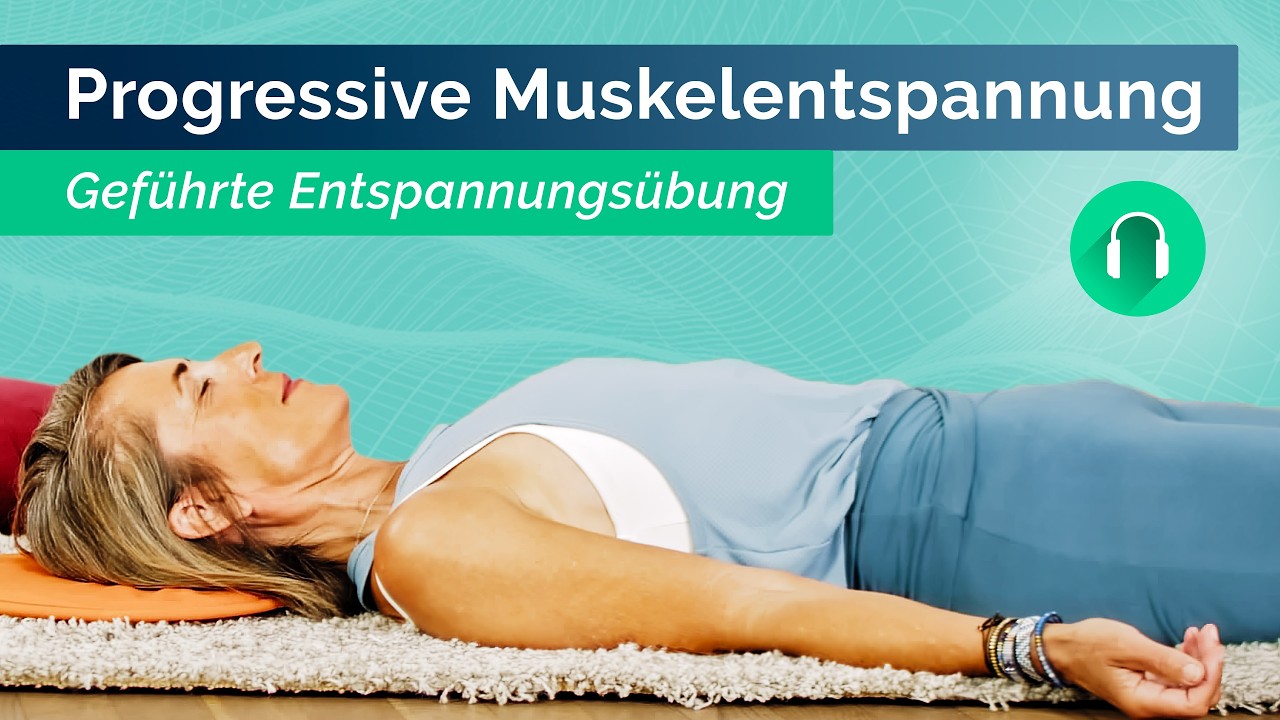
Maria guides you step by step through the complete exercise — perfect for beginners and advanced practitioners.
Duration: 23 minutes of complete instruction
To the guided PMRMeditation
Meditation calms the mind — and a calm mind is good for the whole person. In TCM, it is said that every emotion touches a particular organ. Through regular meditation, you learn to step out of circling thoughts, find emotional balance, and strengthen your inner center.
Just 10 minutes a day can do a lot for your inner calm. Many people find that it makes their everyday life feel more relaxed and clearer.
Recommended meditations
GUIDED MEDITATIONS FOR EVERY DAY
Your personal meditation library
We have put together a complete playlist with over 60 guided meditations, breathing exercises, and relaxation techniques for you — from short 5-minute meditations for in between to deep 30-minute sessions for intensive practice.
In the playlist you will find:
- Morning meditations for a mindful start to the day
- Sleep meditations for restful sleep
- Breathing meditations for inner calm
- Meditations for calm moments during stress and rumination
- TCM standing meditations for all 5 Elements
- Body scan and body journeys
- Calming meditations for body and mind
- Special breathing techniques (4-7-8, coherent breathing, bee breath)
Perfect for beginners and advanced practitioners. Choose the meditation that fits your time, time of day, and needs.
To the meditation playlist"When Liver Blood is depleted, the eyes lose their luster and the sinews lose their suppleness."
— Freely adapted from the HUANG DI NEI JING
(The Yellow Emperor's Classic of Internal Medicine)
More tips for your daily life
Alongside the classic TCM treatment methods there are many small everyday habits that may help rebuild your Liver Blood. In TCM, Liver Blood Deficiency often arises from overwork, too little sleep and an inadequate diet — with the right changes, you can nourish your Blood and strengthen your Liver for the long term.
Eye care — the Liver opens into the eyes
Regular eye breaks
In TCM, Liver Blood nourishes the eyes — when it is deficient, they become dry, tired and sensitive:
- 20–20–20 rule for screen work — every 20 min., look at something 20 feet (about 6 meters) away for 20 sec.
- Warm eye compresses morning and evening — promote circulation and nourish the eyes
- Goji berry tea for eye health — steep 1 tbsp goji berries in hot water for 10 min.
- Less blue light in the evening — use a screen filter and reduce screen time before bed
Sleep — the most important time of regeneration for Liver Blood
Why sleep is crucial for Liver Blood
In TCM, the Blood returns to the Liver at night — there it is cleansed and renewed:
- Go to sleep before 11 p.m. — Liver time is between 1 and 3 a.m., and your body should already be in deep rest before then
- Get 7–8 hours of sleep — Liver Blood needs enough time to regenerate
- Keep your bedroom dark and cool — darkness supports the return of Blood to the Liver
- No screens for 1 hour before bed — blue light tires the eyes and disturbs Liver Blood
Exercise — gentle and nourishing rather than exhausting
Prefer gentle movement
With Liver Blood Deficiency, the right intensity is crucial:
- Gentle movement such as yoga, Qi Gong and walks — nourishes the Blood and moves the Qi
- NOT: Intense workouts, marathons or HIIT — they use up Blood that is already scarce
- Swimming and hiking are ideal — they strengthen without exhausting
- Exercise in nature — the Wood element is strengthened by trees and greenery
When to see a doctor?
Building up Liver Blood takes time and patience. With the right eating and lifestyle habits, you will notice your energy returning, your eyes becoming clearer and numbness easing. Listen to the signals your body gives you and be patient with yourself.
See a doctor if you have:
- Persistent paleness and fatigue lasting more than 4 weeks
- Severe numbness or vision problems
- Unusually heavy or missing menstruation
A blood count (iron, ferritin, B12, folate) quickly brings clarity here. TCM and Western medicine complement each other ideally in this case — conventional medicine can diagnose and treat iron deficiency or anemia, while TCM balances the underlying energetic disharmony.
For the best possible course of treatment
TCM is not a quick fix for symptoms, but a holistic path to healing. You will get the best results when you consistently build the treatment into your daily life and give your body time to regenerate.
Integrating it into your daily life
Start with ONE step
Don't try to change everything at once! That is overwhelming and
usually leads to giving up. Instead:
- Weeks 1–2: Add Blood-nourishing foods to your daily meals (goji berries, dates, beets) — and start with your TCM herbal blend
- Weeks 3–4: Acupressure Le 08 and MP 06 daily
- Weeks 5–6: Qi Gong daily for 10–15 min.
- Weeks 7–8: Interim review — compare your evening vision, calf cramps, nails, and sleep with how things were at the start
- From week 9: Add further methods as needed
Realistic expectations
After 2–3 weeks: First improvements noticeable
- Less fatigue and exhaustion
- A healthier complexion
- Less dry eyes
After 6–8 weeks: Clear improvements
- Less dizziness and numbness
- Better Sleep
- Stronger nails and hair
After 3–6 months: Lasting healing
- Liver Blood is noticeably built up
- Vision and eyes noticeably improved
- Vitality and joy in life are back
TCM vs. Western Medicine
TCM and Western medicine do not exclude each other — they complement each other!
When Western medicine is important:
- In acute emergencies
- In cases of structural damage
- In cases of infection
- For precise diagnoses (lab work, imaging)
Where TCM has its strengths:
- For functional disorders
- For chronic complaints
- For prevention
- For holistic healing
Ideal: Combine both systems! Use Western medicine for
acute treatment and precise diagnostics, and TCM for lasting healing
and for strengthening the body's self-healing powers.
Important: Never stop taking prescribed medications on your own!
Talk to your doctor when you begin TCM treatment.
Do you have questions?

Wolfgang from meine-tcm.com
TCM is a broad field. Much of it sounds unfamiliar at first, and the real question often comes up only once you start trying some of it out in everyday life.
That's exactly what I'm here for. Write to me — no matter whether your question is big or small, whether it relates to this page or to something else entirely from TCM. I read every message myself and will get back to you. Calmly, clearly, and without a sales pitch.
P.S. There are no silly questions. So write to me.
Ask your questionEvery step counts
Your body strives for balance — you just need to create the right conditions for it.
Remember:
👣 Every small step counts
You don't have to be perfect. Even one warm meal a day is better than none. Even 5 minutes of Qi Gong is better than no movement at all.
⏳ Patience pays off
Your body took years to get into this state. Give it time to find its balance again. Change takes time, but it comes.
🎯 Focus on what you CAN do
Don't concentrate on everything you're doing "wrong." Focus on every positive step you take.
💚 Be good to yourself
There's no such thing as perfection. You're allowed to have a bad day now and then. Tomorrow is a new day, and you can pick up where you left off.
🤝 You are not alone
Thousands of people are walking this path with you. For over 2,000 years, TCM has been guiding people like you on their journey toward greater well-being.
Track your progress

To track your progress, we recommend repeating the TCM analysis after about 3 months.
Why is this useful?
- You see how your pattern has changed
- You can adjust your support as needed
- It motivates you to keep going
- You recognize which measures suit you best
⚠️ Important: Your answers from today are stored in encrypted form in a code that you received by e-mail. ONLY with this code can you follow your progress later on. Keep the e-mail in a safe place!
🔒 YOUR DATA IS SAFE
We store:
✓ Only your email for the reminder
✓ The date for sending
We do NOT store:
✗ Your analysis results
✗ Your personal data
✗ The link between e-mail and pattern
All analysis data is completely anonymous and is not linked to your e-mail address.
Newsletter
Stay up to date with our newsletter. Along with helpful tips and tricks for your training and your everyday life, you won't miss any of our new releases.