







On this page, you will learn:
- What this pattern means from the perspective of TCM and Western medicine
- Where your symptoms come from and how they are connected
- Which specific treatment methods can help you now
- How to Preserve and Strengthen Your Jing and Regenerate Your Body from the Ground Up Using TCM Herbs, Acupressure, Qigong, and Nutrition
The good news: A Jing deficiency can be stabilized and improved with the right measures. With essence-nourishing foods, deep rest, and targeted TCM methods, you can protect your Jing and regain vitality.
Take your time, Get to know the different treatment approaches—you don't have to implement everything at once. Choose what feels right for you and what you can easily integrate into your everyday life.
Your treatment at a glance:
Which TCM pattern is really behind your complaints?
Degree of
imbalance

Moderate to Significant
Typical
treatment duration

6–12 months
self-treatment
Possible

Can be treated on one's own to a certain extent
Treatment–
scope

3-4 methods
Proposed
methods

Extensive range
Our free TCM analysis shows you your personal TCM pattern in just 10 minutes.
What is a Jing deficiency?

When the precious essence is exhausted
The TCM Perspective: Jing as the Foundation of Life
In Traditional Chinese Medicine, Jing (essence) is the most precious and profound substance in our bodies. It is the fundamental „start-up capital“ we received from our parents at the moment of our conception—a kind of candle of life that burns slowly and nourishes our entire existence.
Jing is stored in the kidneys and forms the material basis for all life processes: growth, development, reproduction, and healthy aging. It is the seed from which the tree of our life grows. Jing gives rise to marrow (Sui), which in turn fills the bones, nourishes the spinal cord, and sustains the brain—referred to in TCM as the „Sea of Marrow.“.
There are two types of Jing: prenatal Jing (Xian Tian Zhi Jing), which we inherit from our parents and cannot be replaced, and postnatal Jing (Hou Tian Zhi Jing), which we can obtain from high-quality food and deep rest. Both forms complement each other—and postnatal Jing can support and protect prenatal Jing.
The consequence of a Jing deficiency: When Jing is depleted, the body lacks its deepest source of nourishment. Marrow is not produced in sufficient quantities, the bones become weak and porous, the brain is undernourished (leading to forgetfulness and difficulty concentrating), the teeth become loose, and the hair turns gray and falls out. Reproductive function and libido are also affected.
The typical signs of a Jing deficiency:
- Deep, profound exhaustion that does not improve with sleep
- Weak lower back and knees; bone and joint problems
- Premature Graying or Hair Loss
- Forgetfulness, difficulty concentrating, „blanking out“
- Dental problems, loose teeth
- Decreased Libido and Fertility Problems
- Tinnitus, dizziness
- Signs of Premature Aging
The good news: Even though prenatal Jing cannot be replaced, its depletion can be significantly slowed. Through a nutrient-rich diet, deep rest, adequate sleep, and gentle practices such as qigong, you can protect your Jing and strengthen your postnatal Jing—for greater vitality and healthy aging.
The Western Perspective: Hormonal Exhaustion and Premature Aging
From a Western perspective, Jing deficiency most closely corresponds to a combination of hormonal exhaustion, adrenal insufficiency, and premature degenerative changes. In TCM, the kidneys encompass far more than just the physical organ—they include the entire adrenal-hypothalamic-pituitary axis, which is the body’s hormonal control center.
Think of Jing as your biological reserves: the telomeres of your cells (the „protective caps“ on your DNA), your hormone reserves, your bone density, and your stem cell activity. These resources are finite and are depleted more quickly by stress, overwork, lack of sleep, and an unhealthy lifestyle.
The adrenal system (adrenal glands), in particular, shows parallels to the TCM concept of Jing: Chronic stress leads to adrenal exhaustion, as the adrenal glands produce cortisol and other stress hormones. Sex hormones (estrogen, testosterone) and the „youth hormone“ DHEA are also produced there—when the glands are exhausted, these levels drop significantly.
What does modern medicine show?
- Adrenal Fatigue: Exhaustion of the Adrenal Glands Due to Chronic Stress
- Hormonal Imbalances: Low Levels of DHEA, Testosterone, and Estrogen
- Osteoporosis/Osteopenia: Decreased bone density due to a lack of supportive substances
- Early neurodegenerative changes: The brain is not receiving adequate nourishment
- Premature Aging: Shortened Telomeres, Oxidative Stress
- Chronic Fatigue Syndrome: Severe exhaustion with no apparent organic cause
Modern research confirms: The TCM pattern „Jing Deficiency“ correlates with measurable changes in the endocrine system, bone metabolism, and markers of cellular aging. Studies have indeed shown that TCM herbs such as He Shou Wu (Fo-Ti), Gou Qi Zi (Goji), and Du Zhong possess antioxidant, neuroprotective, and bone-strengthening properties.
TCM treatment for Jing deficiency begins right here: It nourishes the kidneys—the storehouse of essence—supports adrenal function, strengthens the bones and bone marrow, and, through a mindful lifestyle, slows the depletion of these precious resources—in a profound, sustainable, and gentle way.

The Yellow Emperor's team explains your pattern
Qi Bo | The Yellow Emperor | Dr. Lisa Weber
MASTER OF THE HEALING ARTS | TCM FOUNDER | MODERN PHYSICIAN
What happens when the legendary Yellow Emperor of Traditional Chinese Medicine sits down with his advisor Qi Bo and a modern doctor? They discuss your pattern—using 4,000-year-old knowledge AND the latest science.
Jing Deficiency — When the precious essence is depleted and the body craves deep nourishment
The Yellow Emperor: „Qi Bo, I see people in my kingdom who appear to have aged far beyond their years. Their hair turns gray prematurely, their bones are weak, they forget things, and they no longer have strength in their loins. Some can no longer father children. What is the cause of this profound suffering?“
Qi Bo: „Your Majesty, these people suffer from a deficiency of Jing—the body’s most precious and profound substance. Jing is the essence we receive from our parents at the moment of our conception. It is like an inheritance, a starting capital for life. This prenatal Jing is stored in the kidneys and is the root of all vital energy. From Jing arises the marrow, which fills the bones, nourishes the spinal cord, and supplies the brain—known as the ‚Sea of Marrow.‘ When Jing is depleted, it can no longer fulfill these vital functions.“
Dr. Weber: „This is a remarkable description of what we now understand as premature aging and hormonal exhaustion! In Western medicine, we would think of the adrenal-hypothalamic-pituitary axis—the body’s central hormonal regulatory system. The adrenal glands produce cortisol, DHEA—often called the ‚youth hormone‘—and sex hormones. Chronic stress causes this system to become depleted. The symptoms you describe—bone weakness, memory problems, hair loss, infertility—all correlate with hormonal exhaustion and early degenerative changes.“
The Yellow Emperor: „You say that Jing is inherited from one's parents. Can it be depleted?“
Qi Bo: „Yes, Your Majesty, prenatal Jing is like a candle that burns slowly. It cannot be replaced, only protected and replenished. However, there is also postnatal Jing, which we can obtain through high-quality food, deep rest, and breathing exercises. This postnatal jing can support the prenatal jing and slow its depletion. Those who squander their jing—through overwork, excessive sexual activity, chronic illness, or an unhealthy lifestyle—age prematurely. Those who preserve their jing live long and vibrant lives.“
Dr. Weber: „Fascinating! This aligns with our understanding of biological reserves. Telomeres—the protective caps on our DNA—shrink with every cell cycle. Chronic stress, lack of sleep, and overwork dramatically accelerate this process. Stem cell activity and hormone reserves are also limited. Interestingly, research shows that meditation, adequate sleep, and certain nutrients can increase telomerase activity—the enzyme that repairs telomeres. The TCM recommendation to conserve jing therefore has a solid scientific basis!“
The Yellow Emperor: „What causes jing to become depleted?“
Qi Bo: „Your Majesty, the causes are manifold. First: Chronic overwork—those who do not allow themselves rest deplete their vital essence. Second: Excessive sexual activity—especially for men, every ejaculation results in a loss of jing. Third: Severe or prolonged illnesses—they deplete the deepest reserves. Fourth: Excessive physical exertion without adequate rest. Fifth: Chronic emotional stress—anxiety, in particular, directly damages the kidneys. Sixth: Inadequate or improper nutrition—the body cannot produce postnatal Jing. And seventh: Drugs and stimulants—they rob the body of its essence.“
Dr. Weber: „Each of these points can be scientifically substantiated! Chronic stress permanently elevates cortisol levels, which exhausts the adrenal glands and leads to ‚adrenal fatigue.‘ Excessive physical exertion without recovery leads to overtraining, which destabilizes the hormonal system. Emotional stress chronically activates the sympathetic nervous system. Poor nutrition does not provide enough building blocks for hormone production. And stimulants such as caffeine or amphetamines actually deplete the adrenal glands“ catecholamine reserves. TCM recognized these connections thousands of years ago!”
The Yellow Emperor: „You mentioned the Mark and the ‚Sea of the Mark.‘ What exactly does that mean?“
Qi Bo: „Your Majesty, the marrow (Sui) is formed from Jing. This marrow fills the bones—hence the connection between Jing and bone health. The marrow also ascends to the brain, which in TCM is referred to as the ‚Sea of Marrow.‘ Consequently: When Jing is deficient, the bones become porous and weak, the teeth loosen, and the brain is undersupplied—resulting in forgetfulness, poor concentration, dizziness, and tinnitus. The kidneys ‚open to the ears‘—hence the hearing problems associated with Jing deficiency.“
Dr. Weber: „This is extremely interesting from a neuroanatomical perspective! The connection between the bone marrow and the brain—with the spinal cord serving as the link—is anatomically correct. Osteoporosis caused by hormonal changes is well documented, especially in cases of low estrogen or testosterone levels. The connection to the brain: Neurodegenerative diseases correlate with hormonal changes and oxidative stress. Even the connection to the ears is accurate—the inner ear is one of the organs most sensitive to circulatory disorders and metabolic changes, and tinnitus is a common symptom in states of exhaustion!“
The Yellow Emperor: „What physical signs indicate a deficiency of Jing?“
Qi Bo: „The signs are characteristic, Your Majesty. The tongue is pale, often slightly swollen, with little or no coating. In cases of severe deficiency, cracks may appear in the center of the tongue—these indicate the depletion of kidney essence. The pulse is deep—Chen Mai—because the Jing lies deep within. It is weak—Ruo Mai—because the fundamental energy is lacking. It is also often thin—Xi Mai. Hair turns gray prematurely or falls out, teeth become loose, and the lower back and knees are weak and painful.“
Dr. Weber: „A pale tongue may indicate anemia or poor blood circulation, which is common in cases of hormonal exhaustion. Tongue fissures are of particular interest—modern research is increasingly examining changes in the tongue as diagnostic markers. Premature graying correlates with oxidative stress and B-vitamin deficiency. Hair loss is a classic sign of hormonal imbalances. The bone and joint complaints are consistent with osteopenia and muscle weakness associated with hormone deficiency. TCM diagnostics identify systemic changes that we can confirm with modern lab test results!“
The Yellow Emperor: „Now let's talk about the treatment. How can the Jing be protected and nourished?“
Qi Bo: „Your Majesty, the principle of treatment is: Bu Shen Yi Jing—strengthen the kidneys and increase essence. This is achieved in several ways. First: Deep rest and sufficient sleep—essence regenerates during sleep. Second: Essence-nourishing foods—black foods such as black beans, black sesame seeds, and walnuts directly nourish the kidneys and Jing. Third: Jing-nourishing herbs—Shu Di Huang, Gou Qi Zi, He Shou Wu, and Shan Zhu Yu are the classic Jing tonics. Fourth: Gentle exercise such as qigong—excessive exertion depletes Jing, while gentle exercises nourish it. Fifth: Sexual moderation—especially important for men to preserve Jing.“
Dr. Weber: „The dietary recommendations are scientifically sound! Black beans are rich in antioxidants and isoflavones, which have hormone-modulating effects. Black sesame seeds provide zinc, magnesium, and vitamin E—all of which are important for hormone production. Walnuts are rich in omega-3 fatty acids, which nourish the brain—the ‚sea of marrow‘! Studies show that He Shou Wu has anti-aging properties and protects against oxidative stress. Goji berries have been shown to have neuroprotective and immunomodulatory effects. And getting enough sleep is essential for the release of growth hormone, which has a regenerative effect!“
The Yellow Emperor: „What are the classic herbal formulas for Jing deficiency?“
Qi Bo: „The basic formula for kidney yin and jing deficiency is Liu Wei Di Huang Wan—the six-ingredient pill with rehmannia. It contains: Shu Di Huang as the chief herb, which deeply nourishes yin and jing. Shan Zhu Yu strengthens the liver and preserves essence. Shan Yao nourishes the spleen and kidneys. Fu Ling drains excess dampness. Ze Xie clears kidney fire. Mu Dan Pi cools the liver blood. In cases of concurrent kidney yang deficiency, a warming formula is needed—this is a distinct pattern and should be managed by a qualified practitioner.“
Dr. Weber: „Liu Wei Di Huang Wan is one of the most thoroughly researched TCM formulas ever! Studies show positive effects on kidney function, bone metabolism, and the endocrine system. Shu Di Huang (Rehmannia) has proven immunomodulatory and antioxidant properties. In animal studies, the formula improves cognitive function and protects against age-related changes. The combination of the six herbs acts synergistically—three nourish, three regulate—an elegant system of balance!“
The Yellow Emperor: „Wonderful! Let's turn this wisdom into a practical plan.“
THE "THREE WISE MEN" METHOD FOR JING DEFICIENCY
MORNING PROTOCOL (Preserving Jing):
- TCM: Wake up slowly—your kidneys don't like an abrupt start to the day
- Science: Waking up abruptly causes a spike in cortisol; waking up gently is easier on the adrenal glands
- Practical: Stay in bed for 5 minutes, stretch gently, and breathe deeply
- TCM: A warm, nourishing breakfast—the essence needs substance
- Science: A breakfast rich in protein and fat helps stabilize blood sugar and hormones
- Practical: Congee with walnuts and black sesame seeds, or eggs with vegetables
- TCM: Kidney Tapping Massage — Gently Awakens Kidney Energy
- Science: A gentle massage of the lower back promotes blood flow to the adrenal glands
- Practical: Gently tap the lower back with loose fists for 1–2 minutes.
TAGS STRATEGY (Protecting Jing):
- TCM: Avoid Overwork — Exhaustion Is the Greatest Thief of Jing
- Science: Chronic stress depletes the adrenal glands' cortisol reserves
- Practical: A break every 90 minutes, no overtime, and a lunch break
- TCM: Acupressure on Kidney 3 (Tai Xi)—the „Great Source“ strengthens the kidney jing
- Science: Stimulating this point has a positive effect on the autonomic nervous system
- Practical: In the hollow between the inner ankle and the Achilles tendon. Gently massage for 3 minutes on each side.
- TCM: Avoid Anxiety and Fear — Anxiety Directly Damages the Kidneys
- Science: Chronic anxiety permanently activates the stress response and depletes the adrenal glands
- Practical: Limiting news consumption, meditation, positive activities
EVENING RITUAL (Regenerating Jing):
- TCM: Gentle Qigong „Gathering Qi“ — Stores Energy in the Kidneys
- Science: Slow, meditative movement activates the parasympathetic nervous system and promotes recovery
- Practical: 10-15 minutes of gentle Qi Gong exercises before dinner
- TCM: Acupressure on KG 04 (Guan Yuan)—the „Gateway to Primordial Energy“—strengthens the Jing
- Science: This point is located above the lower Dan Tian and stimulates the parasympathetic nervous system
- Practical: Four finger-widths below the navel. Gently warm the area with the palm of your hand for 3–5 minutes.
- TCM: Get enough sleep early — Jing regenerates between 11 p.m. and 3 a.m.
- Science: Most growth hormone is released during the first half of the night
- Practical: Go to bed before 10:30 p.m., aim for 8 hours of sleep, no cell phone in bed
The Yellow Emperor: „Qi Bo, how long will it take for the jing to be restored?“
Qi Bo: „Your Majesty, restoring Jing takes a great deal of time and patience—it is the body’s deepest and slowest-acting substance. After 2–3 weeks of consistent practice, most people notice greater inner peace, deeper sleep, and less extreme exhaustion. After 6–8 weeks, the improvements become more noticeable: more stable energy, greater resilience, and less back and knee pain. After 3–6 months, postpartum Jing may have noticeably recovered—the body feels fundamentally strengthened and more resilient. However, fully restoring Jing can take 1–2 years—it’s a marathon, not a sprint.“
Dr. Weber: „This is consistent with our clinical experience! Recovery of the endocrine system after chronic stress typically takes 6–12 months. The adrenal glands need time to rebuild their reserves. Bone density improves after 12–24 months of targeted measures at the earliest. The nervous system also requires a long recovery period. The TCM recommendation to persevere for 6–12 months or longer is entirely realistic. Patience here isn’t just a recommendation—it’s a necessity!“
The Yellow Emperor: „What must be avoided at all costs in cases of Jing deficiency?“
Qi Bo: „Your Majesty, the most important things are: First, no overwork—it is the greatest enemy of Jing. Second, no excessive exercise—intense exertion depletes the essence. Third, no stimulants—caffeine and other stimulants deplete kidney energy. Fourth, no late nights—Jing regenerates between 11 p.m. and 3 a.m. Fifth, no cold foods in large quantities—they weaken kidney yang. Sixth, no excessive sexual activity—men in particular lose jing through it. And seventh, no chronic anxiety—fear directly damages the kidneys.“
Dr. Weber: „Scientifically proven! Chronic overwork and sleep deprivation permanently raise cortisol levels and exhaust the adrenal glands. Intense exercise without adequate recovery leads to overtraining, which destabilizes the endocrine system. Caffeine stimulates the adrenal glands in the short term but exhausts them in the long term—like a high-interest loan. Late nights disrupt the circadian rhythm and reduce growth hormone secretion. Chronic stress and anxiety permanently activate the HPA axis. “The TCM recommendations are all based on endocrinological principles!”
The Yellow Emperor: „Then the message is clear: Jing is the most precious substance in our bodies, the legacy of our parents, and the root of our vitality. Preserving it is a lifelong task. With deep calm, nourishing food, gentle movement, and a wise lifestyle, we can protect this precious essence and lead a long, vibrant life.“
Qi Bo: [smiles] „That is so, Your Majesty. Jing is like a precious treasure we have received from our ancestors. We cannot increase it, but we can preserve and protect it. Whoever wastes their Jing wastes their life. Those who cherish it live long and vigorously. With mindfulness, calm, and the gifts of nature, we can nourish our essence and enjoy a fulfilling life—into old age.“
About our „3 Wise Men“ story
Who are the Yellow Emperor and Qi Bo?
The Yellow Emperor (Huangdi) is said to have lived around 2600 BC and is considered the mythical founder of Chinese culture and medicine. Qi Bo was his most important advisor and personal physician. Their discussions about health, illness, and human nature were recorded in the most important fundamental work of TCM.
The book: Huangdi Neijing
The Huangdi Neijing, also known as The Yellow Emperor's Classic of Internal Medicine, was probably written between 200 BC and 200 AD. It is the oldest surviving work on Chinese medicine and consists of dialogues between the Yellow Emperor and his advisors, mainly Qi Bo.
This work is to TCM what the Bible is to Christianity: the absolute foundation. All the important concepts - yin and yang, the 5 elements, qi, meridians and acupuncture points - are systematically described here for the first time.
Our modern approach: The 3 wise men
In our series „The Three Sages,“ we bring together the Yellow Emperor and Qi Bo with the fictional modern doctor and microbiologist Dr. Weber.
Important note: All three characters and their conversations are purely fictitious and invented by us.
We use this narrative form, similar to the dialogue form in the book Huangdi Neijing, to convey the often complex interrelationships of TCM in an understandable and entertaining way. When the 4,000-year-old emperor is confronted with modern science, enlightening „aha moments“ arise that show that ancient wisdom and new research often speak the same language — just in different words.
This makes TCM lively, understandable and practically applicable for your everyday life.
The dialogs are creative interpretations - not historical documents. For medical questions, please consult a qualified TCM therapist or doctor.
Your treatment options
A Jing deficiency is very treatable! TCM offers you a variety of effective methods to protect, preserve, and gently build up your Jing. You don't have to do everything at once—choose the methods that work best for you and your daily life.
Here you will find specific treatment approaches that have been proven effective in TCM for thousands of years and that you can largely apply yourself.
TCM herbs
Herbal medicine (or, in modern terms, phytotherapy) is the MOST IMPORTANT tool of TCM. It is an integral part of every traditional TCM treatment. Today, there is a suitable herbal blend for every TCM pattern.

Here's how to find the right herbal blend for you
- Search online. Enter Jing Mangel "TCM Herbal Blend" — including the quotation marks — into the search engine of your choice. If you wish, add the following to the search term: Compressed pieces — in our experience, the easiest to take — or Granules. This way, you'll see several providers and can compare them at your leisure.
- Our Therapist Directory. In the TCM Therapist Directory You can find TCM practitioners in your area who will tailor a TCM herbal blend to your individual constitution.
- Your TCM Pharmacy. Some pharmacies carry TCM herbal blends or can order them for you. Tell them what you're looking for—or show them this page.
In any case, pay attention to the quality of the TCM herbal blend, not the price—it’s worth taking a look at the list of ingredients.
Not sure which herbal blend is right for your TCM pattern? Write to us. We'll tell you which classic recipe traditionally goes with this pattern and what you should look for when choosing one.
Request a tip on herbal blends
TCM uses many different methods. Which ones are right for you is the question we hear most often. And it’s not something that can be answered offhand.
That’s why we offer our personalized TCM support. It begins with a free, no-obligation ONLINE initial consultation with Wolfgang.
After that, you’ll receive a personalized support plan outlining all the components and costs as a proposal. If it works for you, we’ll get started: In a second online session (about 30 minutes), Wolfgang will discuss your path with you.
Acupressure
Acupressure is acupuncture without needles. — You can do this yourself at any time. By applying gentle pressure to specific points, you activate the flow of energy in the meridians and strengthen your kidney essence.
These three points form the classic combination for nourishing Jing. Regular stimulation is especially important in cases of Jing deficiency — Patient care strengthens the essence over the long term.
ACUPUNCTURE POINT: Ni 03
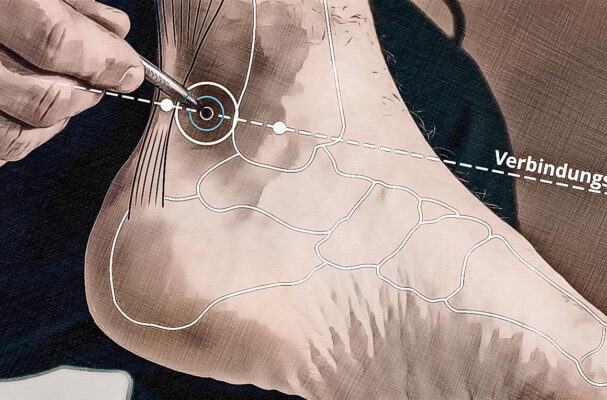
Kidney 03
Great Spring — Tai Xi
- Key Point for Strengthening Kidney Yin and Jing
- Deeply nourishes the kidney essence
- Strengthens the back and knees
- Calms the mind when you're exhausted
- Regulates the water balance
Location: In the hollow between the inner ankle and the Achilles tendon.
Application:
Massage in a circular motion 2 times a day for 2–3 minutes per side, using gentle to moderate pressure. Best done in the morning and evening. If possible, massage with warm hands.
ACUPUNCTURE POINT: KG 04
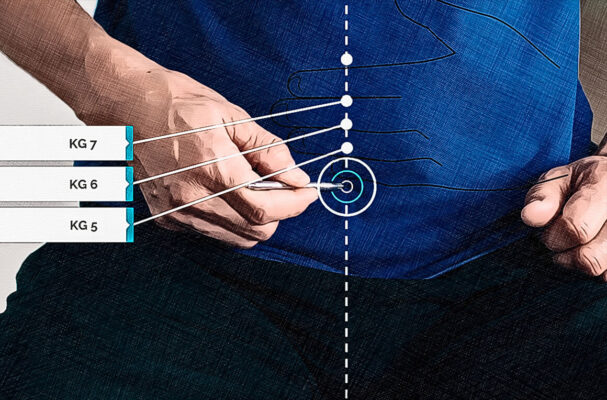
Concept vessel 04
Gateway to Primordial Energy — Guan Yuan
- Strengthens Original Qi and Jing
- Nourishes the essence in the Lower Burner
- Gently warms the kidneys
- Regulates the reproductive organs
- Provides strength during periods of severe exhaustion
Location: Four finger-widths below the navel on the midline.
Application:
Massage twice daily for 2–3 minutes using gentle pressure in a clockwise circular motion. Can also be warmed with moxibustion—particularly effective for symptoms of cold.
Not during pregnancy: KG 04 is located above the uterus and is one of the points that should not be needled, treated with moxibustion, or pressed firmly during pregnancy. If you’re trying to conceive, work with this point during the first half of your cycle and stop using it as soon as conception is possible.
Even more detailsACUPUNCTURE POINT: Ni 07
Kidney 07
Recurring current - Fu Liu

- Tones the kidneys and the water element
- Strengthens kidney yang
- Regulates sweating
- Strengthens the lower back
- Does the Kidney Essence help with fatigue?
Location: Two cun above Ni 03, at the front edge of the Achilles tendon.
Application:
Press with moderate pressure or massage in a circular motion twice daily for 2–3 minutes on each side. Particularly effective when used together with Ni 03 for comprehensive kidney support.
Our App Recommendation
Atemraum: Your App for Mindful Breathing


Breathing is the foundation of physical and mental well-being—and is usually COMPLETELY underestimated in everyday life. Yet hardly anything has such a direct impact: the way we breathe shapes the way we feel.
That's why we created Atemraum: an app with guided breathing exercises that you can take with you anywhere. Wolfgang put together these exercises—along with a 35-day course, quick tips for the moment, and breathing tests that let you track your progress.
Just a few minutes a day is enough. And anyone who uses our personal support If you use it, it already comes with breathing space.


You can try the app for free for 7 days.
Qi Gong
Qi Gong is gentle, nourishing movement — ideal for protecting and preserving your precious Jing. When you have a Jing deficiency, it’s especially important to take it easy: avoid intense exertion and heavy sweating. Instead, slow, meditative exercises help gather and store energy in the kidneys.
Regular practice of qigong (even just 10–15 minutes a day) strengthens jing over the long term and supports your body’s deep regeneration. The best time is in the evening—to gather kidney energy and prepare the body for restful sleep—or in the morning for a gentle start to the day.
QI GONG: Exercise 1
Collect Qi
Gathers vital energy, nourishes the kidneys

Particularly helpful for:
- Exhaustion and lack of energy
- Inner Emptiness and Powerlessness
- Need for Recovery After an Illness
- Chronic Fatigue
Effect:
This exercise gathers vital energy from all directions and stores it specifically in the Dan Tian and the kidneys—the storage site of Jing. The gentle, meditative movements strengthen and preserve the essence of life. It’s perfect for finding peace and replenishing your reserves.
QI GONG: Exercise 2
Connecting heaven and earth
Strengthens the kidneys, harmonizes the energies

Particularly helpful for:
- Weak back and knees
- Lack of energy and exhaustion
- Feeling of being ungrounded
- Lack of roots
Effect:
This powerful exercise connects the energy of the heavens with the energy of the earth and channels both into the kidneys. It strengthens the lower back—the seat of the kidneys—and grounds you in your center. If you have a Jing deficiency, it helps restore your connection to your deepest sources of energy.
QI GONG: Exercise 3
Stretching the bow
Strengthens the kidneys and the back

Particularly helpful for:
- Weak Back Muscles and Back Pain
- Kidney Qi deficiency
- Fatigue and listlessness
- Weakness in the legs
Effect:
This exercise from the „Eight Brocades“ specifically strengthens the kidneys and the entire back. The gentle stretching and contracting activate the kidney area and supply it with fresh energy. At the same time, it opens the chest and improves breathing—both of which support the preservation of Jing.
These Qi Gong exercises are specially selected to preserve and strengthen Jing. They gather energy, strengthen the kidneys, and help your body regenerate its deepest reserves.
All of these exercises are especially effective when you do them in the evening—that’s when kidney energy is gathered and the body prepares for regeneration. Early morning (gently and slowly!) is also a good time.
QI GONG:
When and how often?
In the evening (ideal for Jing deficiency):
- All 3 exercises as a sequence: approx. 15–20 min.
- Or just 1–2 exercises: approx. 5–10 min.
- Helps you recharge your energy for the night
In the morning (gently and slowly):
- Individual exercises for a gentle start: 5–10 min.
- Not too early and not too intense
Regularity is more important than duration:
- It is better to exercise for 10 minutes every day than for 60 minutes once a week.
- After 2–3 weeks, you will notice the first changes.
- After 3–6 months of regular practice: a noticeable increase in vitality
Pro tip: When you have a Jing deficiency, rest is the top priority. Avoid intense physical exertion and heavy sweating—these deplete Jing! Qigong is the perfect form of exercise: gentle, nourishing, and restorative. Listen to your body and never overexert yourself.

LIVE EVERY MONDAY: QI GONG WITH WOLFGANG
Every Monday at 6:00 p.m. Let's practice together live on YouTube. Among other things, Wolfgang will guide you through a complete qigong sequence — free of charge and suitable for all levels.
Why participate live? ✓ Working out together keeps you motivated ✓ Wolfgang explains the exercises in detail ✓ You can ask questions in the live chat ✓ A set time helps keep your routine on track
More about Qi Gong LiveMeridian Yoga — The Yoga of TCM
Meridian Yoga combines yoga with traditional Chinese medicine. The result is a holistic exercise concept for better health and more energy.
In cases of Jing deficiency, the extraordinary vessels are particularly important. The Conception Vessel (Ren Mai) and the Governor Vessel (Du Mai) form the „Sea of Yin and Yang Meridians“—they are directly connected to the kidneys and essence. Gentle stretching of these vessels nourishes Jing without depleting it.
MERIDIAN YOGA: Exercise 1
Backward bend for the conception vessel
Opens the front of the body, strengthens kidney energy

Particularly helpful for:
- Low Energy and Chronic Fatigue
- Weak Back and Lower Back Pain
- Premature Aging and Loss of Vitality
- Fertility and Reproductive Issues
Effect:
This exercise opens the Conception Vessel (Ren Mai), which runs along the front of the body. It is the „Sea of Yin“ and nourishes all the Yin organs. In cases of Jing deficiency, this stretch strengthens the connection to the kidneys and promotes the regeneration of essence.
MERIDIAN YOGA: Exercise 2
Roundback for the handlebar vessel
Stretches the entire spine, nourishes the spinal cord
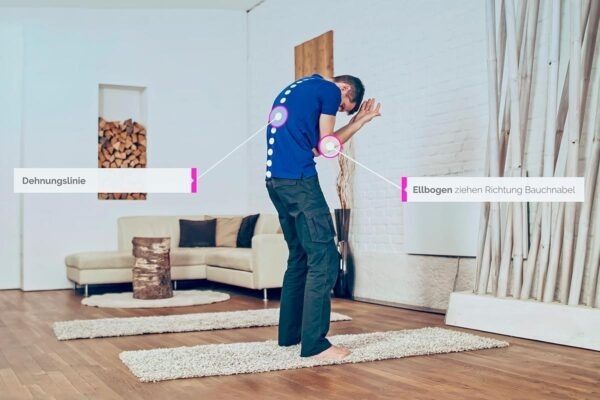
Particularly helpful for:
- Back Problems and Spinal Ailments
- Exhaustion and lack of energy
- Stiffness and limited mobility
- Memory problems and difficulty concentrating
Effect:
The Roundback stretches the Governing Vessel (Du Mai), which runs along the back of the body alongside the spine. It is the „Sea of Yang“ and connects the brain and the spinal cord—both of which are referred to as „marrow“ in TCM and are directly nourished by Jing. This exercise promotes the flow of essence to the spine and the brain.
Both exercises activate the extraordinary vessels Ren Mai and Du Mai, which together form a circuit—the so-called „Small Heavenly Circuit.“ They are directly connected to the kidneys and store the primordial qi (Yuan Qi), which arises from the Jing.
Particularly effective: Hold each position for 3–5 breaths, visualizing nourishing energy flowing from your lower abdomen (Dan Tian) through your spine and the front of your body, replenishing your Jing.
MERIDIAN YOGA:
When and how often?
Best time:
- In the evening between 5 and 7 p.m. (Kidney Time)
- Or in the morning after waking up, to gently wake up
Duration:
- Hold each position for 3–5 breaths.
- Complete sequence: 10–15 minutes
- 3–5 times per week for best results
Important:
- Practice in a calm, warm atmosphere
- Breathe deeply and slowly during the positions
- Stretching should be comfortable, never painful.
Pro tip: Combine Meridian Yoga with gentle qigong exercises such as „Drawing the Bow“ or „Gathering Qi.“ If you have a Jing deficiency, it’s especially important to take it easy—avoid strenuous yoga styles and opt for gentle, nourishing practices that build up your essence rather than deplete it.
Nutrition according to TCM
„Let food be your medicine.“ — This principle has been followed in TCM for thousands of years. If you have a Jing deficiency, proper nutrition is especially important for preserving and building up your precious essence.
Jing belongs to the element Water (kidney) and needs Warm to neutral, deeply nourishing food, in order to be preserved and strengthened. Black foods have a special connection to the kidneys and jing.
What you eat, HOW you eat and WHEN What you eat—all of that affects your jing and your life force.
The Golden Rules for Strong Jing
What is good for you:
Black Foods (Nourish the Kidneys)
- Black Beans — A Powerful Jing Tonic
- Black sesame — nourishes the kidneys and essence
- Black Rice — Nourishment for the Jing
- Mulberries — strengthen the liver and kidneys
Black is the color of water—black foods nourish the kidneys!
Seeds and nuts (contain the „seed“ of life)
- Walnuts — Shaped like the brain, they nourish the brain and kidneys
- Chestnuts — warm and strengthen the kidneys
- Pine nuts — nourish Jing and Yin
- Sesame — white and black; both strengthen the Jing
Seeds contain the essence of life
Nourishment for the Marrow and Bones
- Bone broth — nourishes the marrow and essence directly
- Lamb — warms and nourishes kidney yang
- Eggs — Nourish the Essence
- Seaweed (wakame, nori) — Minerals for the kidneys
Animal-based foods containing essence are particularly effective at building up Jing
Classical Jing–Tonika
- Goji berries — nourish liver and kidney essence
- Walnuts with Honey — An Ancient Jing Recipe
- Sesame paste (tahini) — 1 tablespoon daily
- Royal Jelly — Nourishes the Royal Essence
These foods have been considered Jing tonics for thousands of years
What you should avoid:
Coffee and stimulants
- Coffee in large quantities
- Energy drinks
- Too Much Green Tea
- All beverages with high caffeine content
Caffeine exhausts the adrenal glands and depletes the Jing!
Alcohol
- Wine and Beer
- High-proof alcoholic beverages
- Even „occasional“ alcohol consumption
- Alcohol in Food
Alcohol directly robs you of your Jing—it's your greatest enemy!
Cold food and drinks
- Iced drinks and ice cream
- Cold water from the fridge
- Yoghurt (cold and moist)
- Raw food in large quantities
Cold weakens the kidneys and the digestive fire!
Sugar and Excess
- White sugar and sweets
- Too much salt (puts a strain on the kidneys)
- Highly processed foods
- Overeating in General
Excess in any form depletes the essence!
HOW YOU SHOULD EAT:
Cooked and warm
- Prefer hot meals
- Soups and stews - easy to digest
- Vegetables steamed or boiled
- Hot breakfast, too (congee!)
Slowly and in moderation
- Never eat too fast
- Never too much at once
- Never late at night
- In peace and with pleasure
The kidneys love moderation and consistency!
Drink properly
- Warm water
- Walnut-Sesame Milk (Homemade)
- Goji tea (eat the berries too!)
- Do not drink with meals
Drinking cold beverages weakens the kidneys
IDEAL MENU FOR ONE DAY:
Breakfast (7–9 a.m.):
- Rice Congee with Black Sesame and Goji Berries
- In addition: Warm water or goji tea
Lunch (12–1 p.m.):
- Lamb with Black Beans and Vegetables
- In addition: Black rice or whole-grain rice
- Or: Bone Broth with Walnuts
Dinner (6–7 p.m.):
- Light Vegetable Soup with Egg and Seaweed
- Or: Steamed Fish with Sesame Seeds
- In addition: Small portion of rice
Snack if needed:
- Handful of walnuts
- Or: 1 tbsp sesame paste with honey
- Or: Goji berries (a small handful)
The most important rule when changing your diet is:
Start with ONE step!
Don't change everything at once.
Our suggestion for getting started:
- Eat 1 tablespoon of black sesame seeds or sesame paste every day — 2 weeks
- Introduce a warm breakfast (congee) — 2 weeks
- Significantly cut back on coffee and alcohol — permanently
Step by step, you'll notice how your Jing stabilizes and you gain more vitality.
Your Jing will thank you for it!
RECIPE: BLACK BEAN SOUP WITH WALNUTS
Ingredients:
For 4 portions
- 200 g black beans (soaked overnight)
- 50 g walnuts (coarsely chopped)
- 1 L bone broth (or vegetable broth)
- 3 slices of fresh ginger
- 2 spring onions
- 1 tablespoon sesame oil
- Salt and a little soy sauce to taste
- Optional: 5 goji berries per serving
Preparation:
- Rinse the soaked black beans
- Cook the beans with bone broth and ginger
- Simmer over low heat for 1–1.5 hours until tender
- Toast the walnuts briefly in a pan without oil
- Season the bean soup with salt and soy sauce to taste
- Garnish with walnuts, sesame oil, and green onions
- Optional: Top with goji berries
Effect:
Classic Jing Tonic in TCM
Nourishes kidney essence and strengthens the bones
Warms you from the inside and gives you deep energy
1–2 times a week — powerful Jing cultivation!
RECIPE: CONGEE WITH BLACK SESAME AND GOJI BERRIES
Ingredients:
For 2 portions
- 100 g rice (short-grain or jasmine)
- 1 L water
- 2 tablespoons black sesame paste (or ground black sesame seeds)
- 2 tbsp goji berries
- 1 tbsp honey or maple syrup
- 1 pinch of salt
- Optional: 3–5 red dates (pitted)
- Optional: A few pieces of walnut
Preparation:
- Rinse the rice and add it to a pot with water
- Bring to a boil, then reduce the heat significantly
- Let it simmer for 45–60 minutes, stirring regularly
- Optional: Add dates after 30 minutes
- Add the goji berries 10 minutes before the end
- Stir in the black sesame paste
- Season to taste with honey and a pinch of salt
Effect:
A Gentle, Deeply Nourishing Jing Breakfast
Strengthens the kidneys and spleen at the same time
Ideal for fatigue and nutrient deficiencies
3–5 times a week as a warm breakfast—the gentle path to strong Jing!
Breathing
Breathing is the bridge between body and mind. In TCM, it is said: „The lungs govern the qi“—according to this concept, through conscious breathing you can directly influence your qi flow and find a deeper sense of calm.
Breathe calmly and slowly: Deep abdominal breathing noticeably calms many people—their breathing becomes deeper, their shoulders relax, and their minds become clearer. The good news: Just 5–10 minutes a day can make a difference in your well-being.
Recommended breathing techniques
ABDOMINAL BREATHING — The basis for every breathing technique
Natural breathing
Abdominal breathing is the most natural and calm form of breathing. According to the teachings of TCM, with every breath you bring qi into your body’s center (Dantian).
Wolfgang shows you step by step, How to learn abdominal breathing correctly—lying down to start with, then later also sitting and standing.
Duration: 9 minutes

4–7–8 BREATHING — Find Peace
Calm Breathing for the Evening
With the 4–7–8 breathing technique, you inhale for 4 seconds, hold your breath for 7 seconds, and exhale for 8 seconds. This steady rhythm helps many people wind down in the evening—ideal when your mind won’t shut off at night.
Perfect for the evening or whenever you want to calm down quickly.
Duration: 9 minutes
To the interactive videoBOX BREATHING — For inner coherence
Professional breathing for focus and calmness
Box Breathing (4 seconds on, 4 seconds hold, 4 seconds off, 4 seconds hold) combines activation and relaxation in perfect balance. This method is used by elite soldiers, athletes, and executives to remain calm and focused even in extremely stressful situations.
A steady 4–4–4–4 rhythm A balance of activity and stillness—many people find it clarifying and grounding.
Duration: 9 minutes
To the interactive videoCOHERENT BREATHING — Brings Body and Mind into Harmony
Calm Breathing for Balance
With coherent breathing Breathe in for 5.5 seconds and out for 5.5 seconds. This rhythm brings your heart and breathing into a steady rhythm—a state known as „coherence.“ Many people use it as a regular breathing break in their daily lives.
A nice side effect: The heart and breath settle into a calm, synchronized rhythm.
Duration: 14 minutes
To the interactive video
COHERENT BREATHING Around the clock
Our 24/7 livestream on coherent breathing runs non-stop. You can tune in at any time and join in right away.
Perfect for:
✓ Spontaneous breaks to catch your breath in between
✓ If you'd like some gentle breathing guidance
✓ As background while working
✓ For the evening and to wind down
✓ For regular daily practice
relaxation
When your body is relaxed, Things tend to flow more easily. Persistent tension keeps you in a constant state of stress. By using specific relaxation techniques, you signal to your body to calm down and recharge.
Progressive muscle relaxation It is one of the best-known relaxation methods and has been practiced for over 100 years. It helps you become aware of tension, actively let go of it, and achieve a state of deep relaxation—whenever you want.
Recommended relaxation technique
PROGRESSIVE MUSCLE RELAXATION (PMR)
The Classic Relaxation Method
Progressive muscle relaxation according to Jacobson is one of the best-known relaxation techniques worldwide. By deliberately tensing and relaxing individual muscle groups, you learn to consciously recognize tension and release it.
That's what it feels like:
Step by step, the body becomes heavier and calmer, and the breathing more even. Many people make this a regular part of their evening routine to help them fall asleep easily.

Maria guides you step by step through the entire exercise—perfect for beginners and advanced practitioners alike.
Duration: 23-minute complete guide
To the guided PMRMeditation
Meditation calms the mind — and a calm mind is good for your whole being. In TCM, it is said that every emotion affects a specific organ. Through regular meditation, you’ll learn to step away from racing thoughts, find emotional balance, and strengthen your inner center.
Just 10 minutes a day can do a lot to help you find inner peace. As a result, many people find that their daily lives become more relaxed and clear.
Recommended meditations
GUIDED MEDITATIONS FOR EVERY DAY
Your personal meditation library
We have a complete Playlist with over 60 guided meditations, breathing exercises, and relaxation techniques—from short 5-minute meditations for in between to deep 30-minute sessions for intensive practice.
In the playlist you will find:
- Morning meditations for a mindful start to the day
- Meditations for restful sleep
- Breathing meditations for inner peace
- Meditations for Moments of Calm Amid Stress and Worry
- TCM standing meditations for all 5 elements
- Body scan and body journeys
- Meditations for Peace of Mind and Body
- Special breathing techniques (4–7–8, coherent breathing, bee breathing)

Perfect for beginners and advanced practitioners. Choose the right meditation for you depending on your time, the time of day, and your needs.
To the meditation playlistThose who preserve their essence preserve their lives. Those who squander it age prematurely.
— From the HUANG DI NEI JING
(The Yellow Emperor's Classic of Internal Medicine)
More tips for your everyday life
In addition to traditional TCM treatment methods There are many small daily habits that can protect and strengthen your Jing. In TCM, Jing is the most precious essence—it takes time to build up, but is easily depleted. With the right habits, you can preserve and support your life essence.
Sleep and Rest — Especially Important in Cases of Jing Deficiency
Sufficient sleep
Jing regenerates during sleep:
- 8–9 hours of sleep per night is ideal — more than in other patterns
- In bed before 10:30 p.m. — the best time for Jing regeneration
- Deep sleep nourishes the essence—quality is more important than quantity
- When there is a Jing deficiency, the body can never get enough sleep
Midday rest
Short periods of rest during the day help preserve Jing:
- A 20–30-minute nap at lunchtime is ideal
- Even just closing your eyes and relaxing helps
- The body uses this time to recover
- In cases of severe Jing deficiency: Get plenty of rest, if possible
Avoid reworking—the biggest drain on Jing
Exhaustion directly depletes Jing:
- Revision is the GREATEST enemy of Jing
- Be sure to avoid long work hours
- Plan regular breaks — every 60–90 minutes
- Don't „push through“ when you're tired—that drains your energy
- When there's a lack of Jing: Less is more—it's better to do less, but do it consistently
- Plan for enough vacation time and true relaxation
Strengthening the Kidneys—the Storehouses of Jing
Warmth for the Kidneys
The kidneys like warmth:
- Warm feet and a warm back are essential
- Avoid getting cold—especially in the lower back area
- A kidney wrap or a warm bath for the lower back
- Place a hot water bottle on your lower back if you feel cold
- In winter: Keep your kidneys especially warm
Reduce Stress and Anxiety
Emotional stress directly damages the kidneys:
- Fear is the emotion of the kidneys—it depletes the jing
- Chronic stress depletes the adrenal glands and Jing
- Meditation and mindfulness calm the mind
- Breathing exercises help to gather kidney energy
- Eat in a relaxed manner — Stress while eating impairs digestion
Calming the Mind
A calm mind preserves the Jing:
- Excessive brooding drains your energy
- Schedule Daily Times of Silence
- Reduce screen time — especially in the evening
- Seeking Nature and Tranquility
- Cultivating Simplicity — Less Is More
Gentle Exercise — Rest Is More Important Than Exercise
The right intensity
When there is a Jing deficiency, rest is more important than exercise:
- Qi Gong and Tai Chi are ideal—they let you move without getting exhausted
- Slow, meditative movements nourish the Jing
- Walks in nature—not too long, not too fast
- Gentle Stretching and Effortless Yoga
- Swim only in warm water
What You Should Definitely Avoid
Intense exertion depletes Jing:
- NO intense exercise—it drains your energy
- No marathons, HIIT, CrossFit, or anything like that
- Avoid excessive sweating—it depletes bodily fluids and Jing
- Strength training to the point of exhaustion is off-limits
- Exercising when you're tired worsens Jing deficiency
- Avoid competitive sports during the recovery phase
Exercise after eating
A short walk aids digestion:
- 10-15 minutes of slow walking after eating
- Helps the spleen to transform food
- Do not lie down immediately after eating
- Light housework is also good
Sexuality and Jing
A sensitive but important issue
In TCM, sexuality is closely linked to jing:
- In women, heavy menstrual bleeding, pregnancy, and breastfeeding deplete Jing—after these phases, the body needs targeted rest
- For men, every ejaculation results in a loss of Jing—moderation is the most effective way to manage this
- In cases of Jing deficiency: Reduce strenuous sexual activity until the Jing is strengthened
Healthy Sexuality in Cases of Jing Deficiency
Loving intimacy without exhaustion is healing:
- Closeness and tenderness are more important than performance
- Tantric and Daoist practices can help preserve Jing
- Practicing Sexuality Mindfully
- Listen to your body's signals — pay attention to any fatigue afterward
- After sexual activity: Extra rest, cuddling, and nourishing food
Important to know
Building up Jing requires A LOT of patience—it is the slowest of all substances in TCM. Restoring Jing is like filling an almost empty well—it happens drop by drop, over months and years. Consistency is more important than intensity. Pay attention to your body’s signals: deep exhaustion, premature aging, and feelings of weakness indicate that you need more rest and nourishment. With consistent care, you can support and preserve your Jing.
When to see a doctor? If you’re experiencing severe fatigue, hormonal imbalances, infertility, premature hair loss, or other concerning symptoms, you should see a doctor. Have your hormone levels (thyroid, adrenal glands, sex hormones) and vital signs checked. TCM and Western medicine complement each other perfectly in this regard—TCM strengthens the Jing from within, while Western medicine can correct acute deficiencies.
For optimal treatment progress
TCM is not a quick fix for symptoms., but rather a holistic healing process. You will achieve the best results if you consistently integrate the treatment into your daily routine and give your body time to regenerate.
Integration into everyday life
Start with ONE step
Don't try to change everything at once! That's overwhelming and leads to
usually leads to you giving up. Instead:
- Weeks 1–2: Start taking your TCM herbal blend—and at the same time, establish a sleep routine: in bed by 10:30 p.m., seven to nine hours of sleep. Without this step, the process will come to nothing.
- Weeks 3–4: Incorporate essence-nourishing foods into your daily diet (walnuts, black sesame seeds, goji berries) and practice moderation in work and sexual activity
- Weeks 5–6: Apply acupressure to Ni 03 and KG 04 daily — follow the pregnancy instructions on the acupressure chart for KG 04
- Weeks 7–8: Qi Gong „Gathering Qi,“ 10 minutes daily.
- Starting in Week 9: Depending on the severity of your condition, the treatment regimen with your herbal blend will conclude after 8 to 16 weeks—but continue the habits established in Weeks 1 through 8. Supplement with additional methods as needed; Jing requires several treatment regimens over a period of half a year to a full year.
Realistic expectations
After 2–3 weeks: First improvements noticeable
- More inner peace
- Deeper Sleep
- Less Fatigue
After 6–8 weeks: Significant improvements
- More Stable Energy
- Greater resilience
- Less Back Pain
After 3–6 months: The postpartum Jing has recovered
- Jing is noticeably more stable
- My body feels fundamentally stronger
- Vitality and resilience are returning—it will take another one to two years for the Jing to be fully restored
TCM vs. Western medicine
TCM and Western medicine are not mutually exclusive—they complement each other!
When Western medicine is important:
- In acute emergencies
- In case of structural damage
- In case of infections
- For accurate diagnoses (laboratory, imaging)
Where TCM has its strengths:
- In case of functional disorders
- For chronic complaints
- For prevention
- For holistic healing
Ideal: Combine both systems! Use Western medicine for
Acute treatment and accurate diagnosis, TCM for lasting healing
and strengthening the body's self-healing powers.
Important: Never stop taking prescribed medication without consulting your doctor first!
Talk to your doctor when you start TCM treatment.
Do you have any questions?

Wolfgang from meine-tcm.com
TCM is a broad field. Much of it sounds unfamiliar at first glance, and often the real question doesn't arise until you start putting some of it into practice in your daily life.
That's exactly what I'm here for. Write to me—no matter how big or small your question is, whether it’s related to this page or to something else entirely in TCM. I read every message myself and will get back to you. Calmly, clearly, and without any sales pitch.
P.S.: There are no stupid questions. So write to me.
Ask your questionEvery step counts
Your body strives for balance—you just need to create the right conditions for it.
Remember:
👣 Every little step counts
You don't have to be perfect. Even one warm meal a day is better than none. Even 5 minutes of qigong is better than no exercise at all.
⏳ Patience pays off
It took your body years to get to this point. Give it time to regain its balance. Change takes time, but it will happen.
🎯 Focus on what you can DO
Don't concentrate on what you are doing „wrong". Focus on every positive step you take.
💚 Be good to yourself
Perfection does not exist. It is acceptable to have an off day occasionally. Tomorrow is a new day when you can continue.
🤝 You are not alone
Thousands of people are walking this path with you. For over 2,000 years, TCM has been guiding people like you on their journey toward greater well-being.
Track Your Progress

To track your progress, we recommend that you repeat the TCM analysis after about 3 months.
Why does this make sense?
- You can see how your pattern has changed
- You can adjust your group as needed
- It motivates you to keep going
- You'll figure out which steps work best for you
⚠️ Important: Your answers from today will be stored in encrypted form using a code that you received via email. ONLY with this code will you be able to track your progress later. Be sure to keep the email in a safe place!
🔒 YOUR DATA IS SAFE
We store:
✓ Only your email address for reminders
✓ The date for shipping
We do NOT store:
✗ Your analysis results
✗ Your personal information
✗ The connection between email and the sample
All analysis data is completely anonymous and is not linked to your email address.

Newsletter
Stay up to date with our newsletter. Besides useful tips and tricks for training and your everyday life, you won't miss any of our new releases.