






On this page you will learn:
- What this pattern means from the perspective of TCM and Western medicine
- Where your complaints come from and how they are connected
- Which specific treatment methods may help you now
- How you can nourish your Heart Yin again and find inner calm with TCM herbs, acupressure, Qi Gong, and nutrition
The good news: Heart Yin Deficiency can be treated very well with the right measures. With calming methods, nourishing food, and enough rest, you can rebuild your Heart Yin and calm your mind.
Take your time, getting to know the different treatment approaches — you don't have to put everything into practice at once. Choose what feels right to you and what you can easily fit into your daily life.
Your treatment at a glance:
Which TCM pattern is really behind your complaints?
Degree of the
imbalance

Moderate to Pronounced
Typical
Treatment duration

3–6 months
Self-treatment
Possible

Can be treated yourself with guidance
Treatment
scope

2–3 methods
Suggested
methods

Extensive selection
Our free TCM Analysis shows you your personal TCM pattern in just 10 minutes.
What Is Heart Yin Deficiency?
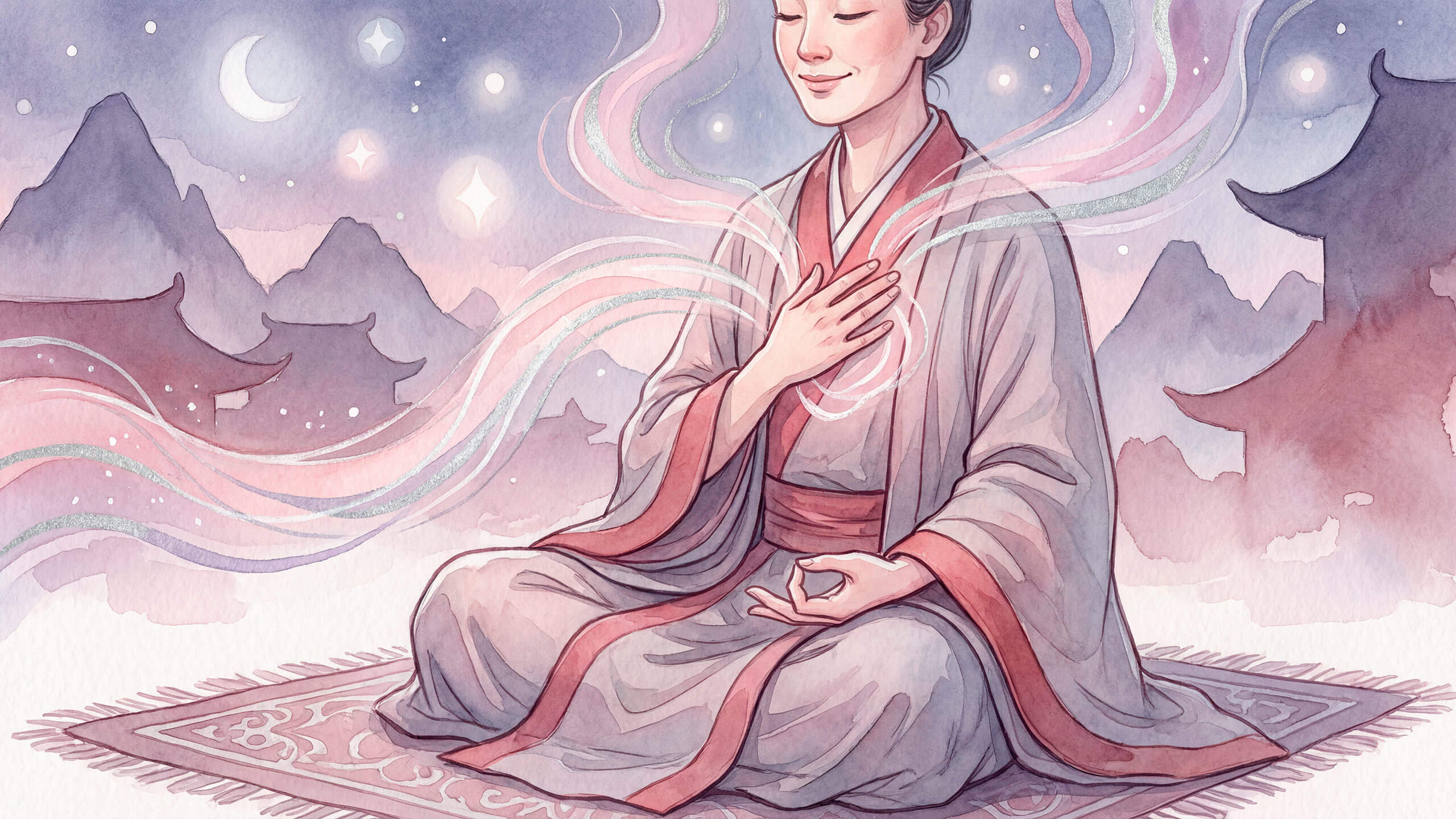
When the Heart's cooling fluids are depleted
The TCM Perspective: Nourishing the Heart and Calming the Mind
In Traditional Chinese Medicine, the Heart is the emperor of all the organs and the seat of the Shen — the spirit, consciousness, and emotional clarity. Heart Yin is the cooling, moistening, and nourishing substance that anchors the spirit and gives it rest.
Heart Yin is like cooling dew on a flame. Without this cool dew, the flame of the Heart becomes unruly — it flickers and licks upward, the mind grows restless and finds no peace. Sleep is disturbed, the Heart pounds wildly, and inner restlessness spreads.
In TCM, the Heart governs the Blood and the blood vessels, houses the spirit (Shen), and opens into the tongue. With Heart Yin Deficiency, it is therefore not only sleep and emotional balance that suffer, but also the function of the Heart itself — palpitations, a racing heart, and a feeling of emptiness in the chest are typical signs.
The consequence of Heart Yin Deficiency: The cooling Yin that nourishes and anchors the Heart spirit is depleted. Empty Heat rises, the Shen becomes restless, and the body shows signs of Dryness, inner Heat, and emotional instability.
The typical signs of Heart Yin Deficiency:
- Palpitations and a racing heart, especially in the evening and at night
- Insomnia, trouble falling asleep and staying asleep
- Night sweats, especially in the chest area
- Inner restlessness, anxiety, and nervousness
- Vivid, disturbing dreams
- Dry mouth and dry throat
- Redness on the cheekbones, a feeling of Heat in the afternoon
- Forgetfulness and difficulty concentrating
The good news: With patience and the right measures, Heart Yin can be rebuilt. Through calming exercises, Yin-nourishing foods, enough sleep and herbs such as Suan Zao Ren (sour jujube), you can anchor your mind again and find inner calm.
The Western Perspective: Autonomic Dysregulation and Sleep Medicine
From a Western point of view, Heart Yin Deficiency corresponds to a state of chronic autonomic overactivation with sleep disturbances, heart rhythm problems and symptoms of anxiety. The sympathetic nervous system is permanently activated, while the calming parasympathetic nervous system is too weak.
Imagine your heart as an engine that is constantly running at full throttle: with Heart Yin Deficiency, the cooling is missing and the engine overheats. The cooling system — the autonomic nervous system — has fallen out of balance. The heart beats faster, calm is missing, and the body can no longer regenerate.
Modern sleep medicine knows this state well: chronic stress leads to elevated cortisol levels, which disturb sleep. The heart shows functional arrhythmias — no structural damage, but a sign of overload. For thousands of years, TCM has described this state as Heart Yin Deficiency.
What does modern medicine show?
- Autonomic dysregulation: overactive sympathetic nervous system, increased heart rate
- Sleep disturbances: reduced melatonin production, disrupted sleep architecture
- Functional heart rhythm disturbances: extrasystoles, tachycardia without an organic cause
- Chronic stress: elevated cortisol and adrenaline levels
- Anxiety disorders: amygdala overactivation, reduced prefrontal control
- Night sweats: disrupted temperature regulation due to autonomic imbalance
Modern research confirms: The pattern of Heart Yin Deficiency shows clear overlaps with burnout, autonomic dysregulation and chronic sleep disturbances. Calming methods such as meditation, acupuncture and certain plant compounds have been shown to improve heart rate variability and strengthen the parasympathetic nervous system.
TCM treatment of Heart Yin Deficiency starts right here: it nourishes the Heart Yin, calms the mind, and strengthens the parasympathetic nervous system. Through calming foods such as lotus seeds and wheat, enough rest, and herbs such as Suan Zao Ren, which is also found in the classic formula Tian Wang Bu Xin Dan, inner balance is restored — deeply, lastingly, and gently.

The Yellow Emperor's team explains your pattern
Qi Bo | The Yellow Emperor | Dr. Lisa Weber
MASTER OF THE HEALING ARTS | FOUNDER OF TCM | MODERN PHYSICIAN
What happens when the legendary Yellow Emperor of Traditional Chinese Medicine sits down with his advisor Qi Bo and a modern doctor? They discuss your pattern—using 4,000-year-old knowledge AND the latest science.
Heart Yin Deficiency — When the Cooling Fluids of the Heart Are Depleted and the Mind Finds No Rest
The Yellow Emperor: "Qi Bo, in my realm I see people who complain of palpitations and a racing heart. They cannot sleep at night, sweat in their sleep and are plagued by constant inner restlessness. Their dreams are vivid and disturbing, and their minds find no rest. What is the cause of this suffering?"
Qi Bo: "Your Majesty, these people suffer from a Deficiency of Heart Yin — the cooling, nourishing substance that anchors the mind and gives the Heart peace. The Heart is the emperor of all organs and the home of the Shen — of the spirit, of consciousness and of emotional clarity. Heart Yin is like cooling dew that soothes a flame. Without this cooling dew, the flame of the Heart becomes uncontrolled — it flickers restlessly, and the Shen loses its anchor and wanders about. Hence the palpitations, the sleeplessness, the restless dreams."
Dr. Weber: "That is a remarkable description of the autonomic nervous system! The heart is indeed strongly influenced by the autonomic nervous system. The sympathetic nervous system speeds up the heart, while the parasympathetic nervous system — especially the vagus nerve — slows it down and promotes rest and recovery. With chronic stress or exhaustion, the sympathetic system is overactive and the parasympathetic system is too weak — the heart "flickers," figuratively speaking. Heart rate variability — a measure of parasympathetic activity — is often greatly reduced in such patients."
The Yellow Emperor: "You speak of the Shen, the spirit. What exactly is this substance that dwells in the Heart?"
Qi Bo: "Your Majesty, the Shen is the highest consciousness, the radiant clarity of the mind. It dwells in the Heart like an emperor in his palace. The Shen governs our thinking, our feeling, our consciousness and our sleep. When Heart Yin is sufficient, the Shen has a cooling, nourishing foundation — it is anchored, calm and clear. When Heart Yin is depleted, the Shen loses its anchor. It becomes restless, like a boat without an anchor on a stormy sea. Hence the sleeplessness — the Shen cannot come to rest at night. Hence the vivid dreams — the Shen wanders uncontrolled. Hence the forgetfulness — the Shen cannot gather itself."
Dr. Weber: "The concept of the Shen has astonishing parallels to modern neuroscience! Consciousness, emotional regulation and sleep are controlled by the prefrontal cortex, the limbic system and the brainstem. Chronic stress leads to overactivation of the amygdala — the fear center — and reduced activity of the prefrontal cortex. The result: emotional instability, sleep disturbances and cognitive limitations. And interestingly, studies show that calming practices such as meditation can strengthen prefrontal control and reduce amygdala activity — exactly what TCM describes as "calming the Shen"!"
The Yellow Emperor: "You mentioned sleep. Why is sleep so disturbed in this condition?"
Qi Bo: "Your Majesty, sleep is the time when the Shen withdraws inward and rests in the Heart Blood. When Heart Yin is exhausted, the Shen has no cooling, nourishing bed. It cannot come to rest and wanders restlessly. That is why falling asleep is difficult — the Shen is too active. That is why staying asleep fails — the Shen wakes again and again. That is why dreams are vivid and disturbing — the Shen wanders uncontrolled in the night. On top of that comes empty Heat: without cooling Yin, warmth rises and disturbs sleep further. Night sweats are a sign of this rising empty Heat."
Dr. Weber: "Sleep medicine confirms these observations! With chronic stress, the sympathetic nervous system is also activated at night — we call this "sympathicotonic insomnia." Cortisol levels are elevated, melatonin production is disrupted, and normal sleep architecture is interrupted. The "empty Heat" of TCM possibly corresponds to nighttime dysregulation of thermoregulation — the body does not cool down enough, which leads to night sweats. Interestingly, studies show that certain herbs such as Suan Zao Ren (sour jujube) may increase GABA activity and improve sleep!"
The Yellow Emperor: "What leads to a depletion of Heart Yin?"
Qi Bo: "The causes are many, Your Majesty. First: emotional stress — prolonged worry, brooding and anxiety directly exhaust Heart Yin. Second: overwork and lack of rest — the Heart needs time to regenerate. Third: chronic illness and fever — they burn up Yin. Fourth: loss of Blood — after surgery, childbirth or heavy menstruation. Fifth: constitutional weakness — some people are born with weaker Heart Yin. Sixth: long-standing Kidney Yin Deficiency — Kidney Yin is the root of all Yin and also nourishes Heart Yin. And seventh: excessive consumption of heating substances — alcohol (especially hard liquor), coffee and spicy seasonings burn up Yin."
Dr. Weber: "That correlates remarkably with what we know about stress-related illness! Chronic emotional stress permanently activates the hypothalamic-pituitary-adrenal axis and increases oxidative stress in the body. Overwork leads to depletion of neurotransmitters and adrenal hormones. Blood loss can lead to anemia, which puts additional strain on the heart. And the genetic component — the constitutional weakness — corresponds to individual variation in stress resilience and parasympathetic function. Even the connection between kidney and heart function is medically documented: The kidneys regulate mineral and fluid balance, which directly affects the heart!"
The Yellow Emperor: "What signs in the body reveal Heart Yin Deficiency?"
Qi Bo: "The signs are characteristic, Your Majesty. The tongue is red — especially at the tip of the tongue, which is associated with the Heart. It shows empty Heat. It has little or no coating — the Deficiency of Yin and fluids. It is dry — no Dampness is present. It often shows cracks — the lack of substance becomes visible. And the tongue body is thin — the substance is missing. The pulse is thin like a fine thread — called Xi Mai — and rapid — Shuo Mai. At the left Cun position, the Heart position at the wrist, it is especially weak and superficial. This shows: The substance is exhausted, the Heat has spread."
Dr. Weber: "Tongue diagnosis is fascinating! A red, dry tongue with little coating is in fact a clinical sign of dehydration and possible systemic illness. A reddened tongue tip can point to increased blood flow or inflammation. And the quality of the pulse — thin and fast — matches what we find in patients with autonomic dysregulation: the cardiac output is reduced with every beat, but the rate is increased to compensate. Traditional diagnostics captures real physiological states!"
The Yellow Emperor: "Now let us talk about treatment. How can the Heart Yin be nourished?"
Qi Bo: "Your Majesty, the treatment principle is: Zi Yin Yang Xin, An Shen — nourish the Heart Yin and calm the spirit. First: Calming nutrition — wheat calms the Heart, lotus seeds nourish the Heart Yin, longan fruits strengthen the Heart Blood. Mulberries moisten the Yin. Duck and pork are cooling and nourishing. Second: Enough sleep — go to bed before 11 p.m. so that the Shen can retreat. Third: Gentle, calming exercises — Qi Gong to open the Heart, meditation to calm the spirit. Fourth: Emotional calm — avoid brooding and worrying, and practice serenity."
Dr. Weber: "The dietary recommendations have a solid foundation! Wheat contains tryptophan, a precursor of serotonin and melatonin — both important for sleep and mood. Lotus seeds contain sedative alkaloids and are used in traditional medicine for sleep problems. Longan fruits are rich in iron and B vitamins — important for blood formation and the nervous system. And early sleep matters hormonally: Melatonin is released in darkness, and the deepest sleep phases with maximum regeneration occur in the first hours after falling asleep!"
The Yellow Emperor: "What about the classic herbal formulas for the Heart Yin?"
Qi Bo: "Ah, Your Majesty brings up the great Heart-calming formulas! Tian Wang Bu Xin Dan — the Pill of the Heavenly Emperor to Strengthen the Heart — is the classic formula for Heart Yin Deficiency with disturbance of the Shen. It contains Sheng Di Huang — fresh Rehmannia — to nourish Yin, Suan Zao Ren — sour jujube seeds — to calm the spirit, and Bai Zi Ren — arborvitae seeds — to nourish the Heart. For severe insomnia, we add Ye Jiao Teng and Fu Shen. For palpitations, we add Long Gu and Mu Li to anchor the Shen. For pronounced empty Heat, Huang Lian and Zhi Zi to cool."
Dr. Weber: "Tian Wang Bu Xin Dan is a well-researched formula! Suan Zao Ren — the sour jujube seed — contains saponins and flavonoids that have been shown to modulate GABA receptors and improve sleep. Studies show anxiolytic and sedative effects. Sheng Di Huang has antioxidant and anti-inflammatory properties. Bai Zi Ren contains fatty acids and triterpenes with a calming effect. Long Gu — fossilized bones — contains calcium and other minerals that have a muscle-relaxing effect. An impressively well-documented formula for sleep problems and anxiety!"
The Yellow Emperor: "Wonderful! Let's put this wisdom into a practical plan."
THE 3 SAGES METHOD FOR HEART YIN DEFICIENCY
MORNING PROTOCOL (Go easy on the Heart Yin):
- TCM: A gentle start — the Heart needs special care in the morning after the night's regeneration
- Science: A calm morning prevents an early cortisol spike and is gentle on the cardiovascular system
- Practical: Get up 10 minutes earlier, wake up slowly, no immediate exertion or stressful news
- TCM: Heart-nourishing breakfast — wheat and lotus seeds calm the Shen directly
- Science: These foods provide tryptophan, B vitamins, and calming plant compounds
- Practical: Oatmeal with longan fruits and walnuts. Or wheat porridge with mulberries and honey
- TCM: Warm Lotus Tea — calms the Heart and gently nourishes the Yin
- Science: Lotus seeds contain sedative alkaloids and support Heart function
- Practical: Steep 5–10 lotus seeds in warm water and drink it first thing in the morning
DAYTIME STRATEGY (Protect the Heart Yin):
- TCM: Honor your midday rest — it protects the Heart Yin and gives the Shen a chance to recover
- Science: A short power nap lowers cortisol and supports parasympathetic recovery
- Practical: 10–20 minutes of midday rest, even if you just sit with your eyes closed
- TCM: Acupressure on Heart 7 (Shenmen) — the Gate of the Spirit calms the Shen directly
- Science: In studies, stimulating this point shows positive effects on heart rate variability and anxiety
- Practical: At the wrist crease, on the little-finger side, in a small hollow. Massage gently for 3 min. on each side
- TCM: A Yin-nourishing midday meal — duck, tofu, and wheat calm without heating
- Science: Light, protein-rich meals containing tryptophan support serotonin production
- Practical: Steamed duck with wheat noodles, or tofu and vegetable soup with lotus seeds
EVENING RITUAL (regenerating the Heart Yin):
- TCM: Gentle Qi Gong "Opening the Heart" — calms the Shen and opens the Heart meridian
- Science: Slow movement with deep breathing activates the parasympathetic nervous system and lowers the heart rate
- Practical: 10 minutes of gentle Heart Qi Gong in the evening
- TCM: Acupressure on Kidney 6 (Zhaohai) — the master point for nourishing Yin throughout the body
- Science: This point influences the parasympathetic nervous system and promotes restful sleep
- Practical: Below the inner ankle bone, in the hollow. Massage gently for 3 min. per side before going to bed
- TCM: Go to bed early — before 11 p.m., so the Shen can withdraw and restore itself
- Science: The deepest sleep phases, with maximum melatonin release, occur before midnight
- Practical: In bed before 10:30 p.m., avoid screens for an hour beforehand, keep the bedroom cool and dark
The Yellow Emperor: "Qi Bo, how long does it take until the Heart Yin is nourished again?"
Qi Bo: "Your Majesty, the Heart Yin regenerates faster than the Kidney Yin, but it still takes patience and consistency. After 2–3 weeks of consistent practice, most people notice that sleep becomes calmer, the palpitations ease, and dreams become less disturbing. After 6–8 weeks the improvements become clearer: less anxiety, better concentration, more inner calm. After 3–6 months the Heart Yin may be noticeably nourished — the Shen finds rest more easily, sleep is deep and restorative, and emotional stability returns. The key is regularity, Your Majesty — small daily practices work better than occasional big efforts."
Dr. Weber: "That matches our clinical experience with sleep disorders and anxiety disorders! With consistent practice of relaxation techniques, parasympathetic function can improve — measurable through heart rate variability. The first improvements in sleep often appear after just 2–3 weeks. The brain's neuroplasticity allows the stress response to be reprogrammed over months. The timeframe of 3–6 months is realistic and evidence-based — that is how long the nervous system needs to establish new patterns!"
The Yellow Emperor: "What absolutely must be avoided with a Heart Yin Deficiency?"
Qi Bo: "Your Majesty, the most important points are these: First, avoid emotional stress and brooding — they directly exhaust the Heart Yin and disturb the Shen. Second, greatly reduce caffeine and stimulants — they increase restlessness and palpitations. Third, do not stay up too late — every hour after 11 p.m. uses up Heart Yin and disturbs the Shen. Fourth, avoid spicy and heating foods — chili, alcohol, and lots of ginger burn the already scarce Yin. Fifth, avoid excessive mental strain — prolonged brooding and worry exhaust the Heart. And sixth, avoid stimulating entertainment before sleep — action movies, the news, and intense conversations disturb the Shen."
Dr. Weber: "All of it is scientifically understandable! Emotional stress and brooding activate the amygdala and keep the sympathetic nervous system active. Caffeine blocks adenosine receptors and prevents natural tiredness. Lack of sleep disrupts the circadian rhythm and melatonin production. Spicy seasonings and alcohol raise the heart rate and can trigger heart rhythm disturbances. And stimulating media before bed activate the nervous system and make it harder to fall asleep. These recommendations are fundamental to good sleep hygiene!"
The Yellow Emperor: "Then the message is clear: Heart Yin is the cooling substance that anchors the spirit and brings calm to the Heart. When it is depleted, the Shen becomes restless, sleep is disturbed, and the Heart is unsettled. With patient care — calming food, enough sleep, gentle exercises, and avoiding things that drain you — we can nourish Heart Yin again and give the spirit its home back."
Qi Bo: [smiles] "So it is, Your Majesty. The Heart is the emperor of the body, and the Shen is its shining advisor. When Heart Yin is nourished, peace, clarity, and restful sleep return — and we can enjoy life with a calm Heart and an alert mind."
About our "3 Sages" story
Who are the Yellow Emperor and Qi Bo?
The Yellow Emperor (Huangdi) is said to have lived around 2600 BCE and is regarded as the mythical founder of Chinese culture and medicine. Qi Bo was his most important advisor and personal physician. Their conversations about health, illness, and the nature of human beings were recorded in the most important foundational work of TCM.
The book: Huangdi Neijing
The "Huangdi Neijing," also known as "The Yellow Emperor — The Foundational Work of Traditional Chinese Medicine," was probably written between 200 BCE and 200 CE. It is the oldest surviving work of Chinese medicine and consists of dialogues between the Yellow Emperor and his advisors — mainly Qi Bo.
For TCM, this work is what the Bible is for Christianity: the absolute foundation. All the key concepts — Yin and Yang, the 5 Elements, Qi, meridians, and acupuncture points — are described systematically here for the first time.
Our modern approach: The 3 Sages
In our series "The 3 Sages," we bring the Yellow Emperor and Qi Bo together with the fictional modern physician and microbiologist Dr. Weber.
Important note: All three characters and their conversations are purely fictional and invented by us.
We use this narrative style, similar to the dialogue form in the Huangdi Neijing, to explain the often complex connections within TCM in a way that is easy to follow and entertaining. When the 4,000-year-old emperor is confronted with modern science, illuminating "aha moments" arise that show: ancient wisdom and new research often speak the same language — just in different words.
This is how TCM comes alive, becomes easy to understand, and can be put into practice in your everyday life.
The dialogues are creative interpretations — not historical documents. For medical questions, please consult a qualified TCM practitioner or physician.
Your treatment options
Heart Yin Deficiency can be treated very well! TCM offers you a wide range of effective methods to rebuild your Heart Yin and find inner peace. You don't have to do everything at once — choose the methods that suit you and your daily life.
Here you will find specific treatment approaches that have proven themselves in TCM over thousands of years and that you can mostly do yourself.
TCM Herbs
Herbal medicine (or, in modern terms, phytotherapy) is the MOST IMPORTANT tool of TCM. It is part of every classical TCM treatment. Today there is a suitable herbal blend for every TCM Pattern.

How to get your matching herbal blend
- Search online. Enter Heart Yin Deficiency "TCM Herbal Blend" — with the quotation marks — into the search engine of your choice. If you like, add the form: Pressed tablets — in our experience the easiest to take — or Granules. That way you'll see several providers and can compare at your leisure.
- Our therapist directory. In TCM Therapist Directory you'll find TCM therapists near you who tailor a TCM herbal blend to your personal pattern.
- Your TCM pharmacy. Some pharmacies carry TCM herbal blends or will order them for you. Tell them your pattern — or show them this page.
In any case, pay attention to the quality of the TCM herbal blend, not the price — it's worth taking a look at the ingredient list.
Not sure which herbal blend fits your TCM pattern? Write to us. We'll tell you which classical formula traditionally belongs to this pattern and what to look for when choosing.
Request a herbal blend tip
TCM uses many tools. Which of them suit you is the question we hear most often. And it can't be answered in passing.
That's why we offer personal TCM guidance. It begins with a free, no-obligation ONLINE initial consultation with Wolfgang.
After that, you'll receive your personal guidance plan with all of its components and the costs as a proposal. If it feels right for you, we get started: in a second online session (about 30 minutes), Wolfgang goes over your path with you.
Acupressure
Acupressure is acupuncture without needles — you can use them yourself anytime. With gentle pressure on specific points, you activate the flow of energy in the meridians and calm your mind.
These three points form the classic combination for nourishing Heart Yin and calming the mind. Regular, gentle stimulation is especially important with Heart Yin Deficiency — patient care nourishes the Yin and anchors the Shen.
ACUPUNCTURE POINT: Ht 07
Heart 07
Gate of the Spirit — Shén Mén
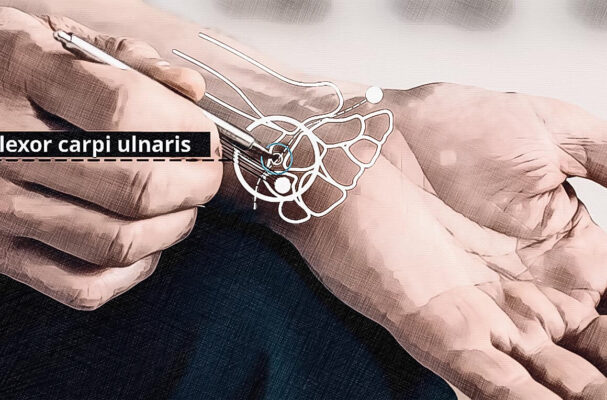
- Source point of the Heart — calms the Shen directly
- The most important point for sleep problems
- Reduces heart palpitations and a racing heart
- Eases anxiousness and inner restlessness
- Helps with night sweats
Location: At the wrist crease, on the little finger side, in the hollow between the pisiform bone and the ulna.
Use:
Press gently 2 times a day for 30–45 seconds. Especially effective in the evening before bed. Breathe deeply and calmly as you do.
ACUPUNCTURE POINT: Ht 03
Heart 03
Little Sea — Shào Hǎi
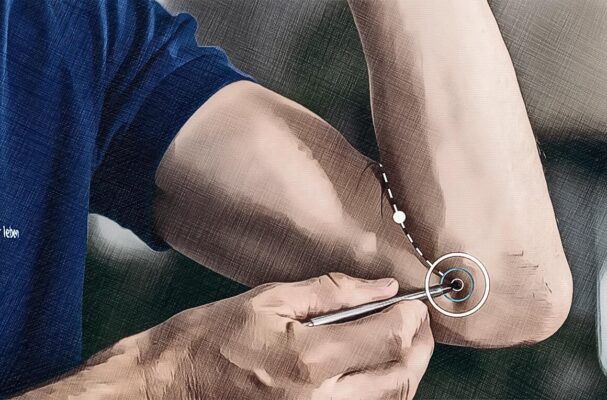
- Water point of the Heart — nourishes Heart Yin
- Cools Heat and calms the Shen
- Relaxes the arm and opens the Heart meridian
- Helps with restlessness and nervousness
- Eases pain in the arm and elbow
Location: At the inner end of the elbow crease, when the arm is bent, between the tendon and the bone.
Use:
Massage 2x daily for 30–45 seconds with medium pressure. Especially soothing during emotional tension.
ACUPUNCTURE POINT: Ki 06
Kidney 06
Shining Sea — Zhào Hǎi
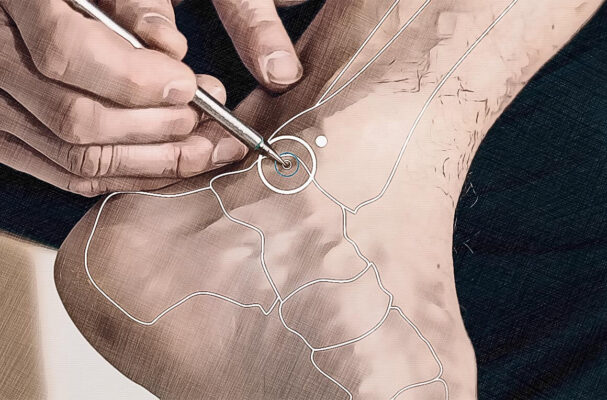
- Master point of the Yin Qiao Mai — moistens the body
- Deeply nourishes the Yin from the root
- Connects Kidney and Heart Yin
- Improves sleep
- Helps with dry eyes and throat
Location: Directly below the tip of the inner ankle bone, in a slight hollow.
Use:
Hold 2x daily for 30–45 seconds with medium pressure. Especially effective in the evening before bed to strengthen Yin.
Our app recommendation
Atemraum: your app for mindful breathing


Breathing is the foundation for physical and mental well-being — and in everyday life it is usually COMPLETELY underestimated. Yet hardly anything is as immediate: how we breathe shapes how we feel.
That's why we built Atemraum: an app with guided breathing exercises that you can take with you anywhere. Wolfgang put the exercises together — plus a 35-day course, quick help for the moment, and breath tests that let you see your progress.
A few minutes a day are enough. And if you use our personal guidance you already have Atemraum included.


You can try the app free for 7 days.
Qi Gong
Qi Gong is moving meditation — gentle, flowing exercises that harmonize your energy flow and calm your mind. With Heart Yin Deficiency, these exercises help nourish your Heart, anchor the Shen, and find inner calm.
Practicing Qi Gong regularly (even just 10–15 minutes a day) has been shown to have positive effects on heart rate variability, sleep and emotional balance.
QI GONG: Exercise 1
Open the Heart
Calms the Shen, opens the chest
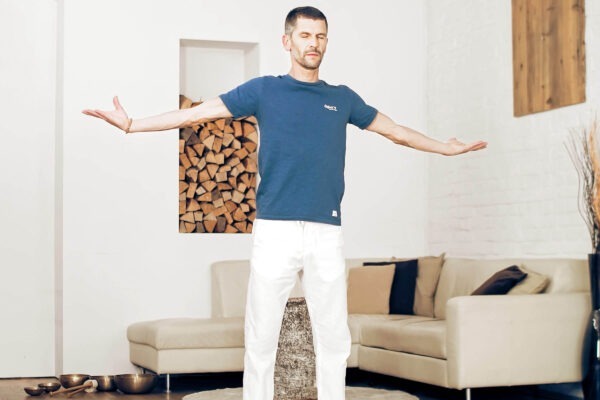
Especially helpful for:
- Heart palpitations and racing heart
- Tightness in the chest
- Inner restlessness and nervousness
- Sleep Disturbances
Effect:
This classic Fire element exercise opens the chest and calms the Shen directly. The expansion improves breathing function and activates the Heart meridian — with Heart Yin Deficiency, the most important exercise for calming the mind.
QI GONG: Exercise 2
Gathering Qi
Calms the mind, nourishes the Yin
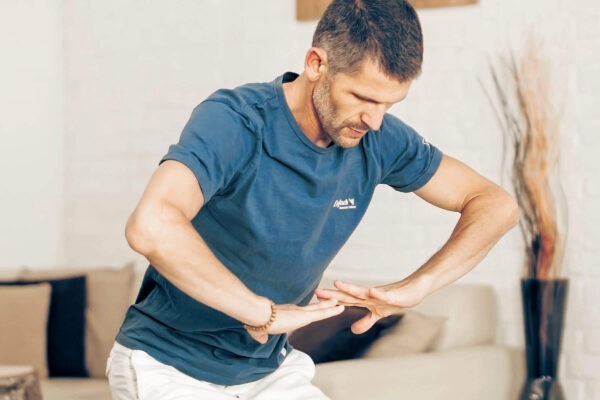
Especially helpful for:
- Inner restlessness and agitation
- Exhaustion and stress
- Night sweats
- Emotional instability
Effect:
This exercise gathers vital energy from all directions and stores it in the body. It is perfect for settling into calm and anchoring the Shen — especially important with Heart Yin Deficiency, since stress depletes the Yin further.
QI GONG: Exercise 3
Looking Backward
Releases tension, relaxes shoulders and neck

Especially helpful for:
- Neck and shoulder tension
- Tension headaches
- Pent-up emotions
- Blocked energy flow in the upper body
Effect:
This exercise releases tension in the shoulders and neck and opens the energy pathways to the head. It is often important with Heart Yin Deficiency, since emotional stress frequently shows up as tension in the shoulders and neck.
These Qi Gong exercises are chosen specifically to calm the Shen and nourish the Heart Yin. They open the Heart, anchor the mind, and help you find inner calm.
All of the exercises work especially well when you practice them between 11 a.m. and 1 p.m. — that is the peak time of the Heart in the organ clock. The time between 7 and 9 p.m. (Pericardium time) is also ideal for calming exercises before bed.
QI GONG:
When and how often?
In the evening (ideal):
- All 3 exercises as a sequence: approx. 15–20 min.
- Or just 1–2 exercises: approx. 5–10 min.
- Best between 7 and 9 p.m. (Pericardium time) or before bed
Throughout the day:
- Individual exercises as needed (e.g., for heart palpitations or restlessness)
- "Opening the Heart" for quickly calming the mind
Consistency matters more than duration:
- It is better to exercise for 10 minutes every day than for 60 minutes once a week.
- After 2–3 weeks, you will notice your first changes
- After 3 months of regular practice: a noticeably calmer mind
Pro tip: Practice Qi Gong in a quiet, pleasant atmosphere. With Heart Yin Deficiency, you should avoid intense physical exertion — gentle, slow movements with mindful breathing are ideal. Close your eyes and visualize cooling, calming energy.
EVERY MONDAY LIVE: QI GONG WITH WOLFGANG
Every Monday at 6:00 p.m. we practice together live on YouTube. Among other things, Wolfgang guides you through a complete Qi Gong sequence — free of charge and suitable for all levels.
Why join live? ✓ Practicing together is motivating ✓ Wolfgang explains the exercises in detail ✓ You can ask questions in the live chat ✓ A fixed time gives your routine structure
More about Qi Gong LiveMeridian Yoga — The Yoga of TCM
Meridian Yoga combines yoga with Traditional Chinese Medicine. The result is a holistic movement concept for more health and energy.
The following exercises specifically activate the Heart meridian — the imperial meridian, which houses the Shen and governs consciousness. The Heart meridian runs from the armpit along the inner side of the arm to the little finger. Activating it calms the Shen and nourishes the Heart Yin.
MERIDIAN YOGA: Exercise 1
Opening the Heart for the Heart Meridian
Opens the Heart and calms the Shen

Especially helpful for:
- Heart palpitations and racing heart
- Inner Restlessness and Anxiety
- Sleep Disturbances
- Emotional Reserve
Effect:
This exercise stretches the Heart meridian along the inner arm and opens the chest. It calms the Shen directly and nourishes the Heart Yin — ideal for Heart Yin Deficiency with restlessness, anxiety, and sleep problems.
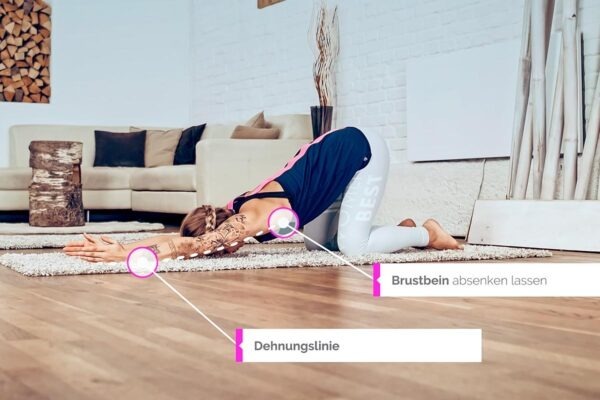
MERIDIAN YOGA: Exercise 2
Shell Stretch for the Heart Meridian
Gently stretches the entire Heart meridian
Especially helpful for:
- Tension in the shoulders and arms
- A feeling of heaviness in the chest
- Brooding and overthinking
- Exhaustion and fatigue
Effect:
The Shell Stretch gently stretches the entire Heart pathway from the armpit to the little finger. This position promotes the flow of energy in the Heart meridian and calms the mind — especially soothing with Heart Yin Deficiency with sleep problems and inner restlessness.
Both exercises activate the Heart meridian, which runs along the inner arm from the Heart to the little finger. As the imperial meridian, it has a special connection to consciousness and to the Shen — the spirit that dwells in the Heart.
Especially effective: Hold each position for 3–5 breaths and visualize calming, cooling energy that anchors your mind and nourishes your Heart Yin.
MERIDIAN YOGA:
When and how often?
Best time:
- In the evening before bed (calms the Shen)
- Or at midday between 11 a.m. and 1 p.m. (Heart time)
- Also good: between 7 and 9 p.m. (Pericardium time)
Duration:
- Hold each position for 3–5 breaths
- Complete sequence: 10–15 minutes
- 3–5x per week for best results
Important:
- Practice in a quiet, calming atmosphere
- Breathe deeply and slowly during the positions
- Stretching should feel comfortable, never painful
Pro tip: Combine Meridian Yoga with calming Qi Gong exercises such as "Opening the Heart" or "Gathering Qi." The gentle, mindful movement supports the nourishing of Heart Yin and calms the restless Shen.
Nutrition according to TCM
"Let food be your medicine" — this principle has held true in TCM for thousands of years. With Heart Yin Deficiency, the right diet is especially important for calming the mind and nourishing your Heart Yin.
Heart Yin belongs to the Fire Element and needs cooling to neutral, calming foods, to anchor the Shen and build up Yin. Red foods and foods that calm the Heart have a special connection to the Heart.
What you eat, HOW you eat, and WHEN you eat — all of this influences your Heart Yin and the calm of your mind.
The golden rules for strong Heart Yin
What does you good:
Grains that calm the Heart
- Wheat (the most important Heart food!)
- Oats (calm and nourish)
- Barley (cools and moistens)
- Rice (neutral and nourishing)
Wheat calms the Heart directly — ideal as porridge or noodles
Fruits that nourish the Heart
- Longan fruits (nourish Heart Blood and Yin)
- Mulberries (moisten and nourish)
- Lotus seeds (calm the Shen directly)
- Red dates (nourish the Heart and Blood)
Longan and lotus seeds are the kings of Heart nourishment
Cooling meats
- Duck (cooling, nourishes Yin)
- Pork (moistening)
- Rabbit (light, cooling)
- Fish (cod, sole)
Duck is the ideal meat for Heart Yin Deficiency
Calming herbs and teas
- Chrysanthemum tea (cools empty Heat)
- Peppermint tea (slightly cooling)
- Chamomile tea (calming)
- Valerian tea (sleep-promoting)
Chrysanthemums are perfect for rising heat
What you should avoid:
Stimulating substances
- Coffee (agitating!)
- Black tea in large amounts
- Energy drinks
- Cola and caffeinated drinks
Caffeine increases restlessness and heart palpitations!
Warming stimulants
- Alcohol (especially hard liquor)
- Red wine in large amounts
- Spicy seasonings
- Cigarettes
They consume Yin and generate Heat!
Spicy seasonings
- Chili (very heating!)
- Cayenne, Tabasco
- Hot pepper
- Too much ginger
Spiciness dries out Yin!
Overly warming meats
- Lamb (too warming)
- Game (too heating)
- Heavily grilled foods
- Fried foods
They create empty Heat and disturb the Shen!
HOW YOU SHOULD EAT:
Regular meals
- 3 regular meals a day
- Dinner before 7 p.m.
- Light evening meals (heavy food disturbs sleep)
- Don't go to bed hungry
Eat in peace
- Chew slowly — it calms the mind!
- Eat in a pleasant atmosphere
- No upsetting conversations during meals
- Avoid screens while eating
Heart Yin loves calm and serenity!
Drinking the right way
- Drink enough fluids (not ice-cold!)
- Chrysanthemum tea (gently cooling)
- Warm water with longan or lotus seeds
- Herbal teas instead of coffee
Moistening nourishes Yin
IDEAL MENU FOR ONE DAY:
Breakfast (7–9 a.m.):
- Wheat porridge with longan fruits and walnuts
- Along with it: Warm water with lotus seeds
Lunch (12–1 p.m.):
- Steamed duck with wheat noodles
- Along with it: Spinach and red dates
- Or: Tofu and vegetable soup with lotus seeds
Dinner (6–7 p.m.):
- Light vegetable soup with wheat
- Or: Steamed fish with barley
- Along with it: Chrysanthemum tea
Snack if needed:
- A handful of longan fruits and mulberries
- Or: Lotus seed soup (sweet or savory)
The most important rule when changing your diet is:
Start with ONE step!
Don't change everything at once.
Our suggestion for getting started:
- Replace coffee with herbal tea — 2 weeks
- Eat wheat or lotus seeds daily — 2 weeks
- Light, calming dinners — 2 weeks
Step by step, you will notice how your Heart Yin is nourished again and your mind comes to rest.
Your Heart Yin will thank you!
RECIPE: HEART-CALMING LOTUS SEED SOUP
Ingredients:
Serves 2
- 50 g dried lotus seeds
- 30 g longan fruits (dried)
- 3 red dates
- 800 ml water
- 2 tbsp honey or brown sugar
- Optional: 10 goji berries
Preparation:
- Soak the lotus seeds in water overnight (or for 2 hours in warm water)
- Remove the green germ from the center of the lotus seeds (it is bitter)
- Bring the lotus seeds, longan and dates to a boil with 800 ml of water
- Reduce the heat and simmer for 30–40 minutes, until the lotus seeds are soft
- Sweeten with honey
- Optional: add the goji berries during the last 5 minutes
Effect:
Calms the Shen and nourishes the Heart Yin
Improves sleep and reduces restlessness at night
Strengthens the Heart Blood and cools empty Heat
1–2 times a day — ideally in the late afternoon or before bedtime!
RECIPE: WHEAT AND DATE DECOCTION (GAN MAI DA ZAO TANG)
Ingredients:
For 2 cups
- 30 g wheat berries (whole, not cracked)
- 10 red dates (pitted)
- 10 g licorice root (optional)
- 1 liter of water
Preparation:
- Wash the wheat berries and let them drain
- Bring all ingredients to a boil with 1 liter of water
- Simmer over low heat for 30–40 min.
- Strain through a sieve
- Drink warm; the dates can be eaten too
Effect:
The classic formula for calming the Heart from the Jin Gui Yao Lü
Nourishes the Heart, calms the Shen, relaxes the emotions
Especially effective for irritability, crying, and emotional instability
1–2 cups daily — ideal for emotional restlessness and sleep problems!
Breathing
Breathing is the bridge between body and mind. In TCM it is said: "The Lung governs the Qi" — according to this idea, conscious breathing lets you address your Qi flow directly and settle into deeper calm.
Breathe calmly and slowly: Deep belly breathing noticeably calms many people — the breath becomes deeper, the shoulders drop, and the mind becomes clearer. The good news: Even 5–10 minutes a day can make a difference for your well-being.
Recommended breathing techniques
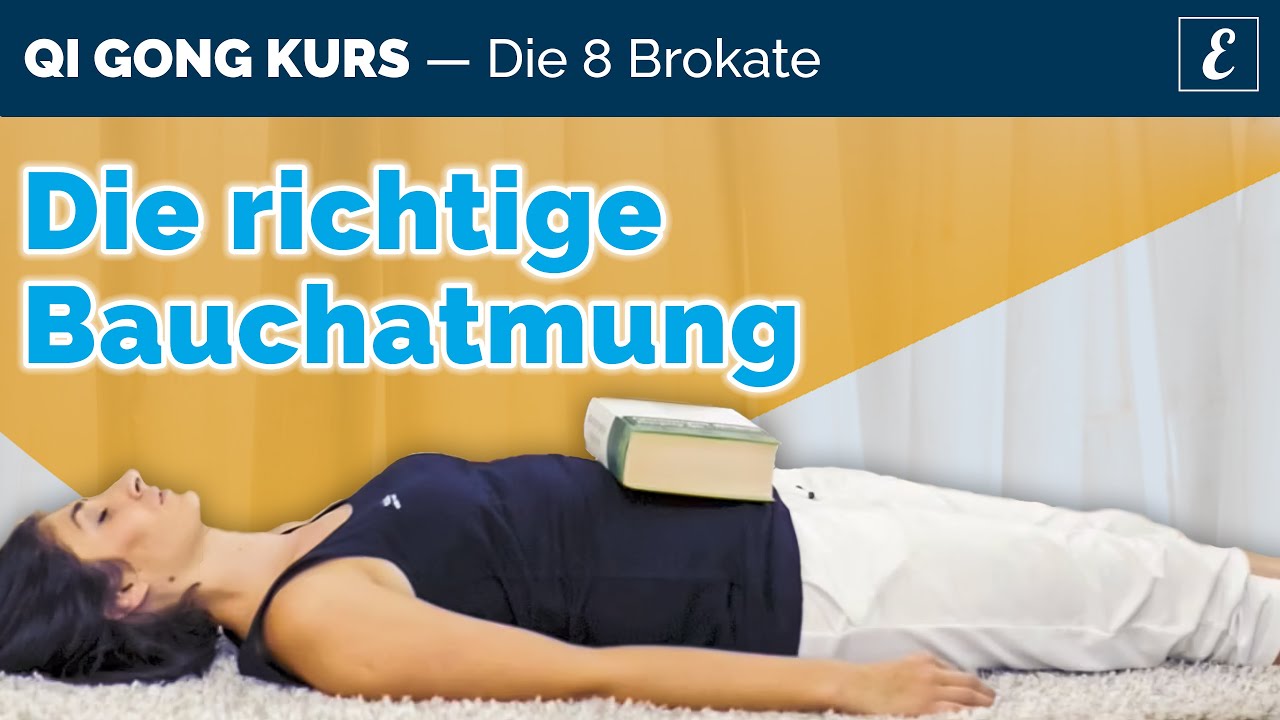
ABDOMINAL BREATHING — The foundation for every breathing technique
Natural breathing
Abdominal breathing is the most natural and calming form of breathing. According to TCM teachings, with every breath you bring Qi into your center (Dantian).
Wolfgang shows you step by step, how to learn abdominal breathing correctly — lying down at first, and later sitting and standing too.
Duration: 9 minutes
4–7–8 BREATHING — Settle into calm
The calming breath for the evening
In 4–7–8 breathing, you inhale for 4 seconds, hold for 7 seconds, and exhale for 8 seconds. Many people find that this steady rhythm helps them wind down in the evening — ideal when your mind just won't switch off at night.
Ideal for the evening or whenever you want to settle down quickly.
Duration: 9 minutes
To the follow-along videoBOX BREATHING — For inner coherence
The pro breathing technique for focus and calm
Box Breathing (4 sec. in, 4 sec. hold, 4 sec. out, 4 sec. hold) combines activation and relaxation in perfect balance. This method is used by elite soldiers, athletes, and executives to stay calm and focused even in extremely stressful situations.
A steady 4–4–4–4 rhythm of activation and calm — many people experience it as clearing and centering.
Duration: 9 minutes
To the follow-along videoCOHERENT BREATHING — Brings body & mind into harmony
The calming breath for balance
In coherent breathing you breathe in for 5.5 seconds and out for 5.5 seconds. This rhythm brings your Heart and breathing into an even beat — a state known as "coherence." Many people use it as a regular breathing break in their day.
A nice side effect: Heart and breath settle into a calm, shared rhythm.
Duration: 14 minutes
To the follow-along video
COHERENT BREATHING Around the clock
Our 24/7 livestream for coherent breathing runs non-stop. You can tune in at any time and join right away.
Perfect for:
✓ Spontaneous breathing breaks during the day
✓ If you would like calm breathing guidance
✓ As background while you work
✓ For the evening and for winding down
✓ For regular daily practice
Relaxation
When your body is relaxed, things flow more easily. Ongoing tension keeps you in constant stress mode. With targeted relaxation techniques, you signal to your body that it can settle down and gather new strength.
Progressive Muscle Relaxation is one of the best-known relaxation methods and has been practiced for over 100 years. It helps you notice tension, actively let go, and reach a state of deep relaxation — whenever you like.
Recommended relaxation technique
PROGRESSIVE MUSCLE RELAXATION (PMR)
The classic relaxation method
Progressive Muscle Relaxation according to Jacobson is one of the best-known relaxation techniques worldwide. By deliberately tensing and releasing individual muscle groups, you learn to consciously notice tension and let it go again.
This is how it feels:
Step by step, the body becomes heavier and calmer, and the breath more even. Many people use it as a regular part of their evening routine to help them fall asleep well.
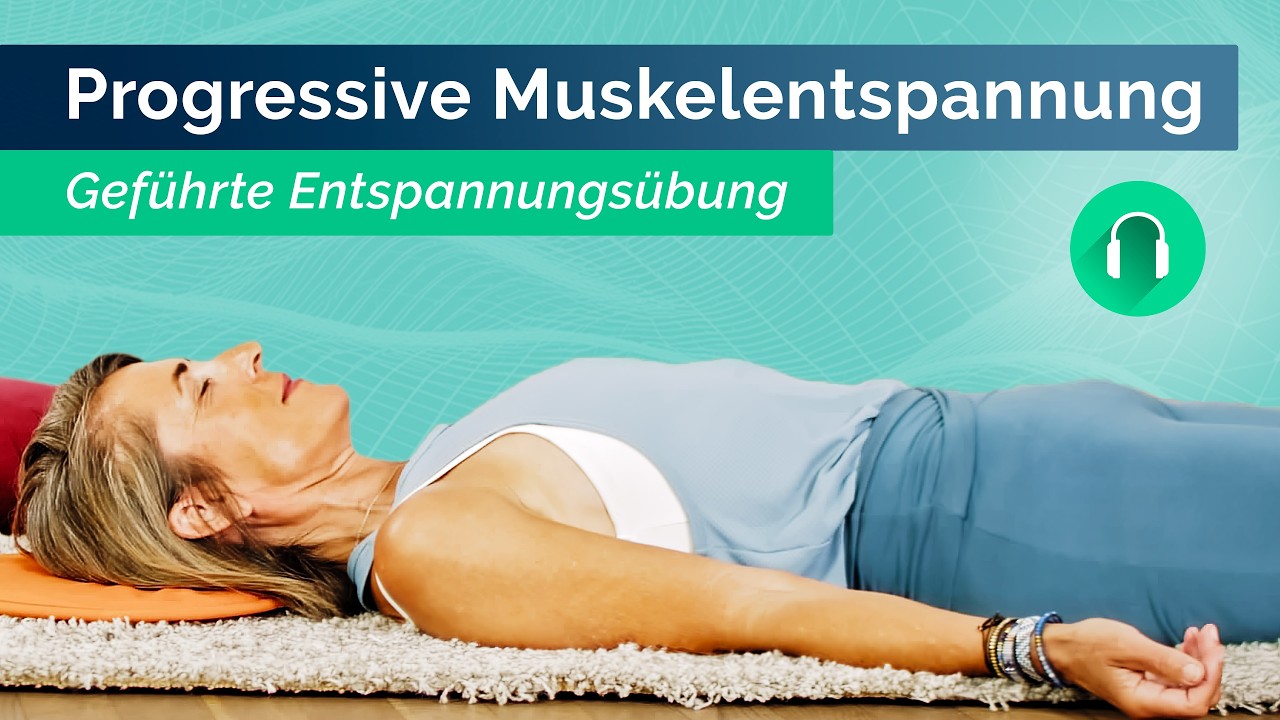
Maria guides you step by step through the complete exercise — perfect for beginners and advanced practitioners.
Duration: 23 minutes of complete instruction
To the guided PMRMeditation
Meditation calms the mind — and a calm mind is good for the whole person. In TCM, it is said that every emotion touches a particular organ. Through regular meditation, you learn to step out of circling thoughts, find emotional balance, and strengthen your inner center.
Just 10 minutes a day can do a lot for your inner calm. Many people find that it makes their everyday life feel more relaxed and clearer.
Recommended meditations
GUIDED MEDITATIONS FOR EVERY DAY
Your personal meditation library
We have put together a complete playlist with over 60 guided meditations, breathing exercises, and relaxation techniques for you — from short 5-minute meditations for in between to deep 30-minute sessions for intensive practice.
In the playlist you will find:
- Morning meditations for a mindful start to the day
- Sleep meditations for restful sleep
- Breathing meditations for inner calm
- Meditations for calm moments during stress and rumination
- TCM standing meditations for all 5 Elements
- Body scan and body journeys
- Calming meditations for body and mind
- Special breathing techniques (4-7-8, coherent breathing, bee breath)
Perfect for beginners and advanced practitioners. Choose the meditation that fits your time, time of day, and needs.
To the meditation playlistThe Heart is the emperor of all the organs and houses the spirit (Shen).
Heart Yin is like cooling dew that nourishes the spirit and gives it peace. Without this dew, the spirit becomes restless like a flame in the wind.
— From the HUANG DI NEI JING
(The Yellow Emperor's Classic of Internal Medicine)
More tips for your daily life
Alongside the classic TCM treatment methods there are many small everyday habits that can strengthen your Heart Yin and calm your spirit. In TCM, the Heart is the emperor of all the organs — with the right habits, you can give it the calm and care it needs.
Sleep and rest
🌙 Go to bed early
Sleep before midnight is worth its weight in gold for Heart Yin:
- Go to bed before 11 p.m. — Gallbladder time begins
- During the Yin hours (11 p.m.–3 a.m.), Heart Yin regenerates best
- At night, the Shen (spirit) withdraws into the Heart and rests there
- Going to bed late keeps the Shen awake and exhausts the Heart
- Stick to regular bedtimes — even on weekends
😴 Improve your sleep hygiene
Good sleep is the best medicine for Heart Yin:
- Keep your bedroom cool, dark, and quiet (16–18 °C / 61–64 °F is ideal)
- No screens for 1 hour before bed — blue light disturbs the Shen
- No stirring conversations, news, or movies before bed
- Introduce a calming evening ritual (tea, acupressure, gentle stretching)
- Use your bed only for sleeping — no working or brooding in bed
⏸️ Avoid brooding
Overthinking drains the Heart directly:
- Stop the merry-go-round of thoughts — consciously think of something pleasant
- Write down your worries and "park" them for tomorrow
- Practice breathing exercises to calm the mind
- Meditation may help anchor the Shen
- If brooding persists: get up and distract yourself for a little while
Emotional balance
💚 Reduce stress
Chronic stress burns up Heart Yin:
- Constant stress creates inner Heat and disturbs the Shen
- Build daily relaxation exercises into your routine (meditation, Qi Gong)
- Set boundaries — learn to say no
- Not everything has to be perfect — let go of perfectionism
- Plan breaks — a short time-out every 90 minutes
😊 Cultivate joy
Joy is the emotion of the Heart — in moderation:
- The Heart delights in pleasant company and good conversation
- Spend time with people who are good for you
- Cultivate hobbies that bring joy without stirring you up
- But: Excessive excitement — even the positive kind — can scatter the Shen
- Find a balance between joy and calm
🧘 Practice meditation
Meditation is the most direct method for calming the Shen:
- Even 10 minutes a day show demonstrably positive effects
- Heart rate variability measurably improves
- The prefrontal cortex is strengthened — better emotional control
- Guided meditations are a good way to start
- Regularity matters more than duration
Keep Cool — Avoid Heat
🔥 Avoid internal Heat
With Heart Yin Deficiency, the body is prone to Heat:
- Cut back strongly on caffeine — it heats and stirs you up
- Avoid alcohol — especially in the evening before sleep
- Limit spicy seasonings — they burn the Yin
- Smoking is especially harmful to the Heart Yin
- Avoid stimulating media — action movies, suspenseful series
🧊 Prefer a cool environment
A pleasantly cool environment supports the Yin:
- Keep your bedroom cool — 16–18 degrees is ideal
- Air out your rooms regularly — fresh air calms the Shen
- For hot flashes: cooling compresses on your forehead and wrists
- Take walks in the cool morning or evening air
- Avoid the hot midday sun
💧 Moisturizing from within
Drinking enough fluids supports the Heart Yin:
- Drink 1.5–2 liters daily — but not ice-cold
- Prefer warm water or warm herbal teas
- Chrysanthemum tea gently cools empty Heat
- Peppermint tea refreshes without heating
- Watch out for dry indoor air — use a humidifier
Gentle movement
🚶 Favor moderate activity
With Heart Yin Deficiency, less is more:
- Intense exercise and heavy sweating exhaust the Yin
- Choose gentle, regular movement instead (Qi Gong, yoga, swimming)
- Walking in nature calms the Shen
- Tai Chi is ideal — slow, flowing, meditative
- Recover sufficiently after activity
🏊 Water activities
The Water element cools and nourishes the Yin:
- Swimming is ideal — cooling and gentle on the Heart
- Walks by the water calm the mind
- A warm (not hot!) bath may help you relax
- The sound of water has a calming effect on the Shen
💡 Good to know
Strengthening Heart Yin takes time and patience. The Shen — your spirit — needs a calm, nourishing foundation in order to settle. With consistent care, you will notice your sleep becoming deeper, your heart beating more calmly, and your spirit finding peace again. Be patient with yourself — the healing of the Heart happens step by step.
For the best possible course of treatment
TCM is not a quick fix for symptoms, but a holistic path to healing. You will get the best results when you consistently build the treatment into your daily life and give your body time to regenerate.
Integrating it into your daily life
Start with ONE step
Don't try to change everything at once! That is overwhelming and
usually leads to giving up. Instead:
- Weeks 1–2: Cut back on caffeine and stimulants, go to bed early (before 11 p.m.)
- Weeks 3–4: Add Yin-nourishing foods (wheat, mulberries, lotus)
- Weeks 5–6: Qi Gong "Opening the Heart" daily for 10 min.
- Weeks 7–8: Acupressure Ht 07 daily before going to bed
- From week 9: Add meditation and other methods as needed
Realistic expectations
After 2–3 weeks: First improvements noticeable
- Calmer sleep
- Fewer heart palpitations
- Less night sweating
After 6–8 weeks: Clear improvements
- Less anxiety
- Better concentration
- More inner calm
After 3–6 months: Lasting healing
- Heart Yin is noticeably strengthened
- Your mind settles into calm more easily
- Balance and emotional stability have returned
TCM vs. Western Medicine
TCM and Western medicine do not exclude each other — they complement each other!
When Western medicine is important:
- For acute heart problems — get an ECG and a cardiac exam!
- For severe anxiety or depression
- For structural heart disease
- For precise diagnoses (lab work, imaging)
Where TCM has its strengths:
- For functional disorders (racing heart without an organic cause)
- For sleep problems and restlessness
- For prevention and strengthening
- For holistic healing
Ideal: Combine both systems! Use Western medicine for
acute treatment and precise diagnostics, and TCM for lasting healing
and for strengthening the body's self-healing powers.
Important: Never stop taking prescribed medications on your own!
Talk to your doctor when you begin TCM treatment.
Do you have questions?

Wolfgang from meine-tcm.com
TCM is a broad field. Much of it sounds unfamiliar at first, and the real question often comes up only once you start trying some of it out in everyday life.
That's exactly what I'm here for. Write to me — no matter whether your question is big or small, whether it relates to this page or to something else entirely from TCM. I read every message myself and will get back to you. Calmly, clearly, and without a sales pitch.
P.S. There are no silly questions. So write to me.
Ask your questionEvery step counts
Your body strives for balance — you just need to create the right conditions for it.
Remember:
👣 Every small step counts
You don't have to be perfect. Even one warm meal a day is better than none. Even 5 minutes of Qi Gong is better than no movement at all.
⏳ Patience pays off
Your body took years to get into this state. Give it time to find its balance again. Change takes time, but it comes.
🎯 Focus on what you CAN do
Don't concentrate on everything you're doing "wrong." Focus on every positive step you take.
💚 Be good to yourself
There's no such thing as perfection. You're allowed to have a bad day now and then. Tomorrow is a new day, and you can pick up where you left off.
🤝 You are not alone
Thousands of people are walking this path with you. For over 2,000 years, TCM has been guiding people like you on their journey toward greater well-being.
Track your progress

To track your progress, we recommend repeating the TCM analysis after about 3 months.
Why is this useful?
- You see how your pattern has changed
- You can adjust your support as needed
- It motivates you to keep going
- You recognize which measures suit you best
⚠️ Important: Your answers from today are stored in encrypted form in a code that you received by e-mail. ONLY with this code can you follow your progress later on. Keep the e-mail in a safe place!
🔒 YOUR DATA IS SAFE
We store:
✓ Only your email for the reminder
✓ The date for sending
We do NOT store:
✗ Your analysis results
✗ Your personal data
✗ The link between e-mail and pattern
All analysis data is completely anonymous and is not linked to your e-mail address.
Newsletter
Stay up to date with our newsletter. Along with helpful tips and tricks for your training and your everyday life, you won't miss any of our new releases.