






On this page you will learn:
- What this pattern means from the perspective of TCM and Western medicine
- Where your complaints come from and how they are connected
- Which specific treatment methods may help you now
- How you can rebuild your Blood and supply your body with nourishing substance using TCM herbs, acupressure, Qi Gong, and nutrition
The good news: Blood Deficiency responds very well to the right measures. With a blood-nourishing diet, gentle movement and targeted TCM methods, you can rebuild your Blood and regain fresh vitality.
Take your time, getting to know the different treatment approaches — you don't have to put everything into practice at once. Choose what feels right to you and what you can easily fit into your daily life.
Your treatment at a glance:
Which TCM pattern is really behind your complaints?
Degree of the
imbalance

Mild to moderate
Typical
Treatment duration

2–4 months
Self-treatment
Possible

Easy to treat yourself
Treatment
scope

2–3 methods
Suggested
methods

Extensive selection
Our free TCM Analysis shows you your personal TCM pattern in just 10 minutes.
What is Blood Deficiency?
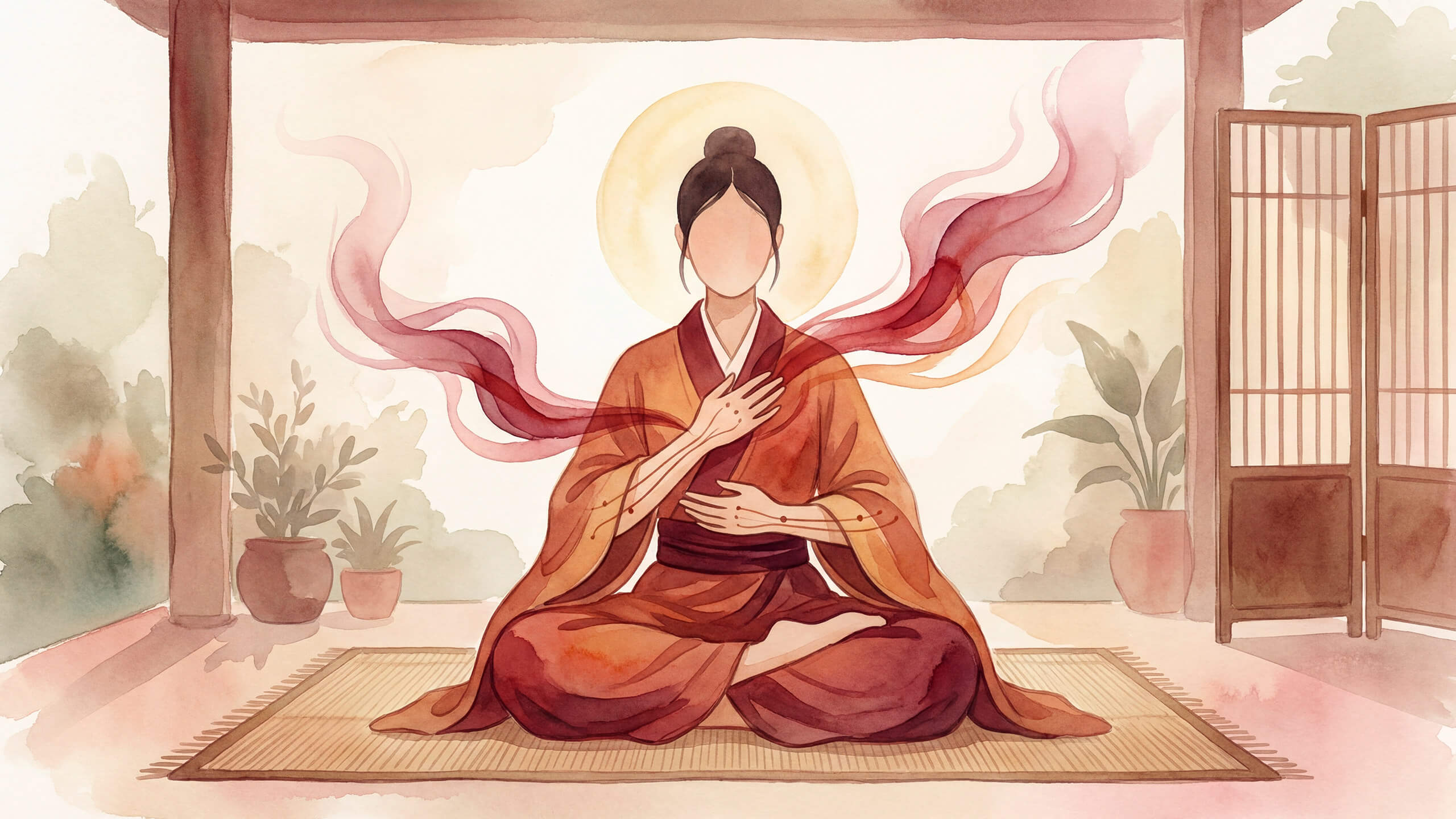
When nourishing Blood is depleted
The TCM perspective: Blood as the elixir of life
In Traditional Chinese Medicine, Blood (Xue) is far more than just the red fluid in our veins. It is a precious substance that nourishes the whole body, moistens it, and fills it with life. Blood is inseparably linked with Qi — while Qi moves and warms, Blood nourishes and moistens.
Blood is formed from the food essence that the Spleen processes. That is why TCM says: "The Spleen is the source of Blood." The Heart governs the Blood and moves it through the vessels, while the Liver stores the Blood and regulates its even flow. These three organs — Spleen, Heart and Liver — are especially affected in Blood Deficiency.
In TCM, Blood has three important functions: it nourishes all the organs and tissues, it moistens the skin, hair, tendons, and eyes, and it houses the Shen (spirit). Without enough Blood, the spirit cannot find rest — which is why insomnia and inner restlessness occur with Blood Deficiency.
The consequence of Blood Deficiency: The body is no longer nourished enough. Organs and tissues "hunger" for substance. The skin becomes dry and pale, the hair loses its shine, and the eyes tire quickly. The spirit finds no anchor and wanders about restlessly.
The typical signs of Blood Deficiency:
- Pale face, pale lips and nail beds
- Tiredness and exhaustion, especially in the afternoon
- Dizziness, especially when standing up
- Sleeplessness with lots of dreams, or trouble falling asleep
- Dry skin and brittle, fragile hair
- Blurred vision and tired eyes
- Numbness and tingling in the limbs
- Irregular, light, or absent menstruation
The good news: Blood can be built up very well with the right measures. With a blood-nourishing diet, TCM herbs, enough rest and gentle movement, you can replenish your Blood and gain new vitality.
The Western perspective: anemia and nutrient deficiency
From a Western point of view, Blood Deficiency corresponds to a condition associated with anemia (low blood count) and various nutrient deficiencies. The body does not have enough red blood cells or hemoglobin to supply all tissues adequately with oxygen and nutrients.
Picture your blood as a transport system: The red blood cells are the trucks that carry oxygen and nutrients to every cell. With Blood Deficiency, too few trucks are on the road — the cells don't get enough supply and begin to "starve." This explains the fatigue, paleness and reduced performance.
Iron deficiency is a particularly common cause: Iron is the central building block of hemoglobin, which transports oxygen. But vitamin B12, folic acid and copper also play important roles in blood formation. A deficiency in these nutrients leads to the classic symptoms of anemia.
What does modern medicine show?
- Iron deficiency: the most common cause of anemia, especially in women
- Vitamin B12 deficiency: leads to a special form of anemia with neurological symptoms
- Folic acid deficiency: Important for cell division and blood formation
- Chronic exhaustion: Fatigue and reduced performance due to a lack of oxygen
- Difficulty concentrating: The brain needs especially large amounts of oxygen
- Hair loss and brittle nails: signs of insufficient nutrient supply
Modern research confirms: The TCM pattern "Blood Deficiency" correlates strongly with measurable blood values such as hemoglobin, ferritin (iron stores), vitamin B12 and folic acid. TCM treatment with blood-nourishing herbs such as Dang Gui (angelica root) shows positive effects on blood formation in studies.
The TCM approach to Blood Deficiency starts right here: It strengthens the Spleen as the source of Blood formation, nourishes the Blood directly through special herbs and foods, and supports the absorption of important nutrients — thoroughly, lastingly, and gently.

The Yellow Emperor's team explains your pattern
Qi Bo | The Yellow Emperor | Dr. Lisa Weber
MASTER OF THE HEALING ARTS | FOUNDER OF TCM | MODERN PHYSICIAN
What happens when the legendary Yellow Emperor of Traditional Chinese Medicine sits down with his advisor Qi Bo and a modern doctor? They discuss your pattern—using 4,000-year-old knowledge AND the latest science.
Blood Deficiency — When the nourishing Blood is depleted and the body longs for substance
The Yellow Emperor: "Qi Bo, in my realm I see people who look pale and tired. Their faces have no color, they complain of dizziness, and they cannot sleep at night. Some report numb fingers, and their hair is falling out. What is the cause of this suffering?"
Qi Bo: "Your Majesty, these people suffer from a Deficiency of Blood — called Xue Xu. In TCM, Blood is one of the most precious substances of the body. It nourishes all the organs and tissues, moistens the skin, sinews and eyes, and houses the Shen — the spirit. When the Blood is depleted, it can no longer fulfill its nourishing functions. The body 'starves' for substance. The pallor shows that the vessels are not filled. The fatigue shows that the organs are not being nourished. And the sleeplessness shows that the spirit finds no anchor in the Blood."
Dr. Weber: "That is a remarkable description of anemia! In Western medicine, we speak of anemia — a condition in which the body does not have enough red blood cells or hemoglobin to supply all tissues with sufficient oxygen. The paleness arises because less red blood flows through the capillaries. The fatigue results from the lack of oxygen in the cells. And the neurological symptoms such as numbness and trouble concentrating arise because the brain and nerves are especially sensitive to a lack of oxygen."
The Yellow Emperor: "You speak of Blood as a nourishing substance. How is Blood actually formed?"
Qi Bo: "Your Majesty, Blood arises from two sources. The first and most important is the Spleen: It takes in food, transforms it into food essence, and sends this to the Heart, where it is turned into Blood. That is why we say: 'The Spleen is the source of Blood.' The second source is the Kidney Essence (Jing), which produces the marrow, and the marrow in turn contributes to the formation of Blood. The Heart governs the Blood and drives it through the vessels. The Liver stores the Blood and regulates its distribution. And the Lung helps to distribute the Blood. When one of these organs is weakened, Blood formation suffers."
Dr. Weber: "Fascinating! This correlates remarkably well with our modern physiology! The spleen is in fact part of the reticuloendothelial system and plays a role in the formation of blood cells and the breakdown of old blood cells. The bone marrow — the 'marrow' of TCM — is the main site of blood cell production in modern medicine. The liver really does store blood and regulate blood flow, and it also stores important nutrients such as iron, vitamin B12 and folic acid, which are essential for blood formation. And of course the heart pumps the blood through the body!"
The Yellow Emperor: "What leads to Blood Deficiency?"
Qi Bo: "The causes are many, Your Majesty. First: loss of Blood — heavy menstruation, childbirth, injuries, or chronic bleeding deplete the Blood directly. Second: poor nutrition — if the body does not receive enough nourishing substance, the Spleen cannot form Blood. Third: Spleen Qi Deficiency — a weak Spleen cannot transform food properly and cannot produce Blood. Fourth: chronic illness — long-lasting conditions consume the Blood. Fifth: emotional stress — excessive brooding and worry weaken the Spleen. And sixth: overwork — it exhausts the Qi, and without Qi, no Blood can be formed."
Dr. Weber: "This agrees completely with the causes of anemia in Western medicine! Blood loss is a main cause, especially in women with heavy menstruation or after surgery. Malnutrition, especially iron, vitamin B12, and folic acid deficiency, leads directly to anemia. Chronic conditions such as kidney disease or autoimmune disorders can disrupt blood formation. And chronic stress raises cortisol levels, which can negatively affect nutrient absorption and blood formation. TCM recognized these connections thousands of years ago!"
The Yellow Emperor: "You mentioned that Blood houses the spirit. What exactly does that mean?"
Qi Bo: "Your Majesty, in TCM the Shen — the spirit — is not a free-floating essence, but needs a material foundation. This foundation is the Blood of the Heart. When Blood is plentiful, the Shen has a 'home' and can rest peacefully. Hence: deep sleep, a clear mind, emotional balance. But when Blood is lacking, the Shen wanders restlessly like a traveler without a home. The result: trouble falling asleep, confused dreams, forgetfulness, anxiousness, and inner restlessness. Blood is the anchor of the spirit."
Dr. Weber: "That is highly interesting from a neurophysiological point of view! We know today that anemia leads to cognitive impairment — trouble concentrating, poor memory, even depressive moods. The brain is extremely dependent on oxygen and reacts sensitively to any deficiency. Sleep disturbances in anemia are well documented, possibly due to disruptions in neurotransmitter balance. Iron is also important for dopamine synthesis, which influences mood and motivation. So the idea that Blood 'anchors' the spirit has a neurochemical basis!"
The Yellow Emperor: "What signs in the body reveal a Blood Deficiency?"
Qi Bo: "The signs are very characteristic, Your Majesty. The tongue is pale — it shows the lack of nourishing substance. It is thin — there is no substance to fill it. It is often dry — the Blood no longer moistens enough. The pulse is thin like a fine thread — called Xi Mai — because the vessels are not filled. It is weak — Ruo Mai — because the nourishing force is missing. Sometimes it is also rough — Se Mai — when the Blood stagnates because too little is flowing. The face, the lips, and the nail beds are pale as well — they do not receive enough Blood."
Dr. Weber: "The pale tongue and pale mucous membranes are classic clinical signs of anemia! We routinely examine the conjunctiva of the eye and the lining of the mouth for paleness — exactly what TCM has observed for thousands of years. Paleness of the nail beds is another standard test. And what you describe as a 'thin pulse' corresponds to the weak pulse we find with low blood pressure and anemia. The diagnostic signs are astonishingly consistent between the two medical systems!"
The Yellow Emperor: "Now let us talk about treatment. How can the Blood be rebuilt?"
Qi Bo: "Your Majesty, the treatment principle is: Bu Xue — nourishing and replenishing the Blood. This happens in several ways. First: strengthen the Spleen — for it is the source of Blood. Only a strong Spleen can produce Blood from food. Second: blood-nourishing foods — red foods such as beets, dates and goji berries nourish the Blood directly. Meat as well, especially liver and beef, are powerful blood tonics. Third: blood-nourishing herbs — above all Dang Gui, angelica root, the 'queen of the blood herbs.' Along with it Shu Di Huang (Rehmannia) and Bai Shao (white peony root). Fourth: enough rest — the Blood regenerates during sleep."
Dr. Weber: "From a scientific point of view, the dietary recommendations are excellent! Beets contain iron and folic acid and have been shown to improve hemoglobin values. Liver is the most concentrated natural source of iron, vitamin B12 and copper. Beef provides well-absorbable heme iron. Goji berries contain iron and antioxidants. Dang Gui, angelica root, actually shows hematopoietic properties in studies — it stimulates the formation of blood cells! And sleep is important because the release of erythropoietin and the maturation of blood cells are especially active during rest."
The Yellow Emperor: "What about the classic herbal formulas for Blood Deficiency?"
Qi Bo: "Ah, Your Majesty touches on the very foundations of Blood therapy! Si Wu Tang — the Four-Substance Decoction — is the basic formula for Blood Deficiency. It contains: Shu Di Huang to deeply nourish the Blood, Dang Gui to nourish and move the Blood, Bai Shao to nourish and hold the Liver Blood, and Chuan Xiong to move the Blood and prevent Stagnation. When there is Qi Deficiency at the same time, we expand it to Ba Zhen Tang — the Eight-Treasure Decoction — which combines Si Wu Tang with Si Jun Zi Tang to strengthen Qi and Blood together. For: 'Qi is the commander of the Blood' — without Qi, the Blood cannot flow."
Dr. Weber: "Si Wu Tang is one of the best-researched TCM formulas! Studies show that it stimulates erythropoiesis (the formation of red blood cells) and improves hemoglobin values. Dang Gui contains ferulic acid and polysaccharides, which have been shown to promote blood formation. The combination of the four herbs works synergistically — more effective together than each one alone. It is especially remarkable that the formula also improves microcirculation and has an antioxidant effect. A 2,000-year-old formula with solid scientific evidence!"
The Yellow Emperor: "Wonderful! Let's put this wisdom into a practical plan."
THE 3 SAGES METHOD FOR BLOOD DEFICIENCY
MORNING PROTOCOL (Building Blood):
- TCM: A nourishing breakfast — in the morning, the Spleen needs warm, easily digestible food for Blood formation
- Science: A warm, iron-rich breakfast optimizes nutrient absorption and kick-starts your metabolism
- Practical: Warm oatmeal with goji berries and dates, or congee with red beans
- TCM: Don't start your day on an empty stomach — the Spleen doesn't like cold and emptiness in the morning
- Science: Eating breakfast stabilizes your blood sugar and helps prevent energy slumps
- Practical: Eat a warm breakfast within 1 hour of getting up
- TCM: Warm water with goji berries — gently nourishes Blood and Yin in the morning
- Science: Goji berries provide iron, vitamin C, and antioxidants for blood formation
- Practical: Let 10–15 goji berries steep in warm water, and eat the berries too
DAILY STRATEGY (protecting Blood):
- TCM: Eat well at midday — the Spleen is strongest between 9 and 11 a.m., a good time for nourishing food
- Science: Digestive enzymes are most active at midday, so nutrients are absorbed optimally
- Practical: A warm main meal at midday with protein and vegetables, no raw salad
- TCM: Acupressure on Sp 06 (San Yin Jiao) — the meeting point of the three Yin meridians, nourishes the Blood
- Science: Studies show that stimulating this point may support Blood formation
- Practical: Four finger-widths above the inner ankle bone, on the back edge of the shinbone. Massage in circles for 3 min. per side.
- TCM: Don't overwork — exhaustion uses up Qi, and without Qi, no Blood can be formed
- Science: Chronic stress raises cortisol, which hinders nutrient absorption and Blood formation
- Practical: Take a short break every 90 minutes, and don't work straight through your lunch break
EVENING RITUAL (to regenerate Blood):
- TCM: Gentle Qi Gong "Warming the Center" — strengthens the Center and supports blood formation
- Science: Gentle movement improves circulation and activates the parasympathetic nervous system
- Practical: 10–15 minutes of gentle Qi Gong exercises before dinner
- TCM: Acupressure on Sp 10 (Xue Hai) — the "Sea of Blood," nourishes and moves the Blood
- Science: This point is located above the vastus medialis muscle and influences circulation in the legs
- Practical: Two thumb-widths above the kneecap on the inner side. Press gently for 3 min. on each side
- TCM: Go to bed early — at night the Blood returns to the Liver and renews itself during sleep
- Science: During deep sleep, growth hormone is released, which promotes cell regeneration
- Practical: In bed before 11 p.m., aim for 7–8 hours of sleep
The Yellow Emperor: "Qi Bo, how long does it take until the Blood is rebuilt?"
Qi Bo: "Your Majesty, building Blood takes time, but not as long as Yin or Essence. After 2–3 weeks of consistent practice, most people notice: less fatigue, a healthier complexion, more energy for the day. After 6–8 weeks, the improvements become clearer: less dizziness, better sleep, stronger nails and shinier hair. After 2–4 months, the Blood may be noticeably rebuilt — the body feels nourished and the joy of life returns. Of course, the duration depends on how severe the Deficiency was and whether the causes are addressed."
Dr. Weber: "That fits well with our clinical experience! With iron deficiency anemia, we often see first improvements in symptoms after 2–3 weeks of iron supplementation. Hemoglobin levels typically normalize within 2–3 months. But replenishing the iron stores takes longer — about 3–6 months. That is why it is important not to stop treatment too early, even if you already feel better. The TCM recommendation to stick with it for 2–4 months is therefore very sensible!"
The Yellow Emperor: "What absolutely must be avoided with a Blood Deficiency?"
Qi Bo: "Your Majesty, the most important points are: First, no cold and raw foods in large amounts — they weaken the Spleen and hinder the formation of Blood. Second, no dairy products in excess — they create Dampness and burden the Spleen. Third, no sugar and sweets — they also weaken the Spleen. Fourth, not too much coffee — it moves too strongly and can exhaust the Blood. Fifth, no overworking — exhaustion uses up Qi and Blood. And sixth, no emotional overload — excessive brooding and worrying weaken the Spleen directly."
Dr. Weber: "Scientifically understandable! Raw food is harder to digest and requires more energy for extracting nutrients. Dairy products can inhibit iron absorption — calcium binds iron in the gut. Too much sugar can negatively affect the gut flora, which worsens nutrient absorption. Coffee contains tannins, which can reduce iron absorption by up to 60% — so don't drink coffee with meals! Chronic stress raises cortisol and inhibits the formation of blood. The TCM recommendations are all well founded in nutritional science!"
The Yellow Emperor: "Then the message is clear: Blood is the nourishing elixir of our body. It feeds all the organs, moistens the tissues and gives the mind a home. With patient care — nourishing food, rest, the right herbs and gentle movement — we can rebuild the Blood and gain new vitality."
Qi Bo: [smiles] "So it is, Your Majesty. Blood is like a fertile river that nourishes the land — when it flows abundantly, life flourishes. With the gifts of the earth, loving preparation and enough rest, we fill this river up again. Then color returns to the face, strength to the body and peace to the mind."
About our "3 Sages" story
Who are the Yellow Emperor and Qi Bo?
The Yellow Emperor (Huangdi) is said to have lived around 2600 BCE and is regarded as the mythical founder of Chinese culture and medicine. Qi Bo was his most important advisor and personal physician. Their conversations about health, illness, and the nature of human beings were recorded in the most important foundational work of TCM.
The book: Huangdi Neijing
The "Huangdi Neijing," also known as "The Yellow Emperor — The Foundational Work of Traditional Chinese Medicine," was probably written between 200 BCE and 200 CE. It is the oldest surviving work of Chinese medicine and consists of dialogues between the Yellow Emperor and his advisors — mainly Qi Bo.
For TCM, this work is what the Bible is for Christianity: the absolute foundation. All the key concepts — Yin and Yang, the 5 Elements, Qi, meridians, and acupuncture points — are described systematically here for the first time.
Our modern approach: The 3 Sages
In our series "The 3 Sages," we bring the Yellow Emperor and Qi Bo together with the fictional modern physician and microbiologist Dr. Weber.
Important note: All three characters and their conversations are purely fictional and invented by us.
We use this narrative style, similar to the dialogue form in the Huangdi Neijing, to explain the often complex connections within TCM in a way that is easy to follow and entertaining. When the 4,000-year-old emperor is confronted with modern science, illuminating "aha moments" arise that show: ancient wisdom and new research often speak the same language — just in different words.
This is how TCM comes alive, becomes easy to understand, and can be put into practice in your everyday life.
The dialogues are creative interpretations — not historical documents. For medical questions, please consult a qualified TCM practitioner or physician.
Your treatment options
A Blood Deficiency is very treatable! TCM offers you a wide variety of effective methods to rebuild your Blood and nourish your body. You don't have to do everything at once — choose the methods that suit you and your daily life.
Here you will find specific treatment approaches that have proven themselves in TCM over thousands of years and that you can mostly do yourself.
TCM Herbs
Herbal medicine (or, in modern terms, phytotherapy) is the MOST IMPORTANT tool of TCM. It is part of every classical TCM treatment. Today there is a suitable herbal blend for every TCM Pattern.

How to get your matching herbal blend
- Search online. Enter Blood Deficiency "TCM Herbal Blend" — with the quotation marks — into the search engine of your choice. If you like, add the form: Pressed tablets — in our experience the easiest to take — or Granules. That way you'll see several providers and can compare at your leisure.
- Our therapist directory. In TCM Therapist Directory you'll find TCM therapists near you who tailor a TCM herbal blend to your personal pattern.
- Your TCM pharmacy. Some pharmacies carry TCM herbal blends or will order them for you. Tell them your pattern — or show them this page.
In any case, pay attention to the quality of the TCM herbal blend, not the price — it's worth taking a look at the ingredient list.
Not sure which herbal blend fits your TCM pattern? Write to us. We'll tell you which classical formula traditionally belongs to this pattern and what to look for when choosing.
Request a herbal blend tip
TCM uses many tools. Which of them suit you is the question we hear most often. And it can't be answered in passing.
That's why we offer personal TCM guidance. It begins with a free, no-obligation ONLINE initial consultation with Wolfgang.
After that, you'll receive your personal guidance plan with all of its components and the costs as a proposal. If it feels right for you, we get started: in a second online session (about 30 minutes), Wolfgang goes over your path with you.
Acupressure
Acupressure is acupuncture without needles — you can use it yourself any time. With gentle pressure on specific points, you activate the flow of energy in the meridians and nourish the Blood.
These three points form the classic combination for nourishing the Blood. Regular stimulation is especially important with Blood Deficiency — patient care steadily rebuilds the Blood.
ACUPUNCTURE POINT: Sp 06
Spleen–Pancreas 06
Meeting point of the three Yin — San Yin Jiao
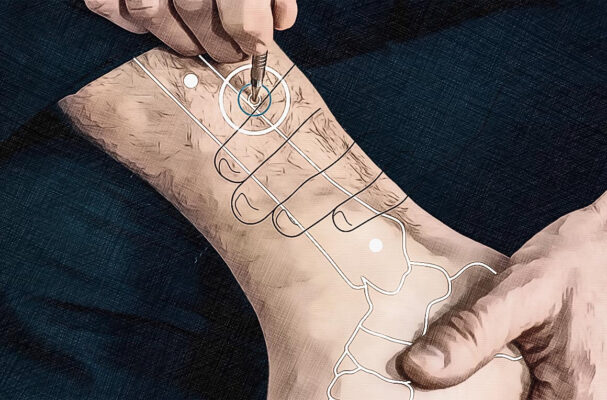
- Meeting point of the three Yin meridians (Spleen, Liver, Kidney)
- Nourishes Blood and Yin at the same time
- Strengthens the Spleen as the source of Blood formation
- Regulates menstruation
- Calms the spirit and promotes sleep
Location: Four finger widths above the highest point of the inner ankle bone, directly behind the shinbone.
Use:
Massage in circles with medium pressure, 2x daily for 2–3 minutes per side. Ideally in the morning and evening. Do NOT use during pregnancy!
ACUPUNCTURE POINT: Sp 10
Spleen–Pancreas 10
Sea of Blood — Xue Hai
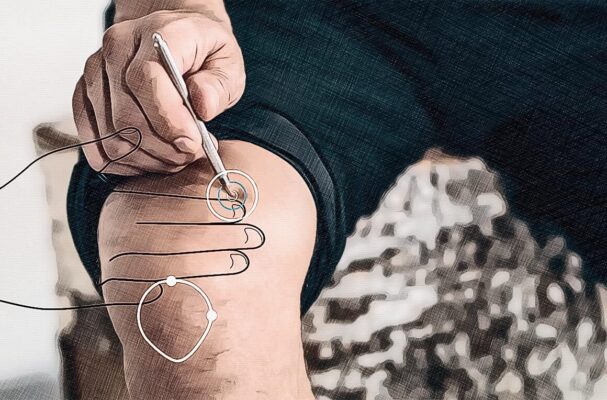
- Main point for nourishing and invigorating the Blood
- Regulates menstruation
- Cools the Blood when you have skin problems
- Helps with anemia and pallor
- Eases itching caused by Blood Dryness
Location: With the knee bent, two thumb-widths above the upper inner corner of the kneecap, on the vastus medialis muscle.
Use:
Press or massage in circles with medium pressure, 2 times a day for 2–3 minutes on each side. Especially effective together with Sp 06.
ACUPUNCTURE POINT: St 36
Stomach 36
Three Miles of the Leg — Zu San Li
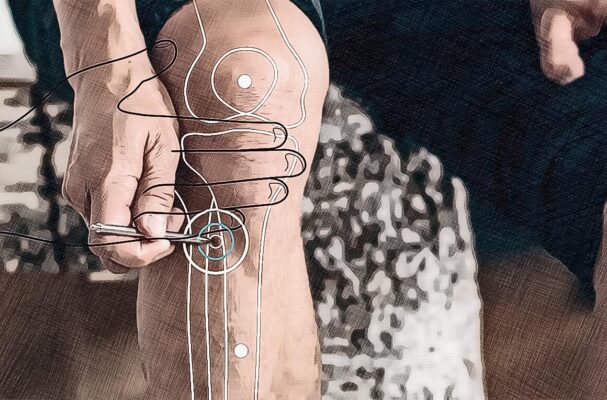
- The most important point for strengthening Qi and Blood
- Strengthens the Spleen and the Stomach
- Promotes the formation of Blood from food
- Gives energy and stamina
- Strengthens the immune system
Location: One hand-width below the kneecap, one thumb-width out to the side of the shinbone's edge.
Use:
Press firmly or massage in small circles for 2–3 minutes per side, twice a day. It can also be warmed with moxibustion (especially with signs of Cold).
Our app recommendation
Atemraum: your app for mindful breathing


Breathing is the foundation for physical and mental well-being — and in everyday life it is usually COMPLETELY underestimated. Yet hardly anything is as immediate: how we breathe shapes how we feel.
That's why we built Atemraum: an app with guided breathing exercises that you can take with you anywhere. Wolfgang put the exercises together — plus a 35-day course, quick help for the moment, and breath tests that let you see your progress.
A few minutes a day are enough. And if you use our personal guidance you already have Atemraum included.


You can try the app free for 7 days.
Qi Gong
Qi Gong is moving meditation — gentle, flowing exercises that harmonize your energy flow and nourish your Blood. With Blood Deficiency, these exercises help strengthen your Spleen, build Qi and so create the foundation for new blood formation.
Practicing Qi Gong regularly (even just 10–15 minutes a day) has been shown to have positive effects on Blood formation, relaxation and general well-being.
QI GONG: Exercise 1
Warming the Center
Strengthens the Spleen, promotes the formation of Blood

Especially helpful for:
- Fatigue and exhaustion
- Weak digestion
- Pallor and anemia
- Feeling of cold in the abdomen
Effect:
This Earth element exercise warms and strengthens the Center in a targeted way — the Spleen as the source of Blood formation. The gentle, circling movements activate digestive strength, and the Spleen may be better able to carry out its transformation function.
QI GONG: Exercise 2
Gathering Qi
Builds Qi, calms the mind
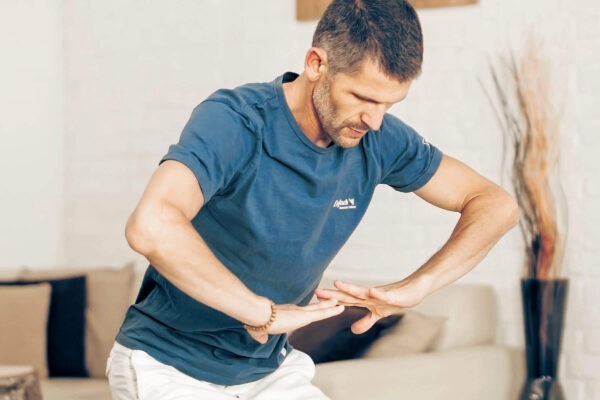
Especially helpful for:
- General weakness and lack of strength
- Inner restlessness and nervousness
- sleep problems
- Exhaustion after illness
Effect:
This exercise gathers vital energy from all directions and stores it in the body. Since "Qi is the commander of Blood," strong Qi supports the formation and flow of Blood. Perfect for finding calm and recharging your energy.
QI GONG: Exercise 3
Open the Heart
Calms the Shen, opens the chest
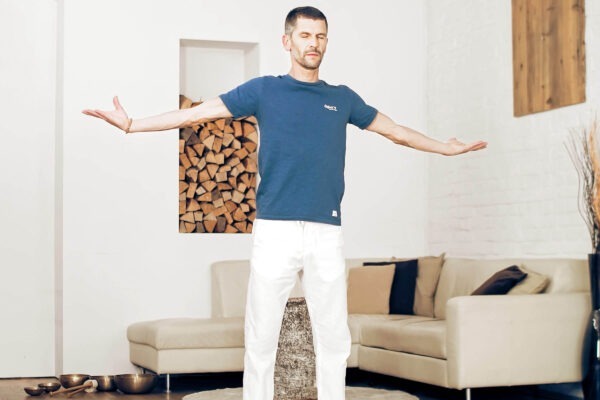
Especially helpful for:
- Inner restlessness and agitation
- sleep problems and dreaming
- Heart palpitations
- Anxiety
Effect:
This exercise opens the chest and calms the Shen (spirit). With Blood Deficiency, the spirit finds no anchor in the Heart Blood — this exercise helps calm the Shen and anchor it in the Heart. It is especially helpful for sleep problems caused by Blood Deficiency.
These Qi Gong exercises are chosen specifically for building up the Blood. They strengthen the Spleen as the source of blood formation, build Qi and calm the spirit.
All of the exercises work especially well when you practice them between 9 and 11 a.m. — that is the Spleen's peak time on the organ clock. Late afternoon is also a good time to gather energy.
QI GONG:
When and how often?
In the morning or late morning (ideal):
- All 3 exercises as a sequence: approx. 15–20 min.
- Or just 1–2 exercises: approx. 5–10 min.
- Best between 9 and 11 a.m. (Spleen time)
Throughout the day:
- Individual exercises as needed (e.g., when you feel tired)
- "Gathering Qi" for a quick boost of energy
Consistency matters more than duration:
- It is better to exercise for 10 minutes every day than for 60 minutes once a week.
- After 2–3 weeks, you will notice your first changes
- After 2–3 months of regular practice: noticeably more energy
Pro tip: With Blood Deficiency, gentle, slow movements are ideal. Avoid intense physical exertion and heavy sweating — they use up Qi and Blood. Qi Gong is the perfect balance of movement and rest.

EVERY MONDAY LIVE: QI GONG WITH WOLFGANG
Every Monday at 6:00 p.m. we practice together live on YouTube. Among other things, Wolfgang guides you through a complete Qi Gong sequence — free of charge and suitable for all levels.
Why join live? ✓ Practicing together is motivating ✓ Wolfgang explains the exercises in detail ✓ You can ask questions in the live chat ✓ A fixed time gives your routine structure
More about Qi Gong LiveMeridian Yoga — The Yoga of TCM
Meridian Yoga combines yoga with Traditional Chinese Medicine. The result is a holistic movement concept for more health and energy.
The following exercises specifically activate the Heart meridian — because the Heart governs the Blood and gives the spirit (Shen) a home. With Blood Deficiency, the anchoring of the spirit in the Heart Blood is disturbed, which leads to sleep problems and inner restlessness.
MERIDIAN YOGA: Exercise 1
Opening the Heart for the Heart Meridian
Opens the chest, calms the mind

Especially helpful for:
- Heart and circulatory problems
- Heart rhythm disorders
- breathing problems
- Stress, restlessness and nervousness
Effect:
This exercise opens the Heart meridian, which runs along the inner side of the arm. It expands the chest and gives the Heart room. With Blood Deficiency, it helps anchor the Shen (spirit) in the Heart Blood and find inner calm.
MERIDIAN YOGA: Exercise 2
Shell Stretch for the Heart Meridian
Gently stretches the Heart meridian while lying down
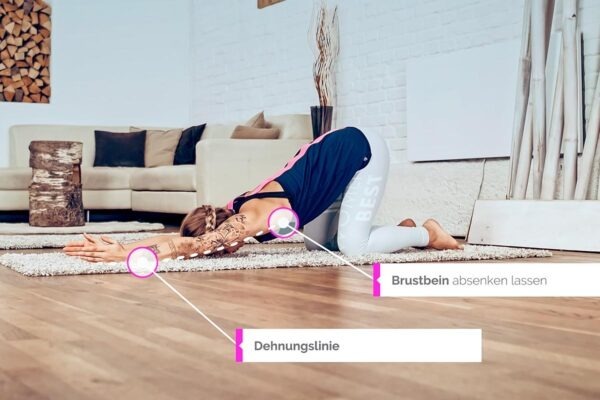
Especially helpful for:
- Heart and circulatory problems
- Heart rhythm disorders
- Breathing problems and blood pressure problems
- Stress, restlessness and nervousness
Effect:
The Shell Stretch is a gentle, relaxing exercise that stretches the Heart meridian while you lie down. It calms the nervous system and promotes restful sleep — especially valuable with Blood Deficiency, when the mind finds no rest at night.
Both exercises activate the Heart meridian, which runs along the inner side of the arm and is connected to the Heart. The Heart governs the Blood and houses the Shen — by activating this meridian, you support both Blood circulation and mental calm.
Especially effective: Hold each position for 3–5 breaths and visualize nourishing, red energy that replenishes your Heart Blood and calms your mind.
MERIDIAN YOGA:
When and how often?
Best time:
- At midday between 11 a.m. and 1 p.m. (Heart time)
- Or in the evening before bed for better sleep
Duration:
- Hold each position for 3–5 breaths
- Complete sequence: 10–15 minutes
- 3–5x per week for best results
Important:
- Practice in a quiet, warm atmosphere
- Breathe deeply and slowly during the positions
- Stretching should feel comfortable, never painful
Pro tip: Combine Meridian Yoga with gentle Qi Gong exercises like "Warming the Center" or "Gathering Qi." With Blood Deficiency, rest is important — avoid strenuous styles of yoga and choose gentle, nourishing practices instead.
Nutrition according to TCM
"Let food be your medicine" — this principle has held true in TCM for thousands of years. With Blood Deficiency, the right diet is especially important for building your Blood.
Blood belongs to the elements Earth (Spleen) and Fire (Heart) and needs warm, nourishing, easily digestible food, to be formed. Red foods have a special relationship with Blood.
What you eat, HOW you eat, and WHEN you eat — all of it influences your Blood and your energy.
The Golden Rules for Strong Blood
What does you good:
Red Foods That Nourish the Blood
- Beets (top Blood nourisher!)
- Red dates (Da Zao) — eat daily
- Goji berries — nourish Blood and Yin
- Cherries, pomegranate, grapes
Red is the color of Blood — red foods nourish the Blood!
Blood-building proteins
- Beef — warms and nourishes the Blood
- Liver (chicken, beef, pork) — a powerful Blood tonic
- Eggs — nourish Blood and Yin
- Chicken soup with dates
Animal protein is especially effective at building Blood
Leafy greens
- Spinach — rich in iron and folate
- Swiss chard and kale
- Nettle (as tea or vegetable)
- Parsley — in large amounts
Chlorophyll has a structure similar to hemoglobin
Grains and legumes
- Black beans — nourish the Kidney and Blood
- Red beans (adzuki) — support the Spleen and Blood
- Oat flakes — strengthen the Spleen
- Whole-grain rice — provides lasting energy
Complex carbohydrates are the foundation of Blood formation
What you should avoid:
Raw foods in large amounts
- Salads as a main meal
- Smoothies with raw fruit
- Raw food diets
- Too many raw vegetables
Raw food weakens the Spleen and hinders Blood formation!
Cold drinks and foods
- Iced drinks and ice cream
- Cold water from the refrigerator
- Yogurt (cold and damp)
- Frozen fruit
Cold weakens your digestive strength!
Too Much Dairy
- Milk (creates Dampness)
- Cheese (especially soft cheese)
- Cream and quark
- Yogurt
Dairy products burden the Spleen and block the formation of Blood!
Sugar and Sweets
- White sugar
- Sweets and cakes
- Soft drinks
- Too much fruit
Sugar weakens the Spleen and creates Dampness!
HOW YOU SHOULD EAT:
Cooked and warm
- Prefer warm meals
- Soups and stews — easy to digest
- Steamed or cooked vegetables
- Have a warm breakfast too (porridge!)
Regularly and in peace
- 3 regular meals a day
- Make lunch your biggest meal
- Light and early in the evening (before 7 pm)
- Eat slowly and chew well
The Spleen loves regularity and warmth!
Drinking the right way
- Warm water
- Jujube date tea (boil 3–5 dates in water)
- Goji tea (eat the berries, too!)
- Don't drink with meals
Cold drinks weaken digestion
IDEAL MENU FOR ONE DAY:
Breakfast (7–9 a.m.):
- Warm oatmeal with goji berries and dates
- Along with it: Date tea or warm water
Lunch (12–1 p.m.):
- Beef with spinach and beets
- Along with it: Whole-grain rice or potatoes
- Or: Chicken Soup with Red Dates
Dinner (6–7 p.m.):
- Light Vegetable Soup with Egg
- Or: Steamed Fish with Vegetables
- Along with it: A small portion of rice
Snack if needed:
- 3–5 red dates
- Or: Handful of goji berries
- Or: 1 boiled egg
The most important rule when changing your diet is:
Start with ONE step!
Don't change everything at once.
Our suggestion for getting started:
- Eat 3–5 red dates daily — 2 weeks
- Introduce a warm breakfast (porridge) — 2 weeks
- Cut back on raw foods and cold drinks — 2 weeks
Step by step, you will notice your Blood being built up again and you getting more energy.
Your Blood will thank you!
RECIPE: RED BEET SOUP WITH DATES
Ingredients:
Serves 4
- 500 g red beets (fresh)
- 5 red dates (pitted)
- 1 small onion
- 2 tbsp olive oil or ghee
- 1 L vegetable or chicken broth
- Salt, pepper, a piece of ginger
- Optional: Sour cream for serving
Preparation:
- Peel the beets and cut them into cubes
- Finely chop the onion and ginger
- Heat the oil in a pot and sauté the onion and ginger
- Add the beets and dates and sauté briefly
- Pour in the broth and simmer for 30–40 min.
- Blend until creamy
- Season with salt and pepper
Effect:
Nourishes and builds Blood
Strengthens the Spleen and supports digestion
Warms from within and provides energy
2–3x per week — perfect for building Blood!
RECIPE: CHICKEN SOUP WITH JUJUBE DATES AND GOJI
Ingredients:
Serves 4–6
- 1 organic chicken (approx. 1.5 kg) or 500 g chicken drumsticks
- 10 red dates (pitted)
- 2 tbsp goji berries
- 3 slices of fresh ginger
- 2 L water
- Salt to taste
- Optional: 10 g Huang Qi (Astragalus)
Preparation:
- Wash the chicken and cut it into large pieces
- Put the chicken in a pot with cold water and heat slowly
- Skim off the foam, then add the ginger and dates
- Optional: simmer Huang Qi in a tea bag along with the rest
- Simmer over low heat for 1.5–2 hours
- 20 min. before the end: add the goji berries
- Season with salt and serve warm
Effect:
Powerful Qi and Blood tonic
Strengthens the Spleen and builds energy
Ideal after illness, childbirth, or when you feel exhausted
1–2x per week — the TCM classic for building Blood!
Breathing
Breathing is the bridge between body and mind. In TCM it is said: "The Lung governs the Qi" — according to this idea, conscious breathing lets you address your Qi flow directly and settle into deeper calm.
Breathe calmly and slowly: Deep belly breathing noticeably calms many people — the breath becomes deeper, the shoulders drop, and the mind becomes clearer. The good news: Even 5–10 minutes a day can make a difference for your well-being.
Recommended breathing techniques
ABDOMINAL BREATHING — The foundation for every breathing technique
Natural breathing
Abdominal breathing is the most natural and calming form of breathing. According to TCM teachings, with every breath you bring Qi into your center (Dantian).
Wolfgang shows you step by step, how to learn abdominal breathing correctly — lying down at first, and later sitting and standing too.
Duration: 9 minutes

4–7–8 BREATHING — Settle into calm
The calming breath for the evening
In 4–7–8 breathing, you inhale for 4 seconds, hold for 7 seconds, and exhale for 8 seconds. Many people find that this steady rhythm helps them wind down in the evening — ideal when your mind just won't switch off at night.
Ideal for the evening or whenever you want to settle down quickly.
Duration: 9 minutes
To the follow-along videoBOX BREATHING — For inner coherence
The pro breathing technique for focus and calm
Box Breathing (4 sec. in, 4 sec. hold, 4 sec. out, 4 sec. hold) combines activation and relaxation in perfect balance. This method is used by elite soldiers, athletes, and executives to stay calm and focused even in extremely stressful situations.
A steady 4–4–4–4 rhythm of activation and calm — many people experience it as clearing and centering.
Duration: 9 minutes
To the follow-along videoCOHERENT BREATHING — Brings body & mind into harmony
The calming breath for balance
In coherent breathing you breathe in for 5.5 seconds and out for 5.5 seconds. This rhythm brings your Heart and breathing into an even beat — a state known as "coherence." Many people use it as a regular breathing break in their day.
A nice side effect: Heart and breath settle into a calm, shared rhythm.
Duration: 14 minutes
To the follow-along video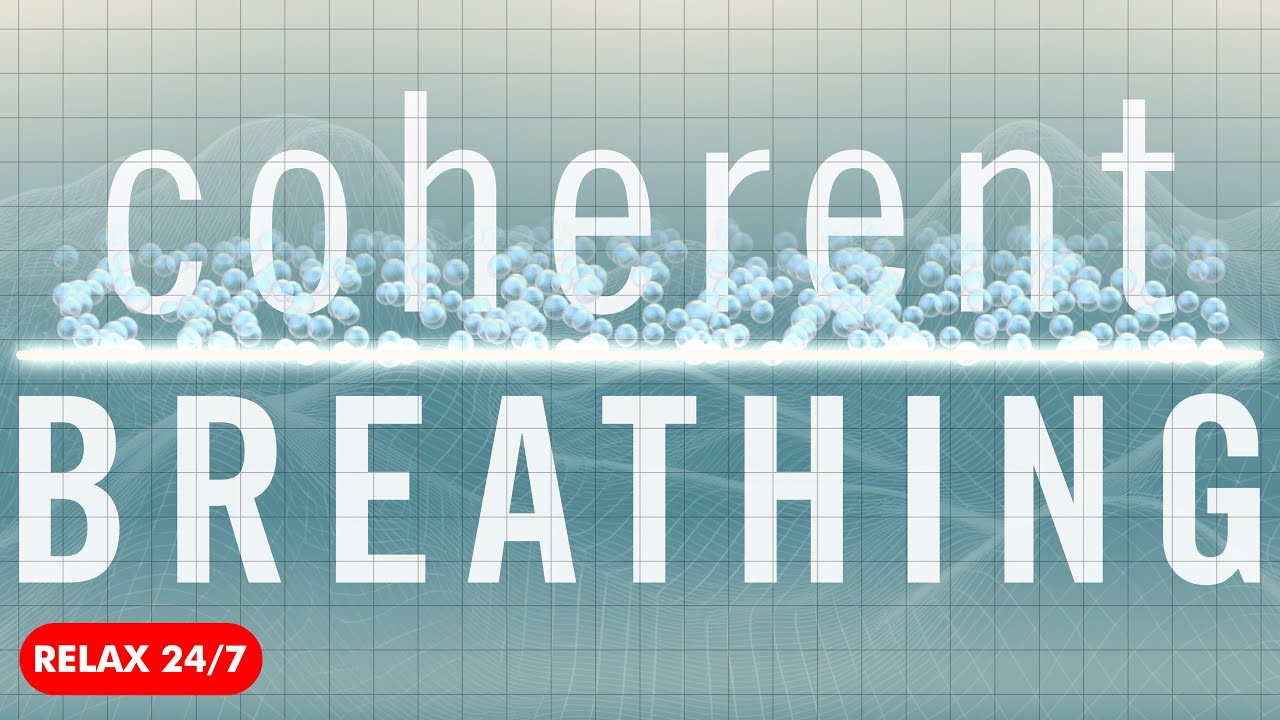
COHERENT BREATHING Around the clock
Our 24/7 livestream for coherent breathing runs non-stop. You can tune in at any time and join right away.
Perfect for:
✓ Spontaneous breathing breaks during the day
✓ If you would like calm breathing guidance
✓ As background while you work
✓ For the evening and for winding down
✓ For regular daily practice
Relaxation
When your body is relaxed, things flow more easily. Ongoing tension keeps you in constant stress mode. With targeted relaxation techniques, you signal to your body that it can settle down and gather new strength.
Progressive Muscle Relaxation is one of the best-known relaxation methods and has been practiced for over 100 years. It helps you notice tension, actively let go, and reach a state of deep relaxation — whenever you like.
Recommended relaxation technique
PROGRESSIVE MUSCLE RELAXATION (PMR)
The classic relaxation method
Progressive Muscle Relaxation according to Jacobson is one of the best-known relaxation techniques worldwide. By deliberately tensing and releasing individual muscle groups, you learn to consciously notice tension and let it go again.
This is how it feels:
Step by step, the body becomes heavier and calmer, and the breath more even. Many people use it as a regular part of their evening routine to help them fall asleep well.
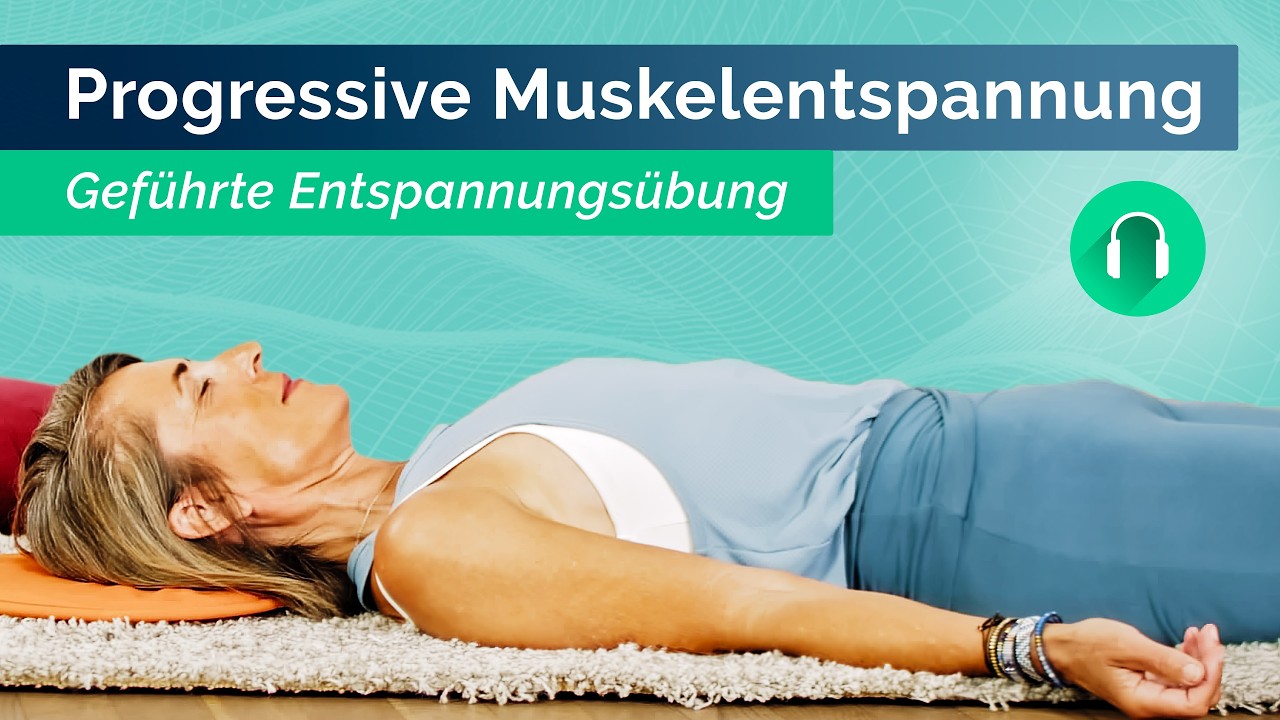
Maria guides you step by step through the complete exercise — perfect for beginners and advanced practitioners.
Duration: 23 minutes of complete instruction
To the guided PMRMeditation
Meditation calms the mind — and a calm mind is good for the whole person. In TCM, it is said that every emotion touches a particular organ. Through regular meditation, you learn to step out of circling thoughts, find emotional balance, and strengthen your inner center.
Just 10 minutes a day can do a lot for your inner calm. Many people find that it makes their everyday life feel more relaxed and clearer.
Recommended meditations
GUIDED MEDITATIONS FOR EVERY DAY
Your personal meditation library
We have put together a complete playlist with over 60 guided meditations, breathing exercises, and relaxation techniques for you — from short 5-minute meditations for in between to deep 30-minute sessions for intensive practice.
In the playlist you will find:
- Morning meditations for a mindful start to the day
- Sleep meditations for restful sleep
- Breathing meditations for inner calm
- Meditations for calm moments during stress and rumination
- TCM standing meditations for all 5 Elements
- Body scan and body journeys
- Calming meditations for body and mind
- Special breathing techniques (4-7-8, coherent breathing, bee breath)
Perfect for beginners and advanced practitioners. Choose the meditation that fits your time, time of day, and needs.
To the meditation playlistWithout enough Blood, the body loses its substance and the Shen cannot find rest.
— From the HUANG DI NEI JING
(The Yellow Emperor's Classic of Internal Medicine)
More tips for your daily life
Alongside the classic TCM treatment methods there are many small everyday habits that can strengthen your Blood. In TCM, Blood is the body's nourishing substance — with the right habits, you can effectively build and maintain it.
Sleep and rest
Get enough sleep
Your Blood regenerates during sleep:
- 7–8 hours of sleep per night is ideal
- With Blood Deficiency, you may also need more sleep
- At night, the Blood returns to the Liver and regenerates
- Get to bed before 11 p.m. — the best time for Blood regeneration
- Quality matters more than quantity — deep sleep nourishes the Blood
Midday rest
A short rest during the day supports the formation of Blood:
- A 10–20 minute midday rest is ideal
- Even just closing your eyes and relaxing helps
- Between 1 and 3 p.m. is Heart time — good for the mind
- No longer than 30 minutes — otherwise your nighttime sleep may be disturbed
Avoid overworking
Exhaustion drains the Blood:
- Avoid long work hours
- Plan regular breaks — every 90 minutes
- Don't "power through" when you're tired — fatigue is a warning sign
- With Blood Deficiency: it's better to do less, but do it consistently
- Plan for enough vacation and recovery time
Strengthen the Spleen — the source of Blood
Warm meals
The Spleen loves warmth:
- Prefer cooked foods — they are easier to digest
- Eat a warm breakfast, too (porridge, congee)
- Raw foods only as a side dish, not as a main meal
- Avoid cold drinks, even in summer
- Soups and Stews Are Ideal for Building Blood
Eat regularly
The Spleen likes rhythm:
- 3 meals at regular times
- Eat your largest meal at midday (when digestive strength is at its peak)
- Eat light and early in the evening (before 7 pm)
- Cut back on snacking between meals
- Don't eat too late — your Spleen needs rest at night
Avoid overthinking
Worry weakens the Spleen:
- Overthinking drains the Spleen energy
- Don't work or watch the news while you eat
- Break Out of Worry Spirals — Through Movement or Distraction
- Meditation and mindfulness help calm the mind
- Solve problems instead of endlessly brooding
Gentle movement — not too much, not too little
The right intensity
With Blood Deficiency, balance is important:
- Gentle, regular movement is ideal
- Walks in the fresh air
- Qi Gong and Tai Chi — movement without exhausting yourself
- Swimming (in warm water)
- Gentle yoga without overexertion
What you should avoid
Intense exertion uses up Blood:
- Intense endurance sports (marathon, HIIT)
- Heavy sweating depletes the body fluids
- Strength training to the point of exhaustion
- Exercising when you feel tired or weak
- Competitive sports during the recovery phase
Moving after meals
A short walk may support digestion:
- 10–15 minutes of slow walking after eating
- Helps the Spleen with the transformation of food
- Don't lie down right after eating
- Even light housework is good for you
For Women: Menstruation and Blood
During your period
Take extra good care of yourself:
- More rest and sleep than usual
- Warm foods and drinks — no raw foods
- No intense workouts
- A hot water bottle on your abdomen if you feel cold
- No cold water — not even for washing your hands
After your period
Rebuilding Blood:
- Plenty of Blood-nourishing foods
- Chicken soup with dates — the classic
- Beets, spinach, liver
- Extra rest and sleep in the first few days
Important to know
Over the years, many women develop a chronic Blood Deficiency from monthly blood loss. Building Blood in a targeted way is especially important with heavy periods, after childbirth, or during menopause. TCM methods can help break this cycle and build Blood for the long term.
Important to know
Strengthening Blood takes time and patience. Building Blood is like filling a reservoir — it happens step by step. Pay attention to your body's signals: fatigue, paleness, and dizziness show that you need more nourishment and rest. With consistent care, you will notice your energy and joy in life returning.
When to see a doctor? If you have severe fatigue, marked paleness, shortness of breath, or other worrying symptoms, you should see a doctor and have your blood levels (hemoglobin, ferritin, vitamin B12) checked. TCM and Western medicine complement each other ideally here.
For the best possible course of treatment
TCM is not a quick fix for symptoms, but a holistic path to healing. You will get the best results when you consistently build the treatment into your daily life and give your body time to regenerate.
Integrating it into your daily life
Start with ONE step
Don't try to change everything at once! That is overwhelming and
usually leads to giving up. Instead:
- Weeks 1–2: Include Blood-nourishing foods every day (dates, goji, beets)
- Weeks 3–4: Acupressure Sp 06 and Sp 10 daily
- Weeks 5–6: Qi Gong "Warming the Center" daily for 10 min.
- Weeks 7–8: Add your TCM herbal blend
- From week 9: Add further methods as needed
Realistic expectations
After 2–3 weeks: First improvements noticeable
- Less fatigue
- A healthier complexion
- More Energy
After 6–8 weeks: Clear improvements
- Less Dizziness
- Better Sleep
- Stronger nails and hair
After 2–4 months: Lasting healing
- Blood is noticeably built up
- Your body feels nourished and strong
- Vitality and joy in life are back
TCM vs. Western Medicine
TCM and Western medicine do not exclude each other — they complement each other!
When Western medicine is important:
- With severe anemia (hemoglobin below 10 g/dl)
- With unexplained blood loss
- If you suspect a serious illness
- For precise diagnoses (blood count, ferritin, B12)
Where TCM has its strengths:
- With mild to moderate Blood Deficiency
- As support alongside iron supplementation
- For lasting Blood building
- For recurring Blood Deficiency (e.g., after menstruation)
Ideal: Combine both systems! Have your blood levels checked regularly and use TCM for lasting support and to strengthen your body's self-healing powers.
Important: Never stop prescribed iron supplements or medications on your own!
Talk to your doctor when you begin TCM treatment.
Do you have questions?

Wolfgang from meine-tcm.com
TCM is a broad field. Much of it sounds unfamiliar at first, and the real question often comes up only once you start trying some of it out in everyday life.
That's exactly what I'm here for. Write to me — no matter whether your question is big or small, whether it relates to this page or to something else entirely from TCM. I read every message myself and will get back to you. Calmly, clearly, and without a sales pitch.
P.S. There are no silly questions. So write to me.
Ask your questionEvery step counts
Your body strives for balance — you just need to create the right conditions for it.
Remember:
👣 Every small step counts
You don't have to be perfect. Even one warm meal a day is better than none. Even 5 minutes of Qi Gong is better than no movement at all.
⏳ Patience pays off
Your body took years to get into this state. Give it time to find its balance again. Change takes time, but it comes.
🎯 Focus on what you CAN do
Don't concentrate on everything you're doing "wrong." Focus on every positive step you take.
💚 Be good to yourself
There's no such thing as perfection. You're allowed to have a bad day now and then. Tomorrow is a new day, and you can pick up where you left off.
🤝 You are not alone
Thousands of people are walking this path with you. For over 2,000 years, TCM has been guiding people like you on their journey toward greater well-being.
Track your progress

To track your progress, we recommend repeating the TCM analysis after about 3 months.
Why is this useful?
- You see how your pattern has changed
- You can adjust your support as needed
- It motivates you to keep going
- You recognize which measures suit you best
⚠️ Important: Your answers from today are stored in encrypted form in a code that you received by e-mail. ONLY with this code can you follow your progress later on. Keep the e-mail in a safe place!
🔒 YOUR DATA IS SAFE
We store:
✓ Only your email for the reminder
✓ The date for sending
We do NOT store:
✗ Your analysis results
✗ Your personal data
✗ The link between e-mail and pattern
All analysis data is completely anonymous and is not linked to your e-mail address.
Newsletter
Stay up to date with our newsletter. Along with helpful tips and tricks for your training and your everyday life, you won't miss any of our new releases.