






On this page, you will learn:
- What this pattern means from the perspective of TCM and Western medicine
- Where your symptoms come from and how they are connected
- Which specific treatment methods can help you now
- How you can rebuild your digestive heat with TCM herbs, acupressure, Qi Gong and nutrition
The good news: Ein Milz–Yang Mangel lässt sich mit den richtigen Maßnahmen sehr gut behandeln. Mit wärmender Ernährung und gezielten Methoden kannst du deine Verdauungskraft zurückgewinnen.
Take your time, Get to know the different treatment approaches—you don't have to implement everything at once. Choose what feels right for you and what you can easily integrate into your everyday life.
Your treatment at a glance:
Which TCM pattern is really behind your complaints?
Degree of
imbalance

Medium
Typical
treatment duration

3–4 months
self-treatment
Possible

Can be treated yourself with instructions
Treatment
scope

2–3 methods
Proposed
methods

Extensive range
Our free TCM analysis shows you your personal TCM pattern in just 10 minutes.
What does a spleen yang deficiency mean?

When the digestive heat is missing and the center freezes
The TCM perspective: rekindling the inner fire
In traditional Chinese medicine, the spleen is the central transformer of our food - it transforms everything we eat and drink into usable energy. Spleen yang is the warming, moving force that drives this transformation process. Without sufficient yang, the spleen is like a cooking pot without fire.
Imagine your digestion like a cooking pot: The spleen is the pot, the spleen yang is the fire underneath. Only if the fire burns strongly enough can the food be „cooked“ and transformed into Qi and blood. If spleen yang is deficient, this heat is missing - the food is not fully transformed and moisture accumulates in the body.
The spleen belongs to the earth element and stands for the nourishing center of the body. It hates cold and dampness. The spleen yang not only warms the digestive system, but also keeps the organs in place and prevents fluids from stagnating in the body. If the yang becomes weak, the center loses its warmth and stability.
The result of a spleen-yang deficiency: Digestion becomes sluggish, the stomach feels cold and food is heavy in the stomach. Moisture accumulates - visible as water retention, swelling or a bloated feeling. A leaden tiredness spreads, especially after eating.
The typical signs of a spleen-yang deficiency:
- Feeling of coldness in the stomach, which improves with warmth
- Soft, mushy stools or diarrhea - often with undigested food residue
- Tiredness and feeling of heaviness, especially after eating
- Water retention in the legs, hands or face
- Flatulence and a bloated feeling in the stomach
- Loss of appetite or craving for hot food
- Pale complexion with a slightly yellowish tinge
The good news: The spleen yang can be specifically rebuilt. Through a warming diet with cooked food, ginger and spices, moxibustion and gentle exercise, you can rekindle the fire in your center and regain your digestive power.
The Western perspective: digestion, metabolism and gut health
From a Western perspective, spleen yang deficiency corresponds to a complex of slowed metabolism, impaired digestive enzyme production and restricted intestinal motility. There are often parallels to a latent underactive thyroid - hypothyroidism - which slows down the entire metabolism.
Think of your digestive system as a factory: The enzymes are the workers that break down food into its components. With a spleen yang deficiency, these „workers“ work more slowly and less effectively. The food is not broken down completely and nutrients are absorbed more poorly - a condition we call malabsorption.
Another important aspect is the gut microbiome. The trillions of bacteria in our gut play a crucial role in digestion and nutrient absorption. Chronic exposure to cold and poor diet can shift this delicate balance - with consequences for overall digestive performance and the immune system.
What does modern medicine show?
- Enzyme insufficiency: Reduced production of digestive enzymes in the stomach and pancreas
- Hypothyroidism: slower basal metabolic rate with a feeling of coldness and tiredness
- Intestinal motility disorders: Slowed intestinal transit leads to flatulence and bloating
- Malabsorption: Impaired nutrient absorption despite sufficient food intake
- Dysbiosis: imbalance of the intestinal flora with effects on digestion and the immune system
- Lymph congestion: impaired drainage of fluids leads to edema
Modern research confirms: Body temperature and in particular the core temperature of the digestive tract have a significant influence on enzyme activity. Cold food and drinks can measurably reduce digestive performance - which scientifically underpins the TCM recommendation for warm food.
TCM treatment for spleen yang deficiency starts right here: It warms the center, activates the metabolism and supports the digestive enzymes in their work - through warming herbs such as ginger and cinnamon, moxibustion and an adapted diet. The power of digestion returns when the inner fire burns again.

The Yellow Emperor's team explains your pattern
The Yellow Emperor | Qi Bo | Dr. Lisa Weber
Founder of TCM | Master of Healing Arts | Modern Physician
What happens when the legendary Yellow Emperor of Traditional Chinese Medicine sits down with his advisor Qi Bo and a modern doctor? They explain YOUR pattern—using 4,000-year-old knowledge AND the latest science.
Spleen yang deficiency - when the digestive fire goes out
The Yellow Emperor: „Qi Bo, I observe people in my kingdom whose stomachs are constantly cold, who suffer from soft stools and whose food comes out undigested. After eating, they feel tired instead of invigorated. What is the cause of this suffering?“
Qi Bo: „Your Majesty, these people suffer from a deficiency of spleen yang. The spleen is the cook of the body - it receives the food and transforms it into nourishing qi and blood through cooking and maturing. Spleen Yang is the fire under the cooking pot. If this fire is too weak, the food cannot be transformed properly. It remains undigested, produces moisture and cold spreads. The body starves when the plate is full.“
Dr. Weber: „A wonderful metaphor! In modern physiology, we would say that the digestive enzymes are not working optimally, intestinal motility is slowed down and the metabolism is running on a low flame. The pancreas produces too few enzymes, stomach acid is reduced and intestinal peristalsis is sluggish. This leads to malabsorption - nutrients are not absorbed properly even though you eat enough.“
The Yellow Emperor: „Why does my stomach get so cold?“
Qi Bo: „The spleen yang is like an inner sun for the middle warmer. It warms the abdomen and keeps the organs at working temperature. If this yang is weak, the abdomen cools down like an oven without fire. The cold accumulates inside and hinders all transformation processes. This is why the abdomen feels cold, the hands and feet are often cold too, and the patient longs for warmth.“
Dr. Weber: „Fascinating! We now know that digestive enzymes work optimally at certain temperatures. Reduced blood flow to the abdomen - often due to chronic stress or vegetative dysregulation - actually leads to a local undersupply. The intestinal microbiome, which comprises around 100 trillion bacteria, also needs optimal conditions. When intestinal function is impaired, the wrong bacterial strains often multiply - we call this dysbiosis.“
The Yellow Emperor: „What leads to a weakness of the spleen yang?“
Qi Bo: „The causes are manifold, Your Majesty. Firstly, too much cold and raw food - salads, smoothies, ice cream, cold drinks quench the digestive fire. Second: Irregular eating - the spleen loves rhythm and consistency. Third: Excessive brooding and worry - they bind the spleen qi and deplete the yang. Fourth: Chronic illness or overwork - they deplete the reserves. And fifthly, constitutional weakness - some people have a delicate spleen yang from birth.“
Dr. Weber: „This is in line with modern findings! Cold food requires more energy to digest - the body first has to warm it up to body temperature. Irregular eating disrupts the circadian rhythm of the digestive organs - enzyme production follows an internal clock. Chronic stress activates the sympathetic nervous system and slows down digestion. And there are indeed genetic variants that influence enzyme production - for example in lactose intolerance or histamine intolerance.“
The Yellow Emperor: „What signs reveal a spleen yang deficiency?“
Qi Bo: „The signs are clear, Your Majesty. The affected person shows: A cold stomach that feels cold. Soft or mushy stools, often with undigested food residue. Flatulence and a bloated feeling after eating. Fatigue, especially after meals - instead of energy, eating brings exhaustion. Water retention, especially in the legs. A pale, often slightly puffy face. Loss of appetite or a feeling of fullness despite eating very little. The tongue is pale, swollen with tooth impressions on the edge, the coating is white and moist. The pulse is deep, weak and slow.“
Dr. Weber: „This constellation of symptoms is clinically very interesting! The undigested food residue in the stool - we call this lienery - shows maldigestion. The edema is caused by reduced albumin production or impaired lymph flow. We know postprandial fatigue as „food coma“ - when digestion is disturbed, an excessive amount of blood is passed into the abdominal cavity. The swollen tongue with teeth impressions indicates fluid retention. In the laboratory, we often find low albumin levels, vitamin B12 deficiency or dysbiosis in the stool test.“
The Yellow Emperor: „How does spleen yang deficiency differ from spleen qi deficiency?“
Qi Bo: „An important question, Your Majesty! Spleen qi deficiency shows fatigue, loss of appetite and loose stools - but without any pronounced signs of cold. Spleen Yang deficiency is accompanied by cold: cold stomach, sensitivity to cold, craving for warmth, watery diarrhea. Spleen yang deficiency is the further development of spleen qi deficiency - if the qi is weakened for a long time, the warming yang is also attacked.“
Dr. Weber: „From a clinical point of view: With spleen qi deficiency, we see functional digestive disorders. With spleen yang deficiency, there are also signs of a slowed metabolism - often with hypothyroidism-like symptoms, sensitivity to cold and metabolic slowdown. Sometimes we actually find a subclinical hypothyroidism!“
The Yellow Emperor: „Now let's talk about the treatment. How can the spleen yang be strengthened?“
Qi Bo: „Majesty, the treatment principle is: Wen Zhong Jian Pi - warm the center and strengthen the spleen. This is achieved in several ways: firstly, by eating a consistently warm diet - everything that enters the stomach should be at least body temperature. Cooked cereals, warm soups, steamed vegetables. Secondly, through warming spices: Ginger is the king herb - it ignites the digestive fire. Also cinnamon, cardamom, fennel. Thirdly, through moxibustion - burning mugwort over acupuncture points brings warmth directly into the depths. And fourthly: acupressure on stomach 36 and spleen 6 - they strengthen the digestive power.“
Dr. Weber: „Excellent strategies! Warm food is actually easier to digest - the enzymes work optimally at body temperature. Studies have shown that ginger accelerates gastric emptying and stimulates enzyme production. Spices stimulate the production of saliva and gastric juice. And moxibustion - heat therapy - has been shown to improve blood circulation and can stimulate intestinal motility. Heat on the stomach is one of the oldest and most effective home remedies!“
The Yellow Emperor: „What about the classic formulas for spleen yang deficiency?“
Qi Bo: „Ah, Your Majesty asks for the time-tested formulas! Li Zhong Tang - the pill to regulate the center - is one of the oldest formulas for this ailment. It contains Gan Jiang - dried ginger - as the king that warms the center. It also contains Ren Shen - ginseng - which strengthens the Qi. Bai Zhu - Atractylodes - which tonifies the spleen. And Zhi Gan Cao - roasted liquorice root - which harmonizes all herbs. This formula ignites the digestive fire like kindling for an extinguishing stove.“
Dr. Weber: „Li Zhong Tang has actually been investigated in studies! The combination shows positive effects on intestinal motility and the composition of the microbiome. Dried ginger contains shogaols - they are even more warming than the gingerol in fresh ginger. Ginseng has adaptogenic properties and can improve energy production in the cells. The combination works synergistically - more than the sum of its parts!“
The Yellow Emperor: „Wonderful! Let's turn this wisdom into a practical plan.“
DIE 3–WEISEN–METHODE BEI MILZ–YANG MANGEL
MORGEN–PROTOKOLL (Verdauungsfeuer entfachen):
- TCM: Hot breakfast - activate the digestive fire in the morning
- Science: A warm breakfast saves digestive energy and optimally activates the metabolism
- Practical: Congee (rice porridge) with ginger and dates, or millet porridge with cinnamon and stewed apple
- TCM: Ginger tea in the morning - ignites the yang of the center
- Science: Ginger promotes gastric motility, stimulates enzyme production and improves blood circulation
- Practical: Pour hot water over 3-4 slices of fresh ginger, leave to infuse for 10 minutes, drink before breakfast
- TCM: Bauch–Selbstmassage im Uhrzeigersinn — bewegt das Qi in der Mitte
- Science: Abdominal massage promotes peristalsis and improves blood circulation in the digestive organs
- Practical: Massage 36 circles clockwise around the navel with warm hands, applying gentle pressure
TAGES–STRATEGIE (Milz–Yang nähren):
- TCM: Warm, cooked meals - the spleen doesn't like anything cold or raw
- Science: Cooked food is enzymatically pre-digested and puts less strain on the digestive system
- Practical: Soups, stews, steamed vegetables, cooked cereals. Greatly reduce salads and raw vegetables
- TCM: Acupressure on stomach 36 (Zusanli) - the master point for digestion and energy
- Science: Stimulation of Ma 36 has been shown to improve intestinal motility and enzyme activity
- Practical: Four finger widths below the kneecap, one finger width next to the edge of the shin. Press firmly for 1 minute on each side
- TCM: Integrate warming spices into every meal
- Science: Ginger, cinnamon and cardamom stimulate the production of digestive juices
- Practical: Use ginger in cooking, cinnamon in porridge, fennel tea after a meal
ABEND–RITUAL (Milz–Yang bewahren):
- TCM: Light, warm evening meal - the spleen should be able to rest at night
- Science: An early, light evening meal supports the nightly regeneration of the digestive organs
- Practical: Vegetable soup or steamed vegetables with rice, at least 2-3 hours before sleep
- TCM: Moxibustion or hot water bottle on the abdomen - nourishes the spleen yang directly
- Science: Local heat improves blood circulation and relaxes the smooth muscles of the intestine
- Practical: Wärmflasche auf den Bauch legen, 15–20 Min. entspannen, alternativ Moxa–Pflaster verwenden
- TCM: Acupressure on spleen 6 (Sanyinjiao) - strengthens the spleen and promotes transformation
- Science: Mi 6 has been shown to influence the digestive tract and hormonal balance
- Practical: Four finger widths above the inner ankle, behind the shin. Gently massage in circles for 2-3 minutes per side
The Yellow Emperor: „Qi Bo, how long does it take for the spleen yang to strengthen again?“
Qi Bo: „Majesty, the spleen yang is like a furnace that needs to be re-fired - it takes time and consistency. After 2-3 weeks of consistent practice, most people notice that their stomach feels warmer and bloating decreases. After 4-6 weeks, the stool becomes firmer and fatigue after eating decreases. After 2-3 months, the spleen yang is noticeably strengthened - digestion works more efficiently and energy returns. Particularly important: In the humid season and in late summer, the spleen yang should be particularly protected.“
Dr. Weber: „This corresponds to our clinical experience! The intestinal microbiome needs around 2-3 months to undergo a lasting change. Enzyme production can recover if the load is reduced. And the reference to warm and humid weather makes medical sense: digestion is particularly challenged during this time, as moisture can put a strain on intestinal function!“
The Yellow Emperor: „Are there things that should be avoided at all costs?“
Qi Bo: „Yes, Your Majesty! First: Cold and raw foods - salads, smoothies, yogurt, ice cream quench the digestive fire. Second: Cold drinks - they are like ice water on red-hot coals. Thirdly, too many sweet and fatty foods - they create moisture and strain the spleen. Fourthly: Irregular eating and eating standing up - the spleen loves order and rest. And fifthly: excessive brooding - worries bind the spleen qi and deplete the yang.“
Dr. Weber: „All scientifically verifiable! Cold food actually slows down enzyme activity. Too much sugar feeds unfavorable intestinal bacteria and promotes fermentation processes. Hasty eating leads to insufficient chewing - there is no predigestion in the mouth. And chronic stress activates the sympathetic nervous system, which inhibits digestion - this explains the link between brooding and digestive problems!“
The Yellow Emperor: „Then the message is clear: the spleen yang is our inner digestive fire. With warm food, warming spices, local warmth and a calm mind, we can rekindle this fire.“
Qi Bo: [smiles] „So ist es, Majestät. Die Milz ist der treue Koch, der unser Leben nährt. Wenn wir ihr Feuer hüten und pflegen, verwandelt sie unsere Nahrung in Lebenskraft — und wir können die Fülle des Lebens mit einem warmen Bauch genießen.“
About our „3 Wise Men“ story
Who are the Yellow Emperor and Qi Bo?
The Yellow Emperor (Huangdi) is said to have lived around 2600 BC and is considered the mythical founder of Chinese culture and medicine. Qi Bo was his most important advisor and personal physician. Their discussions about health, illness, and human nature were recorded in the most important fundamental work of TCM.
The book: Huangdi Neijing
The Huangdi Neijing, also known as The Yellow Emperor's Classic of Internal Medicine, was probably written between 200 BC and 200 AD. It is the oldest surviving work on Chinese medicine and consists of dialogues between the Yellow Emperor and his advisors, mainly Qi Bo.
This work is to TCM what the Bible is to Christianity: the absolute foundation. All the important concepts - yin and yang, the 5 elements, qi, meridians and acupuncture points - are systematically described here for the first time.
Our modern approach: The 3 wise men
In our series „The Three Sages,“ we bring together the Yellow Emperor and Qi Bo with the fictional modern doctor and microbiologist Dr. Weber.
Important note: All three characters and their conversations are purely fictitious and invented by us.
We use this narrative form, similar to the dialogue form in the book Huangdi Neijing, to convey the often complex interrelationships of TCM in an understandable and entertaining way. When the 4,000-year-old emperor is confronted with modern science, enlightening „aha moments“ arise that show that ancient wisdom and new research often speak the same language — just in different words.
This makes TCM lively, understandable and practically applicable for your everyday life.
The dialogs are creative interpretations - not historical documents. For medical questions, please consult a qualified TCM therapist or doctor.
Your treatment options
Spleen yang deficiency is very treatable! TCM offers you a variety of effective methods to rebuild your digestive heat and the strength of your center. You don't have to do everything at once - choose the methods that suit you and your everyday life.
Here you will find specific treatment approaches that have been proven effective in TCM for thousands of years and that you can largely apply yourself.
TCM herbs
Herbal medicine (or, in modern terms, phytotherapy) is the MOST IMPORTANT tool of TCM. It is an integral part of every traditional TCM treatment. Today, there is a suitable herbal blend for every TCM pattern.

Here's how to find the right herbal blend for you
- Search online. Enter Milz–Yang Mangel "TCM Kräutermischung" — including the quotation marks — into the search engine of your choice. If you wish, add the following to the search term: Compressed pieces — in our experience, the easiest to take — or Granules. This way, you'll see several providers and can compare them at your leisure.
- Our Therapist Directory. In the TCM Therapist Directory You can find TCM practitioners in your area who will tailor a TCM herbal blend to your individual constitution.
- Your TCM Pharmacy. Some pharmacies carry TCM herbal blends or can order them for you. Tell them what you're looking for—or show them this page.
In any case, pay attention to the quality of the TCM herbal blend, not the price—it’s worth taking a look at the list of ingredients.
Not sure which herbal blend is right for your TCM pattern? Write to us. We'll tell you which classic recipe traditionally goes with this pattern and what you should look for when choosing one.
Request a tip on herbal blends
TCM uses many different methods. Which ones are right for you is the question we hear most often. And it’s not something that can be answered offhand.
That’s why we offer our personalized TCM support. It begins with a free, no-obligation ONLINE initial consultation with Wolfgang.
After that, you’ll receive a personalized support plan outlining all the components and costs as a proposal. If it works for you, we’ll get started: In a second online session (about 30 minutes), Wolfgang will discuss your path with you.
Acupressure
Acupressure is acupuncture without needles. - you can apply them yourself at any time. By applying gentle pressure to certain points, you activate the energy flow in the meridians and strengthen the spleen yang.
The following three points form the classic combination for strengthening the spleen and digestion. The combination with moxibustion is particularly effective for spleen yang deficiency - a heat treatment with mugwort, which additionally nourishes the yang and warms the center.
ACCESSION POINT: Wed 06
Spleen 06
Intersection of the three Yin - Sān Yīn Jiāo
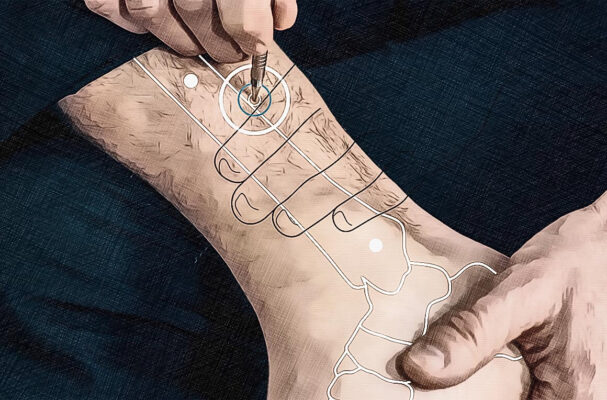
- Crossing point of the three Yin meridians (spleen, liver, kidney)
- Strengthens the spleen and spleen yang
- Promotes the conversion of moisture
- Harmonizes the digestion
- Helps with tiredness and heaviness
Location: 3 cun (about 4 finger widths) above the inner ankle, at the rear edge of the shin.
Application:
Press firmly twice a day for 30–45 seconds. Best done in the morning and evening. Particularly effective when combined with heat (moxibustion).
ACUPUNCTURE POINT: Ma 36
Stomach 36
Three miles on foot — Zú Sān Lǐ
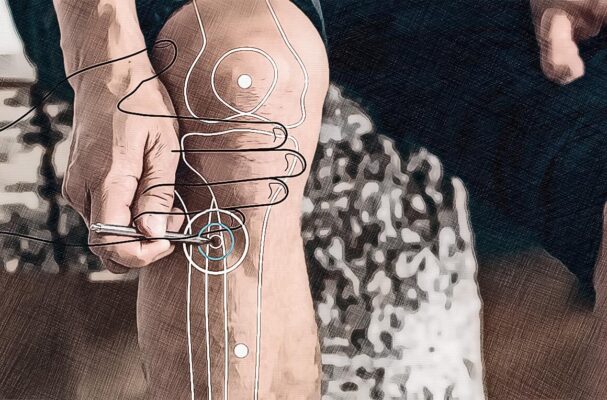
- The master point for Qi and digestion
- Strengthens the spleen and stomach
- Warms the center and dispels cold
- Improves the absorption of nutrients
- Helps with flatulence and soft stools
Location: 3 cun (about 4 finger widths) under the kneecap, 1 cun (about 1 finger width) lateral to the edge of the shin.
Application:
2x täglich für 30–45 Sekunden kräftig drücken. Ideal morgens nach dem Aufstehen und mittags. Moxibustion auf diesem Punkt ist besonders effektiv bei Milz–Yang Mangel.
ACUPUNCTURE POINT: KG 12
Conception vessel 12
Center of the stomach - Zhōng Wǎn
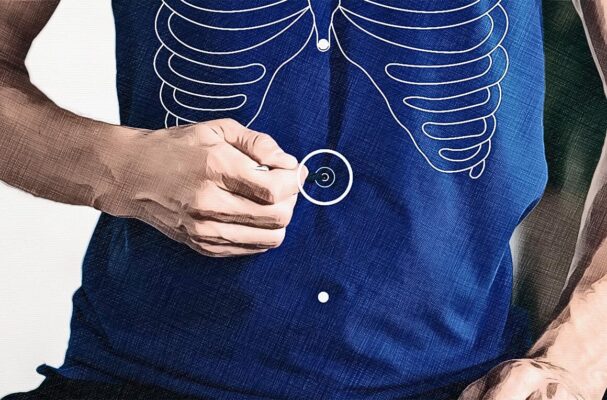
- The alarm point of the stomach - regulates the entire center
- Directly strengthens the spleen and stomach
- Resolves food stagnation
- Warms the central warmer
- Ideal for weak digestion and a cold feeling in the stomach
Location: On the midline of the abdomen, halfway between the navel and the end of the sternum (xiphoid process).
Application:
1x täglich für 30–45 Sekunden mit warmem Druck im Uhrzeigersinn massieren. Ideal vor oder nach den Mahlzeiten. Moxibustion auf diesem Punkt ist besonders wirkungsvoll!
TIP
Moxibustion
Heat treatment for spleen yang deficiency
The ideal complement to acupressure for spleen-yang deficiency. Moxibustion uses smouldering mugwort to bring heat deep into the acupuncture points. This method has been used for thousands of years to strengthen the yang of the center and dispel internal cold.
Our App Recommendation
Atemraum: Your App for Mindful Breathing


Breathing is the foundation of physical and mental well-being—and is usually COMPLETELY underestimated in everyday life. Yet hardly anything has such a direct impact: the way we breathe shapes the way we feel.
That's why we created Atemraum: an app with guided breathing exercises that you can take with you anywhere. Wolfgang put together these exercises—along with a 35-day course, quick tips for the moment, and breathing tests that let you track your progress.
Just a few minutes a day is enough. And anyone who uses our personal support If you use it, it already comes with breathing space.


You can try the app for free for 7 days.
Qi Gong
Qi Gong is moving meditation - Gentle, flowing exercises that harmonize your energy flow and strengthen your Qi. If you have a spleen-yang deficiency, these exercises help to activate your digestive heat, strengthen your center and dispel inner coldness.
Regular practice of Qi Gong (as little as 10-15 minutes a day) has been shown to have positive effects on digestion, metabolism and general well-being.
QI GONG: Exercise 1
Warm the center
Warms the center, strengthens the spleen-yang

Particularly helpful for:
- Feeling cold in the stomach
- Weak digestion
- Soft chair
- Tiredness after eating
Effect:
This exercise specifically warms the center and activates the spleen yang. The gentle rotating movement massages the digestive organs and strengthens the transformative power of the spleen.
QI GONG: Exercise 2
Regulate Qi
Harmonizes the Qi flow in the center
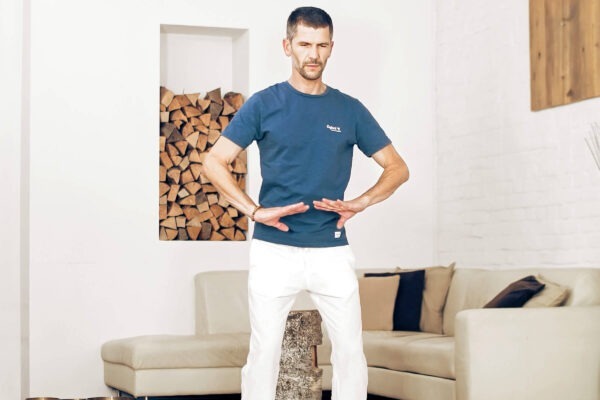
Particularly helpful for:
- Flatulence and bloating
- Irregular digestion
- Stagnation in the middle
- energy shortage
Effect:
This exercise harmonizes the flow of Qi throughout the body and supports the transformative power of the spleen. It helps to release stagnant Qi and regulate digestion.
QI GONG: Exercise 3
Connecting heaven and earth
Strengthens the connection, promotes transformation

Particularly helpful for:
- Feeling of heaviness after eating
- Water retention
- Fatigue and listlessness
- Weak metabolism
Effect:
This exercise promotes the rise of clear yang and the sinking of turbid yin. It strengthens the spleen function of lifting the pure upwards and guiding the turbid downwards.
These Qi Gong exercises are specially selected to strengthen the spleen yang. They activate the heat of digestion, promote the transformation of food and help to dispel internal cold and dampness.
All exercises work particularly well if you practise them between 9 and 11 a.m. - this is the peak of the spleen in the organ clock. However, the time between 7 and 9 a.m. (stomach time) is also ideal.
QI GONG:
When and how often?
In the morning (ideal):
- All 3 exercises as a sequence: approx. 15–20 min.
- Or just 1–2 exercises: approx. 5–10 min.
- Preferably between 9 and 11 am (spleen time)
In between:
- Individual exercises if required (e.g. if you feel cold in your stomach)
- „Warm the center“ for rapid activation of the digestive fire
Regularity is more important than duration:
- It is better to exercise for 10 minutes every day than for 60 minutes once a week.
- After 2–3 weeks, you will notice the first changes.
- After 3 months of regular practice: significantly stronger spleen yang
Pro tip: Practice Qi Gong after getting up and before breakfast. The gentle movements warm the core and prepare the digestion for breakfast. A warm tea or congee afterwards enhances the effect.
LIVE EVERY MONDAY: QI GONG WITH WOLFGANG
Every Monday at 6:00 p.m. Let's practice together live on YouTube. Among other things, Wolfgang will guide you through a complete qigong sequence — free of charge and suitable for all levels.
Why participate live? ✓ Working out together keeps you motivated ✓ Wolfgang explains the exercises in detail ✓ You can ask questions in the live chat ✓ A set time helps keep your routine on track
More about Qi Gong LiveMeridian Yoga — The Yoga of TCM
Meridian Yoga combines yoga with traditional Chinese medicine. The result is a holistic exercise concept for better health and more energy.
In TCM, the spleen and stomach form an inseparable pair - they both belong to the earth element and are jointly responsible for digestion and food conversion. The following exercises activate the stomach meridian, which is energetically closely connected to the spleen. When the stomach meridian flows freely, the spleen is also supported in its warming function.
MERIDIAN YOGA: Exercise 1
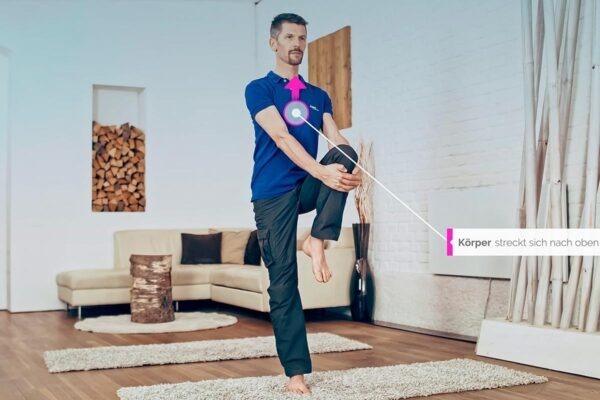
The tree with acupressure
Strengthens digestion and balance with Ma 36
Particularly helpful for:
- Feeling of cold in the stomach and cold limbs
- Carrier digestion and soft stools
- Tiredness after eating
- Lack of earthing and centering
Effect:
In this version of the tree, you hold the Ma 36 acupuncture point on the lower leg while balancing. This point is one of the most important points in TCM - it strengthens the digestive heat and supports both the stomach and spleen in their function.
MERIDIAN YOGA: Exercise 2
The bow
Stretches the front and activates the digestive organs

Particularly helpful for:
- Coldness and weakness in the center of the body
- Flatulence and bloating
- Loss of appetite and sluggish digestion
- Lack of energy and listlessness
Effect:
Diese Rückbeuge dehnt den gesamten Magen–Meridian, der über die Vorderseite des Körpers verläuft. Durch die Öffnung des Bauchraums werden Magen und Milz energetisch aktiviert und die Verdauungswärme angeregt — besonders wohltuend bei Milz–Yang Mangel.
Both exercises activate the stomach meridian, which runs along the front of the body and legs. As the spleen and stomach work together as an earth-element pair, the spleen benefits directly from the activation of the stomach meridian. The free flow of Qi in the stomach supports the warming and transforming power of the spleen.
Particularly effective: Hold each position for 3-5 breaths and visualize warm, golden energy in your abdominal region.
MERIDIAN YOGA:
When and how often?
Best time:
- In the morning after getting up (activates the digestive heat for the day)
- Or between 9 and 11 o'clock (spleen time in the organ clock)
Duration:
- Hold each position for 3–5 breaths.
- Complete sequence: 10–15 minutes
- 3–5 times per week for best results
Important:
- Practice in a warm room (avoid cold)
- Breathe deeply and evenly during the positions.
- Stretching should be comfortable, never painful.
Pro tip: Combine meridian yoga with warming Qi Gong exercises. The gentle movement generates inner warmth and additionally supports the spleen yang. A warm tea afterwards enhances the effect.
Nutrition according to TCM
„Let food be your medicine.“ - This principle has been valid in TCM for thousands of years. If you have a spleen-yang deficiency, the right diet is particularly important for strengthening your digestive fire.
The spleen yang belongs to the Element earth and needs warm, easily digestible food, to regain strength. Warming spices and cooked dishes have a special relationship with the spleen.
What you eat, HOW you eat and WHEN you eat - all of this influences your digestive power and ability to transform.
The golden rules for a strong spleen yang
What is good for you:
Warming spices
- Ginger (warms the center)
- Cinnamon (strengthens the digestive fire)
- Cardamom (transforms moisture)
- Fennel, caraway, aniseed
Spices are the medicine of the kitchen
Cooked cereals
- Rice (strengthens the spleen)
- Millet (warms and nourishes)
- Oats (tonifies the Qi)
- Congee (easily digestible)
Grain is the basis for strong spleen qi
Warming vegetables
- Pumpkin (strengthens the spleen)
- Carrots (sweet and warming)
- Sweet potatoes (nourish the yang)
- Fennel (warms and loosens)
Always cooked, never raw
Soups and stews
- Vegetable soups with ginger
- Chicken broth
- Pumpkin soup
- Congee with spices
Soups are the best medicine for the spleen
What you should avoid:
Cold drinks
- Ice-cold drinks
- Drinks straight from the refrigerator
- ice cube
- Cold smoothies
Cold extinguishes the digestive fire!
Raw food
- Raw salads
- Raw vegetables
- Uncooked fruit in large quantities
- Raw food diets
Raw food cools and weakens the spleen!
Dairy products
- cow's milk
- Yogurt, quark
- Cheese in large quantities
- cream
Generate moisture and strain the spleen
Sugar and tropical fruits
- Industrial sugar, sweets
- Bananas, oranges, pineapple
- Ice cream and ice cream
- Sweet drinks
Generate moisture and cool
HOW YOU SHOULD EAT:
Regular meals
- 3 fixed meals a day
- Breakfast between 7-9 am
- Prefer a hot breakfast
- Dinner before 7 p.m. and light
Mindful eating
- Chew slowly (relieves the spleen!)
- Eat calmly, don't rush
- Do not eat while standing
- Cozy atmosphere
The spleen loves rest and regularity!
Drink properly
- Warm water
- Ginger tea (especially in the morning)
- Fennel tea (after a meal)
- Don't drink too much while eating
Too much liquid dilutes the digestive juices
IDEAL MENU FOR ONE DAY:
Breakfast (7–9 a.m.):
- Warm millet porridge with cinnamon and cardamom
- In addition: Ginger tea
Lunch (12–1 p.m.):
- Pumpkin soup with carrots and ginger
- In addition: Rice with steamed vegetables
- Or: Chicken soup with warming spices
Dinner (6–7 p.m.):
- Light vegetable soup
- Or: Congee with fennel
- In addition: Fennel tea
Snack if needed:
- Warm broth
- Or: Stewed apple with cinnamon
The most important rule when changing your diet is:
Start with ONE step!
Don't change everything at once.
Our suggestion for getting started:
- Establish a hot breakfast - 2 weeks
- Replace cold drinks with warm ones - 2 weeks
- Replace raw food with cooked vegetables - 2 weeks
Step by step, you will notice how your digestion becomes stronger and the cold feeling in your stomach decreases.
Your spleen yang will thank you!
RECIPE: WARMING CONGEE
Ingredients:
For 2 people
- 100 g short-grain rice
- 1 piece of ginger (approx. 3 cm), sliced
- 1 l water or vegetable stock
- 1 pinch of cinnamon
- 1 teaspoon fennel seeds
- 2 spring onions, finely chopped
- salt to taste
- Optional: 3-4 dried dates
Preparation:
- Wash the rice and add water
- Add the ginger and fennel seeds
- Simmer over a low heat for 60-90 minutes
- Stir regularly
- Season to taste with cinnamon and salt
- Serve with spring onions
Effect:
Warms the center and strengthens the spleen yang
Easily digestible and nourishing
Transforms moisture
Ideal as a hot breakfast or for those with weak digestion!
RECIPE: PUMPKIN SOUP WITH GINGER
Ingredients:
Serves 4
- 500 g Hokkaido pumpkin
- 2 carrots
- 1 piece of ginger (approx. 4 cm)
- 1 onion
- 1 l vegetable stock
- 1 teaspoon caraway seeds
- Salt, pepper
- Optional: Coconut milk to refine
Preparation:
- Dice the pumpkin and carrots
- Finely chop the onion and ginger
- Sauté the onion in a little oil
- Add vegetables and spices
- Pour in the stock, simmer for 25 minutes
- Puree and season to taste
Effect:
Strengthens the spleen and warms the center
Nourishes the Qi and the blood
Gently removes moisture
Perfect for fall and winter or when your tummy is cold!
Breathing
Breathing is the bridge between body and mind. In TCM, it is said: „The lungs govern the qi“—according to this concept, through conscious breathing you can directly influence your qi flow and find a deeper sense of calm.
Breathe calmly and slowly: Deep abdominal breathing noticeably calms many people—their breathing becomes deeper, their shoulders relax, and their minds become clearer. The good news: Just 5–10 minutes a day can make a difference in your well-being.
Recommended breathing techniques
ABDOMINAL BREATHING — The basis for every breathing technique
Natural breathing
Abdominal breathing is the most natural and calm form of breathing. According to the teachings of TCM, with every breath you bring qi into your body’s center (Dantian).
Wolfgang shows you step by step, How to learn abdominal breathing correctly—lying down to start with, then later also sitting and standing.
Duration: 9 minutes

4–7–8 BREATHING — Find Peace
Calm Breathing for the Evening
With the 4–7–8 breathing technique, you inhale for 4 seconds, hold your breath for 7 seconds, and exhale for 8 seconds. This steady rhythm helps many people wind down in the evening—ideal when your mind won’t shut off at night.
Perfect for the evening or whenever you want to calm down quickly.
Duration: 9 minutes
To the interactive videoBOX BREATHING — For inner coherence
Professional breathing for focus and calmness
Box Breathing (4 seconds on, 4 seconds hold, 4 seconds off, 4 seconds hold) combines activation and relaxation in perfect balance. This method is used by elite soldiers, athletes, and executives to remain calm and focused even in extremely stressful situations.
A steady 4–4–4–4 rhythm A balance of activity and stillness—many people find it clarifying and grounding.
Duration: 9 minutes
To the interactive videoCOHERENT BREATHING — Brings Body and Mind into Harmony
Calm Breathing for Balance
With coherent breathing Breathe in for 5.5 seconds and out for 5.5 seconds. This rhythm brings your heart and breathing into a steady rhythm—a state known as „coherence.“ Many people use it as a regular breathing break in their daily lives.
A nice side effect: The heart and breath settle into a calm, synchronized rhythm.
Duration: 14 minutes
To the interactive video
COHERENT BREATHING Around the clock
Our 24/7 livestream on coherent breathing runs non-stop. You can tune in at any time and join in right away.
Perfect for:
✓ Spontaneous breaks to catch your breath in between
✓ If you'd like some gentle breathing guidance
✓ As background while working
✓ For the evening and to wind down
✓ For regular daily practice
relaxation
When your body is relaxed, Things tend to flow more easily. Persistent tension keeps you in a constant state of stress. By using specific relaxation techniques, you signal to your body to calm down and recharge.
Progressive muscle relaxation It is one of the best-known relaxation methods and has been practiced for over 100 years. It helps you become aware of tension, actively let go of it, and achieve a state of deep relaxation—whenever you want.
Recommended relaxation technique
PROGRESSIVE MUSCLE RELAXATION (PMR)
The Classic Relaxation Method
Progressive muscle relaxation according to Jacobson is one of the best-known relaxation techniques worldwide. By deliberately tensing and relaxing individual muscle groups, you learn to consciously recognize tension and release it.
That's what it feels like:
Step by step, the body becomes heavier and calmer, and the breathing more even. Many people make this a regular part of their evening routine to help them fall asleep easily.

Maria guides you step by step through the entire exercise—perfect for beginners and advanced practitioners alike.
Duration: 23-minute complete guide
To the guided PMRMeditation
Meditation calms the mind — and a calm mind is good for your whole being. In TCM, it is said that every emotion affects a specific organ. Through regular meditation, you’ll learn to step away from racing thoughts, find emotional balance, and strengthen your inner center.
Just 10 minutes a day can do a lot to help you find inner peace. As a result, many people find that their daily lives become more relaxed and clear.
Recommended meditations
GUIDED MEDITATIONS FOR EVERY DAY
Your personal meditation library
We have a complete Playlist with over 60 guided meditations, breathing exercises, and relaxation techniques—from short 5-minute meditations for in between to deep 30-minute sessions for intensive practice.
In the playlist you will find:
- Morning meditations for a mindful start to the day
- Meditations for restful sleep
- Breathing meditations for inner peace
- Meditations for Moments of Calm Amid Stress and Worry
- TCM standing meditations for all 5 elements
- Body scan and body journeys
- Meditations for Peace of Mind and Body
- Special breathing techniques (4–7–8, coherent breathing, bee breathing)
Perfect for beginners and advanced practitioners. Choose the right meditation for you depending on your time, the time of day, and your needs.
To the meditation playlistDie Milz ist die Wurzel des Nach–Himmels–Qi.
When the spleen is warm and strong, it can transform the food and nourish the whole body.
— From the HUANG DI NEI JING
(The Yellow Emperor's Classic of Internal Medicine)
More tips for your everyday life
In addition to traditional TCM treatment methods there are many small everyday habits that can strengthen your spleen yang. In TCM, the spleen is the „cook“ of your body - with the right habits, you can effectively build up and maintain its digestive fire.
Supplying heat from outside
🔥 Keep your tummy warm
The center needs warmth - help it to do so:
- Hot water bottle on the stomach - especially after eating
- Cherry stone cushion for gentle, long-lasting warmth
- Always wear an undershirt - even in summer
- Make sure your stomach is covered when you sleep
- If you feel cold: place warm hands gently on your stomach
🔥 Moxibustion
The warming power of mugwort:
- Self-Moxa on KG 12 (Zhongwan) - the center of the abdomen
- Also warm Ma 36 (Zusanli) on the leg - strengthens digestion
- 2-3 times a week for 10-15 minutes each time
- Moxa plaster as a practical alternative for on the go
- Wrap up warm and rest after moxa
🛁 Foot baths
Heat from below strengthens the yang:
- Warm foot baths at 38-40 °C
- With ginger or cinnamon in the water - enhances the warming effect
- 15-20 minutes before going to bed
- Then put on warm socks
- Cold feet weaken the yang - always keep them warm
Optimize eating habits
⏰ Regular meals
The spleen loves rhythm and regularity:
- Eat at the same time if possible
- This allows the spleen to adjust optimally to the digestive work
- Breakfast between 7-9 am (stomach time)
- Lunch between 11 a.m. and 1 p.m. (heart time)
- Dinner before 7 p.m. and light
🍵 Don't drink too much
Too much fluid puts a strain on the spleen:
- Only consume liquids in moderation
- Stets warm trinken
- Do not drink during meals - dilutes the digestive juices
- Better in small amounts throughout the day
- Cold drinks are taboo - they put out the digestive fire
🧘 Rest after the meal
The spleen needs rest to do its work:
- Avoid strenuous activities directly after meals
- A short digestive walk (10 minutes) is permitted
- No intensive physical or mental activities
- Do not go back to work immediately
- Allow yourself 15-20 minutes of rest after eating
Movement and rest in balance
🚶 Gentle movement
Exercise in moderation strengthens the spleen:
- Qi Gong and Tai Chi - ideal for the spleen yang
- Leisurely walks in the fresh air
- Gentle yoga without overexertion
- Light stretching exercises
- Avoid exhausting sports - they exhaust the Yang
😰 Avoid brooding
Excessive thinking weakens the spleen:
- Worry and brooding put a direct strain on the spleen
- Learn to interrupt circles of thought
- Meditation and mindfulness exercises help
- Don't think about problems in the evening
- Write down worries - this relieves the mind
😴 Sufficient sleep
Yang regenerates during sleep:
- 7–8 hours of sleep per night
- Go to bed before 11 pm
- Maintain regular bedtimes
- Warm feet help you fall asleep
- Don't keep the bedroom too cold
Seasonal adjustment
🍂 Late summer - the time of the spleen
Late summer belongs to the earth element:
- Best time to specifically strengthen the spleen
- Sweet, nourishing foods such as pumpkin and carrots
- Moderation in everything - do not overeat
- Regular daily rhythm
- Ideal time for herbal cures
❄️ Winter - Protect spleen yang in particular
The spleen yang is particularly at risk in winter:
- Consistently warm food - soups, stews
- Keep your stomach and kidneys particularly warm
- Use more warming spices
- Use moxibustion regularly
- No cold food and drinks
💡 Important all year round
Strengthening the spleen yang requires patience and consistency. It is like nourishing a small fire - with regular care it becomes stronger. Pay attention to your body's signals: a cold feeling in your stomach, soft stools or tiredness after eating show that the spleen needs support. Over time, you will enjoy a warmer body sensation and stronger digestion.
For optimal treatment progress
TCM is not a quick fix for symptoms., but a holistic healing path. You will achieve the best results if you consistently integrate the treatment into your everyday life and give your body time to rebuild its spleen yang.
Integration into everyday life
Start with ONE step
Don't try to change everything at once! That's overwhelming and leads to
usually leads to you giving up. Instead:
- Woche 1–2: Warmes Frühstück etablieren, kalte Speisen und Getränke meiden — und mit deiner TCM–Kräutermischung beginnen
- Week 3-4: Integrate warming spices into all meals
- Week 5-6: Qi Gong „Warming the center“ daily 10 min.
- Week 7-8: Moxibustion or heat treatment on the abdomen
- From week 9: Add further methods as required
Realistic expectations
After 2–3 weeks: First improvements noticeable
- Less flatulence and bloating
- Sturdier chair
- Warmer feeling in the stomach
After 6–8 weeks: Significant improvements
- Better digestion overall
- More energy after eating
- Less water retention and oedema
After 3–6 months: Sustainable healing
- Spleen Yang is significantly strengthened
- Stable digestion and metabolism
- Less sensitivity to cold
TCM vs. Western medicine
TCM and Western medicine are not mutually exclusive—they complement each other!
When Western medicine is important:
- In acute emergencies
- In case of structural damage
- In case of infections
- For accurate diagnoses (laboratory, imaging)
Where TCM has its strengths:
- In case of functional disorders
- For chronic complaints
- For prevention
- For holistic healing
Ideal: Combine both systems! Use Western medicine for
Acute treatment and accurate diagnosis, TCM for lasting healing
and strengthening the body's self-healing powers.
Important: Never stop taking prescribed medication without consulting your doctor first!
Talk to your doctor when you start TCM treatment.
Do you have any questions?

Wolfgang from meine-tcm.com
TCM is a broad field. Much of it sounds unfamiliar at first glance, and often the real question doesn't arise until you start putting some of it into practice in your daily life.
That's exactly what I'm here for. Write to me—no matter how big or small your question is, whether it’s related to this page or to something else entirely in TCM. I read every message myself and will get back to you. Calmly, clearly, and without any sales pitch.
P.S.: There are no stupid questions. So write to me.
Ask your questionEvery step counts
Your body strives for balance—you just need to create the right conditions for it.
Remember:
👣 Every little step counts
You don't have to be perfect. Even one warm meal a day is better than none. Even 5 minutes of qigong is better than no exercise at all.
⏳ Patience pays off
It took your body years to get to this point. Give it time to regain its balance. Change takes time, but it will happen.
🎯 Focus on what you can DO
Don't concentrate on what you are doing „wrong". Focus on every positive step you take.
💚 Be good to yourself
Perfection does not exist. It is acceptable to have an off day occasionally. Tomorrow is a new day when you can continue.
🤝 You are not alone
Thousands of people are walking this path with you. For over 2,000 years, TCM has been guiding people like you on their journey toward greater well-being.
Track Your Progress

To track your progress, we recommend that you repeat the TCM analysis after about 3 months.
Why does this make sense?
- You can see how your pattern has changed
- You can adjust your group as needed
- It motivates you to keep going
- You'll figure out which steps work best for you
⚠️ Important: Your answers from today will be stored in encrypted form using a code that you received via email. ONLY with this code will you be able to track your progress later. Be sure to keep the email in a safe place!
🔒 YOUR DATA IS SAFE
We store:
✓ Only your email address for reminders
✓ The date for shipping
We do NOT store:
✗ Your analysis results
✗ Your personal information
✗ The connection between email and the sample
All analysis data is completely anonymous and is not linked to your email address.
Newsletter
Stay up to date with our newsletter. Besides useful tips and tricks for training and your everyday life, you won't miss any of our new releases.