






On this page, you will learn:
- What this pattern means from the perspective of TCM and Western medicine
- Where your symptoms come from and how they are connected
- Which specific treatment methods can help you now
- How you can strengthen your heart qi and your zest for life with TCM herbs, acupressure, qi gong, and nutrition
The good news: Ein Herz–Qi Mangel lässt sich mit den richtigen Maßnahmen gut behandeln. Mit gezielten Übungen, herzstärkender Ernährung und Akupressur kannst du dein Herz–Qi wieder aufbauen.
Take your time, Get to know the different treatment approaches—you don't have to implement everything at once. Choose what feels right for you and what you can easily integrate into your everyday life.
Your treatment at a glance:
Which TCM pattern is really behind your complaints?
Degree of
imbalance

Light to moderate
Typical
treatment duration

2-4 months
self-treatment
Possible

Can be treated yourself with instructions
Treatment–
scope

1–2 Methods
Proposed
methods

Extensive range
Our free TCM analysis shows you your personal TCM pattern in just 10 minutes.
What is heart qi deficiency?
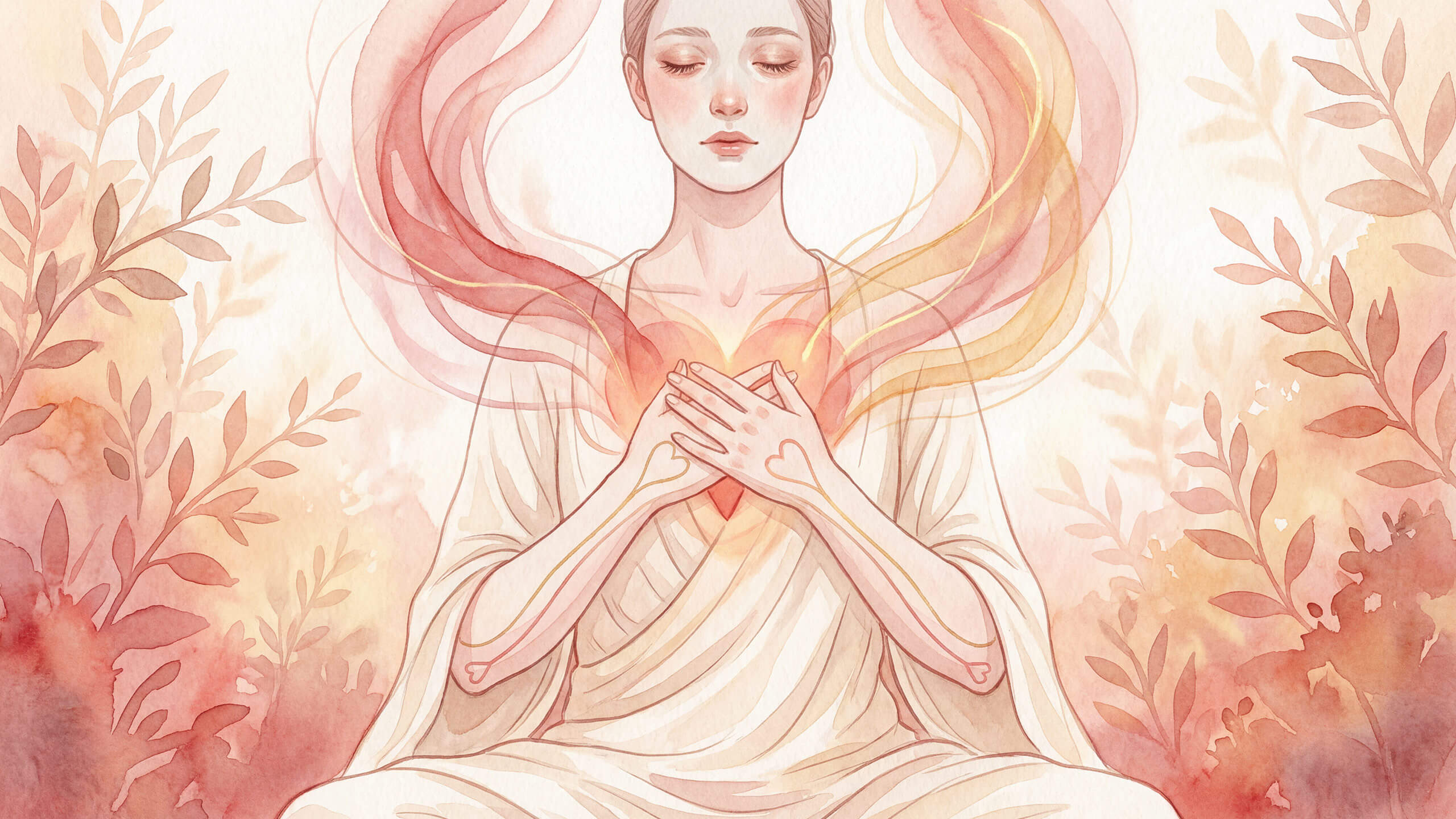
When the heart grows weary and the joy of life fades away
The TCM perspective: Strengthening the emperor of the body
In traditional Chinese medicine, the heart is considered the „emperor of all organs“ — it houses the spirit (Shen) and governs the blood. The heart is the seat of our consciousness, our joy, and our ability to connect with other people.
Heart qi controls our mental clarity and emotional stability. It ensures that blood flows evenly through the body and supplies all organs with vitality. When heart qi becomes weak, the mind loses its calm and joie de vivre begins to fade.
The heart belongs to the fire element and opens to the tongue. It works closely with the small intestine—both belong to the same element. The pericardium, or heart sac, protects the heart like a minister protects his emperor. The heart meridians run along the inside of the arms to the little fingers.
The consequence of heart qi deficiency: The mind becomes restless, the heart beats without reason, concentration wanes, and a deep fatigue spreads. The joy that should be nourished by the heart gives way to an inner emptiness.
The typical signs of heart qi deficiency:
- Herzklopfen oder ein Flattern in der Brust, besonders bei Anstrengung oder Aufregung
- Shortness of breath and rapid fatigue
- Spontaneous sweating, even without physical activity
- Poor concentration and mental fatigue
- Inner turmoil and a feeling of emptiness
The good news: Heart qi can be rebuilt. By eating heart-strengthening foods such as longan and red dates, applying acupressure to the heart meridians, and doing gentle exercises such as qigong „heart opening,“ you can strengthen your heart and regain your zest for life.
The Western perspective: Heart and autonomic nervous system
From a Western perspective, heart qi deficiency often corresponds to functional heart failure—a condition in which the heart is organically healthy but no longer performs adequately under stress. The autonomic nervous system often plays a central role in this.
Imagine your heart as an engine: chronic stress and emotional exhaustion cause this engine to run constantly at high pressure without sufficient recovery phases. The result is functional weakness, which manifests itself in palpitations, shortness of breath, and rapid exhaustion—typical symptoms of what we now refer to as heart anxiety or functional heart problems.
Another important aspect is the connection between the heart and the psyche. The so-called heart-brain axis shows that emotional states have a direct influence on heart function. Anxiety, grief, and chronic stress can cause measurable changes in heart rate variability.
What does modern medicine show?
- Functional heart problems: palpitations without organic cause
- Heart rate variability: Reduced adaptability of the heart
- Vegetative dysregulation: imbalance between the sympathetic and parasympathetic nervous systems
- Chronic fatigue: Often associated with heart palpitations and feelings of anxiety
- Orthostatic dysregulation: dizziness when standing up due to poor circulatory adaptation
- Psychosomatic complaints: The soul speaks through the heart
Modern research confirms: Chronic emotional stress leads to measurable changes in heart function. Regeneration requires more than just physical rest—it needs emotional relief, targeted relaxation, and gentle exercise.
TCM treatment for heart qi deficiency addresses precisely this issue: it strengthens and calms the mind, nourishes the heart qi, and restores balance to the exhausted system—gently, profoundly, and sustainably. The heart needs rest and joy to regenerate, but with the right measures, vitality can be restored.

The Yellow Emperor's team explains your pattern
The Yellow Emperor | Qi Bo | Dr. Lisa Weber
Founder of TCM | Master of Healing Arts | Modern Physician
What happens when the legendary Yellow Emperor of Traditional Chinese Medicine sits down with his advisor Qi Bo and a modern doctor? They explain YOUR pattern—using 4,000-year-old knowledge AND the latest science.
Heart qi deficiency — When the heart becomes tired and the joy of life fades
The Yellow Emperor: „Qi Bo, in my kingdom I observe people whose hearts beat weakly. They are tired, short of breath at the slightest exertion, and their once bright eyes have lost their sparkle. Joy seems to have disappeared from their lives. What is the cause of this condition?“
Qi Bo: „Your Majesty, these people suffer from a deficiency of heart qi. The heart is no ordinary organ—it is the emperor of all organs, the seat of the shen, our spirit. The heart governs the blood and blood vessels; it houses consciousness and emotions. It belongs to the fire element and brings warmth, joy, and vitality to our lives. When the heart qi is weak, a person loses their inner flame—like a candle whose wick has become too short.“
Dr. Weber: „That is both a poetic and precise description! In modern medicine, we see the heart as the central pump of the circulatory system. In heart failure - cardiac insufficiency - the heart can no longer pump enough blood through the body. The symptoms are surprisingly similar: tiredness, shortness of breath, reduced resilience. The connection to the psyche is also interesting: heart patients often suffer from depression and listlessness. Research shows that the heart and brain are closely connected via the autonomic nervous system.“
The Yellow Emperor: „So your science also recognizes the special role of the heart for the spirit?“
Qi Bo: „That is exactly right, Your Majesty. The heart is home to the Shen—the spirit that gives us clarity, awareness, and the ability to experience true joy. When the heart qi is strong, the eyes shine, speech is clear, and sleep is deep and restful. If the heart qi is weak, the shen becomes restless: the person is anxious, jumpy, their sleep is disturbed, and their thoughts race. The heart opens to the tongue — therefore, a deficiency of heart qi also disrupts speech and the ability to express joy.“
The Yellow Emperor: „What causes this weakness of the heart qi?“
Qi Bo: „There are many causes, Your Majesty. First: chronic emotional stress—especially suppressed grief, constant worry, or a lack of joy exhaust the heart qi. Second: overwork without sufficient rest—the heart needs periods of rest and quiet. Thirdly: Long illnesses that have weakened the qi as a whole. Fourthly: Excessive mental work without physical balance — too much thinking and brooding puts strain on the heart. Fifthly: Inadequate nutrition that does not nourish the blood and qi. And sixthly: Lack of true heartfelt joy and human connection.“
Dr. Weber: „This correlates perfectly with our cardiological findings! Chronic stress increases cortisol levels and puts permanent strain on the cardiovascular system. The so-called ‚broken heart syndrome‘ — Takotsubo cardiomyopathy — shows that severe emotional stress can actually cause physical damage to the heart. Lack of sleep and overwork significantly increase the risk of heart disease. And the link to social isolation? Studies show that loneliness increases the risk of heart attack by up to 30 percent. Ancient knowledge meets modern epidemiology here!“
The Yellow Emperor: „What signs tell me that someone is suffering from heart qi deficiency?“
Qi Bo: „The symptoms are characteristic, Your Majesty. The affected person exhibits: heart palpitations and fluttering in the chest, especially during exertion or excitement. Shortness of breath even during light exertion. Deep fatigue that is only partially relieved by rest. Spontaneous sweating without physical exertion. A pale face without a healthy glow. The tongue is pale, possibly slightly swollen, with a thin white coating. The pulse is weak and empty, especially at the heart position — sometimes also irregular. The Shen appears subdued: the gaze is dull, the voice quiet, the zest for life diminished.“
Dr. Weber: „This constellation of symptoms is clinically very relevant! Palpitations - heart palpitations - are a common sign of heart failure and arrhythmias. Dyspnoea, i.e. shortness of breath on exertion, occurs when the heart cannot pump enough blood into the lungs and the body. Spontaneous sweating can indicate disorders of the autonomic nervous system. Paleness indicates reduced blood circulation. And the ‚dampened spirit‘? This corresponds to the depression that often accompanies heart disease, which we now take seriously as a separate clinical picture.“
The Yellow Emperor: „Now let's talk about treatment. How can the heart qi be strengthened?“
Qi Bo: „Your Majesty, the treatment principle is: Bu Xin Qi — tonify and strengthen the heart qi. This is achieved in several ways: First, through cultivating joy — the heart thrives on joy, gratitude, and loving connection. Second, through gentle exercise — strenuous sports exhaust the heart, but gentle exercises such as qi gong nourish it. Thirdly, through heart-strengthening food: red dates nourish the heart blood, longan fruits calm the Shen, wheat strengthens the heart Qi. Fourthly, through sufficient sleep — the heart recovers at night. And fifthly, through the cultivation of the Shen: meditation, silence, and inner peace deeply nourish the heart.“
Dr. Weber: „Wonderful recommendations! Cardiological research confirms that positive emotions and social connections have been proven to lower blood pressure and protect the heart. Moderate exercise—not too intense!—strengthens heart function, while overtraining can be harmful. Whole wheat contains magnesium, which is essential for heart function. Getting enough sleep — ideally seven to eight hours — has been shown to protect the heart. And meditation? Studies show that regular meditation lowers blood pressure, improves heart rate variability, and reduces the risk of cardiovascular disease!“
The Yellow Emperor: „Qi Bo, what specific exercises do you recommend for the heart?“
Qi Bo: „The most important exercise is to ‚open your heart‘, Your Majesty. Stand upright with your arms crossed in front of your chest. As you inhale, open your arms wide to the side, lift your gaze gently upwards and open your chest. As you exhale, bring your arms together again. This movement opens the heart qi and dispels stagnation. Acupressure on heart 7 - on the inner wrist - is also valuable: this point calms the Shen and strengthens the heart. The point Ren Mai 17 (KG 17) - in the middle of the sternum - is the ‚Sea of Qi‘ and nourishes the entire Heart Qi. And the simple smile! A conscious, gentle smile for 2 minutes a day opens the heart energy.“
Dr. Weber: „These exercises have tangible physiological effects! Opening the chest stretches the respiratory muscles and promotes deep abdominal breathing—this activates the parasympathetic nervous system and calms the heart. Acupressure has been shown to improve heart rate variability. The sternum center corresponds anatomically to the thymus, which is important for the immune system. And smiling? Even a ‚fake‘ smile activates the facial muscles, which send positive signals to the brain via nerve connections — the so-called facial feedback hypothesis. Smiling actually makes you happier!“
The Yellow Emperor: „Wonderful! Let's turn this wisdom into a practical plan.“
THE 3-WISE METHOD FOR HEART QI DEFICIENCY
MORNING ROUTINE (awaken heart qi):
- TCM: Conscious smiling for 2 minutes — nourishing the heart with joy
- Science: Smiling activates positive neurotransmitters and reduces stress hormones.
- Practical: After waking up in bed: gently close your eyes and put a slight smile on your lips. Hold for 2 minutes while thinking of something pleasant.
- TCM: Qi Gong exercise „Opening the heart“ — expanding the chest
- Science: Chest expansion promotes deep breathing and activates the parasympathetic nervous system.
- Practical: Stand with your arms crossed in front of your chest, open them wide as you inhale, and bring them back together as you exhale. Repeat 8–10 times.
- TCM: Warm breakfast with heart-healthy ingredients
- Science: Whole grains provide magnesium and B vitamins, which support heart health.
- Practical: Oatmeal porridge with red dates (2–3 pieces) and a teaspoon of honey. Accompanied by warm tea instead of coffee.
TAGS STRATEGY (nourishing heart qi):
- TCM: Longan or date snack to strengthen the heart
- Science: Natural fruits provide antioxidants and gentle energy without blood sugar spikes.
- Practical: 3–5 red dates or dried longan as an afternoon snack. Enjoy slowly and mindfully.
- TCM: Acupressure on Heart 7 (Shenmen) — the „gate of the mind“
- Science: Stimulation of this point can have a calming effect and improve heart rate variability.
- Practical: On the inner wrist, in the hollow on the little finger side. Massage gently in a circular motion for 2–3 minutes on each side. Particularly helpful for restlessness.
- TCM: Take short breaks for your heart — don't work through them
- Science: Regular breaks lower cortisol levels and relieve strain on the cardiovascular system.
- Practical: Take a 5–10 minute break every 90 minutes. Get up, go to the window, and take a deep breath. No screens during the break.
EVENING RITUAL (calm and regenerate heart qi):
- TCM: Acupressure on Ren Mai 17 (Shanzhong) — the „Sea of Qi“
- Science: Gentle pressure on the sternum can have a calming effect and deepen breathing.
- Practical: In the middle of the sternum, at nipple level. Massage gently in a circular motion for 3–5 minutes. Breathe deeply and calmly while doing so.
- TCM: Heartwarming evening meal — light and warm
- Science: A light meal 2–3 hours before bedtime promotes restful sleep.
- Practical: Wheat groats soup or light chicken broth with vegetables. Alternatively: oatmeal with lotus seeds. Do not eat too late or too heavily.
- TCM: Go to bed early — your heart needs rest to regenerate
- Science: Getting enough sleep is essential for heart health and regulating the autonomic nervous system.
- Practical: Be in bed by 10:30 p.m. at the latest. Aim for 7–8 hours of sleep. Before going to sleep: 10 minutes of silence — no cell phone, no television.
The Yellow Emperor: „Qi Bo, how long will it take for the heart qi to regain its strength?“
Qi Bo: „Your Majesty, the heart is the emperor—it takes time and loving care to heal. After 2–3 weeks of consistent practice, most people notice that their sleep becomes more peaceful and their heart palpitations subside. After 6–8 weeks, energy and resilience improve significantly. After 3–6 months, the heart qi can be fundamentally strengthened — the eyes begin to shine again, joie de vivre returns, and the shen is clear and calm. Important: The heart does not heal through effort, but through joy, calm, and loving self-care.“
Dr. Weber: „This corresponds to our clinical experience with functional heart problems! Heart rate variability—a measure of heart health—often improves after just a few weeks of regular relaxation exercises. Stress tolerance gradually increases. And what about joie de vivre? Studies show that positive emotions and social connections have measurable positive effects on heart function. The advice to heal the heart with joy rather than effort is medically sound!“
The Yellow Emperor: „What should people pay particular attention to in summer when the fire element reigns supreme?“
Qi Bo: „Summer is the season of the heart, Your Majesty! During this time, the heart is particularly active, but also vulnerable. People should: Not work in the intense heat of midday—it exhausts the heart qi. Drink enough fluids, but not too cold—cold drinks shock the heart. Get up early and go to bed later than in winter — but take a 20–30 minute nap at noon. Enjoy bitter foods — they nourish the heart. Cultivate joy — summer is the time to fill the heart with joy. Those who care for their hearts in summer will have the strength to reap the rewards in autumn.“
Dr. Weber: „Excellent seasonal recommendations! Heat actually puts considerable strain on the cardiovascular system—statistically, heart attacks and strokes increase on hot days. Adequate hydration is essential, but ice-cold drinks can strain the circulation. The afternoon nap—the siesta—is a tradition in hot countries for good reason: it relieves the heart during the hottest hours of the day. And bitter foods such as arugula, chicory, or green tea? They contain polyphenols and antioxidants that actually protect the heart!“
The Yellow Emperor: „Then the message is clear: the heart, our inner emperor, deserves loving attention. With joy, calm, gentle movement, and heart-nourishing food, the heart qi can flourish and give us a fulfilled, joyful life.“
Qi Bo: [smiles] „That's right, Your Majesty. The heart is the throne of the spirit. Those who adorn this throne with joy, gratitude, and inner peace will have a life that shines from within. For the secret to a happy life lies not in achieving more, but in opening your heart to the joy that is already there.“
About our „3 Wise Men“ story
Who are the Yellow Emperor and Qi Bo?
The Yellow Emperor (Huangdi) is said to have lived around 2600 BC and is considered the mythical founder of Chinese culture and medicine. Qi Bo was his most important advisor and personal physician. Their discussions about health, illness, and human nature were recorded in the most important fundamental work of TCM.
The book: Huangdi Neijing
The Huangdi Neijing, also known as The Yellow Emperor's Classic of Internal Medicine, was probably written between 200 BC and 200 AD. It is the oldest surviving work on Chinese medicine and consists of dialogues between the Yellow Emperor and his advisors, mainly Qi Bo.
This work is to TCM what the Bible is to Christianity: the absolute foundation. All the important concepts - yin and yang, the 5 elements, qi, meridians and acupuncture points - are systematically described here for the first time.
Our modern approach: The 3 wise men
In our series „The Three Sages,“ we bring together the Yellow Emperor and Qi Bo with the fictional modern doctor and microbiologist Dr. Weber.
Important note: All three characters and their conversations are purely fictitious and invented by us.
We use this narrative form, similar to the dialogue form in the book Huangdi Neijing, to convey the often complex interrelationships of TCM in an understandable and entertaining way. When the 4,000-year-old emperor is confronted with modern science, enlightening „aha moments“ arise that show that ancient wisdom and new research often speak the same language — just in different words.
This makes TCM lively, understandable and practically applicable for your everyday life.
The dialogs are creative interpretations - not historical documents. For medical questions, please consult a qualified TCM therapist or doctor.
Your treatment options
Heart qi deficiency is very treatable! TCM offers you a variety of effective methods to rebuild your heart qi and your zest for life. You don't have to do everything at once — choose the methods that suit you and your everyday life.
Here you will find specific treatment approaches that have been proven effective in TCM for thousands of years and that you can largely apply yourself.
TCM herbs
Herbal medicine (or, in modern terms, phytotherapy) is the MOST IMPORTANT tool of TCM. It is an integral part of every traditional TCM treatment. Today, there is a suitable herbal blend for every TCM pattern.

Here's how to find the right herbal blend for you
- Search online. Enter Herz–Qi Mangel "TCM Kräutermischung" — including the quotation marks — into the search engine of your choice. If you wish, add the following to the search term: Compressed pieces — in our experience, the easiest to take — or Granules. This way, you'll see several providers and can compare them at your leisure.
- Our Therapist Directory. In the TCM Therapist Directory You can find TCM practitioners in your area who will tailor a TCM herbal blend to your individual constitution.
- Your TCM Pharmacy. Some pharmacies carry TCM herbal blends or can order them for you. Tell them what you're looking for—or show them this page.
In any case, pay attention to the quality of the TCM herbal blend, not the price—it’s worth taking a look at the list of ingredients.
Not sure which herbal blend is right for your TCM pattern? Write to us. We'll tell you which classic recipe traditionally goes with this pattern and what you should look for when choosing one.
Request a tip on herbal blends
TCM uses many different methods. Which ones are right for you is the question we hear most often. And it’s not something that can be answered offhand.
That’s why we offer our personalized TCM support. It begins with a free, no-obligation ONLINE initial consultation with Wolfgang.
After that, you’ll receive a personalized support plan outlining all the components and costs as a proposal. If it works for you, we’ll get started: In a second online session (about 30 minutes), Wolfgang will discuss your path with you.
Acupressure
Acupressure is acupuncture without needles. — you can apply them yourself at any time. By gently pressing on specific points, you activate the flow of energy in the meridians and strengthen the corresponding organs.
Die folgenden drei Punkte stärken gezielt das Herz–Qi und beruhigen den Geist (Shen) — zwei liegen auf dem Herz–Meridian, der dritte auf dem Konzeptionsgefäß mitten auf dem Brustbein.
ACUPUNCTURE POINT: He 07
Heart 07
Gate of the Spirit — Shen Men
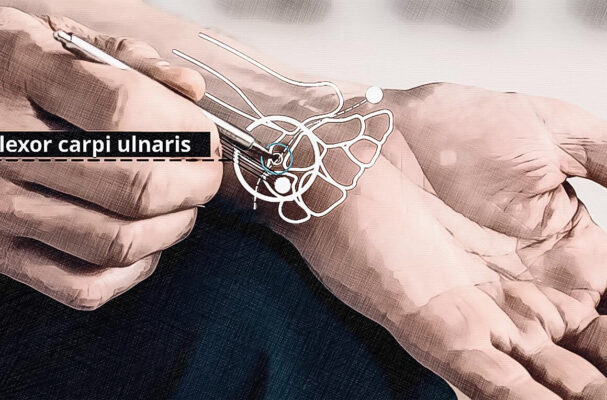
- Source point of the heart meridian — strengthens heart qi
- Calms the mind (Shen) and the heart
- Strengthens the heart blood
- Helps with sleep disorders, anxiety, and heart palpitations
- Promotes mental health and resilience
Location:
In front of the pisiform bone, in a depression on the side of the little finger, at the level of the inner wrist crease.
Application:
Hold twice daily for 30–45 seconds with gentle pressure. Ideal in the evening in bed to calm the mind.
ACUPUNCTURE POINT: He 03
Heart 03
The Little Sea — Shao Hai
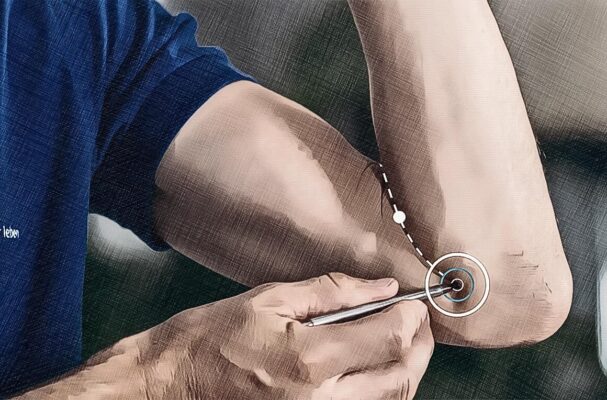
- The „good mood point“ — promotes joie de vivre
- Öffnet die Leitbahn und beruhigt den Geist bei innerer Unruhe
- Löst Enge und Druck im Ellenbogen– und Brustbereich
- Helps with depressive moods and sadness
- Has a calming effect on the psychological level
Location:
At the medial end of the elbow crease, above the medial epicondyle when the elbow is flexed.
Application:
Hold twice daily for 20–30 seconds with gentle pressure. Ideal in combination with He 07.
ACUPUNCTURE POINT: KG 17
Concept vessel 17
Center of the chest — Shan Zhong
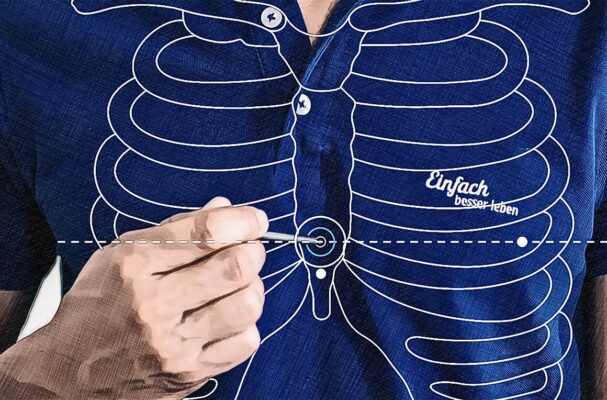
- Master point for breathing and circulation
- Pericardial alarm point — strengthens the heart
- Calms the mind (Shen) and opens the chest
- Clears the lungs and strengthens the circulation
- Helps with heart problems and emotional unrest
Location:
In the middle of the sternum, at the level of the nipples.
Application:
Hold twice a day for 30-45 seconds with medium pressure. Ideal for emotional calming.
Our App Recommendation
Atemraum: Your App for Mindful Breathing


Breathing is the foundation of physical and mental well-being—and is usually COMPLETELY underestimated in everyday life. Yet hardly anything has such a direct impact: the way we breathe shapes the way we feel.
That's why we created Atemraum: an app with guided breathing exercises that you can take with you anywhere. Wolfgang put together these exercises—along with a 35-day course, quick tips for the moment, and breathing tests that let you track your progress.
Just a few minutes a day is enough. And anyone who uses our personal support If you use it, it already comes with breathing space.


You can try the app for free for 7 days.
Qi Gong
Qi Gong is moving meditation — gentle, flowing exercises that harmonize your energy flow and strengthen your qi. If you have a heart qi deficiency, these exercises help to build up your heart qi, calm your mind (shen), and restore your zest for life.
Regular practice of Qi Gong (as little as 10-15 minutes a day) has been shown to have positive effects on heart energy, emotional balance and general well-being.
QI–GONG: Exercise 1
Open heart
Opens the chest cavity, strengthens the heart qi
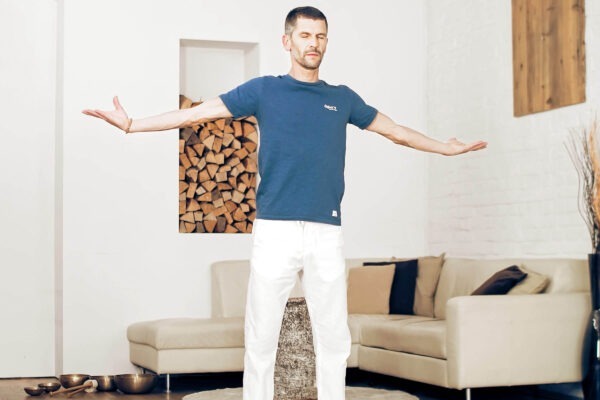
Particularly helpful for:
- Tightness and pressure in the chest
- Emotional reticence
- Heart palpitations and restlessness
- Lack of zest for life
Effect:
This exercise gently opens the chest and activates the heart meridian. The wide arm movement allows the qi to flow freely in the heart area and strengthens the heart qi. Particularly effective for tightness in the chest and emotional closedness.
QI–GONG: Exercise 2
Regulate Qi
Harmonizes energy flow, calms the mind
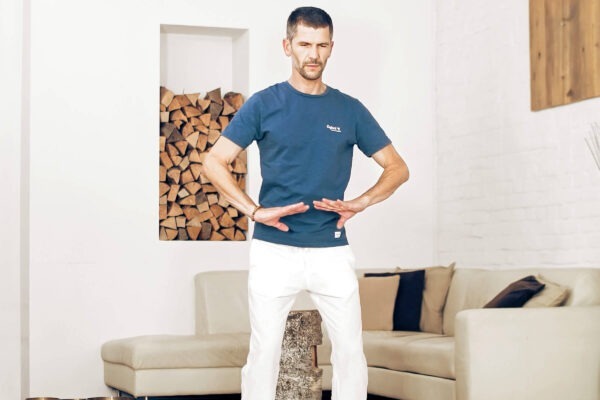
Particularly helpful for:
- Inner restlessness and nervousness
- Irregular heartbeat
- Exhaustion due to stress
- Emotional instability
Effect:
This exercise regulates and harmonizes the flow of qi throughout the body. The calm, steady movements calm the mind (shen) and balance the heart qi — particularly valuable for nervous restlessness and overwork.
QI GONG: Exercise 3
Connecting heaven and earth
Connects above and below, centers the heart

Particularly helpful for:
- Detachment and restlessness
- Lack of grounding
- Shortness of breath during exertion
- Weakness and lack of energy
Effect:
This exercise connects the energy of heaven and earth in the heart—the middle Dantian. The stretching and lowering movements promote the free flow of energy and strengthen the heart qi by connecting the top and bottom.
These Qi Gong exercises are specially selected to strengthen the heart qi. They open the chest, calm the mind (shen), and activate the fire element of the heart.
All exercises are particularly effective when practiced between 11 a.m. and 1 p.m. — this is the peak time for the heart in the organ clock. The time between 7 p.m. and 9 p.m. (pericardium time) is also suitable, as the pericardium forms the protective covering of the heart.
QI GONG:
When and how often?
In the morning (ideal):
- All 3 exercises as a sequence: approx. 15–20 min.
- Or just 1–2 exercises: approx. 5–10 min.
- Preferably between 11 a.m. and 1 p.m. (heart time)
In between:
- Individual exercises as needed (e.g., for heart palpitations or restlessness)
- „Open your heart“ for quick relaxation in the chest area
Regularity is more important than duration:
- It is better to exercise for 10 minutes every day than for 60 minutes once a week.
- After 2–3 weeks, you will notice the first changes.
- After 3 months of regular practice: significant improvement
Pro tip: Practice the exercises in a calm, joyful atmosphere. If you have heart qi deficiency, it is particularly important to avoid stress and cultivate positive emotions — this nourishes the shen and strengthens the heart.
LIVE EVERY MONDAY: QI GONG WITH WOLFGANG
Every Monday at 6:00 p.m. Let's practice together live on YouTube. Among other things, Wolfgang will guide you through a complete qigong sequence — free of charge and suitable for all levels.
Why participate live? ✓ Working out together keeps you motivated ✓ Wolfgang explains the exercises in detail ✓ You can ask questions in the live chat ✓ A set time helps keep your routine on track
More about Qi Gong LiveMeridian Yoga — The Yoga of TCM
Meridian Yoga combines classic yoga poses with the energy concept of traditional Chinese medicine. — more dynamic than traditional yoga and focused on improving health and energy levels.
Targeted stretches along the twelve main meridians open blocked energy pathways, strengthen organ functions, and increase permeability in fascia, joints, and muscles.
Accompanied by calm breathing and mindful body awareness, Meridian Yoga has a particularly balancing effect on stress, exhaustion, and inner restlessness. The gentle style is suitable for all ages—even without prior experience—and helps you strengthen your core, become more flexible, and let your life energy flow more freely again.
MERIDIAN YOGA: Exercise 1
Open heart for the heart meridian
Opens the chest cavity and activates the heart qi

Particularly helpful for:
- Tightness in the chest
- Shortness of breath and shallow breathing
- Emotional reticence
- Lack of zest for life
Effect:
This exercise gently opens the chest and stretches the inner arms, where the heart meridian runs. Opening the heart promotes the free flow of heart qi and calms the mind (shen).
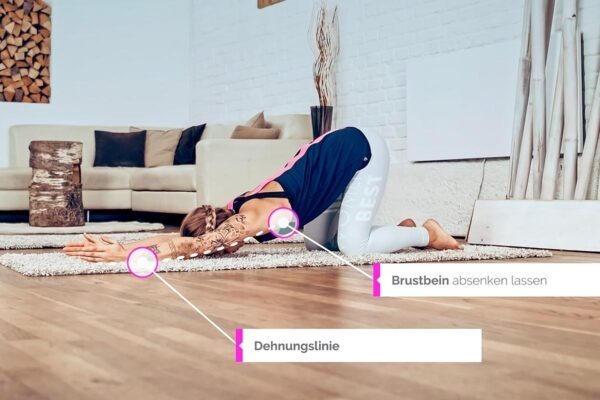
MERIDIAN YOGA: Exercise 2
Shell stretch for the heart meridian
Calms the heart and relaxes the upper body
Particularly helpful for:
- Restlessness and nervousness
- Heart palpitations and fluttering
- Sleep disorders
- Emotional exhaustion
Effect:
Der Shell Stretch bringt den Körper in eine schützende, beruhigende Position und dehnt den gesamten Rücken sowie die Arme. Diese Übung sammelt das Herz–Qi, statt es zu verbrauchen, und beruhigt den aufgeregten Geist.
Both exercises activate the heart meridian, which begins in the armpit, runs down the inside of the arms, and ends at the little finger. Stretching stimulates the flow of qi and strengthens heart function.
Particularly effective: Hold each position for 3–5 breaths, breathing deeply into your abdomen.
MERIDIAN YOGA:
When and how often?
Best time:
- At noon between 11 a.m. and 1 p.m. (heart meridian time)
- Or in the early evening to relax
Duration:
- Hold each position for 3–5 breaths.
- Complete sequence: 10–15 minutes
- 3–5 times per week for best results
Important:
- Practice in a quiet, relaxed atmosphere
- Breathe deeply and evenly during the positions.
- Stretching should be comfortable, never painful.
Pro tip: Combine Meridian Yoga with Qi Gong — first the flowing Qi Gong movements, then the Meridian Yoga exercises for maximum heart Qi building.
Nutrition according to TCM
„Let food be your medicine.“ — this principle has been applied in TCM for thousands of years. If you have a heart qi deficiency, proper nutrition is particularly important for strengthening your heart and your spirit (shen).
The heart belongs to the Fire element and needs neutral to warm, nourishing food, to regain strength. Red foods have a special relationship with the heart.
What you eat, HOW you eat and WHEN What you eat affects your heart qi and your zest for life.
The golden rules for a strong heart
What is good for you:
Cereals (neutral to warm)
- Wheat (calms the heart)
- Oats (nourishes the heart qi)
- Millet (strengthens the center)
- Spelt (gentle and nourishing)
Grains form the basis for a strong heart
Heart tonics
- Red dates (classic heart tonic)
- Longan fruit (nourishes the heart and blood)
- Lotus seeds (calm the Shen)
- Goji berries (nourish the heart and blood)
Nourish the heart and calm the mind
Animal-based foods
- Chicken (strengthens qi)
- Beef (nourishes blood and qi)
- Lamb heart (strengthens the heart qi)
- Eggs (nourishing and restorative)
Bauen das Herz–Qi sanft auf
beverages
- Rosenknospentee (bewegt sanft und hebt die Stimmung)
- Rose water (opens the heart)
- Wheat tea (calming)
- Longan–date tea (nourishes the heart)
Gentle drinks for a calm heart
What you should avoid:
Coffee and stimulants
- Coffee (stimulates the heart)
- Energy drinks
- Schwarzer und grüner Tee in größeren Mengen
- cola
Overstimulate the heart qi!
Alcohol
- Wine, beer, spirits
- Harmful even in small quantities
- Disturbs the Shen
- Heats the heart
Causes lasting damage to the heart qi!
Spicy food
- Chili, hot spices
- Pepper in large quantities
- Hot sauces
- Raw garlic
Zerstreut das Qi, das aufgebaut werden soll
Cold drinks and hard-to-digest foods
- Ice-cold drinks
- Ice cream, frozen food
- Greasy, fried food
- Heavy, late meals
Stresses the heart and circulation
HOW YOU SHOULD EAT:
Regular meals
- 3 fixed meals a day
- Breakfast between 7-9 am
- Prefer a hot breakfast
- Dinner before 7 p.m. and light
Mindful eating
- Eat in peace, without distractions
- Chew slowly and thoroughly
- Enjoy with pleasure
- Do not eat while standing or walking
The heart loves joy and lightness!
Drink properly
- Warm water
- Weizentee oder Rosenknospentee
- Rose water with warm water
- Longan–date tea
Gentle drinks calm the heart
IDEAL MENU FOR ONE DAY:
Breakfast (7–9 a.m.):
- Warm oatmeal with red dates and longan
- In addition: Warmes Wasser oder Weizentee
Lunch (12–1 p.m.):
- Chicken soup with lotus seeds
- In addition: Millet or rice with steamed vegetables
- Or: Wheat congee with goji berries
Dinner (6–7 p.m.):
- Light vegetable and rice soup
- Or: Steamed fish with vegetables
- In addition: Calming wheat tea
Snack if needed:
- Handful of red dates and goji berries
- Or: Longan fruits
The most important rule when changing your diet is:
Start with ONE step!
Don't change everything at once.
Our suggestion for getting started:
- Kaffee reduzieren oder durch Longan–Datteln–Tee ersetzen — 2 Wochen
- Eat 3–5 red dates daily — 2 weeks
- Dinner before 7 p.m. and keep it light — 2 weeks
Step by step, you will notice how your heart becomes calmer and your zest for life returns.
Your heart will thank you!
RECIPE: LONGAN–DATE TEA
Ingredients:
For 2 people
- 10 g dried longan fruit
- 5 red dates (pitted)
- 500 ml water
- 1 tablespoon goji berries
- Optional: 1 teaspoon honey, 2–3 lotus seeds
Preparation:
- Cut the dates in half and press down lightly.
- Bring water to a boil in a pot.
- Add longan, dates, and lotus seeds.
- Simmer on low heat for 15–20 minutes.
- Add goji berries in the last 5 minutes.
- Allow to cool slightly, then sweeten with honey.
- Enjoy warm
Effect:
Strengthens the heart qi
Nourishes the heart and blood
Calms the mind (Shen)
Perfect in the afternoon or before bedtime!
RECIPE: HEART-STRENGTHENING CONGEE
Ingredients:
For 2 people
- 80 g rice (short grain)
- 50 g wheat (whole)
- 800 ml water
- 5 red dates (pitted)
- 2 tablespoons lotus seeds
- 1 tablespoon goji berries
- Optional: 1 teaspoon honey
Preparation:
- Wash the rice and wheat thoroughly.
- Bring water to a boil, add rice and wheat
- Simmer on low heat for 30–40 minutes.
- Add dates and lotus seeds after 20 minutes.
- Add goji berries in the last 5 minutes.
- Season to taste with honey
- Serve warm
Effect:
Strengthens the heart qi in the long term
Calms and nourishes the Shen
Easy to digest and fortifying
Perfect as a warming breakfast!
Breathing
Breathing is the bridge between body and mind. In TCM, it is said: „The lungs govern the qi“—according to this concept, through conscious breathing you can directly influence your qi flow and find a deeper sense of calm.
Breathe calmly and slowly: Deep abdominal breathing noticeably calms many people—their breathing becomes deeper, their shoulders relax, and their minds become clearer. The good news: Just 5–10 minutes a day can make a difference in your well-being.
Recommended breathing techniques
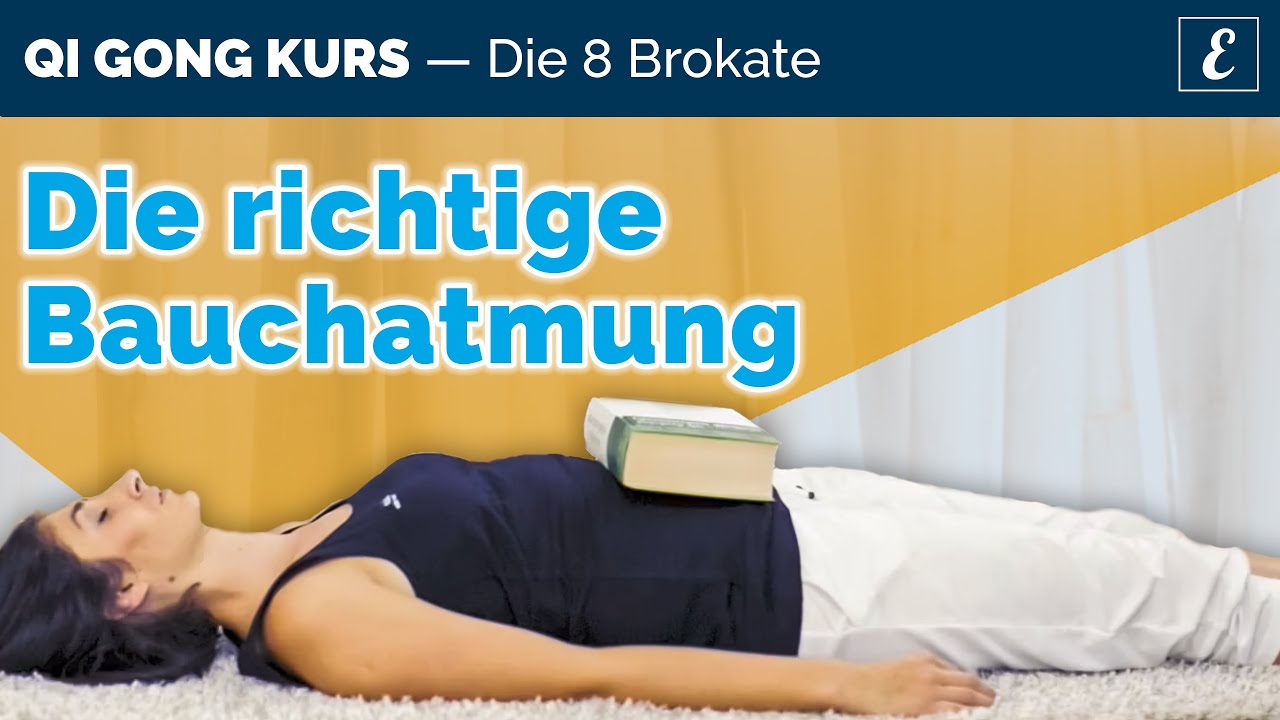
ABDOMINAL BREATHING — The basis for every breathing technique
Natural breathing
Abdominal breathing is the most natural and calm form of breathing. According to the teachings of TCM, with every breath you bring qi into your body’s center (Dantian).
Wolfgang shows you step by step, How to learn abdominal breathing correctly—lying down to start with, then later also sitting and standing.
Duration: 9 minutes
4–7–8 BREATHING — Find Peace
Calm Breathing for the Evening
With the 4–7–8 breathing technique, you inhale for 4 seconds, hold your breath for 7 seconds, and exhale for 8 seconds. This steady rhythm helps many people wind down in the evening—ideal when your mind won’t shut off at night.
Perfect for the evening or whenever you want to calm down quickly.
Duration: 9 minutes
To the interactive videoBOX BREATHING — For inner coherence
Professional breathing for focus and calmness
Box Breathing (4 seconds on, 4 seconds hold, 4 seconds off, 4 seconds hold) combines activation and relaxation in perfect balance. This method is used by elite soldiers, athletes, and executives to remain calm and focused even in extremely stressful situations.
A steady 4–4–4–4 rhythm A balance of activity and stillness—many people find it clarifying and grounding.
Duration: 9 minutes
To the interactive videoCOHERENT BREATHING — Brings Body and Mind into Harmony
Calm Breathing for Balance
With coherent breathing Breathe in for 5.5 seconds and out for 5.5 seconds. This rhythm brings your heart and breathing into a steady rhythm—a state known as „coherence.“ Many people use it as a regular breathing break in their daily lives.
A nice side effect: The heart and breath settle into a calm, synchronized rhythm.
Duration: 14 minutes
To the interactive video
COHERENT BREATHING Around the clock
Our 24/7 livestream on coherent breathing runs non-stop. You can tune in at any time and join in right away.
Perfect for:
✓ Spontaneous breaks to catch your breath in between
✓ If you'd like some gentle breathing guidance
✓ As background while working
✓ For the evening and to wind down
✓ For regular daily practice
relaxation
When your body is relaxed, Things tend to flow more easily. Persistent tension keeps you in a constant state of stress. By using specific relaxation techniques, you signal to your body to calm down and recharge.
Progressive muscle relaxation It is one of the best-known relaxation methods and has been practiced for over 100 years. It helps you become aware of tension, actively let go of it, and achieve a state of deep relaxation—whenever you want.
Recommended relaxation technique
PROGRESSIVE MUSCLE RELAXATION (PMR)
The Classic Relaxation Method
Progressive muscle relaxation according to Jacobson is one of the best-known relaxation techniques worldwide. By deliberately tensing and relaxing individual muscle groups, you learn to consciously recognize tension and release it.
That's what it feels like:
Step by step, the body becomes heavier and calmer, and the breathing more even. Many people make this a regular part of their evening routine to help them fall asleep easily.
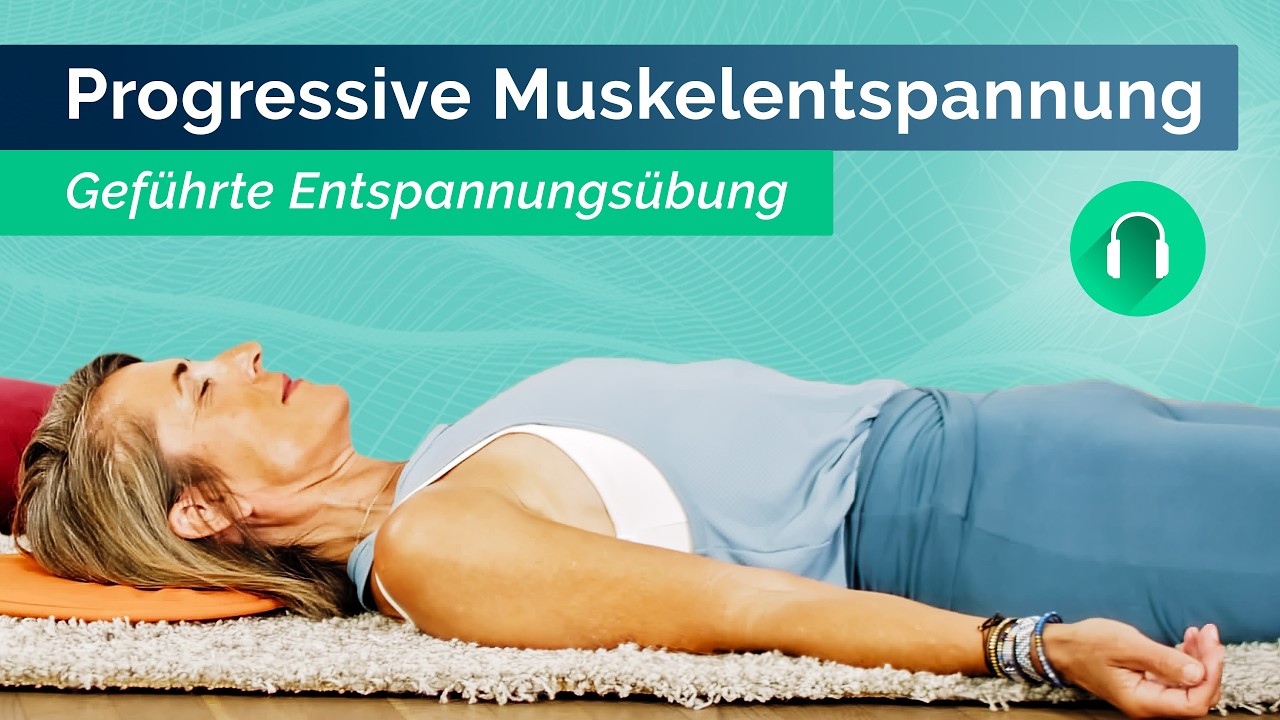
Maria guides you step by step through the entire exercise—perfect for beginners and advanced practitioners alike.
Duration: 23-minute complete guide
To the guided PMRMeditation
Meditation calms the mind — and a calm mind is good for your whole being. In TCM, it is said that every emotion affects a specific organ. Through regular meditation, you’ll learn to step away from racing thoughts, find emotional balance, and strengthen your inner center.
Just 10 minutes a day can do a lot to help you find inner peace. As a result, many people find that their daily lives become more relaxed and clear.
Recommended meditations
GUIDED MEDITATIONS FOR EVERY DAY
Your personal meditation library
We have a complete Playlist with over 60 guided meditations, breathing exercises, and relaxation techniques—from short 5-minute meditations for in between to deep 30-minute sessions for intensive practice.
In the playlist you will find:
- Morning meditations for a mindful start to the day
- Meditations for restful sleep
- Breathing meditations for inner peace
- Meditations for Moments of Calm Amid Stress and Worry
- TCM standing meditations for all 5 elements
- Body scan and body journeys
- Meditations for Peace of Mind and Body
- Special breathing techniques (4–7–8, coherent breathing, bee breathing)
Perfect for beginners and advanced practitioners. Choose the right meditation for you depending on your time, the time of day, and your needs.
To the meditation playlistThe heart is the emperor of all organs.
It houses the spirit (Shen) and governs the blood. When the heart qi is strong, the eyes shine and joy fills life.
— From the HUANG DI NEI JING
(The Yellow Emperor's Classic of Internal Medicine)
More tips for your everyday life
In addition to traditional TCM treatment methods There are many small everyday habits that can strengthen your heart qi. In TCM, the heart is the emperor of all organs and the seat of the shen — with the right habits, you can calm your mind and rediscover your zest for life.
Emotional balance — Cultivating joy
😊 Cultivating joy in everyday life
Positive emotions nourish the heart qi:
- Consciously noticing small joys every day
- Spend time with people who are good for you
- Practice gratitude — write down three beautiful moments in the evening
- Laughter is medicine for the heart — enjoy humorous content
- Creative activities promote joy in the heart
⚖️ Avoid overexcitement
Too much excitement exhausts the heart qi:
- Excessive joy and excitement can weaken the heart.
- Avoid constant emotional roller coasters
- Reducing sensory overload from media
- Avoid exciting movies and news in the evening
- Finding a balance between activity and rest
💔 Healing emotional wounds
Unprocessed emotions put strain on the heart:
- Grief and loss require time and space
- Resolve relationship conflicts or let them go
- Practice forgiveness—even toward yourself
- Seek professional help if necessary
- The heart loves openness and connection
Sleep and rest — Let your heart come to rest
🌙 Go to bed early
Optimal bedtime for the heart:
- Go to bed before 11 p.m. — the heart time is 11 a.m. to 1 p.m.
- At night, the shen (spirit) regenerates in the heart.
- Staying up late disperses the heart qi.
- Regular bedtimes calm the heart
- Start your evening routine at least 30 minutes before bedtime.
😴 Schedule a nap
Making the most of your heart time:
- The peak time is between 11 a.m. and 1 p.m.
- A short afternoon nap of 15–30 minutes strengthens the heart.
- Even without sleep: close your eyes and relax
- No exciting conversations or activities at lunchtime
- Don't go back to work immediately after lunch.
🛏️ A sleep environment that's good for your heart
A peaceful place to sleep calms the mind:
- Designing your bedroom as an oasis of calm
- No screens in the bedroom
- Prefer soft, warm colors (pink, peach)
- Soothing scents such as lavender or rose
- Leave your worries and brooding outside the bedroom door
Gentle exercise — Strengthen your heart without exhausting yourself
🚶 Gentle, rhythmic movement
The heart loves steady, flowing movement:
- Walks in nature — 20–30 minutes daily.
- Qi Gong — especially exercises for opening the heart
- Tai Chi — flowing movements calm the heart
- Gentle yoga — no overly strenuous flows
- Dancing to calm music relaxes the body and mind.
⛔ Avoid exhausting activities
Overwork weakens the heart qi:
- No high-performance sports with heart qi deficiency
- Avoid training to the point of exhaustion
- Watch out for heart palpitations and shortness of breath—then take a break
- Competition and pressure to perform put strain on the heart
- After exercising, you should feel refreshed, not exhausted.
🧘 Finding the right intensity
Exercise should strengthen the heart qi:
- You should still be able to speak during the exercise.
- Light sweating is good, heavy sweating is exhausting.
- Pulse should return to normal after 5 minutes.
- Listen to your body — less is often more
- Regular, moderate exercise is better than infrequent intense exercise.
Stress reduction — Taking the strain off your heart
⚡ Reduce sources of stress
Chronic stress exhausts the heart qi:
- Overwork is a major cause of heart qi deficiency.
- Schedule regular breaks — every 60–90 minutes.
- The end of the workday truly means the end of the workday
- Learning to say no — setting boundaries protects the heart
- Plan to-do lists realistically, don't overload them
📱 Digital breaks
Constant availability stresses the heart:
- Fixed times without cell phones and computers
- Reduce notifications to the bare minimum
- Use social media consciously and in moderation
- No screens one hour before bedtime
- Spend one day a week largely offline
🌸 Relaxation Techniques
Actively promoting relaxation:
- Progressive muscle relaxation — 10–15 minutes daily.
- Breathing exercises — deep, slow breathing calms the heart
- Autogenic training with a focus on heart warmth
- Warm baths with soothing additives
- Regular massage or self-massage
Meditation for the heart — Calming the mind
🧘 Heart Meditation
Nourish the heart with loving attention:
- Silent meditation — 10–20 minutes daily.
- Place your hand on your heart and feel the warmth
- Visualization: Warm, red light in the heart area
- Loving-kindness meditation (metta) strengthens the heart
- The healing heart sound „Hā“ from Qi Gong
💗 Heart-opening exercises
Opening your heart to joy and connection:
- Gratitude meditation — Focus on the good things in life
- Forgiveness meditation — Freeing your heart from old burdens
- Visualize a flower opening in your heart.
- Breathe in love, breathe out worries
- Connect in your thoughts with people you love
😌 Calm your mind
A calm mind strengthens the heart qi:
- Mindfulness in everyday life — one thing at a time
- Stop your mind racing by focusing on your breathing
- Consciously interrupt brooding — say „stop“
- Evenings: Write down your thoughts and let them go
- The heart is home to the Shen — a calm mind is a healthy heart
💡 Important to know
Strengthening the heart qi takes time and patience—especially when emotional stress plays a role. The heart is the seat of the shen (spirit) and needs above all peace, joy, and loving care. With consistent practice, you will develop more joy, inner peace, and a clear mind. Be gentle with yourself and give your heart the attention it deserves.
For optimal treatment progress
TCM is not a quick fix for symptoms., but rather a holistic healing process. You will achieve the best results if you consistently integrate the treatment into your daily routine and give your body time to regenerate.
Integration into everyday life
Start with ONE step
Don't try to change everything at once! That's overwhelming and leads to
usually leads to you giving up. Instead:
- Woche 1–2: Mit deiner TCM–Kräutermischung beginnen — dazu früh schlafen, Stress reduzieren, leichte Bewegung
- Weeks 3–4: Qi Gong „Open Heart“ daily for 10 minutes.
- Weeks 5–6: Integrate acupressure points He 07 and KG 17
- Woche 7–8: Zwischenbilanz — Schwitzen ohne Anlass und Erschöpfung sollten sich als Erstes bewegt haben; vergleiche jetzt Herzklopfen bei Anstrengung und Belastbarkeit mit dem, was am Anfang stand
- Ab Woche 9: Die Kur mit deiner Kräutermischung läuft je nach Schweregrad nach 8 bis 16 Wochen aus — früher schlafen, Qi Gong und Akupressur bleiben. Weitere Methoden kannst du nach Bedarf ergänzen
Realistic expectations
After 2–3 weeks: First improvements noticeable
- More restful sleep
- Less heart palpitations
- More inner peace
After 6–8 weeks: Significant improvements
- Significantly more energy
- Better concentration
- More stable emotions
After 3–6 months: Sustainable healing
- Heart qi is significantly strengthened
- Joy of life returns
- Clear, calm mind
TCM vs. Western medicine
TCM and Western medicine are not mutually exclusive—they complement each other!
When Western medicine is important:
- In acute emergencies
- In case of structural damage
- In case of infections
- For accurate diagnoses (laboratory, imaging)
Where TCM has its strengths:
- In case of functional disorders
- For chronic complaints
- For prevention
- For holistic healing
Ideal: Combine both systems! Use Western medicine for
Acute treatment and accurate diagnosis, TCM for lasting healing
and strengthening the body's self-healing powers.
Important: Never stop taking prescribed medication without consulting your doctor first!
Talk to your doctor when you start TCM treatment.
Do you have any questions?

Wolfgang from meine-tcm.com
TCM is a broad field. Much of it sounds unfamiliar at first glance, and often the real question doesn't arise until you start putting some of it into practice in your daily life.
That's exactly what I'm here for. Write to me—no matter how big or small your question is, whether it’s related to this page or to something else entirely in TCM. I read every message myself and will get back to you. Calmly, clearly, and without any sales pitch.
P.S.: There are no stupid questions. So write to me.
Ask your questionEvery step counts
Your body strives for balance—you just need to create the right conditions for it.
Remember:
👣 Every little step counts
You don't have to be perfect. Even one warm meal a day is better than none. Even 5 minutes of qigong is better than no exercise at all.
⏳ Patience pays off
It took your body years to get to this point. Give it time to regain its balance. Change takes time, but it will happen.
🎯 Focus on what you can DO
Don't concentrate on what you are doing „wrong". Focus on every positive step you take.
💚 Be good to yourself
Perfection does not exist. It is acceptable to have an off day occasionally. Tomorrow is a new day when you can continue.
🤝 You are not alone
Thousands of people are walking this path with you. For over 2,000 years, TCM has been guiding people like you on their journey toward greater well-being.
Track Your Progress

To track your progress, we recommend that you repeat the TCM analysis after about 3 months.
Why does this make sense?
- You can see how your pattern has changed
- You can adjust your group as needed
- It motivates you to keep going
- You'll figure out which steps work best for you
⚠️ Important: Your answers from today will be stored in encrypted form using a code that you received via email. ONLY with this code will you be able to track your progress later. Be sure to keep the email in a safe place!
🔒 YOUR DATA IS SAFE
We store:
✓ Only your email address for reminders
✓ The date for shipping
We do NOT store:
✗ Your analysis results
✗ Your personal information
✗ The connection between email and the sample
All analysis data is completely anonymous and is not linked to your email address.

Newsletter
Stay up to date with our newsletter. Besides useful tips and tricks for training and your everyday life, you won't miss any of our new releases.