






On this page, you will learn:
- What this pattern means from the perspective of TCM and Western medicine
- Where your symptoms come from and how they are connected
- Which specific treatment methods can help you now
- How you can use TCM herbs, acupressure, Qi Gong and nutrition to eliminate damp heat from your body and clear your skin from the inside out
The good news: Damp heat on the skin can be treated very well with the right measures. With a cooling diet, targeted acupressure and proven TCM herbs, you can eliminate the moisture and heat and soothe your skin again.
Take your time, Get to know the different treatment approaches—you don't have to implement everything at once. Choose what feels right for you and what you can easily integrate into your everyday life.
Your treatment at a glance:
Which TCM pattern is really behind your complaints?
Degree of
imbalance

Moderate to Significant
Typical
treatment duration

3-6 months
self-treatment
Possible

Partly self-treatable
Treatment–
scope

2–3 methods
Proposed
methods

Extensive range
Our free TCM analysis shows you your personal TCM pattern in just 10 minutes.
What is moist heat of the skin?
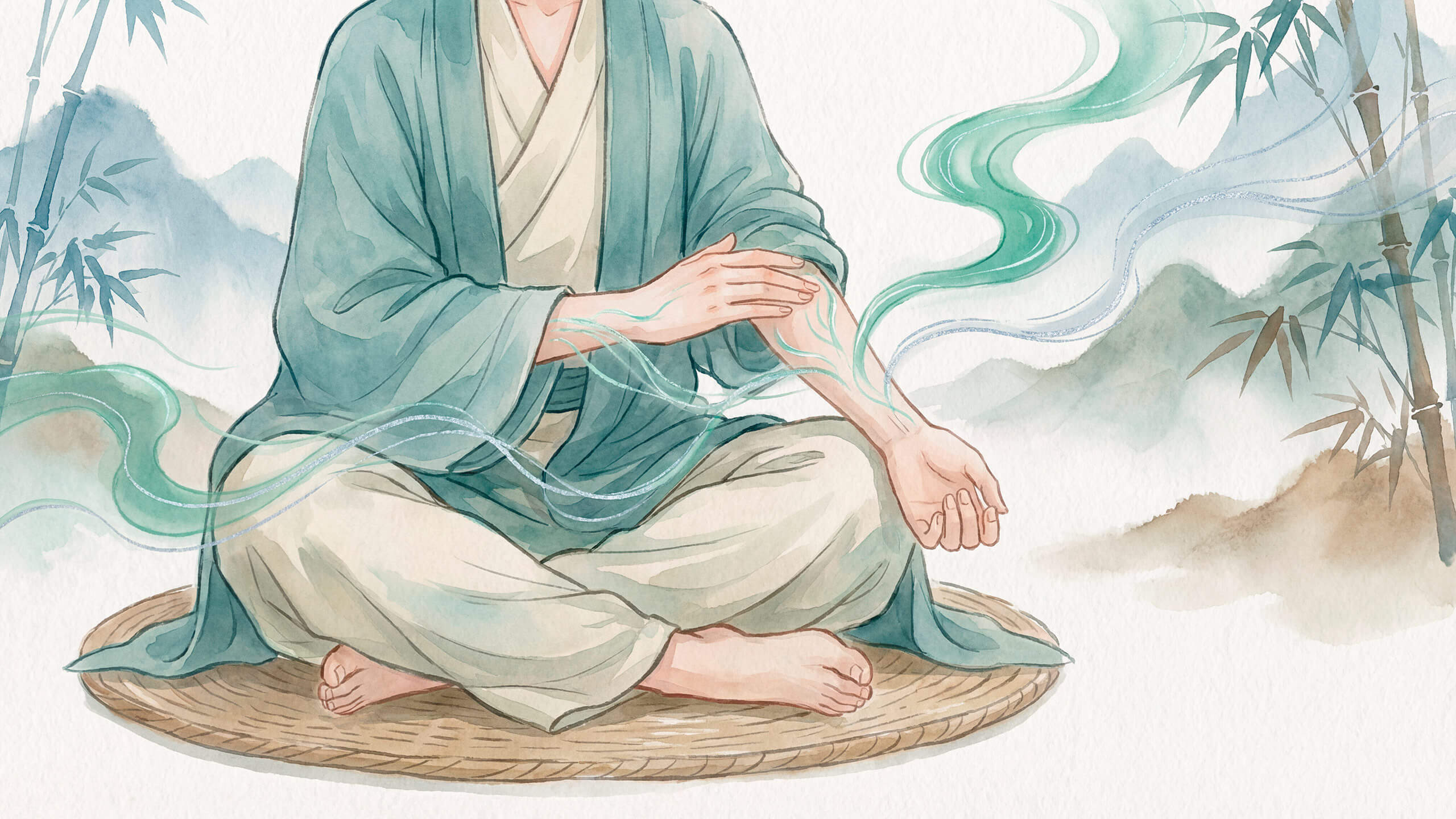
When moisture and heat build up in the skin
The TCM perspective: damp heat as the cause of skin problems
In der Traditionellen Chinesischen Medizin gilt die Haut als „Spiegel des Inneren“. Hautprobleme sind fast nie ein isoliertes Geschehen an der Oberfläche — sie zeigen, dass im Inneren des Körpers ein Ungleichgewicht herrscht. Im Muster „Feuchte Hitze der Haut“ haben sich zwei pathogene Faktoren verbunden: Feuchtigkeit (Shī) und Hitze (Rè). Dazu kommt ein dritter, der dem Muster seinen Namen in der Rezeptur gibt — der Wind (Fēng): Er ist der Grund, warum es juckt und warum der Ausschlag wandert.
Dampness occurs when the spleen can no longer fulfill its transformation function properly. In TCM, the spleen is responsible for transforming and transporting body fluids. If it is weakened - for example due to poor nutrition, excessive brooding or external dampness - fluid builds up in the body. This pathological dampness is viscous, sticky and heavy.
Heat is added when the liver qi stagnates and turns into heat, when too many heating foods are consumed (alcohol, spicy food, fried food) or when external heat enters the body. The combination of Dampness and Heat is particularly stubborn - the Dampness retains the Heat and the Heat „brews“ the Dampness further.
The result for the skin: The moist heat rises to the surface and manifests itself in the skin. Redness, inflammation, itching, weeping rashes, pustules and a feeling of heaviness and impurity develop. The lungs - the „mistress of the skin“ in TCM - can no longer supply the skin with sufficient clear Qi.
The typical signs of damp heat of the skin:
- Red, inflamed areas of skin with itching
- Weeping, sticky rashes or blisters
- Pustules, acne or eczema with yellowish fluid
- Oily, blemished skin or oily shine
- Feeling of heaviness and fullness in the body
- Foul-smelling sweat or body odor
- Dark, concentrated urine
- Digestive problems, soft stools or flatulence
Nicht hierher gehören schmerzhafte, gruppierte Bläschen in einem Streifen auf einer Körperseite — das ist eine Gürtelrose und gehört sofort zum Arzt; die antivirale Behandlung soll in den ersten drei Tagen beginnen. Ebenso wenig honiggelb verkrustete Herde, die sich ausbreiten: Das ist eine Eiterflechte, ansteckend und ebenfalls ein Fall für den Arzt.
The good news: Moist heat of the skin can be treated very well with the right measures. You can restore your inner balance with a cooling diet, TCM herbs to draw out the moisture and clear the heat, acupressure and gentle exercise - and your skin will thank you for it.
The Western perspective: Inflammatory skin diseases and the microbiome
From a Western perspective, „moist heat of the skin“ corresponds to a condition associated with various inflammatory skin diseases - eczema, dermatitis, acne, psoriasis or fungal infections. What these diseases have in common is an excessive inflammatory reaction in the skin, often accompanied by a disturbed skin microbiome.
Think of your skin as a protective shield: It is home to billions of beneficial microorganisms that form a healthy barrier. If this ecosystem gets out of balance - due to diet, stress, medication or external influences - harmful germs can spread and trigger inflammation. The body reacts with redness, swelling, itching and secretions.
The gut-skin axis in particular plays a central role: a disturbed gut microbiome directly influences the condition of the skin. Inflammatory messengers from the gut can reach the skin via the blood and trigger or intensify inflammation there. This finding is surprisingly consistent with the TCM view that the spleen (digestion) is the root of many skin problems.
What does modern medicine show?
- Gut-skin axis: gut dysbiosis correlates with skin diseases such as acne, eczema and rosacea
- Systemic inflammation: Elevated inflammation markers (CRP, interleukins) in chronic skin inflammation
- Food intolerances: Certain foods can trigger skin reactions
- Histamine intolerance: excess histamine leads to itching and redness
- Stress axis: cortisol influences inflammatory processes and the skin barrier
- Genetic disposition: Certain skin diseases have a hereditary component
What the research says about this: Zu Xiao Feng San gibt es kleinere klinische Arbeiten bei Ekzemen und chronischer Nesselsucht, und einzelne Bestandteile sind pharmakologisch gut untersucht — Di Fu Zi und Niu Bang Zi zeigen in Laborversuchen juckreizmindernde und anti–entzündliche Eigenschaften. Für belastbare Aussagen reicht das nicht aus, und die Studien ersetzen keine dermatologische Abklärung. Gut belegt ist dagegen das Unspektakuläre: konsequente Basispflege, kühl halten und nicht kratzen.
Die TCM–Behandlung bei Feuchter Hitze der Haut setzt an drei Stellen zugleich an: Sie zerstreut den Wind, der den Juckreiz macht, trocknet und leitet die Feuchtigkeit aus, die das Nässen erklärt, und kühlt die Hitze, die die Röte erklärt. Dazu kommt ein vierter Schritt, der leicht übersehen wird — sie nährt das Blut, damit die Haut nicht austrocknet und der Juckreiz nicht von vorn beginnt.

The Yellow Emperor's team explains your pattern
Qi Bo | The Yellow Emperor | Dr. Lisa Weber
MASTER OF THE HEALING ARTS | TCM FOUNDER | MODERN PHYSICIAN
What happens when the legendary Yellow Emperor of Traditional Chinese Medicine sits down with his advisor Qi Bo and a modern doctor? They discuss your pattern—using 4,000-year-old knowledge AND the latest science.
Moist heat skin - when moisture and heat build up in the skin and inflammation occurs
The Yellow Emperor: „Qi Bo, many people in my kingdom complain of inflamed, itchy skin. They have red spots, weeping rashes, sometimes pustules with yellowish fluid. The skin feels hot and unclean. What is behind this?“
Qi Bo: „Your Majesty, these people suffer from Damp Heat in the Skin - called Shī Rè Pí Fū. Two pathogenic factors have combined: Moisture and heat. Dampness is viscous and sticky - it builds up in the body like stagnant water in a ditch. The heat is like a fire that brings this stagnant water to the boil. Together they create inflammation, pus and itching. The moisture retains the heat, and the heat ‚boils‘ the moisture further and further - a vicious circle.“
Dr. Weber: „That's an apt description of inflammatory skin conditions! In Western medicine, we see exactly this combination in eczema, dermatitis, acne and fungal infections: an excessive inflammatory reaction - that would be the ‚heat‘ - together with edema, secretion and disturbed fluid regulation in the skin - the ‚moisture‘. The description of the vicious circle is remarkable, because inflammation actually leads to tissue damage, which in turn causes more fluid to leak out, creating the breeding ground for further inflammation.“
The Yellow Emperor: „Where is this damp heat coming from?“
Qi Bo: „Majesty, the root usually lies in the spleen. The spleen is responsible for the transformation and transportation of body fluids. If the spleen is weakened - through irregular eating, too much sweet and fatty food, excessive brooding or external dampness - it can no longer transform the fluids properly. Moisture accumulates. The heat comes from various sources: The liver stagnates and generates heat, heating foods such as alcohol, hot spices and fried foods bring fire into the body, or external damp heat penetrates through the skin. The lungs - the ‚mistress of the skin‘ - can then no longer nourish and protect the skin properly.“
Dr. Weber: „The role of the spleen as a digestive organ in skin problems is perfectly in line with modern research on the gut-skin axis! We now know that a disturbed gut microbiome - a so-called dysbiosis - can directly trigger inflammatory skin diseases. Inflammatory messengers from the gut reach the skin via the bloodstream. Studies show: Patients with acne have a significantly altered gut microbiome. We often find food intolerances in atopic dermatitis. And alcohol and processed foods have been proven to worsen the appearance of the skin. TCM recognized this connection between digestion and skin thousands of years ago!“
The Yellow Emperor: „So the liver also plays a role?“
Qi Bo: „A very important one indeed, Your Majesty! The liver ensures the free flow of qi throughout the body. When the liver qi stagnates - due to emotional stress, suppressed anger or frustration - heat is generated. This heat combines with the dampness of the weak spleen and rises to the skin. This is why we observe that skin problems often get worse with stress. The liver ‚overflows‘ into the spleen and weakens it further - another vicious circle.“
Dr. Weber: „This fits in with our findings on the stress-skin axis! Chronic stress increases cortisol levels, which weakens the skin barrier, increases sebum production and intensifies inflammatory reactions. Cortisol also affects intestinal permeability - ‚leaky gut‘ syndrome - causing more inflammatory substances to enter the bloodstream. The TCM observation that liver stress weakens the spleen and exacerbates skin problems is well proven by neuroimmunodermatology!“
The Yellow Emperor: „How can you reliably detect moist heat in the skin?“
Qi Bo: „The signs are very characteristic, Your Majesty. The tongue is red - the heat manifests itself. The coating is thick, yellow and sticky - dampness is manifested. Tooth impressions are often seen on the edge of the tongue - a sign of Spleen Weakness with Dampness. The pulse is slippery - Huá Mài - indicating dampness. It is also rapid - Shuò Mài - indicating heat. Sometimes it is also string-like - Xián Mài - which indicates liver involvement. The skin changes themselves speak a clear language: redness means heat, weeping areas mean dampness, yellowish pus means a combination of both.“
Dr. Weber: „The color symbolism is highly interesting from a diagnostic point of view! In dermatology, we actually differentiate according to color and consistency: redness indicates dilated vessels and inflammation. Yellowish secretions indicate bacterial involvement - neutrophils, the body's inflammatory cells, produce yellow pus. Weeping areas show a disturbed skin barrier with fluid leakage. TCM tongue diagnostics are fascinating - a thick, yellow tongue coating actually correlates in studies with increased inflammatory markers and an altered oral microbiome composition.“
The Yellow Emperor: „How do you treat damp heat on the skin?“
Qi Bo: „Majesty, the treatment principle is: Qīng Rè Lì Shī - clearing heat and removing moisture. This happens on several levels. Firstly, clearing the heat - with cooling, bitter herbs such as Huáng Qín (Scutellaria) and Huáng Bǎi (Phellodendron). Second: Expel dampness - with drying herbs such as Cāng Zhú (Atractylodes) and Yì Yǐ Rén (Job's tears). Third: Strengthen the spleen - because it is the root of dampness formation. Fourth: Harmonize the liver - to release Qi stagnation and thus the source of heat. And fifthly, change your diet - away from heat-generating foods and towards cooling, easily digestible foods.“
Dr. Weber: „Many of these TCM herbs have been well researched pharmacologically! Huáng Qín - Scutellaria baicalensis - contains baicalein and wogonin, which have potent anti-inflammatory effects. They inhibit cyclooxygenase and reduce inflammatory messengers such as TNF-alpha and interleukins. Yì Yǐ Rén - Coix lacryma-jobi - has shown immunomodulating and skin-soothing properties in studies. The nutritional recommendations of TCM correspond to an anti-inflammatory diet, which is increasingly recommended in modern dermatology. Avoiding sugar, alcohol and processed foods has been proven to improve the appearance of the skin.“
The Yellow Emperor: „Which herbal formulas do you recommend?“
Qi Bo: „Majesty, the classic recipe for damp heat of the skin is Lóng Dǎn Xiè Gān Tāng - the gentian liver decoction. It contains: Lóng Dǎn Cǎo (gentian root) as the main herb to clear Liver-Heat, Huáng Qín and Zhī Zǐ to clear Heat, Zé Xiè and Chē Qián Zǐ to clear Dampness, and Dāng Guī and Shēng Dì Huáng to protect Blood and Yin. For more pronounced dampness, I recommend Bì Xiè Shèn Shī Tāng - the Dioscorea Dampness Decoction - which specifically removes dampness via the lower warmer.“
Dr. Weber: „Lóng Dǎn Xiè Gān Tāng is well documented in research! Studies show significant effects on herpes zoster, eczema and inflammatory skin diseases. The combination of anti-inflammatory, antimicrobial and diuretic herbs simultaneously addresses inflammation, infection and fluid retention - a multimodal approach in line with modern combination therapy. The addition of blood-nourishing herbs is remarkable - because aggressive heat clearing can damage yin and blood, and the formula takes this into account from the outset!“
The Yellow Emperor: „Wonderful! Let's turn this wisdom into a practical plan.“
THE 3-WAY METHOD FOR MOIST HEAT OF THE SKIN
MORNING PROTOCOL (clear heat, remove moisture):
- TCM: Warm water with fresh lemon - cools the inner heat and stimulates detoxification
- Science: Lemon water has an alkaline effect on the metabolism and contains vitamin C, which has an anti-inflammatory effect
- Practical: In the morning on an empty stomach, drink a glass of warm water with the juice of half a lemon
- TCM: Light, warm breakfast - the spleen needs wholesome food in the morning without producing moisture
- Science: A low-gluten, sugar-free breakfast stabilizes blood sugar and reduces inflammation markers
- Practical: Congee with mung beans or porridge with pear - no dairy products, no sugar
- TCM: Acupressure on Di 11 (Qū Chí) - clears heat from the blood and skin
- Science: Stimulation of this point shows anti-inflammatory and immunomodulating effects in studies
- Practical: With elbow bent at the end of the elbow crease. Massage for 3 minutes on each side with firm pressure
TAGS-STRATEGY (transform moisture):
- TCM: The biggest meal at lunchtime - light and cooling without creating moisture
- Science: Anti-inflammatory diet with lots of vegetables reduces systemic inflammatory markers
- Practical: Vegetables with rice and lean protein, no fried food, no dairy products
- TCM: Chrysanthemum tea or green tea - gently cools the heat and removes moisture
- Science: Chrysanthemums contain flavonoids with proven anti-inflammatory and antihistamine effects
- Practical: 2-3 cups throughout the day, drink lukewarm
- TCM: Acupressure on MP 06 (Sān Yīn Jiāo) - strengthens the spleen and drains moisture
- Science: Studies show that this point influences intestinal function and fluid regulation
- Practical: 4 fingers wide above the inner ankle on the back of the shin. Massage in circles for 3 minutes per side
EVENING RITUAL (harmonize the liver, soothe the skin):
- TCM: Gentle Qi Gong „Looking backwards“ - releases liver Qi stagnation and allows energy to flow freely
- Science: Gentle exercise lowers cortisol and activates the parasympathetic nervous system, which reduces skin inflammation
- Practical: 10-15 minutes of gentle Qi Gong exercises before dinner
- TCM: Acupressure on Le 03 (Tài Chōng) - harmonizes the liver, relieves stagnation and cools the heat
- Science: This point has been shown to influence the autonomic nervous system and lowers the sympathetic tone
- Practical: On the back of the foot between the big and second toe, in the indentation. Press gently for 3 minutes on each side
- TCM: Sleep before 11 pm - between 11 pm and 1 am the liver regenerates the blood, including the blood of the skin
- Science: During deep sleep, the body produces growth hormone, which renews skin cells and reduces inflammation
- Practical: Reduce screen time in the evening, create a cool bedroom
The Yellow Emperor: „Qi Bo, how long does it take for the skin to calm down?“
Qi Bo: „Majesty, damp heat is stubborn - it takes more patience than other patterns. After 2-3 weeks of consistent practice, most people notice: less itching, fewer new rashes and better digestion. After 6-8 weeks, the improvements become clearer: the skin calms down, inflammation decreases and the body feels lighter. After 3-6 months, the damp heat can be noticeably eliminated - the skin is clearer, the digestive system is stronger and the general well-being is significantly better. The duration depends on how deep the dampness is and how consistently the diet is changed.“
Dr. Weber: „This corresponds well with our clinical experience! Inflammatory skin conditions often require 2-3 months of consistent treatment before stable improvements occur. Skin renewal takes about 28 days - so it takes at least one full skin cycle to see changes. Intestinal flora even needs 3-6 months to undergo a lasting change. The TCM recommendation of 3-6 months is therefore very sensible and gives the body the time it needs to truly heal from within.“
The Yellow Emperor: „What must be avoided at all costs?“
Qi Bo: „Majesty, the most important thing is: Firstly, no alcohol - it generates heat and moisture at the same time, the worst combination for the skin. Secondly, no hot spices - chili, garlic in large quantities and pepper generate heat. Thirdly, no fried or greasy food - it stresses the spleen and creates moisture. Fourthly, no sugar and sweets - they weaken the spleen and nourish dampness. Fifthly, reduce dairy products - in TCM they create dampness. And sixthly, don't ‚swallow‘ emotional stress - suppressed emotions dam up the liver qi and generate heat.“
Dr. Weber: „All these recommendations are dermatologically sound! Alcohol dilates the blood vessels and aggravates rosacea and eczema. Spicy food can release histamine and increase itching. Fried, greasy food promotes sebum production and acne. Sugar increases insulin-like growth factor, which directly promotes acne. Dairy products contain hormones and growth factors that can increase skin inflammation. And stress is one of the strongest triggers for skin flare-ups in atopic dermatitis and psoriasis. The TCM recommendations are a perfect anti-inflammatory strategy!“
The Yellow Emperor: „Then the message is clear: the skin reflects the inside. Damp heat that shows up in the skin must be treated at the root - by clearing the heat, draining the dampness, strengthening the spleen and harmonizing the liver. With patience and the right measures, the skin can regain its natural peace.“
Qi Bo: [smiles] „That's right, Your Majesty. The skin is like the surface of a lake - when the water underneath is clear and calm, the surface is also smooth and pure. We must clear the water, restore the flow and nurture the spring. Then purity will return - from the inside out.“
About our „3 Wise Men“ story
Who are the Yellow Emperor and Qi Bo?
The Yellow Emperor (Huangdi) is said to have lived around 2600 BC and is considered the mythical founder of Chinese culture and medicine. Qi Bo was his most important advisor and personal physician. Their discussions about health, illness, and human nature were recorded in the most important fundamental work of TCM.
The book: Huangdi Neijing
The Huangdi Neijing, also known as The Yellow Emperor's Classic of Internal Medicine, was probably written between 200 BC and 200 AD. It is the oldest surviving work on Chinese medicine and consists of dialogues between the Yellow Emperor and his advisors, mainly Qi Bo.
This work is to TCM what the Bible is to Christianity: the absolute foundation. All the important concepts - yin and yang, the 5 elements, qi, meridians and acupuncture points - are systematically described here for the first time.
Our modern approach: The 3 wise men
In our series „The Three Sages,“ we bring together the Yellow Emperor and Qi Bo with the fictional modern doctor and microbiologist Dr. Weber.
Important note: All three characters and their conversations are purely fictitious and invented by us.
We use this narrative form, similar to the dialogue form in the book Huangdi Neijing, to convey the often complex interrelationships of TCM in an understandable and entertaining way. When the 4,000-year-old emperor is confronted with modern science, enlightening „aha moments“ arise that show that ancient wisdom and new research often speak the same language — just in different words.
This makes TCM lively, understandable and practically applicable for your everyday life.
The dialogs are creative interpretations - not historical documents. For medical questions, please consult a qualified TCM therapist or doctor.
Your treatment options
Moist heat of the skin is very easy to treat! TCM offers you a variety of effective methods to eliminate damp heat and clear your skin. You don't have to do everything at once - choose the methods that suit you and your everyday life.
Here you will find specific treatment approaches that have been proven effective in TCM for thousands of years and that you can largely apply yourself.
TCM herbs
Herbal medicine (or, in modern terms, phytotherapy) is the MOST IMPORTANT tool of TCM. It is an integral part of every traditional TCM treatment. Today, there is a suitable herbal blend for every TCM pattern.

Here's how to find the right herbal blend for you
- Search online. Enter Feuchte Hitze Haut "TCM Kräutermischung" — including the quotation marks — into the search engine of your choice. If you wish, add the following to the search term: Compressed pieces — in our experience, the easiest to take — or Granules. This way, you'll see several providers and can compare them at your leisure.
- Our Therapist Directory. In the TCM Therapist Directory You can find TCM practitioners in your area who will tailor a TCM herbal blend to your individual constitution.
- Your TCM Pharmacy. Some pharmacies carry TCM herbal blends or can order them for you. Tell them what you're looking for—or show them this page.
In any case, pay attention to the quality of the TCM herbal blend, not the price—it’s worth taking a look at the list of ingredients.
Not sure which herbal blend is right for your TCM pattern? Write to us. We'll tell you which classic recipe traditionally goes with this pattern and what you should look for when choosing one.
Request a tip on herbal blends
TCM uses many different methods. Which ones are right for you is the question we hear most often. And it’s not something that can be answered offhand.
That’s why we offer our personalized TCM support. It begins with a free, no-obligation ONLINE initial consultation with Wolfgang.
After that, you’ll receive a personalized support plan outlining all the components and costs as a proposal. If it works for you, we’ll get started: In a second online session (about 30 minutes), Wolfgang will discuss your path with you.
Acupressure
Acupressure is acupuncture without needles. - You can apply it yourself at any time. By applying gentle pressure to certain points, you activate the energy flow in the meridians and release the moist heat.
These three points form an effective combination for removing moisture and heat from the skin. Regular stimulation is particularly important with damp heat - patient application clears the heat and removes the moisture step by step.
ACCESSION POINT: Tue 11
Large intestine 11
Pond at the bend - Qū Chí
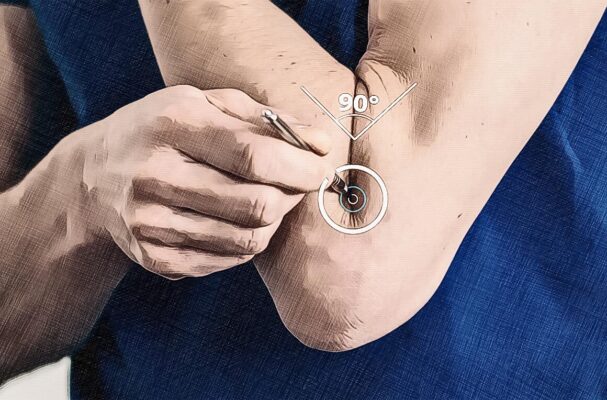
- One of the most important points for clearing heat from the blood
- Cools inflammation of the skin
- Soothes itching and redness
- Strengthens the immune system
- Regulates the Wei-Qi (defense Qi of the skin)
Location: With the elbow bent, at the outer end of the elbow crease, in the hollow in front of the bony prominence.
Application:
Massage in circles twice a day for 2-3 minutes per side with firm pressure. Particularly effective for acute itching and skin inflammation.
ACUPUNCTURE POINT: MP 06
Spleen-Pancreas 06
Meeting point of the three Yin - Sān Yīn Jiāo
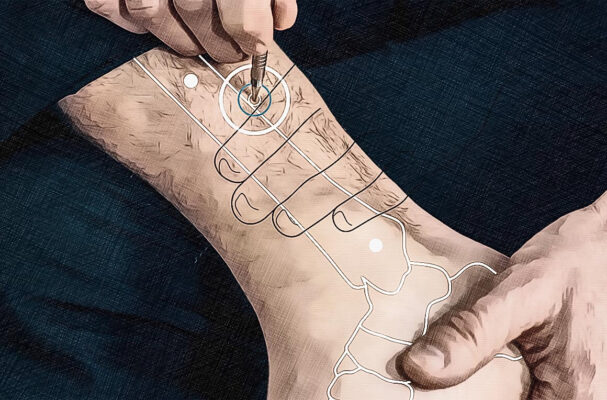
- Strengthens the spleen and removes moisture
- Nourishes blood and yin
- Regulates the body fluids
- Supports the transformation of moisture
- Harmonizes the liver, spleen and kidneys
Location: Four finger widths above the highest point of the inner ankle, directly behind the shin.
Application:
Massage in a circular motion twice a day for 2-3 minutes per side with medium pressure. DO NOT use during pregnancy!
ACCESSION POINT: Le 03
Liver 03
Great flow - Tài Chōng
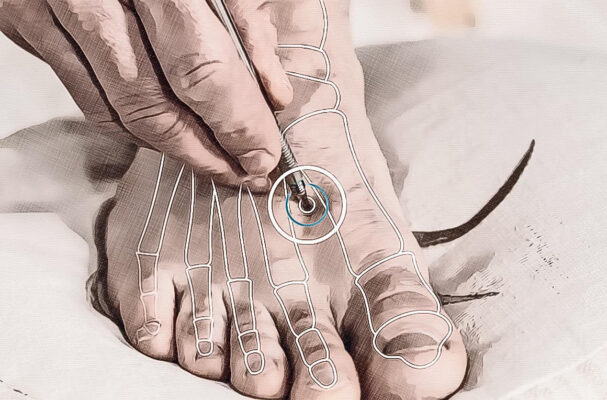
- Harmonizes the liver and releases Qi stagnation
- Cools liver heat
- Dissipates rising heat
- Calms emotional stress
- Supports the free flow of Qi
Location: On the back of the foot, in the hollow between the first and second metatarsal bones.
Application:
Press twice daily for 2-3 minutes per side with gentle to medium pressure. Ideal in the evening to reduce stress.
Our App Recommendation
Atemraum: Your App for Mindful Breathing


Breathing is the foundation of physical and mental well-being—and is usually COMPLETELY underestimated in everyday life. Yet hardly anything has such a direct impact: the way we breathe shapes the way we feel.
That's why we created Atemraum: an app with guided breathing exercises that you can take with you anywhere. Wolfgang put together these exercises—along with a 35-day course, quick tips for the moment, and breathing tests that let you track your progress.
Just a few minutes a day is enough. And anyone who uses our personal support If you use it, it already comes with breathing space.


You can try the app for free for 7 days.
Qi Gong
Qi Gong is moving meditation - Gentle, flowing exercises that harmonize your energy flow and channel the damp heat out of your body. In the case of damp heat of the skin, these exercises help to harmonize the liver, strengthen the spleen and thus improve the transformation of dampness.
Regular practice of Qi Gong (as little as 10-15 minutes a day) has been shown to have positive effects on the immune system, stress reduction and skin health.
QI GONG: Exercise 1
Look backwards
Releases liver qi stagnation, promotes the free flow of qi
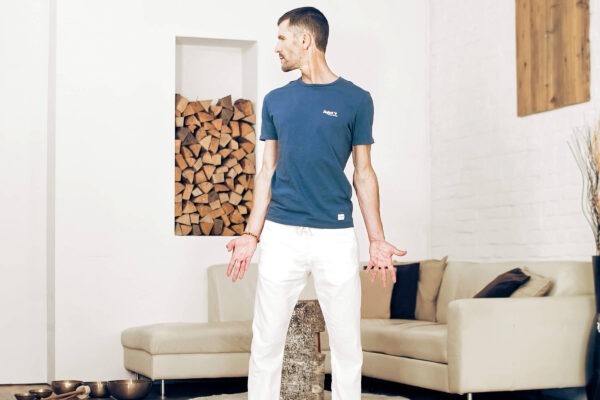
Particularly helpful for:
- Itchy skin due to liver qi stagnation
- Irritability and inner tension
- Tension in the neck and shoulder area
- Feeling of tension in the flanks
Effect:
This wood element exercise releases stagnation in the liver and gallbladder and promotes the free flow of Qi. The gentle twisting movement activates the liver meridian - less congestion means less heat development and therefore less inflammation in the skin.
QI GONG: Exercise 2
Regulate Qi
Harmonizes the Qi flow, regulates the middle warmer
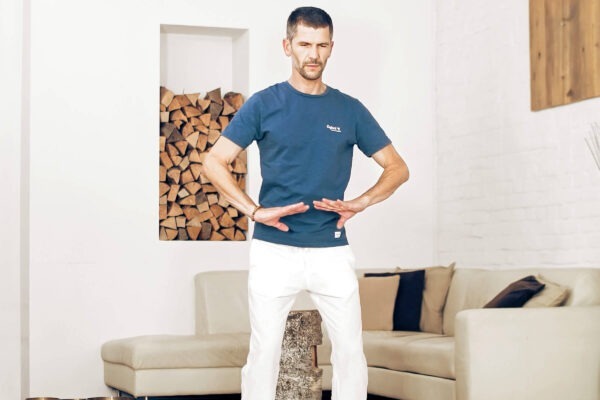
Particularly helpful for:
- Feeling of heaviness and fullness
- Flatulence and bloated stomach
- Skin blemishes due to poor digestion
- Inner restlessness and stagnation
Effect:
This earth element exercise regulates the flow of Qi in the stomach and spleen and calms the center. The harmonizing movements open the middle warmer and the spleen can better fulfil its transformation function - less dampness means less breeding ground for heat in the skin.
QI GONG: Exercise 3
Warm the center
Strengthens the spleen, improves the transformation of moisture
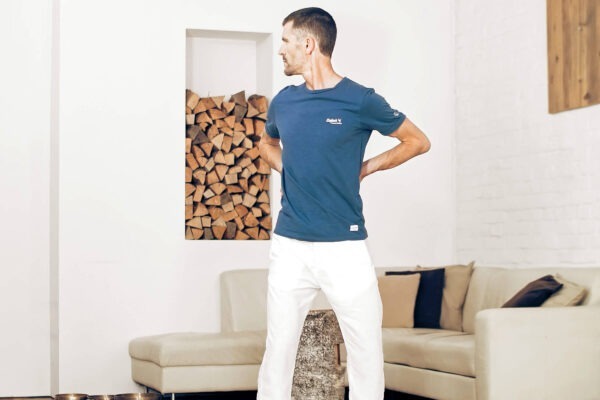
Particularly helpful for:
- Moisture due to weak spleen
- Tiredness and feeling of heaviness
- Weak digestion and soft stools
- Tendency to water retention and swelling
Effect:
This earth element exercise warms and strengthens the center - the spleen as a transformation center for moisture. The gentle, circular movements activate the digestive power and the spleen can better transform and eliminate moisture. Less moisture in the body means fewer skin symptoms.
These Qi Gong exercises are specially selected for draining damp heat from the skin. They harmonize the liver, strengthen the spleen as a transformation center and help to release accumulated moisture and heat.
Die Übungen wirken besonders gut, wenn du sie morgens zwischen 9 und 11 Uhr praktizierst — das ist die Milz–Zeit in der Organuhr und ideal für die Stärkung der Mitte. Auch der späte Abend eignet sich: Zwischen 23 und 1 Uhr läuft die Gallenblasen–Zeit, die Leber–Zeit folgt von 1 bis 3 Uhr — praktiziere vor dem Schlafengehen eine ruhige Übung, um die Leber zu harmonisieren und die Regeneration der Haut im Schlaf zu fördern.
QI GONG:
When and how often?
In the morning or in the morning (ideal):
- All 3 exercises as a sequence: approx. 15–20 min.
- Or just 1–2 exercises: approx. 5–10 min.
- Preferably between 9 and 11 am (spleen time)
In the evening before going to bed:
- „Looking behind“ for liver harmonization
- Ab 23 Uhr beginnt die Gallenblasen–Zeit, von 1 bis 3 Uhr die Leber–Zeit — beide Stunden gehören dem Schlaf, die Übung davor
- Calm exercise before sleep promotes night-time skin regeneration
In between:
- Einzelne Übungen bei Bedarf (z. B. bei Juckreiz oder Schweregefühl)
- „Regulate Qi“ for quick relief of the center
Regularity is more important than duration:
- It is better to exercise for 10 minutes every day than for 60 minutes once a week.
- After 2–3 weeks, you will notice the first changes.
- After 2-3 months of regular practice: significantly clearer complexion
Pro tip: Moderate exercise is ideal when the skin is hot and humid - not too gentle (moisture needs exercise), but not too intense either (heavy sweating can exacerbate the heat and irritate the skin even more). Qi Gong is the perfect balance of exercise and care for your skin.
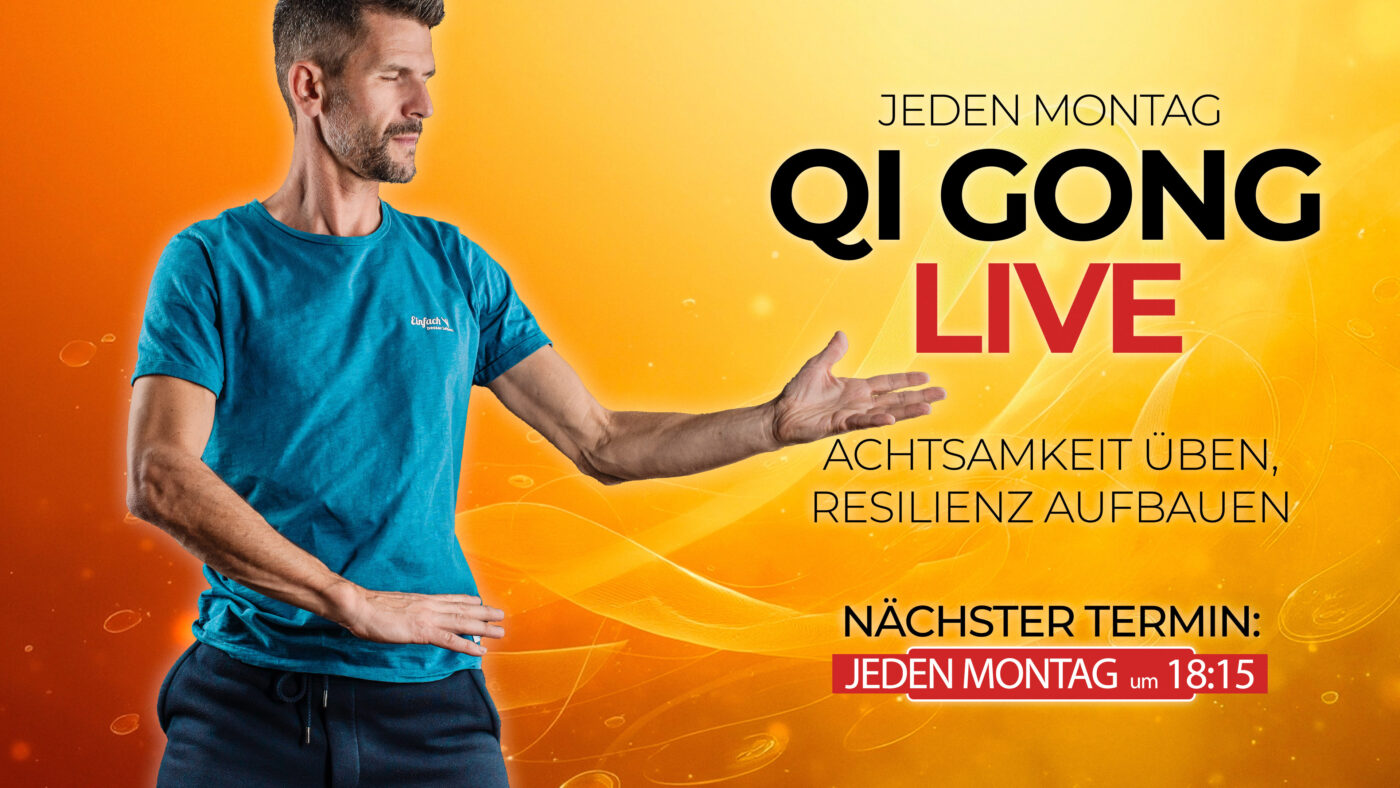
LIVE EVERY MONDAY: QI GONG WITH WOLFGANG
Every Monday at 6:00 p.m. Let's practice together live on YouTube. Among other things, Wolfgang will guide you through a complete qigong sequence — free of charge and suitable for all levels.
Why participate live? ✓ Working out together keeps you motivated ✓ Wolfgang explains the exercises in detail ✓ You can ask questions in the live chat ✓ A set time helps keep your routine on track
More about Qi Gong LiveMeridian Yoga — The Yoga of TCM
Meridian Yoga combines yoga with traditional Chinese medicine. The result is a holistic exercise concept for better health and more energy.
The following exercises specifically activate the liver meridian and the stomach meridian - two key meridians for damp heat of the skin. The liver ensures the free flow of Qi - if it stagnates, heat arises and rises to the skin. Together with the spleen, the stomach is responsible for the transformation of dampness. By activating both meridians, you release the stagnation, drain moisture and heat and support your skin from the inside out.
MERIDIAN YOGA: Exercise 1
Straddle for the liver meridian
Stretches the liver meridian, relieves stagnation and promotes the free flow of Qi
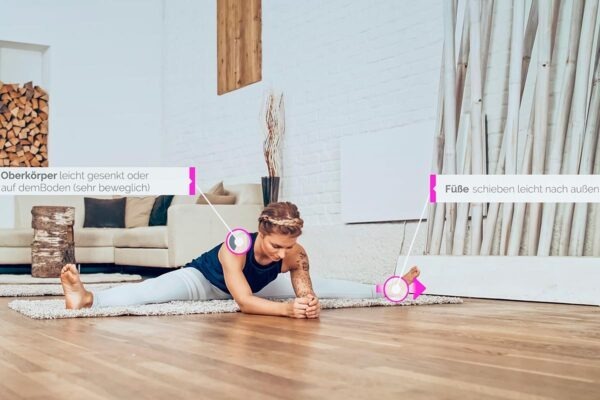
Particularly helpful for:
- Liver Qi stagnation and internal heat accumulation
- Stress, irritability and emotional tension
- Hip stiffness and tension in the legs
- Skin problems due to rising heat
Effect:
The straddle intensively stretches the liver meridian, which runs along the inside of the legs. The liver plays a central role in damp heat of the skin - if the liver qi stagnates, it generates heat which, together with dampness, rises to the skin and causes inflammation there. Stretching releases the stagnation, the Qi can flow freely again and the heat is no longer driven upwards.
MERIDIAN YOGA: Exercise 2
The tree with acupressure for the stomach meridian
Strengthens the center, improves the transformation of moisture
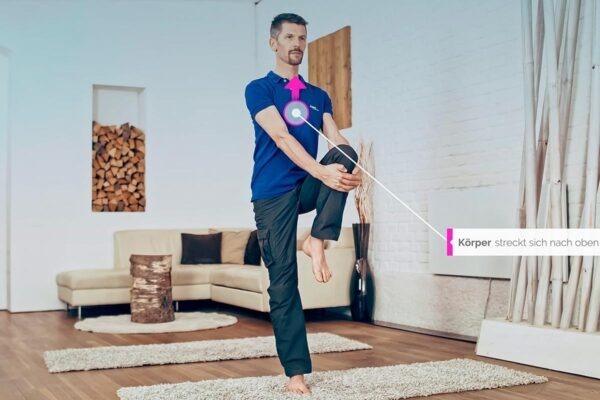
Particularly helpful for:
- Indigestion and bloating
- Moisture and heaviness in the body
- Spleen weakness and lack of transformation power
- Sluggishness and listlessness
Effect:
The tree with acupressure activates the stomach meridian and strengthens the legs - both of which promote the downward drainage of moisture. The combination with acupressure on Ma 36 (Zusanli) strengthens the transformative power of the center so that moisture can be actively transformed and drained away. If the skin is hot and humid, a strong center is crucial to prevent moisture from rising into the skin in the first place.
The two exercises complement each other perfectly: the straddle releases the liver qi stagnation that generates heat - the tree strengthens the center, which transforms dampness. Together they address both roots of Damp Heat in the skin: the stagnated Qi flow of the liver and the weakened transformative power of the spleen and stomach.
Particularly effective: Hold each position for 3-5 breaths, visualizing cool, clear light streaming through your skin, calming inflammation and leaving you feeling light.
MERIDIAN YOGA:
When and how often?
Best time:
- In the morning between 7 and 9 a.m. (stomach time) or in the evening between 7 and 9 p.m.
- Not immediately after eating - wait at least 2 hours
Duration:
- Hold each position for 3–5 breaths.
- Complete sequence: 10-15 min.
- 3–5 times per week for best results
Important:
- Practice in a well-ventilated, cool room - avoid heat and humidity
- Breathe deeply and evenly to promote the flow of Qi
- Stretching should be noticeable but comfortable - never painful
Pro tip: Combine Meridian Yoga with Qi Gong exercises such as „looking backwards“ or „regulating Qi“. The following applies to Damp Heat of the skin: regular, moderate exercise gets the Qi flowing and helps to dissolve the connection between dampness and heat - however, avoid excessive exertion when it is very hot, as heavy sweating can damage the Yin and further irritate the skin.
Nutrition according to TCM
„Let food be your medicine.“ - This principle has been valid in TCM for thousands of years. If your skin is affected by damp heat, the right diet is the most important lever for clearing your skin from the inside out.
Moist heat is one of the elements Earth (spleen) and wood (liver) and needs Cooling, light, moisture-dissipating food. Bitter foods play a special role here - they clear heat and dry out moisture.
What you eat, HOW you eat and WHEN what you eat - all of this affects your skin and your inner balance.
The golden rules for clear skin
What is good for you:
Cooling food
- Cucumber - cools and wicks away moisture
- Watermelon - cools heat and gently moisturizes
- Mung beans - the TCM classic against heat
- Celery, tomato, zucchini
Cool food takes the heat off your skin!
Bitter foods
- Dandelion - removes heat/moisture
- Chicorée und Radicchio
- Rocket - bitter and cooling
Bitter clears heat and dries moisture - just what your skin needs!
Light proteins
- Tofu - cools and nourishes without stress
- White fish - light and cool
- Pute oder Kaninchen — mild, gut verdaulich und ohne Hitze (Huhn wärmt)
- Mung beans - vegetable protein with a cooling effect
Strengthen light proteins without generating heat
Moisture-releasing cereals
- Job's Tears (Yi Yi Ren) - THE remedy for dampness
- Barley - cools and wicks away moisture
- Rice - neutral and spleen-strengthening
- Buckwheat - cooling and drying
These cereals help to remove moisture from the body
What you should avoid:
Alcohol
- Beer, wine, spirits
- Generates heat AND moisture
- The worst combination for your skin
- Harmful even in small quantities
Alcohol creates the exact pattern that makes your skin sick!
Hot spices
- Chili and hot sauces
- Garlic in large quantities
- Hot pepper
- Curry and cayenne
Spiciness generates heat - and you already have too much of it!
Fried and greasy foods
- French fries, chips, fried foods
- Fatty meat (pork, lamb)
- Fast food and ready meals
- Fatty sauces and dressings
Fat generates moisture and heat - poison for your skin!
Sugar and sweets
- White sugar and sweets
- Cakes and pastries
- Soft drinks and juices
- Chocolate and ice cream
Sugar creates moisture and feeds inflammation!
HOW YOU SHOULD EAT:
Light and digestible
- Steamed, boiled or blanched
- Nicht zu heiß essen — warm ist ideal, denn die Milz braucht Wärme, um die Feuchtigkeit aufzuräumen
- Small portions, do not overeat
- Prefer soups and congee
Regular and mindful
- 3 fixed meals a day
- Biggest meal at lunchtime
- Light and early in the evening (before 7 pm)
- Eat in peace, chew well
The spleen loves regularity - and a strong spleen cleans up moisture!
Drink properly
- Green tea - cools and clears heat
- Chrysanthemum tea - the skin classic
- Barley tea (Mugicha) - removes moisture
- Warm water - don't drink it ice cold!
The right drinks support the elimination of moisture and heat
IDEAL MENU FOR ONE DAY:
Breakfast (7–9 a.m.):
- Rice congee with mung beans and lotus root
- In addition: Green tea or chrysanthemum tea
Lunch (12–1 p.m.):
- Steamed fish with cucumber and zucchini
- In addition: Rice or Job's tears
- Or: Tofu mit Chicorée und Tomaten
Dinner (6–7 p.m.):
- Light vegetable soup with celery and tofu
- Or: Mung bean soup with cucumber
- In addition: Small portion of rice
Snack if needed:
- A piece of watermelon
- Or: Cucumber sticks
- Or: Green tea with chrysanthemums
The most important rule when changing your diet is:
Start with ONE step!
Don't change everything at once.
Our suggestion for getting started:
- Eliminate alcohol, fried foods and sugar - 2 weeks
- Drink chrysanthemum tea or green tea daily - 2 weeks
- Include mung beans and bitter vegetables in your diet - 2 weeks
Step by step, you will notice how your skin becomes calmer and the inflammation recedes.
Your skin will thank you for it!
RECIPE: MUNG BEAN SOUP WITH CUCUMBER
Ingredients:
For 4 portions
- 200 g mung beans (soaked overnight)
- 1 large cucumber
- 1 L vegetable stock
- 2 slices of fresh ginger
- 1 tablespoon sesame oil
- salt to taste
- Optional: Fresh coriander to garnish
Preparation:
- Rinse and drain the mung beans
- Peel and dice the cucumber
- Heat the sesame oil in a pan, briefly sauté the ginger
- Add the mung beans and pour in the stock
- Bring to the boil, then simmer over a low heat for 30-40 minutes
- Add the diced cucumber, simmer for a further 5 minutes
- Season with salt and garnish with coriander
Effect:
Cools heat and wicks away moisture
Soothes inflamed skin from the inside
Strengthens the spleen and supports digestion
2-3 times a week - perfect for removing damp heat!
RECIPE: HIHOBSTRÄNEN-CONGEE WITH CHRYSANTHEMUMS
Ingredients:
For 4 portions
- 100 g Job's tears (Yi Yi Ren)
- 50 g rice
- 1 tbsp dried chrysanthemum flowers
- 1.5 L water
- 2 slices of fresh ginger
- Some honey or rock candy (a little!)
- Optional: 2 tbsp goji berries
Preparation:
- Soak Job's tears in water overnight
- Add 1.5 liters of water to the Job's tears and rice
- Add the ginger and bring to the boil
- Simmer over a low heat for 45-60 minutes, stirring regularly
- Add the chrysanthemum flowers in the last 10 minutes
- Optional: add the goji berries 5 minutes before the end
- Season with a little honey and serve warm
Effect:
Dissipates moisture and clears heat
Strengthens the spleen and regulates digestion
Chrysanthemums cool and clear the skin
3-4 times a week as breakfast - the best congee for clear skin!
In der Schwangerschaft die Hiobstränen weglassen — sie gelten in der TCM als absenkend und werden dann gemieden; Reis–Congee mit Chrysanthemen tut es auch.
Breathing
Breathing is the bridge between body and mind. In TCM, it is said: „The lungs govern the qi“—according to this concept, through conscious breathing you can directly influence your qi flow and find a deeper sense of calm.
Breathe calmly and slowly: Deep abdominal breathing noticeably calms many people—their breathing becomes deeper, their shoulders relax, and their minds become clearer. The good news: Just 5–10 minutes a day can make a difference in your well-being.
Recommended breathing techniques
ABDOMINAL BREATHING — The basis for every breathing technique
Natural breathing
Abdominal breathing is the most natural and calm form of breathing. According to the teachings of TCM, with every breath you bring qi into your body’s center (Dantian).
Wolfgang shows you step by step, How to learn abdominal breathing correctly—lying down to start with, then later also sitting and standing.
Duration: 9 minutes

4–7–8 BREATHING — Find Peace
Calm Breathing for the Evening
With the 4–7–8 breathing technique, you inhale for 4 seconds, hold your breath for 7 seconds, and exhale for 8 seconds. This steady rhythm helps many people wind down in the evening—ideal when your mind won’t shut off at night.
Perfect for the evening or whenever you want to calm down quickly.
Duration: 9 minutes
To the interactive videoBOX BREATHING — For inner coherence
Professional breathing for focus and calmness
Box Breathing (4 seconds on, 4 seconds hold, 4 seconds off, 4 seconds hold) combines activation and relaxation in perfect balance. This method is used by elite soldiers, athletes, and executives to remain calm and focused even in extremely stressful situations.
A steady 4–4–4–4 rhythm A balance of activity and stillness—many people find it clarifying and grounding.
Duration: 9 minutes
To the interactive videoCOHERENT BREATHING — Brings Body and Mind into Harmony
Calm Breathing for Balance
With coherent breathing Breathe in for 5.5 seconds and out for 5.5 seconds. This rhythm brings your heart and breathing into a steady rhythm—a state known as „coherence.“ Many people use it as a regular breathing break in their daily lives.
A nice side effect: The heart and breath settle into a calm, synchronized rhythm.
Duration: 14 minutes
To the interactive video
COHERENT BREATHING Around the clock
Our 24/7 livestream on coherent breathing runs non-stop. You can tune in at any time and join in right away.
Perfect for:
✓ Spontaneous breaks to catch your breath in between
✓ If you'd like some gentle breathing guidance
✓ As background while working
✓ For the evening and to wind down
✓ For regular daily practice
relaxation
When your body is relaxed, Things tend to flow more easily. Persistent tension keeps you in a constant state of stress. By using specific relaxation techniques, you signal to your body to calm down and recharge.
Progressive muscle relaxation It is one of the best-known relaxation methods and has been practiced for over 100 years. It helps you become aware of tension, actively let go of it, and achieve a state of deep relaxation—whenever you want.
Recommended relaxation technique
PROGRESSIVE MUSCLE RELAXATION (PMR)
The Classic Relaxation Method
Progressive muscle relaxation according to Jacobson is one of the best-known relaxation techniques worldwide. By deliberately tensing and relaxing individual muscle groups, you learn to consciously recognize tension and release it.
That's what it feels like:
Step by step, the body becomes heavier and calmer, and the breathing more even. Many people make this a regular part of their evening routine to help them fall asleep easily.
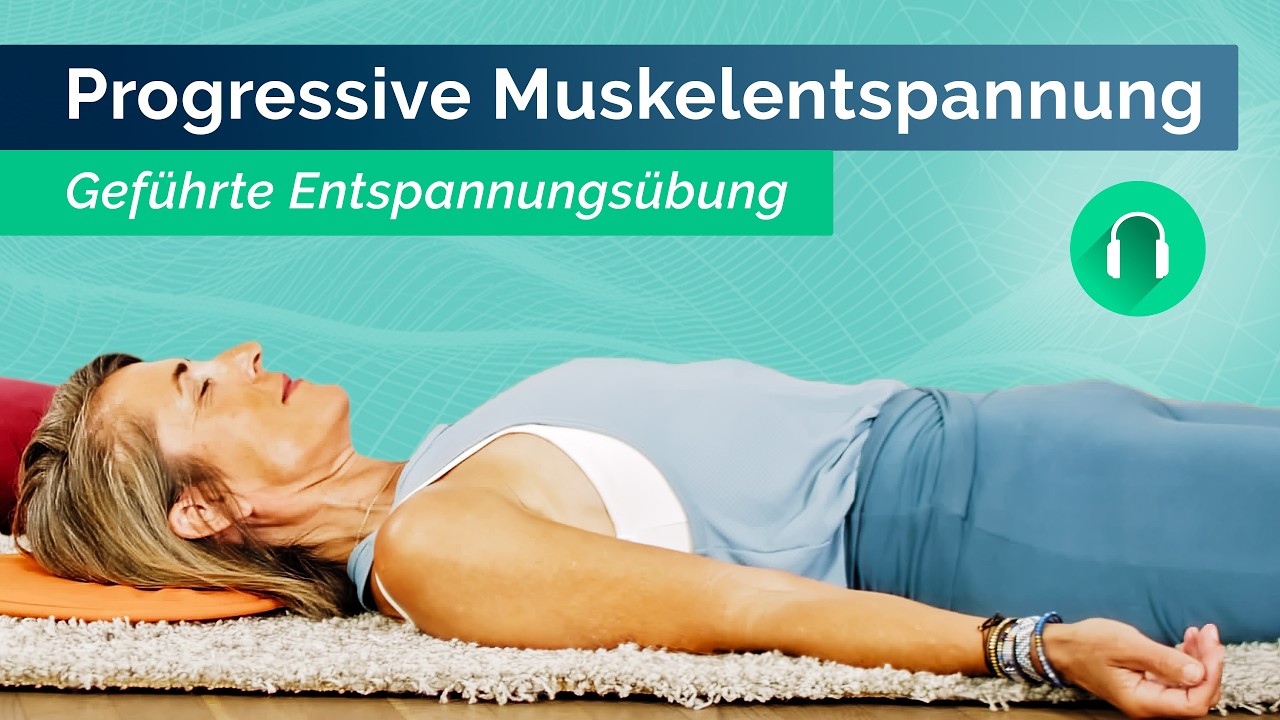
Maria guides you step by step through the entire exercise—perfect for beginners and advanced practitioners alike.
Duration: 23-minute complete guide
To the guided PMRMeditation
Meditation calms the mind — and a calm mind is good for your whole being. In TCM, it is said that every emotion affects a specific organ. Through regular meditation, you’ll learn to step away from racing thoughts, find emotional balance, and strengthen your inner center.
Just 10 minutes a day can do a lot to help you find inner peace. As a result, many people find that their daily lives become more relaxed and clear.
Recommended meditations
GUIDED MEDITATIONS FOR EVERY DAY
Your personal meditation library
We have a complete Playlist with over 60 guided meditations, breathing exercises, and relaxation techniques—from short 5-minute meditations for in between to deep 30-minute sessions for intensive practice.
In the playlist you will find:
- Morning meditations for a mindful start to the day
- Meditations for restful sleep
- Breathing meditations for inner peace
- Meditations for Moments of Calm Amid Stress and Worry
- TCM standing meditations for all 5 elements
- Body scan and body journeys
- Meditations for Peace of Mind and Body
- Special breathing techniques (4–7–8, coherent breathing, bee breathing)
Perfect for beginners and advanced practitioners. Choose the right meditation for you depending on your time, the time of day, and your needs.
To the meditation playlistInflammation occurs where moisture and heat accumulate.
Clear the heat, drain the moisture - and the skin regains its natural peace.
- Loosely based on the HUANG DI NEI JING
(The Yellow Emperor's Classic of Internal Medicine)
More tips for your everyday life
In addition to traditional TCM treatment methods there are many small everyday habits that can eliminate damp heat from your body and soothe your skin. In TCM, damp heat of the skin is caused by a combination of impaired spleen function and ascending heat - with the right habits, you can effectively tackle both causes.
Skin care from the outside
Gentle, natural cleansing
Irritated skin needs protection:
- Use lukewarm water - hot water increases the heat
- Mild, pH-neutral cleansing products without fragrances
- No aggressive scrubs or harsh soaps
- Gently dab the skin instead of rubbing
- Less is more - not too many products at the same time
Cooling compresses for acute itching
Natural help from outside:
- Green tea - allow to cool and apply as a compress
- Chamomile compresses soothe inflamed skin
- Cooling curd compresses for severe redness
- Aloe vera gel (pure, without additives) moisturizes and cools
- Leave the compresses on for 10-15 minutes
Clothing and sweating
The right clothing makes a difference:
- Wear natural fibers - cotton, linen, silk
- Avoid synthetics - they retain heat and moisture
- Wash off sweat promptly - it also irritates the skin
- Prefer loose clothing - tight clothing promotes congestion
- Don't scratch - even if it's hard, scratching increases the heat
Strengthen the spleen - remove the root of dampness
Warm, regular meals
The spleen loves rhythm and warmth:
- 3 hot meals at fixed times
- Prefer cooked food - it is easier to digest
- Biggest meal at lunchtime, when digestive power is at its strongest
- Eat light and early in the evening - before 7 pm
- Reduce raw food and cold drinks - they weaken the spleen
Avoid brooding
Sorgen schwächen die Milz–Energie:
- Excessive thinking exhausts the spleen
- Don't work or watch the news while eating
- Breaking through spirals of worry - through exercise or distraction
- Solve problems instead of endlessly pondering
- Meditation and mindfulness help to calm the mind
Avoid damp environments
External moisture intensifies internal moisture:
- Ventilate damp rooms regularly
- Do not stay in wet clothing for too long
- Pay particular attention to warm food in humid weather
- Don't sit for too long - exercise promotes spleen function
- Get up and move regularly - every 60-90 minutes
Harmonize the liver - calm the source of heat
Reduce stress
Stress generates liver heat, which rises to the skin:
- Incorporate regular breaks into your daily routine
- Relaxation techniques such as meditation or breathing exercises
- Consciously calm down in the evening - reduce screen time
- Go to bed before 11 p.m. - the liver regenerates between 1 and 3 a.m.
- Letting go of perfectionism - good is good enough
Let emotions flow freely
Suppressed emotions dam up the liver qi:
- Expressing feelings instead of suppressing them - including anger and frustration
- Seek discussions with trusted persons
- Writing, painting or music - creative expressions free the liver
- Crying is allowed and healing
- Seek professional help if necessary
Exercise in nature
The liver loves freedom and movement:
- Daily walks in the fresh air
- Nature calms the liver qi - forest, park, meadow
- Gentle exercise such as Qi Gong, Tai Chi or yoga
- Creative activities - painting, gardening, cooking
- Everything that gives you pleasure harmonizes the liver
Important to know
Treating damp heat on the skin takes time and patience. Draining moisture and heat is like draining a swamp - it happens step by step. Skin changes often do not improve in a linear fashion: there may be phases in which the skin temporarily looks worse before it makes a lasting recovery. Pay attention to your body's signals and stick to the measures consistently.
When to see a doctor? Bei Zeichen einer Infektion (Eiter, starke Schwellung, Fieber), bei großflächigen oder sich schnell ausbreitenden Ausschlägen, bei Fieber in Verbindung mit Hautveränderungen oder bei Wunden, die nicht heilen. Dazu kommen schmerzhafte, gruppierte Bläschen in einem Streifen auf einer Körperseite — dort zählt ein Zeitfenster von drei Tagen. TCM und westliche Dermatologie ergänzen sich gut; nur die Reihenfolge steht fest.
For optimal treatment progress
TCM is not a quick fix for symptoms., but rather a holistic healing process. You will achieve the best results if you consistently integrate the treatment into your daily routine and give your body time to regenerate.
Integration into everyday life
Start with ONE step
Don't try to change everything at once! That's overwhelming and leads to
usually leads to you giving up. Instead:
- Woche 1–2: Ernährung umstellen, Hitze erzeugende Nahrung meiden — und mit deiner TCM–Kräutermischung beginnen
- Week 3-4: Acupressure Tue 11 and MP 06 daily
- Week 5-6: Qi Gong daily 10 min.
- Starting in Week 7: Check to see if you still need your herbal blend—for mild to moderate cases, it’s usually no longer needed by then. It ends when the symptoms disappear, not when the weekly schedule ends.
- From week 9: Add further methods as required
Realistic expectations
After 2–3 weeks: First improvements noticeable
- Less itching and redness
- Fewer new skin rashes
- Improved digestion
After 6–8 weeks: Significant improvements
- Significant improvement in the appearance of the skin
- Less inflammation
- Lighter body feeling
After 3–6 months: Sustainable healing
- Skin noticeably clearer and calmer
- Body feels light and balanced
- Sustainable improvement in well-being
TCM vs. Western medicine
TCM and Western medicine are not mutually exclusive—they complement each other!
When Western medicine is important:
- In acute emergencies
- In case of structural damage
- In case of infections
- For accurate diagnoses (laboratory, imaging)
Where TCM has its strengths:
- In case of functional disorders
- For chronic complaints
- For prevention
- For holistic healing
Ideal: Combine both systems! Use Western medicine for
Acute treatment and accurate diagnosis, TCM for lasting healing
and strengthening the body's self-healing powers.
Important: Never stop taking prescribed medication without consulting your doctor first!
Talk to your doctor when you start TCM treatment.
Do you have any questions?

Wolfgang from meine-tcm.com
TCM is a broad field. Much of it sounds unfamiliar at first glance, and often the real question doesn't arise until you start putting some of it into practice in your daily life.
That's exactly what I'm here for. Write to me—no matter how big or small your question is, whether it’s related to this page or to something else entirely in TCM. I read every message myself and will get back to you. Calmly, clearly, and without any sales pitch.
P.S.: There are no stupid questions. So write to me.
Ask your questionEvery step counts
Your body strives for balance—you just need to create the right conditions for it.
Remember:
👣 Every little step counts
You don't have to be perfect. Even one warm meal a day is better than none. Even 5 minutes of qigong is better than no exercise at all.
⏳ Patience pays off
It took your body years to get to this point. Give it time to regain its balance. Change takes time, but it will happen.
🎯 Focus on what you can DO
Don't concentrate on what you are doing „wrong". Focus on every positive step you take.
💚 Be good to yourself
Perfection does not exist. It is acceptable to have an off day occasionally. Tomorrow is a new day when you can continue.
🤝 You are not alone
Thousands of people are walking this path with you. For over 2,000 years, TCM has been guiding people like you on their journey toward greater well-being.
Track Your Progress

To track your progress, we recommend that you repeat the TCM analysis after about 3 months.
Why does this make sense?
- You can see how your pattern has changed
- You can adjust your group as needed
- It motivates you to keep going
- You'll figure out which steps work best for you
⚠️ Important: Your answers from today will be stored in encrypted form using a code that you received via email. ONLY with this code will you be able to track your progress later. Be sure to keep the email in a safe place!
🔒 YOUR DATA IS SAFE
We store:
✓ Only your email address for reminders
✓ The date for shipping
We do NOT store:
✗ Your analysis results
✗ Your personal information
✗ The connection between email and the sample
All analysis data is completely anonymous and is not linked to your email address.
Newsletter
Stay up to date with our newsletter. Besides useful tips and tricks for training and your everyday life, you won't miss any of our new releases.