






On this page, you will learn:
- What this pattern means from the perspective of TCM and Western medicine
- Where your symptoms come from and how they are connected
- Which specific treatment methods can help you now
- How you can get your blood moving again and gently dissolve blockages with TCM herbs, acupressure, Qi Gong and nutrition
The good news: Eine Blut–Stase lässt sich mit den richtigen Maßnahmen sehr gut behandeln. Mit blutbewegenden Kräutern, gezielter Akupressur, sanfter Bewegung und der richtigen Ernährung kannst du Blockaden lösen und dein Blut wieder zum Fließen bringen.
Take your time, Get to know the different treatment approaches—you don't have to implement everything at once. Choose what feels right for you and what you can easily integrate into your everyday life.
Your treatment at a glance:
Which TCM pattern is really behind your complaints?
Degree of
imbalance

Light to moderate
Typical
treatment duration

6–8 Wochen
self-treatment
Possible

Well self-treatable
Treatment–
scope

2–3 methods
Proposed
methods

Extensive range
Our free TCM analysis shows you your personal TCM pattern in just 10 minutes.
What is blood stasis?
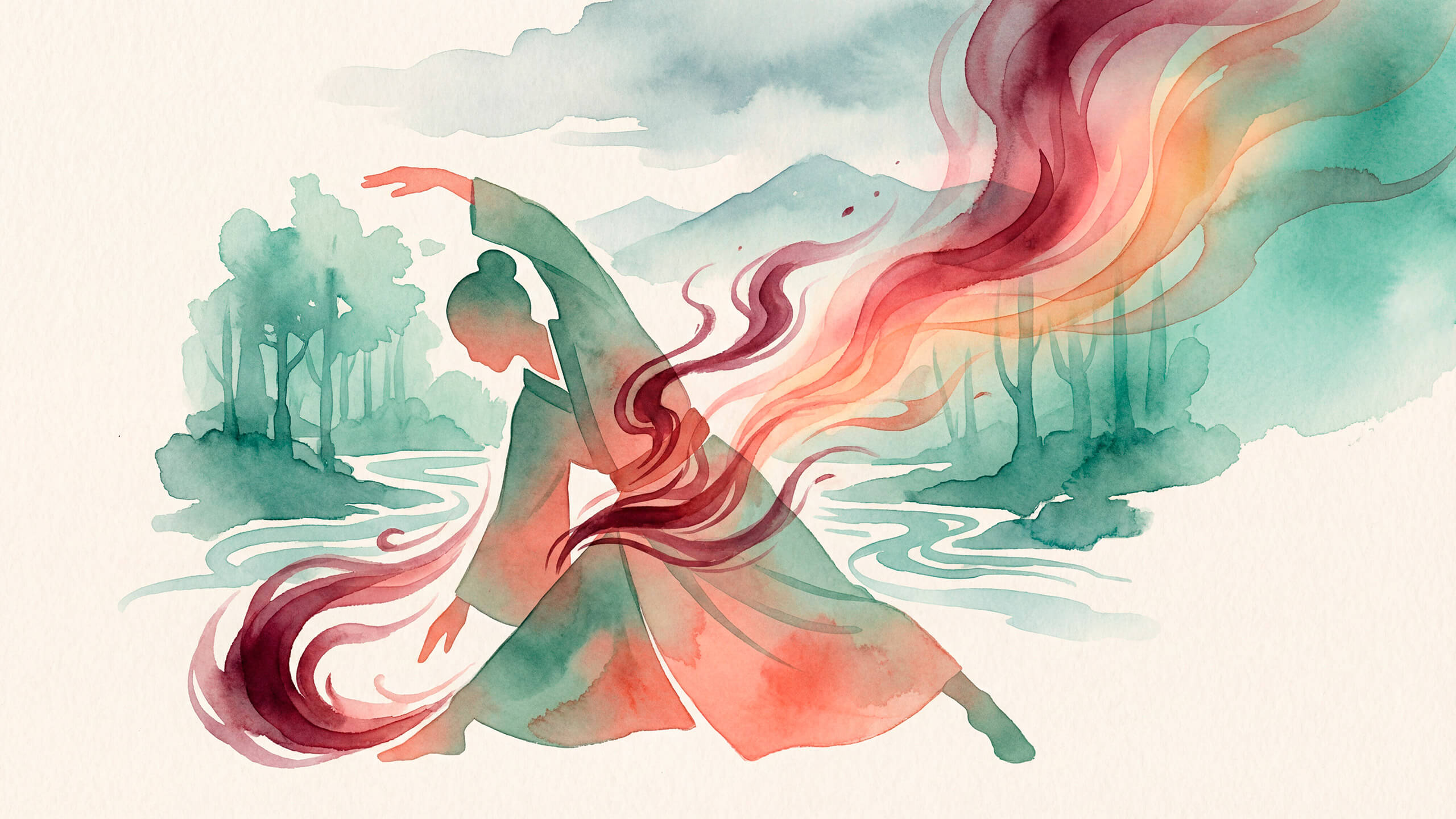
When the blood clots and can no longer flow freely
Die TCM–Perspektive: Wenn das Blut nicht mehr fließt
In der Traditionellen Chinesischen Medizin ist das freie Fließen des Blutes (Xue) eine Grundvoraussetzung für Gesundheit. Wenn das Blut stockt und nicht mehr ungehindert zirkulieren kann, sprechen wir von einer Blut–Stase (Xue Yu) — einem der wichtigsten pathologischen Muster in der TCM. Es geht dabei nicht um zu wenig Blut, sondern darum, dass das vorhandene Blut seine Bewegung verloren hat.
Stell dir einen Fluss vor, der normalerweise klar und lebendig fließt. Bei einer Blut–Stase gleicht dieser Fluss einem trüben Gewässer voller Hindernisse: Das Wasser staut sich, wird schlammig, und an manchen Stellen bilden sich Ablagerungen. Genau so verhält es sich mit dem Blut bei einer Stase — es wird zäh, dunkel und kann seine nährende Funktion nicht mehr erfüllen.
Die TCM sagt: „Wo das Blut nicht fließt, entsteht Schmerz.“ Dieser Grundsatz erklärt, warum fixierte, stechende Schmerzen das Leitsymptom einer Blut–Stase sind. Der Schmerz sitzt immer an derselben Stelle, wird oft als bohrend oder stechend beschrieben und verschlimmert sich bei Druck. Das unterscheidet ihn grundlegend von wandernden Schmerzen, die eher auf Qi–Stagnation hindeuten.
How does blood stasis develop? Die Ursachen sind vielfältig: Ein Trauma kann das Blut zum Stocken bringen, Kälte zieht die Gefäße zusammen und verlangsamt den Fluss, Hitze dickt das Blut ein, und auch eine langanhaltende Qi–Stagnation führt mit der Zeit zur Blut–Stase — denn das Qi ist die bewegende Kraft hinter dem Blut. Selbst ein chronischer Blut–Mangel kann paradoxerweise zur Stase führen: Wenn zu wenig Blut da ist, fließt es träger.
The typical signs of blood stasis:
- Fixed, stabbing pain that always occurs in the same place
- Dark discoloration of the skin, lips or tongue (livid, bluish-purple)
- Dark menstrual blood with lumps or clots
- Hardening, lumps or palpable masses in the body
- Pain that worsens at night or in the cold
- Congested, visible veins under the tongue (sublingual)
- Trockene, schuppige oder raue Haut
- Difficulties with wound healing
The treatment principle is: Huo Xue Hua Yu — Das Blut beleben und die Stase auflösen. Mit blutbewegenden Kräutern, gezielter Akupressur, sanfter aber regelmäßiger Bewegung und durchblutungsfördernden Nahrungsmitteln kannst du das Blut wieder zum Fließen bringen und die Blockaden sanft lösen.
The Western perspective: circulatory disorders and microcirculation
Aus westlicher Sicht entspricht die Blut–Stase einem Zustand gestörter Durchblutung und beeinträchtigter Mikrozirkulation. Das Blut fließt nicht mehr optimal durch die feinen Kapillaren, Gewebe werden schlechter versorgt, und Stoffwechselabfallprodukte können nicht mehr effizient abtransportiert werden.
Stell dir dein Gefäßsystem wie ein Straßennetz vor: Die großen Arterien sind die Autobahnen, die Kapillaren die kleinen Nebenstraßen. Bei einer Durchblutungsstörung sind besonders diese kleinen Straßen betroffen — sie sind verstopft, verengt oder der „Verkehr“ stockt. Die Folge: Das Gewebe bekommt nicht genug Sauerstoff und Nährstoffe, während sich Abfallstoffe ansammeln. Das erklärt die typischen Schmerzen und Verfärbungen.
Medizinisch relevant sind verschiedene Erscheinungsformen: Thrombosen (Blutgerinnsel in den Gefäßen), venöse Insuffizienz (Krampfadern, schwere Beine), arterielle Durchblutungsstörungen, aber auch funktionelle Mikrozirkulationsstörungen, die oft schwer messbar sind. Viele Patienten mit „unerklärlichen“ chronischen Schmerzen zeigen Anzeichen gestörter Mikrozirkulation.
What does modern medicine show?
- Mikrozirkulationsstörungen: Beeinträchtigte Durchblutung der kleinsten Gefäße
- Erhöhte Blutviskosität: Das Blut wird zähflüssiger und fließt langsamer
- Tendency to thrombosis: Increased risk of blood clots
- Chronic inflammation: Inflammation markers such as CRP can be elevated
- Venous congestion: Varicose veins, spider veins, heavy legs
- Tissue undersupply: Cells receive too little oxygen and nutrients
Modern research confirms: Das TCM–Muster „Blut–Stase“ korreliert mit messbaren Veränderungen wie erhöhter Blutviskosität, veränderten Gerinnungswerten und beeinträchtigter Mikrozirkulation. Blutbewegende TCM–Kräuter wie Dan Shen (Rotwurzelsalbei) zeigen in Studien positive Effekte auf die Durchblutung und werden sogar in der modernen Kardiologie erforscht.
This is exactly where TCM treatment comes in: It revitalizes the blood, dissolves congestion and promotes microcirculation - using gentle, natural methods that do not strain the body. Exercise, warmth and foods that promote blood circulation, such as turmeric, onions and garlic, are just as important as the classic blood-moving herbs.

The Yellow Emperor's team explains your pattern
Qi Bo | The Yellow Emperor | Dr. Lisa Weber
MASTER OF THE HEALING ARTS | TCM FOUNDER | MODERN PHYSICIAN
What happens when the legendary Yellow Emperor of Traditional Chinese Medicine sits down with his advisor Qi Bo and a modern doctor? They discuss your pattern—using 4,000-year-old knowledge AND the latest science.
Blut–Stase — Wenn das Blut stockt und nicht mehr frei fließen kann
The Yellow Emperor: „Qi Bo, I observe people in my realm who complain of fixed, stabbing pains. The pain always stays in the same place and gets worse at night. Some have dark discoloration on their skin, their lips are bluish and the women report dark menstrual blood with clots. What is the cause of this condition?“
Qi Bo: „Your Majesty, these people are suffering from blood stasis - called Xue Yu. The blood, which should normally flow freely and evenly through the blood vessels, has become stagnant. It no longer moves, but stagnates in certain places. This stagnation causes pain - and very characteristic pain at that: it is fixed, stinging like a needle, and worsens at night when the blood flows more slowly anyway. The dark discoloration shows us that the blood is no longer circulating freshly. And the lumps in the menstrual blood are clotted, stagnant blood that is finally expelled.“
Dr. Weber: „This is a precise description of circulatory disorders and microvascular problems! In Western medicine, we speak of hyperviscosity of the blood, microcirculatory disorders or thrombotic processes. The stabbing, fixed pain is typical of ischemic conditions - when tissue is not sufficiently supplied with blood. The nocturnal aggravation can be explained by the fact that blood pressure drops when lying down and blood flow in already compromised areas decreases further. The livid discoloration and dark blood show an increased proportion of deoxygenated haemoglobin.“
The Yellow Emperor: „How does blood stasis differ from other types of pain?“
Qi Bo: „Your Majesty, that is an important question! The pain of blood stasis is very characteristic. Firstly, they are fixed - they always stay in the same place, unlike the wandering pains of Qi stagnation or wind. Secondly, it is stabbing - as if from a needle or knife, not dull or pulling. Thirdly, it worsens with pressure - the area is sensitive to pressure. Fourthly, they get worse at night - when Yin dominates and blood flows more slowly. And fifthly, they do not improve with heat alone - unlike cold pain. Blood stasis requires movement!“
Dr. Weber: „These distinctions are clinically very valuable! The fixed character of the pain corresponds to what we see in local circulatory disorders - the ischemia affects a specific supply area. The stabbing character comes from the fact that pain receptors are irritated by a lack of oxygen and metabolic products. The nocturnal aggravation is well documented in peripheral vascular diseases. And it makes sense that heat alone does not help - because heat does dilate the vessels, but if the blood itself is too viscous or microthrombi are present, additional movement is needed to restore the flow.“
The Yellow Emperor: „What causes the blood to stagnate?“
Qi Bo: „There are many causes, Your Majesty. Firstly: trauma - injuries, falls or operations can cause the blood to stagnate locally. Secondly, cold - cold constricts and slows the blood flow until it stagnates. Third: Heat - paradoxically, heat can also cause stasis by ‚thickening‘ the blood like water that evaporates. Fourth: Qi stagnation - if the Qi is not flowing, it cannot move the blood. It is said: ‚Where the Qi stagnates, the blood follows‘. Fifth: Chronic blood deficiency - if there is too little blood, it no longer flows powerfully and begins to stagnate. And sixthly: sitting or lying down for long periods - lack of movement causes the blood to stagnate.“
Dr. Weber: „This is remarkably consistent with modern pathophysiology! Trauma leads to local hematomas and tissue swelling that impede blood flow. Cold causes vasoconstriction and increased blood viscosity. With fever and dehydration, the blood actually becomes more viscous - the hematocrit increases. Chronic stress - emotional stagnation - increases the tendency to clot via increased cortisol levels. With anemia, the blood flow is actually often disturbed because the body tries to compensate. And prolonged sitting is a known risk factor for deep vein thrombosis!“
The Yellow Emperor: „What signs on the body reveal blood stasis?“
Qi Bo: „The signs are very clear, Your Majesty. The tongue is livid, dark purple or has purple spots - it shows the stagnation directly. Often one sees dilated veins under the tongue - the so-called sublingual veins - which are dark and swollen. The pulse is rough (Se Mai) and tough (Se Mai) - it does not flow smoothly but bumpily like a river full of stones. The skin may show fixed dark spots. The lips are often bluish or dark. And women show dark, lumpy menstrual blood with pain.“
Dr. Weber: „This tongue diagnosis is fascinating! The livid tongue staining actually shows an increased concentration of deoxygenated hemoglobin - i.e. poor oxygen supply. The dilated sublingual veins are a recognized clinical sign that indicates venous congestion or increased venous pressure. The ‚rough‘ pulse corresponds to what we might measure as an irregular or reduced pulse wave velocity. Dysmenorrhea with dark, clumpy blood indicates delayed shedding of the endometrium, often accompanied by elevated prostaglandin levels.“
The Yellow Emperor: „Now let's talk about the treatment. How can we get the stagnant blood moving again?“
Qi Bo: „Your Majesty, the treatment principle is: Huo Xue Hua Yu - invigorate the blood and dissolve stasis. This is an active therapy! Firstly, blood-moving herbs - Tao Ren (peach seed) and Hong Hua (safflower blood) are the classics. They break up the stasis and get the blood flowing again. Second: Dan Shen (red root sage) - it cools the blood and moves it gently, especially good for the heart. Third: Chuan Xiong - it moves both Qi and blood and opens the vessels. Fourth: Movement - stagnant blood needs physical movement! Fifth: Heat for cold stasis - warm compresses and moxibustion help to loosen the stagnant blood.“
Dr. Weber: „The blood-moving herbs actually have well-documented pharmacological effects! Dan Shen contains salvianolic acid and tanshinone, which have been shown in studies to have an antithrombotic effect and improve microcirculation. Tao Ren contains amygdalin and has been shown to have blood liquefying properties. Hong Hua contains Safflower Yellow A, which improves blood flow properties. Chuan Xiong contains ligustilide, which has a vasodilating effect. These herbs are even used in China for coronary heart disease and are the subject of intensive research!“
The Yellow Emperor: „What is the classic recipe for blood stasis?“
Qi Bo: „Your Majesty, the most famous recipe is Xue Fu Zhu Yu Tang - the ‚decoction that dispels stasis from the blood house‘. It is a masterpiece of composition: Tao Ren and Hong Hua as emperor herbs break up the stasis. Chuan Xiong, Chi Shao and Dang Gui move and nourish the blood. Chai Hu and Zhi Ke move the Qi - because where Qi flows, Blood follows. Niu Xi guides the blood downwards. This formula has been tried and tested for centuries for heart pain, headaches caused by stasis and all forms of fixed pain in the upper body.“
Dr. Weber: „Xue Fu Zhu Yu Tang is one of the most intensively researched TCM formulas! There are hundreds of studies on it. The formula has been shown to improve blood flow properties, reduce platelet aggregation and protect heart tissue from ischemic damage. In China, it is used as an adjunctive therapy for coronary heart disease. The combination of blood-moving and qi regulating herbs makes pharmacological sense - vasodilatation plus blood liquefaction is a synergistic approach!“
The Yellow Emperor: „Wonderful! Let's turn this wisdom into a practical plan.“
THE 3-WAY METHOD FOR BLOOD STASIS
MORNING PROTOCOL (getting the blood moving):
- TCM: Warm water with turmeric - turmeric moves the blood and gently dissolves stagnation
- Science: Curcumin hat nachweislich antithrombotische Eigenschaften und verbessert die Blutfließfähigkeit
- Practical: 1 cup of warm water with 1/2 teaspoon of turmeric and a pinch of black pepper (for better absorption)
- TCM: Gentle stretching exercises in the morning - stretching opens the meridians and gets stagnant blood moving
- Science: Stretching improves blood circulation and reduces blood viscosity by activating the muscle pump
- Practical: 5–10 Minuten sanftes Dehnen aller großen Muskelgruppen nach dem Aufstehen
- TCM: Self-massage - direct movement of the blood through manual stimulation
- Science: Massage promotes microcirculation and lymph flow, reduces local congestion
- Practical: Massage arms and legs in the morning with circular movements towards the heart, 2-3 min.
TAGS STRATEGY (prevent stasis):
- TCM: Regelmäßige Bewegungspausen — langes Sitzen lässt das Blut stagnieren, Bewegung hält es fließend
- Science: Standing up every 30-60 minutes reduces the risk of thrombosis and improves the venous return pump
- Practical: Stand up every 45-60 minutes, walk for 2-3 minutes or climb stairs
- TCM: Akupressur auf Leber 3 (Tai Chong) — der „große Ansturm“ bewegt Qi und Blut kraftvoll
- Science: Stimulation dieses Punktes zeigt in Studien gefäßerweiternde Wirkung und Blutdruckregulation
- Practical: Between the 1st and 2nd toe, 2 thumb widths upwards. Press vigorously in a circular motion for 2-3 minutes per side
- TCM: Acupressure on spleen 6 (San Yin Jiao) - meeting point of the three Yin meridians, moves and nourishes the blood
- Science: This point has been shown to influence uterine blood flow and is used to treat dysmenorrhea
- Practical: 4 fingers wide above the inner ankle on the back of the shin. 3 min. per side
EVENING RITUAL (promotes blood circulation):
- TCM: Warmes Fußbad — Wärme erweitert die Gefäße und bringt das stagnierende Blut in Bewegung
- Science: Heat causes vasodilation and reduces blood viscosity, improves venous return
- Practical: 15–20 Min. warmes Fußbad (38–42 °C), optional mit etwas Ingwer oder Beifuß
- TCM: Qi Gong „Looking backwards“ - this exercise rotates the spine and moves the blood throughout the body
- Science: Rotational movements of the spine improve blood flow to the internal organs and relieve tension
- Practical: 8-10 minutes of gentle Qi Gong exercises with a focus on twisting movements before going to bed
- TCM: Go to bed early - during liver time (1-3 o'clock) the blood returns to the liver and is cleansed
- Science: Im Tiefschlaf entspannen sich die Gefäße, die Durchblutung regeneriert sich, Reparaturprozesse laufen ab
- Practical: In bed before 11 p.m. to make the most of the night's blood regeneration
The Yellow Emperor: „Qi Bo, how long does it take for the blood stasis to dissipate?“
Qi Bo: „Majesty, that depends on the depth and duration of the stasis. Acute stasis - after an injury, for example - can be resolved within 1-2 weeks. Chronic blood stasis that has built up over months or years takes longer. Many people notice this after 2-4 weeks of consistent practice: Pain becomes less intense, tongue color lightens, menstrual blood becomes lighter. After 6-8 weeks, more profound changes can occur: The fixed pain disappears, the skin shows fewer dark spots, the energy returns. With very old stasis it can take 3-6 months, but the body shows us the progress through a lighter tongue and less pain.“
Dr. Weber: „This correlates well with what we see in microcirculatory disorders! After starting a therapy to improve blood flow properties, initial improvements are often seen within 2-4 weeks. Normalization of laboratory values such as erythrocyte aggregation or plasma viscosity typically takes 4-8 weeks. In chronic conditions such as post-thrombotic syndrome, complete improvement can take months. The TCM observation that tongue color serves as an indicator is clinically useful - the color actually shows the oxygenation status!“
The Yellow Emperor: „What must be avoided at all costs with blood stasis?“
Qi Bo: „Majesty, the most important thing is: firstly, no sitting or lying down for long periods - lack of movement is the enemy of flowing blood. Secondly, no cold - cold drinks, cold food and cold surroundings freeze the blood. Thirdly, no emotional stagnation - suppressed anger and frustration stagnate Qi and blood. Fourth, no constricting clothing - tight belts and too-tight clothing impede blood flow. Fifthly, don't go to bed too late - the liver needs the night to purify the blood. And sixth, no excessive exhaustion - because overwork turns Qi deficiency into blood stasis.“
Dr. Weber: „All these recommendations are completely understandable from a cardiovascular point of view! Sitting for long periods is a known risk factor for thrombosis - that's why thrombosis prophylaxis is available for long flights. Cold causes vasoconstriction and increased blood viscosity. Chronic stress increases the tendency to clot via increased fibrinogen levels. Restrictive clothing can actually impede venous return. Lack of sleep interferes with nocturnal vascular regeneration. And exhaustion increases the cardiovascular risk. TCM wisdom is precise!“
The Yellow Emperor: „Then the message is clear: the blood must flow like a living river. When it stagnates, pain and illness arise. With exercise, warmth, the right herbs and a balanced lifestyle, we can dissolve the stasis and get the blood flowing again.“
Qi Bo: [smiles] „That's right, Your Majesty. Blood is like a river that must never stand still. If stones block its course, they must be removed. We dissolve the blockages with moving herbs, physical activity and the warmth of life. Then the blood flows freely again, the pain recedes and joie de vivre returns.“
About our „3 Wise Men“ story
Who are the Yellow Emperor and Qi Bo?
The Yellow Emperor (Huangdi) is said to have lived around 2600 BC and is considered the mythical founder of Chinese culture and medicine. Qi Bo was his most important advisor and personal physician. Their discussions about health, illness, and human nature were recorded in the most important fundamental work of TCM.
The book: Huangdi Neijing
The Huangdi Neijing, also known as The Yellow Emperor's Classic of Internal Medicine, was probably written between 200 BC and 200 AD. It is the oldest surviving work on Chinese medicine and consists of dialogues between the Yellow Emperor and his advisors, mainly Qi Bo.
This work is to TCM what the Bible is to Christianity: the absolute foundation. All the important concepts - yin and yang, the 5 elements, qi, meridians and acupuncture points - are systematically described here for the first time.
Our modern approach: The 3 wise men
In our series „The Three Sages,“ we bring together the Yellow Emperor and Qi Bo with the fictional modern doctor and microbiologist Dr. Weber.
Important note: All three characters and their conversations are purely fictitious and invented by us.
We use this narrative form, similar to the dialogue form in the book Huangdi Neijing, to convey the often complex interrelationships of TCM in an understandable and entertaining way. When the 4,000-year-old emperor is confronted with modern science, enlightening „aha moments“ arise that show that ancient wisdom and new research often speak the same language — just in different words.
This makes TCM lively, understandable and practically applicable for your everyday life.
The dialogs are creative interpretations - not historical documents. For medical questions, please consult a qualified TCM therapist or doctor.
Your treatment options
Blood stasis is very treatable! TCM offers you a variety of effective methods to get your blood moving again and dissolve blockages. You don't have to do everything at once - choose the methods that suit you and your everyday life.
Here you will find specific treatment approaches that have been proven effective in TCM for thousands of years and that you can largely apply yourself.
TCM herbs
Herbal medicine (or, in modern terms, phytotherapy) is the MOST IMPORTANT tool of TCM. It is an integral part of every traditional TCM treatment. Today, there is a suitable herbal blend for every TCM pattern.

Here's how to find the right herbal blend for you
- Search online. Enter Blut–Stase "TCM Kräutermischung" — including the quotation marks — into the search engine of your choice. If you wish, add the following to the search term: Compressed pieces — in our experience, the easiest to take — or Granules. This way, you'll see several providers and can compare them at your leisure.
- Our Therapist Directory. In the TCM Therapist Directory You can find TCM practitioners in your area who will tailor a TCM herbal blend to your individual constitution.
- Your TCM Pharmacy. Some pharmacies carry TCM herbal blends or can order them for you. Tell them what you're looking for—or show them this page.
In any case, pay attention to the quality of the TCM herbal blend, not the price—it’s worth taking a look at the list of ingredients.
Not sure which herbal blend is right for your TCM pattern? Write to us. We'll tell you which classic recipe traditionally goes with this pattern and what you should look for when choosing one.
Request a tip on herbal blends
TCM uses many different methods. Which ones are right for you is the question we hear most often. And it’s not something that can be answered offhand.
That’s why we offer our personalized TCM support. It begins with a free, no-obligation ONLINE initial consultation with Wolfgang.
After that, you’ll receive a personalized support plan outlining all the components and costs as a proposal. If it works for you, we’ll get started: In a second online session (about 30 minutes), Wolfgang will discuss your path with you.
Acupressure
Acupressure is acupuncture without needles. - you can apply them yourself at any time. By applying strong pressure to certain points, you activate the energy flow and release blood stagnation.
These three points form the classic combination for moving the blood. Blood stasis is about moving the blood and dissolving blockages — regelmäßige Stimulation bringt das Blut wieder in Fluss. In der Schwangerschaft werden alle drei nicht gedrückt — sie bewegen das Blut zu kräftig; das gilt für Le 03 und MP 10 genauso wie für MP 06.
ACCESSION POINT: Le 03
Liver 03
Great flow - Tai Chong
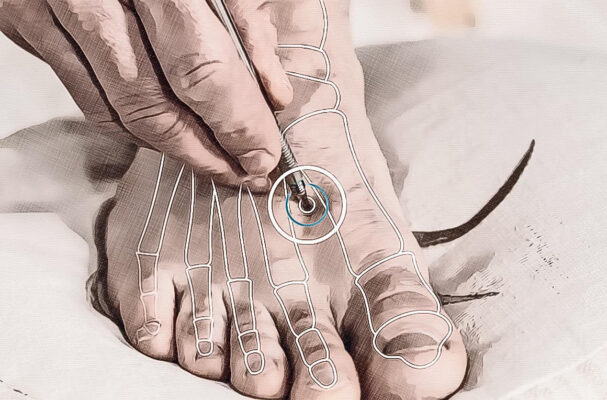
- Most important point for the movement of Qi and blood
- Relaxes the liver and relieves stagnation
- Relieves headaches and menstrual pain
- Regulates the free flow of liver qi
- Helps with emotional tension and frustration
Location: Auf dem Fußrücken, zwischen dem 1. und 2. Mittelfußknochen, ca. zwei Daumenbreiten vom Zehenansatz entfernt in der Vertiefung.
Application:
2x täglich für 2–3 Min. pro Seite kräftig drücken oder kreisend massieren. Ideal morgens und abends. NICHT während der Schwangerschaft anwenden!
ACUPUNCTURE POINT: MP 06
Spleen-Pancreas 06
Meeting place of the three Yin - San Yin Jiao
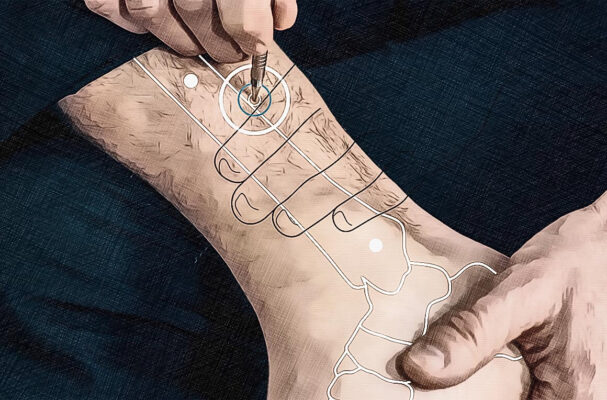
- Meeting point of the three Yin meridians (spleen, liver, kidney)
- Moves and nourishes the blood at the same time
- Regulates menstruation
- Solves stagnation in the lower heater
- Calms the mind and promotes sleep
Location: Four finger widths above the highest point of the inner ankle, directly behind the shin.
Application:
Massage in a circular motion twice a day for 2-3 minutes per side with medium to firm pressure. Do NOT use during pregnancy!
ACUPUNCTURE POINT: MP 10
Spleen-pancreas 10
Sea of Blood - Xue Hai
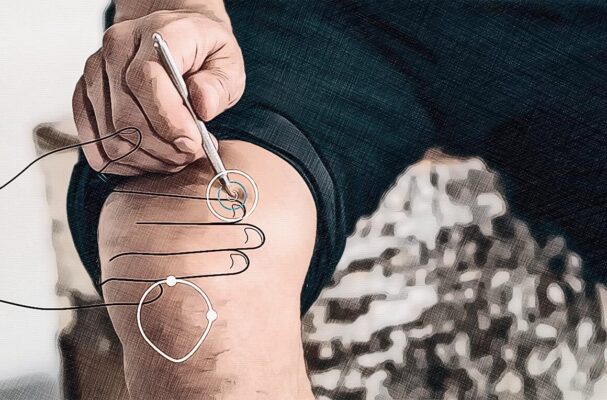
- Main point for blood stasis - revitalizes the blood
- Cools the blood in case of heat signs
- Helps with dark discoloration and skin problems
- Relieves blood stagnation throughout the body
- Regulates menstruation in case of lumps and pain
Location: With the knee bent, two thumb widths above the upper inner corner of the kneecap, on the vastus medialis muscle.
Application:
2x täglich für 2–3 Min. pro Seite kräftig drücken oder mit kleinen Kreisen massieren. Besonders wirksam zusammen mit Le 03 und MP 06. NICHT während der Schwangerschaft anwenden!
Our App Recommendation
Atemraum: Your App for Mindful Breathing


Breathing is the foundation of physical and mental well-being—and is usually COMPLETELY underestimated in everyday life. Yet hardly anything has such a direct impact: the way we breathe shapes the way we feel.
That's why we created Atemraum: an app with guided breathing exercises that you can take with you anywhere. Wolfgang put together these exercises—along with a 35-day course, quick tips for the moment, and breathing tests that let you track your progress.
Just a few minutes a day is enough. And anyone who uses our personal support If you use it, it already comes with breathing space.


You can try the app for free for 7 days.
Qi Gong
Movement is crucial for blood stasis — sanfte, fließende Qi Gong Übungen bringen dein Blut wieder zum Fließen. Stagnation entsteht durch Stillstand, und diese Übungen lösen Blockaden auf, bewegen das Qi und damit auch das Blut.
Regelmäßiges Praktizieren von Qi Gong (schon 10–15 Min. täglich) aktiviert die Zirkulation, löst Verspannungen und beugt neuen Stauungen vor. Die Devise: Bewegung statt Stillstand!
QI GONG: Exercise 1
Look backwards
Moves Qi and blood in the upper body
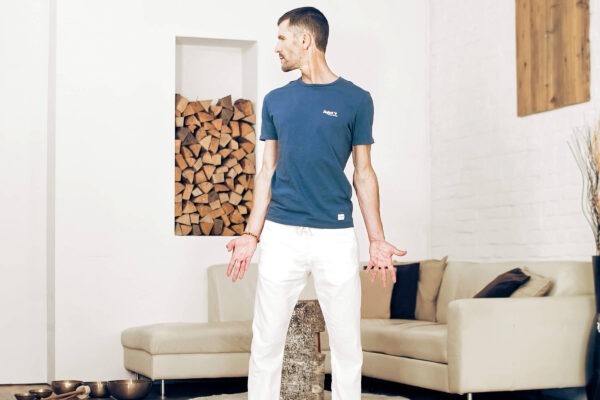
Particularly helpful for:
- Neck stiffness and tension
- Shoulder pain
- Headaches due to stagnation
- Stiffness in the upper body
Effect:
This wood element exercise moves Qi and blood powerfully through the entire upper body. The twisting movement activates the liver and gallbladder meridians, releases tension in the neck and shoulder area and gets stagnant blood flowing again.
QI GONG: Exercise 2
Regulate Qi
Harmonizes the flow of Qi
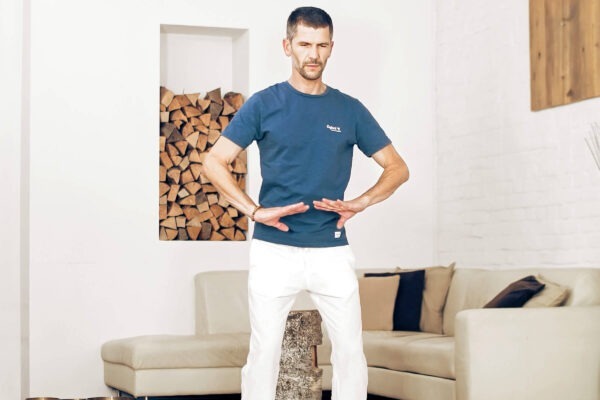
Particularly helpful for:
- Qi stagnation
- Digestive problems
- General rigidity
- Bloating and flatulence
Effect:
This earth element exercise harmonizes the entire flow of Qi in the body. As „Qi is the commander of the blood“, a free flow of Qi automatically improves blood circulation. The gentle up and down movements release blockages in the center and support digestion.
QI GONG: Exercise 3
Open heart
Opens the chest, promotes blood circulation
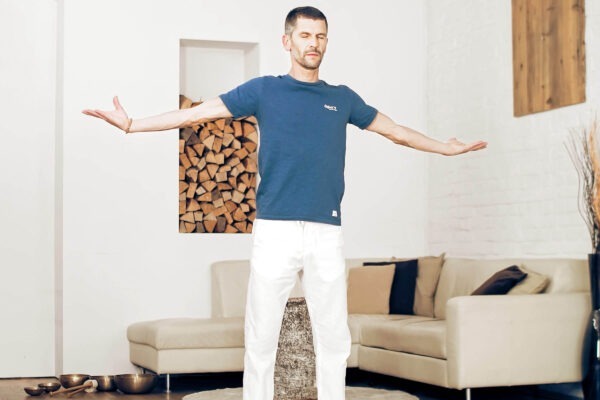
Particularly helpful for:
- Tightness in the chest
- Palpitations and inner restlessness
- Poor circulation
- Emotional tension
Effect:
This fire element exercise opens the chest and activates the heart - the organ that regulates the blood and moves it through the body. The wide arm movements release congestion in the chest and promote circulation. Particularly valuable for blood stasis, as the heart is the driving force behind blood flow.
These Qi Gong exercises are specially selected to dissolve blood stasis. They move Qi and blood, release tension and blockages and get the circulation flowing again.
All exercises work particularly well if you practise them in the morning between 5 and 7 a.m. - this is the liver's peak time in the organ clock. The morning is also a good time to get stagnant blood moving.
QI GONG:
When and how often?
In the morning or in the morning (ideal):
- All 3 exercises as a sequence: approx. 15–20 min.
- Or just 1–2 exercises: approx. 5–10 min.
- Best between 5 and 7 o'clock (liver time)
In between:
- Einzelne Übungen bei Bedarf (z. B. bei Verspannungen)
- „Look behind“ for quick relaxation in the neck
Regularity is more important than duration:
- It is better to exercise for 10 minutes every day than for 60 minutes once a week.
- After 2–3 weeks, you will notice the first changes.
- Nach 2–3 Monaten regelmäßiger Praxis: deutlich bessere Zirkulation
Pro tip: Bei Blut–Stase ist Bewegung wichtiger als bei anderen Syndromen. Regelmäßige, sanfte Bewegung ist der Schlüssel — Stillstand fördert die Stagnation. Kombiniere Qi Gong mit leichten Spaziergängen und vermeide langes Sitzen.
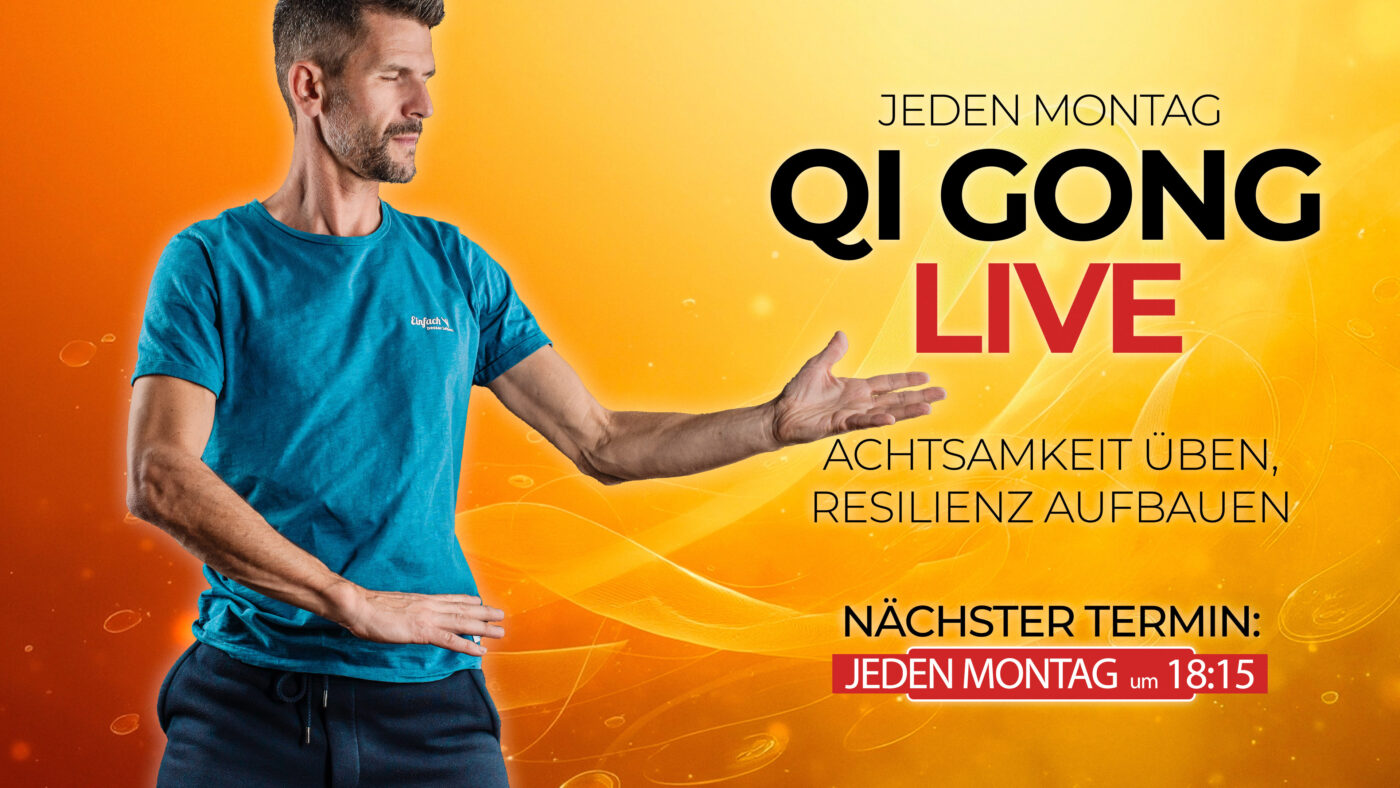
LIVE EVERY MONDAY: QI GONG WITH WOLFGANG
Every Monday at 6:00 p.m. Let's practice together live on YouTube. Among other things, Wolfgang will guide you through a complete qigong sequence — free of charge and suitable for all levels.
Why participate live? ✓ Working out together keeps you motivated ✓ Wolfgang explains the exercises in detail ✓ You can ask questions in the live chat ✓ A set time helps keep your routine on track
More about Qi Gong LiveMeridian Yoga — The Yoga of TCM
Meridian Yoga combines yoga with traditional Chinese medicine. The result is a holistic exercise concept for better health and more energy.
The liver and gallbladder meridians are particularly important for blood stasis - the liver stores the blood and regulates its free flow. The following exercises specifically stretch these meridians and help to release stagnation and get the blood moving again.
MERIDIAN YOGA: Exercise 1
Straddle for the liver meridian
Stretches the liver meridian, moves the blood
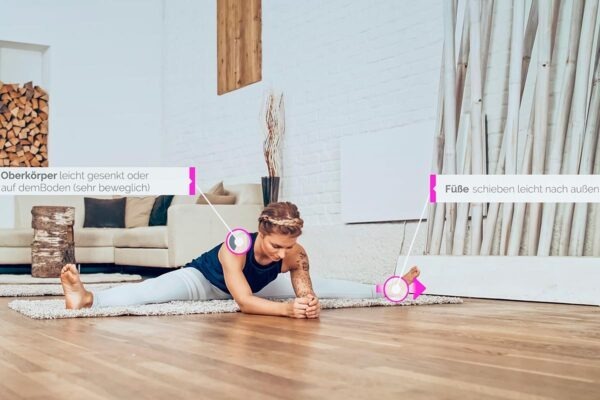
Particularly helpful for:
- Menstrual pain
- Inner tension
- Hip stiffness
- Blood stasis in the lower abdomen
Effect:
This exercise stretches the liver meridian on the inside of the legs and moves the liver blood. The liver stores the blood and regulates its free flow - by activating this meridian, stagnation is released and the blood starts to move again.
MERIDIAN YOGA: Exercise 2
Angle for the gallbladder meridian
Stretches the side of the body, relieves tension

Particularly helpful for:
- Lateral headaches
- Rib pain
- Tension on the side of the body
- Emotional tension
Effect:
Der Winkel dehnt die gesamte Körperseite und den Gallenblasen–Meridian, der seitlich am Körper verläuft. Die Gallenblase arbeitet eng mit der Leber zusammen — durch diese Übung lösen sich seitliche Verspannungen und das Qi kann wieder frei fließen, was auch die Blut–Bewegung unterstützt.
Both exercises activate the liver and gallbladder meridians, which are responsible for the free flow of Qi and blood. The liver stores the blood and releases it when needed - by activating these meridians, you support the natural circulation of blood and release stagnation.
Particularly effective: Halte jede Position für 3–5 Atemzüge und visualisiere dabei, wie sich Blockaden lösen und das Blut wieder frei fließt. Atme in die Dehnung hinein und lasse bei jedem Ausatmen mehr Spannung los.
MERIDIAN YOGA:
When and how often?
Best time:
- In the evening before going to bed
- Or in the morning after getting up to start the day with a free flow of Qi
Duration:
- Hold each position for 3–5 breaths.
- Complete sequence: 10–15 minutes
- 3–5 times per week for best results
Important:
- Practice in a calm, warm atmosphere
- Breathe deeply and slowly during the positions
- Stretching should be comfortable, never painful.
Pro tip: Kombiniere Meridian Yoga mit bewegenden Qi Gong–Übungen wie „Den Himmel stützen“ oder „Der Kranich breitet seine Flügel aus“. Bei Blut–Stase ist Bewegung das A und O — vermeide zu langes Sitzen und bringe deinen Körper regelmäßig in sanfte Bewegung.
Nutrition according to TCM
„Let food be your medicine.“ - This principle has been valid in TCM for thousands of years. In the case of blood stasis, the right diet is crucial to get your blood moving again.
Blood belongs to the elements Wood (liver) and fire (heart) and needs Warm, moving and aromatic food, um frei zu fließen. Kälte lässt das Blut stocken — Wärme bringt es in Fluss!
What you eat, HOW you eat and WHEN du isst — all das beeinflusst, ob dein Blut frei fließt oder stockt.
Die goldenen Regeln für fließendes Blut
What is good for you:
Blood-moving spices
- Turmeric - the top blood mover!
- Safran — öffnet die Gefäße
- Ginger - warms and moves the blood
- Rosemary, oregano, basil
Aromatic spices move Qi and blood!
Blood moving vegetables
- Onions and garlic - warm and move
- Eggplant - gently moves the blood
- Leek and spring onions
- Kohlrabi and radish
These vegetables release stagnation and promote flow
Blood-moving fruit
- Peaches - that's why Tao Ren (peach pit) is so important!
- Cherries - invigorate the blood
- Plums - move gently
- Grapes (red)
These fruits get the blood pumping
Other blood-moving foods
- Essig — löst Stagnation (in Maßen)
- Red wine - moves the blood (max. 1 glass)
- Chestnuts - warm and nourish
- Walnuts - gently move the blood
Small amounts are enough - it's about movement, not quantity!
What you should avoid:
Cold food and drinks
- Iced drinks and ice cream
- Cold water from the fridge
- Smoothies with ice cream or frozen fruit
- Yoghurt (cold and produces moisture)
Cold makes the blood coagulate and stagnate!
Raw food in large quantities
- Salads as a main meal
- Raw food diets
- Too many raw vegetables
- Cold fruit in the morning
Raw food weakens the digestive heat!
Greasy, heavy food
- Fried and breaded food
- Fat sausage and bacon
- Heavy cream sauces
- Übermäßig fettes Fleisch
Fat produces mucus and blocks the blood flow!
Dairy products in excess
- Milk (produces moisture)
- Cheese (especially soft cheese)
- Cream and quark
- Yogurt
Dairy products produce mucus and block the flow!
HOW YOU SHOULD EAT:
Cooked and warm
- Prefer hot meals
- Soups and stews - promote blood flow
- Steamed or fried vegetables
- Also eat breakfast hot
With moving spices
- Add turmeric to many dishes
- Season with ginger
- Use aromatic herbs
- Zwiebeln und Knoblauch nicht scheuen
Spices are your daily medicine!
Regularly and at rest
- 3 fixed meals a day
- Don't eat too late
- Eat in peace, chew well
- Exercise after eating (walk)
Exercise after eating promotes blood flow!
IDEAL MENU FOR ONE DAY:
Breakfast (7–9 a.m.):
- Warm porridge with cinnamon and walnuts
- In addition: Ginger tea or turmeric latte
Lunch (12–1 p.m.):
- Eggplant curry with onions and garlic
- In addition: Whole grain rice or quinoa
- Or: Vegetable pan with turmeric
Dinner (6–7 p.m.):
- Light vegetable soup with ginger
- Or: Steamed fish with leek
- In addition: Small portion of rice with turmeric
Snack if needed:
- Handful of walnuts
- Or: Warm turmeric tea
- Or: Cherries or peach
The most important rule when changing your diet is:
Start with ONE step!
Don't change everything at once.
Our suggestion for getting started:
- Integrate turmeric into your meals every day - 2 weeks
- Avoid cold drinks and ice cream completely - 2 weeks
- Introduce a warm breakfast with ginger - 2 weeks
Step by step, you will notice how your blood starts to flow again and the pain subsides.
Dein Blut wird wieder fließen!
RECIPE: TURMERIC GINGER TEA
Ingredients:
For 2 cups
- 1 teaspoon freshly grated turmeric (or 1/2 teaspoon powder)
- 1 teaspoon freshly grated ginger
- 1/2 teaspoon cinnamon
- 1 pinch of black pepper (important for absorption!)
- 500 ml hot water
- Optional: 1 TL Honig zum Süßen
Preparation:
- Freshly grate the ginger and turmeric
- Pour hot water over it
- Add cinnamon and black pepper
- Leave to infuse for 5-10 minutes
- Strain or drink with spices
- Optionally, sweeten with honey
Effect:
Moves the blood and relieves stagnation
Warms from the inside and promotes blood circulation
Relieves pain through improved blood flow
1-2 cups a day - your blood mover for every day!
RECIPE: EGGPLANT CURRY WITH ONIONS AND GARLIC
Ingredients:
For 4 portions
- 2 mittelgroße Auberginen
- 2 große Zwiebeln
- 4 garlic cloves
- 1 piece of ginger (approx. 3 cm)
- 2 tsp turmeric
- 1 teaspoon cumin
- 1 tin of tomatoes (400 g)
- 3 tbsp olive oil or coconut oil
- Salt, pepper, fresh coriander
Preparation:
- Cut the eggplants into cubes, season lightly with salt and leave to rest for 15 minutes
- Chop the onions into rings, finely chop the garlic and ginger
- Heat the oil and fry the onions until translucent
- Add garlic, ginger and spices
- Add the eggplants and sauté for 5 minutes
- Add the tomatoes, simmer for 20-25 minutes
- Season with salt and pepper to taste
- Serve with fresh coriander
Effect:
Eggplant, onions and garlic move the blood
Turmeric and ginger relieve stagnation
Warms and promotes blood circulation
2-3 times a week - perfect for blood movement!
Breathing
Breathing is the bridge between body and mind. In TCM, it is said: „The lungs govern the qi“—according to this concept, through conscious breathing you can directly influence your qi flow and find a deeper sense of calm.
Breathe calmly and slowly: Deep abdominal breathing noticeably calms many people—their breathing becomes deeper, their shoulders relax, and their minds become clearer. The good news: Just 5–10 minutes a day can make a difference in your well-being.
Recommended breathing techniques
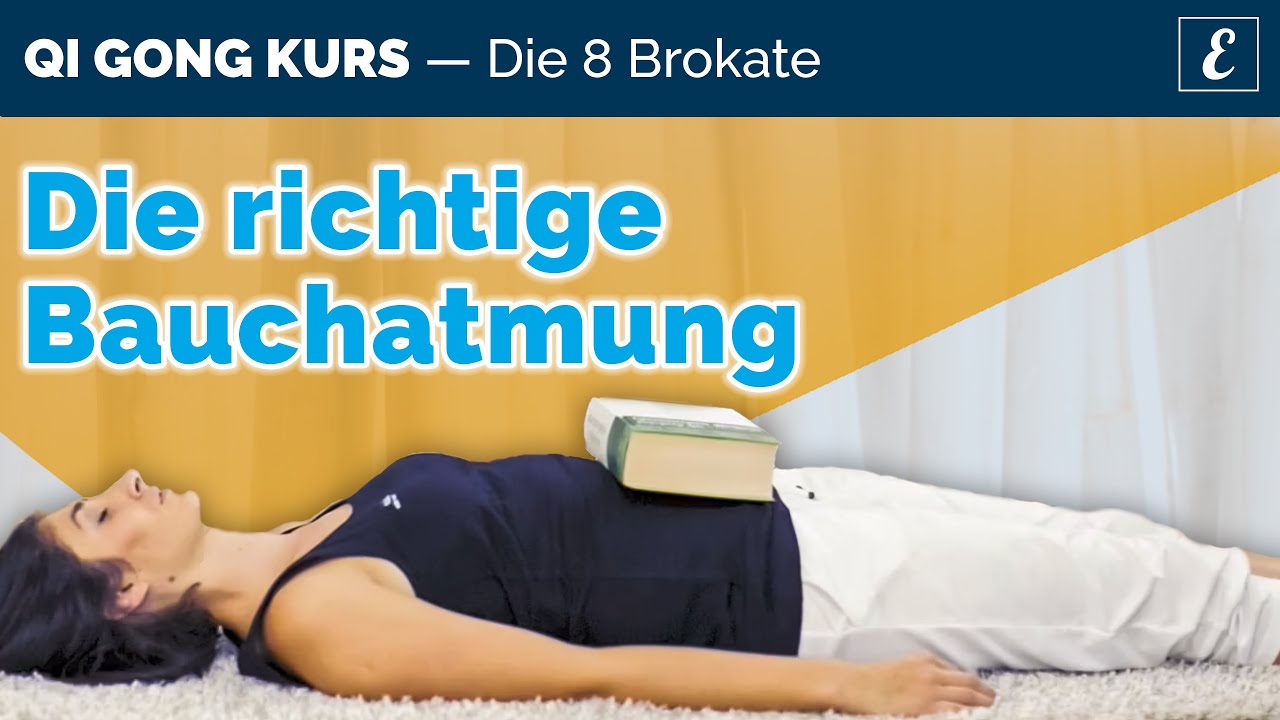
ABDOMINAL BREATHING — The basis for every breathing technique
Natural breathing
Abdominal breathing is the most natural and calm form of breathing. According to the teachings of TCM, with every breath you bring qi into your body’s center (Dantian).
Wolfgang shows you step by step, How to learn abdominal breathing correctly—lying down to start with, then later also sitting and standing.
Duration: 9 minutes
4–7–8 BREATHING — Find Peace
Calm Breathing for the Evening
With the 4–7–8 breathing technique, you inhale for 4 seconds, hold your breath for 7 seconds, and exhale for 8 seconds. This steady rhythm helps many people wind down in the evening—ideal when your mind won’t shut off at night.
Perfect for the evening or whenever you want to calm down quickly.
Duration: 9 minutes
To the interactive videoBOX BREATHING — For inner coherence
Professional breathing for focus and calmness
Box Breathing (4 seconds on, 4 seconds hold, 4 seconds off, 4 seconds hold) combines activation and relaxation in perfect balance. This method is used by elite soldiers, athletes, and executives to remain calm and focused even in extremely stressful situations.
A steady 4–4–4–4 rhythm A balance of activity and stillness—many people find it clarifying and grounding.
Duration: 9 minutes
To the interactive videoCOHERENT BREATHING — Brings Body and Mind into Harmony
Calm Breathing for Balance
With coherent breathing Breathe in for 5.5 seconds and out for 5.5 seconds. This rhythm brings your heart and breathing into a steady rhythm—a state known as „coherence.“ Many people use it as a regular breathing break in their daily lives.
A nice side effect: The heart and breath settle into a calm, synchronized rhythm.
Duration: 14 minutes
To the interactive video
COHERENT BREATHING Around the clock
Our 24/7 livestream on coherent breathing runs non-stop. You can tune in at any time and join in right away.
Perfect for:
✓ Spontaneous breaks to catch your breath in between
✓ If you'd like some gentle breathing guidance
✓ As background while working
✓ For the evening and to wind down
✓ For regular daily practice
relaxation
When your body is relaxed, Things tend to flow more easily. Persistent tension keeps you in a constant state of stress. By using specific relaxation techniques, you signal to your body to calm down and recharge.
Progressive muscle relaxation It is one of the best-known relaxation methods and has been practiced for over 100 years. It helps you become aware of tension, actively let go of it, and achieve a state of deep relaxation—whenever you want.
Recommended relaxation technique
PROGRESSIVE MUSCLE RELAXATION (PMR)
The Classic Relaxation Method
Progressive muscle relaxation according to Jacobson is one of the best-known relaxation techniques worldwide. By deliberately tensing and relaxing individual muscle groups, you learn to consciously recognize tension and release it.
That's what it feels like:
Step by step, the body becomes heavier and calmer, and the breathing more even. Many people make this a regular part of their evening routine to help them fall asleep easily.
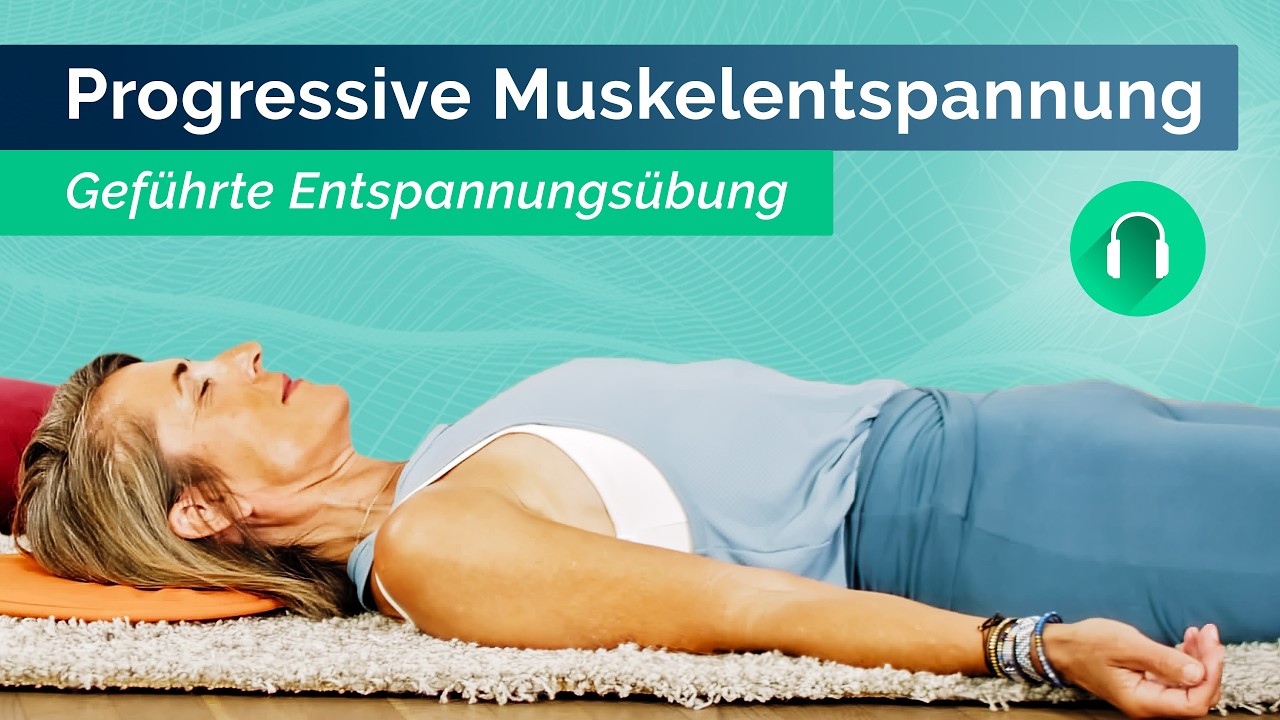
Maria guides you step by step through the entire exercise—perfect for beginners and advanced practitioners alike.
Duration: 23-minute complete guide
To the guided PMRMeditation
Meditation calms the mind — and a calm mind is good for your whole being. In TCM, it is said that every emotion affects a specific organ. Through regular meditation, you’ll learn to step away from racing thoughts, find emotional balance, and strengthen your inner center.
Just 10 minutes a day can do a lot to help you find inner peace. As a result, many people find that their daily lives become more relaxed and clear.
Recommended meditations
GUIDED MEDITATIONS FOR EVERY DAY
Your personal meditation library
We have a complete Playlist with over 60 guided meditations, breathing exercises, and relaxation techniques—from short 5-minute meditations for in between to deep 30-minute sessions for intensive practice.
In the playlist you will find:
- Morning meditations for a mindful start to the day
- Meditations for restful sleep
- Breathing meditations for inner peace
- Meditations for Moments of Calm Amid Stress and Worry
- TCM standing meditations for all 5 elements
- Body scan and body journeys
- Meditations for Peace of Mind and Body
- Special breathing techniques (4–7–8, coherent breathing, bee breathing)
Perfect for beginners and advanced practitioners. Choose the right meditation for you depending on your time, the time of day, and your needs.
To the meditation playlist„Wenn das Blut stockt, entsteht Schmerz.“
„Das Blut muss fließen wie ein Fluss — ohne Hindernisse, ohne Stauung. Wo das Blut nicht fließen kann, sammelt sich Schmerz und Krankheit an. Bringe das Blut in Bewegung, und der Körper heilt sich selbst.“
- From the HUANG DI NEI JING (The Yellow Emperor's classic on internal medicine)
More tips for your everyday life
In addition to traditional TCM treatment methods there are many small everyday habits that can get your blood moving again. With blood stasis, it is crucial to restore the flow - with the right habits, you can actively help your blood to circulate freely.
Exercise and activity - the most important things for blood stasis
Regelmäßige Bewegung ist essentiell
Exercise is the best medicine for blood stasis:
- Walks in the fresh air - at least 30 minutes a day
- Light jogging or Nordic walking
- Swimming gets the whole body moving
- Dancing - is fun and moves the blood wonderfully
- Cycling - gentle and effective
Do not sit for too long
Prolonged sitting promotes blood stasis:
- Get up and move every 30-60 minutes
- Incorporate short stretching exercises at the workplace
- Use a standing desk or height-adjustable desk
- Do not cross your legs - impedes the blood flow
- Im Sitzen öfters die Füße kreisen lassen
Stretching and stretching
Against stiffness and tension:
- Gentle stretching in the morning - gets the blood pumping
- Yoga or Tai Chi - ideal for blood flow
- Besonders Hüftöffner und Schulterdehnungen
- Stretch slowly and consciously, not jerkily
- In case of pain: go carefully to the limit, not over it
Apply heat - promote blood circulation
Wärme von außen
Heat relieves stagnation and promotes blood flow:
- Hot water bottle for localized pain - especially in the lower abdomen
- Warme Bäder entspannen und erweitern die Gefäße
- Fußbäder mit Ingwer — ziehen die Wärme in den Körper
- Infrared lamp for tension and pain
- Sauna (if there are no signs of heat)
Avoid cold at all costs
Cold slows down the blood flow:
- Avoid cold drinks and food
- Nicht barfuß auf kaltem Boden laufen
- Keep your lower abdomen and lower back warm
- In winter: Protect the kidney and abdominal area in particular
- No cold compresses for blood stasis pain
Hot food
Warm from the inside:
- Prefer cooked, warm meals
- Ginger, turmeric, cinnamon - warming spices
- Hot soups and stews
- No raw food as a main meal
- Getränke warm trinken — Kälte bremst den Blutfluss zusätzlich
Self-massage - activate the blood flow
Daily self-massage
Promotes blood circulation and relieves stagnation:
- Stroke the extremities from bottom to top in the morning
- Circular abdominal massage in a clockwise direction - promotes digestion
- Schultern und Nacken regelmäßig lockern
- Scalp massage - improves blood circulation
- Earlobe kneading - many reflex zones are represented here
Dry brush massage
Before showering - invigorates the whole body:
- Working with a natural bristle brush
- Von den Füßen aufwärts zum Herzen hin bürsten
- From the hands upwards to the shoulder
- Gentle pressure - the skin should redden slightly
- Then take a warm shower
Gua Sha
Traditional technique for tension:
- Work with a Gua Sha stone or spoon
- Scraping the neck and shoulders in case of tension
- Red discoloration (Sha) indicates stagnation - is desirable
- Always work with oil, never on dry skin
- In case of severe blood stasis: start gently first
Emotional balance - don't suppress your feelings
The connection between emotions and blood stasis
Suppressed emotions cause Qi stagnation, which leads to blood stasis:
- Prolonged frustration and anger dam up the Qi
- Unexpressed grief and pain remain „stuck“ in the body“
- Chronic stress leads to tension and stagnation
- Resentment and bitterness are particularly hard on the liver
- Emotional stress often manifests itself physically
Expressing feelings
Restore the emotional flow:
- Perceiving and naming feelings
- Talking to people you know
- Crying when it wants to show itself
- Writing a diary - helps to organize thoughts
- Seeking professional help for chronic stress
Find valves
Physical expression of emotional energy:
- Sport as an outlet for frustration and anger
- Creative activities - painting, making music, writing
- Singing - moves the Qi in the whole body
- Dancing - combines emotions with movement
- Being in nature - helps you let go
For women: Menstruation and blood stasis
Typical signs of blood stasis
Menstruation often clearly shows whether blood stasis is present:
- Dark, almost black menstrual blood
- Blood clots during your period
- Severe, cramp-like pain
- Schmerzen, die Wärme kurz lindert, ohne dass sie verschwinden — bessert Wärme dagegen zuverlässig alles, steckt eher Kälte als Stase dahinter
- Unregelmäßiger Zyklus mit verzögertem Beginn
During menstruation
Support the blood flow:
- Heat on the lower abdomen - hot water bottle or grain pillow
- Drink warm drinks - ginger tea is ideal
- No cold food or drinks
- Gentle exercise - don't crawl into bed
- Light abdominal massage in a clockwise direction
Between the periods
Work preventively:
- Regelmäßige Bewegung den ganzen Monat über
- Reduce stress - especially before your period
- Keep your lower abdomen warm - no crop tops
- Eat blood-boosting foods (turmeric, saffron)
- TCM herbs for prevention - discuss with therapist
Important to know
Dissolving blood stasis takes time and consistency. Unlike with acute complaints, patience is required here - but it's worth the effort. Every day that you move, apply heat and listen to your body, a little more stagnation is released. Pay attention to the signs: less pain, better blood circulation, lighter menstrual flow show that you are on the right track.
When to see a doctor? If you experience severe, persistent pain, sudden worsening, unexplained bruising or bleeding, you should definitely see a doctor. Even if the symptoms do not improve despite consistent self-help, a medical examination is important. TCM and Western medicine can complement each other perfectly in cases of blood stasis.
For optimal treatment progress
TCM is not a quick fix for symptoms., but rather a holistic healing process. You will achieve the best results if you consistently integrate the treatment into your daily routine and give your body time to regenerate.
Integration into everyday life
Start with ONE step
Don't try to change everything at once! That's overwhelming and leads to
usually leads to you giving up. Instead:
- Woche 1–2: Blutbewegende Lebensmittel täglich integrieren (Kurkuma, Zwiebeln, Aubergine)
- Week 3-4: Acupressure Le 03 and MP 06 daily
- Week 5-6: Qi Gong daily 10 min.
- Ab Woche 7: Prüfe, ob du deine Kräutermischung überhaupt noch brauchst — bei leichtem und mittlerem Schweregrad ist sie dann meist schon abgesetzt. Sie endet mit dem Schmerz, nicht mit dem Wochenplan
- From week 9: Add further methods as required
Realistic expectations
After 2–3 weeks: First improvements noticeable
- Less feeling of tension
- Better blood circulation
- Pain subsides
After 6–8 weeks: Significant improvements
- Significantly less fixed pain
- Better menstruation (fewer lumps)
- Skin becomes rosier
After 3–6 months: Sustainable healing
- Blut fließt wieder frei
- Chronic pain resolved
- Body feels light and flexible
TCM vs. Western medicine
TCM and Western medicine are not mutually exclusive—they complement each other!
When Western medicine is important:
- In acute emergencies
- In case of structural damage
- In case of infections
- For accurate diagnoses (laboratory, imaging)
Where TCM has its strengths:
- In case of functional disorders
- For chronic complaints
- For prevention
- For holistic healing
Ideal: Combine both systems! Use Western medicine for
Acute treatment and accurate diagnosis, TCM for lasting healing
and strengthening the body's self-healing powers.
Important: Never stop taking prescribed medication without consulting your doctor first!
Talk to your doctor when you start TCM treatment.
Do you have any questions?

Wolfgang from meine-tcm.com
TCM is a broad field. Much of it sounds unfamiliar at first glance, and often the real question doesn't arise until you start putting some of it into practice in your daily life.
That's exactly what I'm here for. Write to me—no matter how big or small your question is, whether it’s related to this page or to something else entirely in TCM. I read every message myself and will get back to you. Calmly, clearly, and without any sales pitch.
P.S.: There are no stupid questions. So write to me.
Ask your questionEvery step counts
Your body strives for balance—you just need to create the right conditions for it.
Remember:
👣 Every little step counts
You don't have to be perfect. Even one warm meal a day is better than none. Even 5 minutes of qigong is better than no exercise at all.
⏳ Patience pays off
It took your body years to get to this point. Give it time to regain its balance. Change takes time, but it will happen.
🎯 Focus on what you can DO
Don't concentrate on what you are doing „wrong". Focus on every positive step you take.
💚 Be good to yourself
Perfection does not exist. It is acceptable to have an off day occasionally. Tomorrow is a new day when you can continue.
🤝 You are not alone
Thousands of people are walking this path with you. For over 2,000 years, TCM has been guiding people like you on their journey toward greater well-being.
Track Your Progress

To track your progress, we recommend that you repeat the TCM analysis after about 3 months.
Why does this make sense?
- You can see how your pattern has changed
- You can adjust your group as needed
- It motivates you to keep going
- You'll figure out which steps work best for you
⚠️ Important: Your answers from today will be stored in encrypted form using a code that you received via email. ONLY with this code will you be able to track your progress later. Be sure to keep the email in a safe place!
🔒 YOUR DATA IS SAFE
We store:
✓ Only your email address for reminders
✓ The date for shipping
We do NOT store:
✗ Your analysis results
✗ Your personal information
✗ The connection between email and the sample
All analysis data is completely anonymous and is not linked to your email address.
Newsletter
Stay up to date with our newsletter. Besides useful tips and tricks for training and your everyday life, you won't miss any of our new releases.