





On this page, you will learn:
- What this pattern means from the perspective of TCM and Western medicine
- Where your symptoms come from and how they are connected
- Which specific treatment methods can help you now
- How you can rebuild your blood and supply your body with nourishing substances using TCM herbs, acupressure, Qi Gong and nutrition
The good news: Ein Blut Mangel lässt sich mit den richtigen Maßnahmen sehr gut behandeln. Mit blutnährender Ernährung, sanfter Bewegung und gezielten TCM–Methoden kannst du dein Blut wieder aufbauen und neue Vitalität gewinnen.
Take your time, Get to know the different treatment approaches—you don't have to implement everything at once. Choose what feels right for you and what you can easily integrate into your everyday life.
Your treatment at a glance:
Which TCM pattern is really behind your complaints?
Degree of
imbalance

Light to moderate
Typical
treatment duration

2-4 months
self-treatment
Possible

Well self-treatable
Treatment–
scope

2–3 methods
Proposed
methods

Extensive range
Our free TCM analysis shows you your personal TCM pattern in just 10 minutes.
What is a blood deficiency?
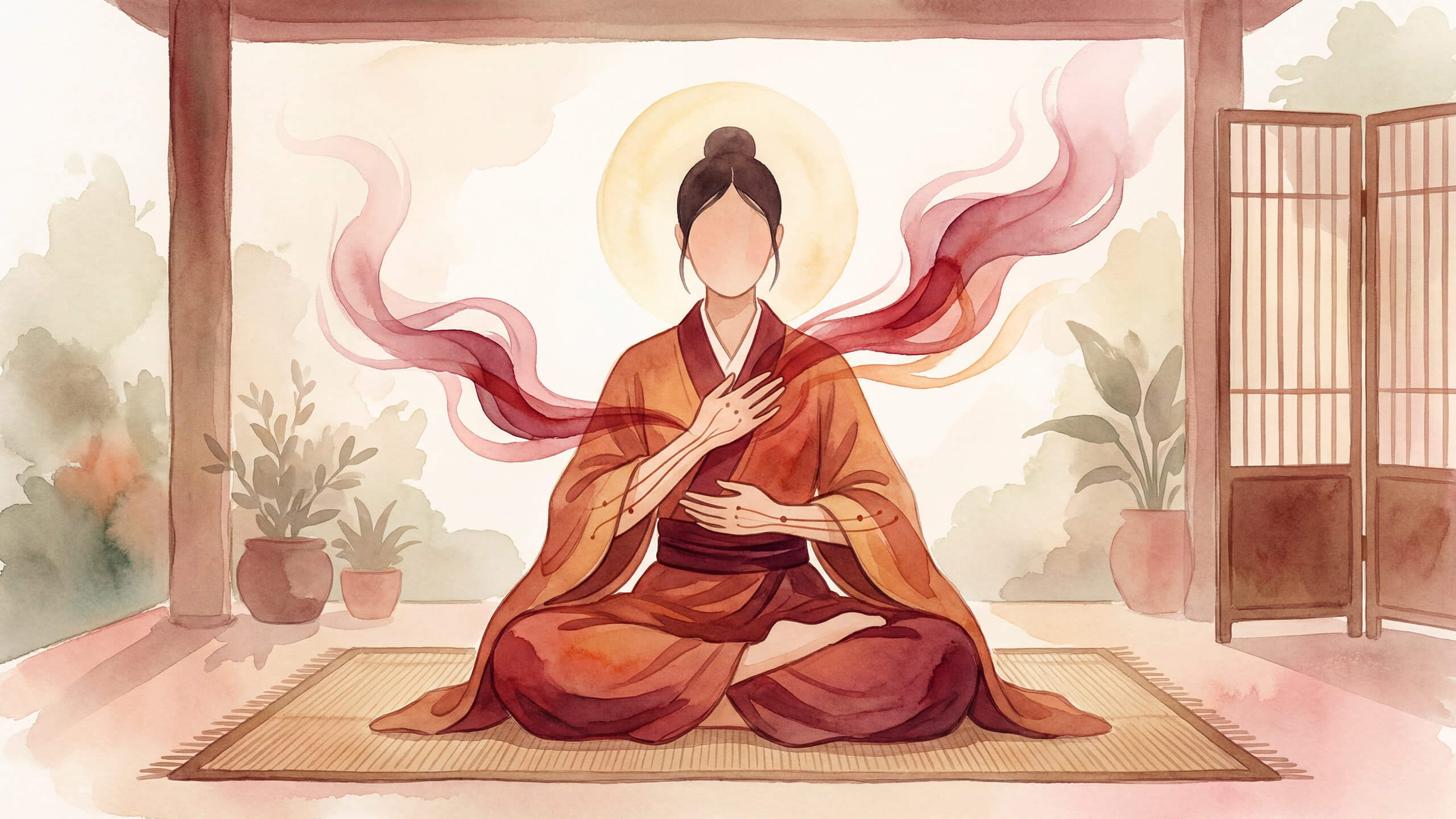
When the nourishing blood is exhausted
The TCM perspective: blood as the elixir of life
In der Traditionellen Chinesischen Medizin ist das Blut (Xue) weit mehr als nur die rote Flüssigkeit in unseren Adern. Es ist eine kostbare Substanz, die den gesamten Körper nährt, befeuchtet und mit Leben erfüllt. Das Blut ist untrennbar mit dem Qi verbunden — während das Qi bewegt und wärmt, nährt und befeuchtet das Blut.
Das Blut wird aus der Nahrungsessenz gebildet, die von der Milz aufbereitet wird. Daher sagt man in der TCM: „Die Milz ist die Quelle des Blutes“. Das Herz regiert das Blut und treibt es durch die Gefäße, während die Leber das Blut speichert und seinen gleichmäßigen Fluss reguliert. Diese drei Organe — Milz, Herz und Leber — sind bei einem Blut Mangel besonders betroffen.
The blood has three important functions in TCM: It nourishes all organs and tissues, it moisturizes the skin, hair, tendons and eyes, and it houses the Shen (spirit). Without sufficient blood, the mind cannot rest - hence the insomnia and inner restlessness caused by blood deficiency.
The result of a blood deficiency: The body is no longer sufficiently nourished. Organs and tissues „starve“ for substance. The skin becomes dry and pale, the hair loses its shine, the eyes tire quickly. The mind finds no anchorage and wanders restlessly.
The typical signs of a blood deficiency:
- Pale face, pale lips and nail beds
- Tiredness and exhaustion, especially in the afternoon
- Dizziness, especially when standing up
- Insomnia with many dreams or problems falling asleep
- Dry skin and brittle, fragile hair
- Blurred vision and tired eyes
- Taubheitsgefühle und Kribbeln in den Gliedmaßen
- Irregular, light or absent menstruation
The good news: Das Blut lässt sich mit den richtigen Maßnahmen sehr gut aufbauen. Durch blutnährende Ernährung, TCM–Kräuter, ausreichend Ruhe und sanfte Bewegung kannst du dein Blut wieder auffüllen und neue Lebenskraft gewinnen.
The Western perspective: anemia and nutrient deficiency
From a Western perspective, blood deficiency corresponds to a condition related to anemia and various nutrient deficiencies. The body does not have enough red blood cells or haemoglobin to supply all tissues with sufficient oxygen and nutrients.
Think of your blood as a transportation system: The red blood cells are the trucks that bring oxygen and nutrients to every cell. If there is a blood deficiency, there are too few trucks on the road - the cells do not get enough supply and start to „starve“. This explains the tiredness, paleness and reduced performance.
Iron deficiency is a particularly common cause: iron is the central building block of haemoglobin, which transports oxygen. However, vitamin B12, folic acid and copper also play important roles in blood formation. A lack of these nutrients leads to the classic symptoms of anaemia.
What does modern medicine show?
- Iron deficiency: the most common cause of anemia, especially in women
- Vitamin B12–Mangel: Führt zu einer speziellen Form der Anämie mit neurologischen Symptomen
- Folic acid deficiency: important for cell division and blood formation
- Chronic fatigue: tiredness and loss of performance due to lack of oxygen
- Concentration disorders: The brain needs a lot of oxygen
- Haarausfall und brüchige Nägel: Zeichen von Nährstoffunterversorgung
Modern research confirms: Das TCM–Muster „Blut Mangel“ korreliert stark mit messbaren Blutwerten wie Hämoglobin, Ferritin (Eisenspeicher), Vitamin B12 und Folsäure. Die TCM–Behandlung mit blutnährenden Kräutern wie Dang Gui (Angelikawurzel) zeigt in Studien positive Effekte auf die Blutbildung.
The TCM treatment of a blood deficiency starts right here: It strengthens the spleen as the source of blood formation, nourishes the blood directly with special herbs and foods and supports the absorption of important nutrients - profoundly, sustainably and gently.

The Yellow Emperor's team explains your pattern
Qi Bo | The Yellow Emperor | Dr. Lisa Weber
MASTER OF THE HEALING ARTS | TCM FOUNDER | MODERN PHYSICIAN
What happens when the legendary Yellow Emperor of Traditional Chinese Medicine sits down with his advisor Qi Bo and a modern doctor? They discuss your pattern—using 4,000-year-old knowledge AND the latest science.
Blood deficiency - When the nourishing blood is depleted and the body craves substance
The Yellow Emperor: „Qi Bo, I observe people in my realm who look pale and tired. Their faces have no color, they complain of dizziness and can't sleep at night. Some report numb fingers and their hair is falling out. What is the cause of this suffering?“
Qi Bo: „Majestät, diese Menschen leiden an einem Mangel des Blutes — Xue Xu genannt. Das Blut ist in der TCM eine der kostbarsten Substanzen des Körpers. Es nährt alle Organe und Gewebe, befeuchtet Haut, Sehnen und Augen, und beherbergt den Shen — den Geist. Wenn das Blut erschöpft ist, kann es seine nährenden Funktionen nicht mehr erfüllen. Der Körper ‚hungert‘ nach Substanz. Die Blässe zeigt, dass die Gefäße nicht gefüllt sind. Die Müdigkeit zeigt, dass die Organe nicht genährt werden. Und die Schlaflosigkeit zeigt, dass der Geist keine Verankerung im Blut findet.“
Dr. Weber: „That's a remarkable description of anemia! In Western medicine, we speak of anemia - a condition in which the body does not have enough red blood cells, or hemoglobin, to adequately supply all tissues with oxygen. The pallor occurs because there is less red blood flowing through the capillaries. The tiredness results from the lack of oxygen in the cells. And the neurological symptoms such as numbness and concentration problems arise because the brain and nerves are particularly sensitive to a lack of oxygen.“
The Yellow Emperor: „You talk about blood as a nourishing substance. How is blood actually formed?“
Qi Bo: „Your Majesty, blood comes from two sources. The first and most important is the spleen: it absorbs food, transforms it into food essence and sends it to the heart, where it is transformed into blood. That is why we say: ‚The spleen is the source of blood‘. The second source is the Kidney essence (Jing), which produces the marrow, and the marrow in turn contributes to blood formation. The Heart governs the blood and drives it through the vessels. The liver stores the blood and regulates its distribution. And the lungs help to distribute the blood. If one of these organs is weakened, haematopoiesis suffers.“
Dr. Weber: „Faszinierend! Das korreliert erstaunlich gut mit unserer modernen Physiologie! Die Milz ist tatsächlich Teil des retikuloendothelialen Systems und spielt eine Rolle bei der Blutzellenbildung und dem Abbau alter Blutzellen. Das Knochenmark — das ‚Mark‘ der TCM — ist der Hauptort der Blutzellenproduktion in der modernen Medizin. Die Leber speichert tatsächlich Blut und reguliert den Blutfluss, und sie speichert auch wichtige Nährstoffe wie Eisen, Vitamin B12 und Folsäure, die für die Blutbildung essentiell sind. Und das Herz pumpt natürlich das Blut durch den Körper!“
The Yellow Emperor: „What leads to a blood deficiency?“
Qi Bo: „The causes are manifold, Your Majesty. Firstly, blood loss - heavy menstruation, childbirth, injury or chronic bleeding directly deplete the blood. Second: Poor nutrition - if the body does not receive enough nourishing substance, the spleen cannot produce blood. Third: Spleen Qi deficiency - a weak Spleen cannot transform food properly and cannot produce blood. Fourth: Chronic illness - prolonged illness depletes the blood. Fifth: Emotional stress - excessive brooding and worrying weaken the Spleen. And sixth: overwork - it depletes the Qi, and without Qi no blood can be produced.“
Dr. Weber: „This is completely in line with the causes of anemia in Western medicine! Blood loss is a major cause, especially in women with heavy menstruation or after operations. Malnutrition, especially iron, vitamin B12 and folic acid deficiency, leads directly to anemia. Chronic illnesses such as kidney disease or autoimmune diseases can disrupt blood formation. And chronic stress increases cortisol levels, which can have a negative impact on nutrient absorption and blood formation. TCM recognized these connections thousands of years ago!“
The Yellow Emperor: „You mentioned that the blood harbors the spirit. What does that mean exactly?“
Qi Bo: „Majesty, in TCM the Shen - the spirit - is not a free-floating essence, but needs a material foundation. This foundation is the blood of the heart. When the blood is abundant, the Shen has a ‚home‘ and can rest peacefully. Hence: deep sleep, clear mind, emotional balance. However, if there is a lack of blood, the Shen wanders restlessly like a wanderer without a home. The result: problems falling asleep, confused dreams, forgetfulness, anxiety and inner restlessness. Blood is the anchor of the mind.“
Dr. Weber: „This is highly interesting from a neurophysiological point of view! We now know that anemia leads to cognitive impairment - concentration problems, poor memory, even depressive moods. The brain is extremely dependent on oxygen and reacts sensitively to any deficiency. Sleep disorders in anemia are well documented, possibly due to disturbances in the neurotransmitter balance. Iron is also important for dopamine synthesis, which affects mood and motivation. So the idea that the blood ‚anchors‘ the mind has a neurochemical basis!“
The Yellow Emperor: „What signs on the body reveal a blood deficiency?“
Qi Bo: „The signs are very characteristic, Your Majesty. The tongue is pale - it shows the lack of nourishing substance. It is thin - no substance to fill it. It is often dry - the blood no longer moistens it sufficiently. The pulse is thin like a fine thread - called Xi Mai - because the vessels are not filled. It is weak - Ruo Mai - because the nourishing force is missing. Sometimes it is also rough - Se Mai - when the blood stagnates because there is too little flow. The face, lips and nail beds are also pale - they do not receive enough blood.“
Dr. Weber: „The pale tongue and pale mucous membranes are classic clinical signs of anemia! We routinely examine the conjunctiva of the eye and the oral mucosa for paleness - exactly what TCM has been observing for thousands of years. Nail bed pallor is another standard test. And what you describe as a ‚thin pulse‘ corresponds to the weak pulse we find in low blood pressure and anemia. The diagnostic signs are amazingly consistent between the two medical systems!“
The Yellow Emperor: „Now let's talk about the treatment. How can the blood be rebuilt?“
Qi Bo: „Majestät, das Behandlungsprinzip lautet: Bu Xue — das Blut nähren und auffüllen. Dies geschieht auf mehreren Wegen. Erstens: Die Milz stärken — denn sie ist die Quelle des Blutes. Nur eine starke Milz kann aus der Nahrung Blut produzieren. Zweitens: Blut nährende Nahrungsmittel — rote Lebensmittel wie rote Beete, Datteln und Goji–Beeren nähren das Blut direkt. Auch Fleisch, besonders Leber und Rindfleisch, sind kraftvolle Bluttonika. Drittens: Blut nährende Kräuter — allen voran Dang Gui, die Angelikawurzel, die ‚Königin der Blutkräuter‘. Dazu Shu Di Huang (Rehmannia) und Bai Shao (weiße Pfingstrosenwurzel). Viertens: Ausreichend Ruhe — das Blut regeneriert sich im Schlaf.“
Dr. Weber: „Die Ernährungsempfehlungen sind aus wissenschaftlicher Sicht ausgezeichnet! Rote Beete enthält Eisen und Folsäure und verbessert nachweislich die Hämoglobin–Werte. Leber ist die konzentrierteste natürliche Quelle für Eisen, Vitamin B12 und Kupfer. Rindfleisch liefert gut resorbierbares Häm–Eisen. Goji–Beeren enthalten Eisen und Antioxidantien. Dang Gui, die Angelikawurzel, zeigt in Studien tatsächlich hämatopoetische Eigenschaften — sie stimuliert die Bildung von Blutzellen! Und der Schlaf ist wichtig, weil die Erythropoietin–Ausschüttung und die Blutzellenreifung im Ruhezustand besonders aktiv sind.“
The Yellow Emperor: „What about the classic herbal formulas for blood deficiency?“
Qi Bo: „Ah, Majesty addresses the foundations of blood therapy! Si Wu Tang - the four-substance decoction - is the basic formula for blood deficiency. It contains: Shu Di Huang to deeply nourish Blood, Dang Gui to nourish and move Blood, Bai Shao to nourish and hold Liver-Blood, and Chuan Xiong to move Blood and prevent stagnation. If Qi is deficient at the same time, we expand to Ba Zhen Tang - the Eight Treasures Decoction - which combines Si Wu Tang with Si Jun Zi Tang to strengthen Qi and Blood together. Because: ‚Qi is the commander of blood‘ - without Qi, blood cannot flow.“
Dr. Weber: „Si Wu Tang ist eine der am besten erforschten TCM–Formeln! Studien zeigen, dass sie die Erythropoese (Bildung roter Blutzellen) stimuliert und die Hämoglobin–Werte verbessert. Dang Gui enthält Ferulasäure und Polysaccharide, die nachweislich die Blutbildung fördern. Die Kombination der vier Kräuter wirkt synergistisch — zusammen effektiver als jedes einzeln. Besonders bemerkenswert ist, dass die Formel auch die Mikrozirkulation verbessert und antioxidativ wirkt. Eine 2000 Jahre alte Rezeptur mit solider wissenschaftlicher Evidenz!“
The Yellow Emperor: „Wonderful! Let's turn this wisdom into a practical plan.“
THE 3-WAY METHOD FOR BLOOD DEFICIENCY
MORNING PROTOCOL (build up blood):
- TCM: Nourishing breakfast - the spleen needs warm, wholesome food in the morning for blood formation
- Science: A warm, iron-rich breakfast optimizes nutrient absorption and boosts the metabolism
- Practical: Warm porridge with goji berries and dates, or congee with red beans
- TCM: Don't start on an empty stomach - the spleen doesn't like cold and emptiness in the morning
- Science: Breakfast stabilizes blood sugar and prevents energy lows
- Practical: Have a hot breakfast within 1 hour of getting up
- TCM: Warmes Wasser mit Goji–Beeren — nährt Blut und Yin sanft am Morgen
- Science: Goji berries provide iron, vitamin C and antioxidants for blood formation
- Practical: Steep 10-15 goji berries in warm water, eat the berries with the dish
TAGS-STRATEGY (protect blood):
- TCM: Eat well at lunchtime - the spleen is at its strongest between 9 and 11 a.m., a good time for nutritious food
- Science: Digestive enzymes are most active at lunchtime, nutrients are optimally absorbed
- Practical: Hot main meal at lunchtime with protein and vegetables, no raw vegetable salad
- TCM: Acupressure on spleen 6 (San Yin Jiao) - the meeting point of the three Yin meridians, nourishes the blood
- Science: Studies show that stimulation of this point can support blood formation
- Practical: 4 fingers wide above the inner ankle on the back of the shin. Massage in circles for 3 minutes per side
- TCM: Do not overwork - exhaustion consumes Qi, and without Qi no blood can be formed
- Science: Chronic stress increases cortisol, which inhibits nutrient absorption and blood formation
- Practical: Short break every 90 minutes, do not work through lunch break
EVENING RITUAL (blood regeneration):
- TCM: Sanftes Qi Gong „Die Mitte wärmen“ — stärkt die Mitte und fördert die Blutbildung
- Science: Gentle movement improves blood circulation and activates the parasympathetic nervous system
- Practical: 10-15 minutes of gentle Qi Gong exercises before dinner
- TCM: Akupressur auf Milz 10 (Xue Hai) — das „Meer des Blutes“, nährt und bewegt das Blut
- Science: This point is located above the vastus medialis muscle and influences the blood circulation in the legs
- Practical: 2 thumb widths above the kneecap on the inside. Press gently for 3 minutes on each side
- TCM: Go to bed early - the blood returns to the liver at night and regenerates during sleep
- Science: Growth hormone is released during deep sleep, which promotes cell regeneration
- Practical: In bed before 11 pm, aim for 7-8 hours of sleep
The Yellow Emperor: „Qi Bo, how long does it take for the blood to rebuild?“
Qi Bo: „Majesty, building the blood takes time, but not as long as the yin or essence. After 2-3 weeks of consistent practice, most people notice: less fatigue, better complexion, more energy for the day. After 6-8 weeks, the improvements become more noticeable: less dizziness, better sleep, stronger nails and shinier hair. After 2-4 months, the blood can be noticeably built up - the body feels nourished and joie de vivre returns. The duration of course depends on how severe the deficiency was and whether the causes have been eliminated.“
Dr. Weber: „This corresponds well with our clinical experience! With iron deficiency anemia, we often see initial improvements in symptoms after 2-3 weeks of iron supplementation. Haemoglobin levels typically normalize within 2-3 months. But replenishing iron stores takes longer - about 3-6 months. It is therefore important not to stop treatment too early, even if you are already feeling better. The TCM recommendation to persevere for 2-4 months is therefore very sensible!“
The Yellow Emperor: „What must be avoided at all costs in the event of a blood deficiency?“
Qi Bo: „Majesty, the most important thing is: Firstly, no cold and raw foods in large quantities - they weaken the spleen and hinder blood formation. Secondly, no dairy products in excess - they create dampness and strain the spleen. Thirdly, no sugar and sweets - they also weaken the spleen. Fourthly, not too much coffee - it agitates too much and can deplete the blood. Fifth, no overwork - exhaustion depletes Qi and blood. And sixth, no emotional overload - excessive brooding and worry directly weaken the spleen.“
Dr. Weber: „Scientifically comprehensible! Raw food is harder to digest and requires more energy to extract nutrients. Dairy products can inhibit iron absorption - calcium binds iron in the intestine. Too much sugar can have a negative effect on the intestinal flora, which impairs nutrient absorption. Coffee contains tannins, which can reduce iron absorption by up to 60% - so don't drink coffee with meals! Chronic stress increases cortisol and inhibits blood formation. The TCM recommendations are all based on nutritional science!“
The Yellow Emperor: „Then the message is clear: blood is the nourishing elixir of our body. It feeds all the organs, moisturizes the tissues and gives the spirit a home. With patient care - nourishing food, rest, the right herbs and gentle exercise - we can rebuild the blood and gain new vitality.“
Qi Bo: [smiles] „That's right, Your Majesty. The blood is like a fertile river that nourishes the land - when it flows abundantly, life flourishes. We replenish this river with the gifts of the earth, loving preparation and sufficient rest. Then color returns to the face, strength to the body and peace to the mind.“
About our „3 Wise Men“ story
Who are the Yellow Emperor and Qi Bo?
The Yellow Emperor (Huangdi) is said to have lived around 2600 BC and is considered the mythical founder of Chinese culture and medicine. Qi Bo was his most important advisor and personal physician. Their discussions about health, illness, and human nature were recorded in the most important fundamental work of TCM.
The book: Huangdi Neijing
The Huangdi Neijing, also known as The Yellow Emperor's Classic of Internal Medicine, was probably written between 200 BC and 200 AD. It is the oldest surviving work on Chinese medicine and consists of dialogues between the Yellow Emperor and his advisors, mainly Qi Bo.
This work is to TCM what the Bible is to Christianity: the absolute foundation. All the important concepts - yin and yang, the 5 elements, qi, meridians and acupuncture points - are systematically described here for the first time.
Our modern approach: The 3 wise men
In our series „The Three Sages,“ we bring together the Yellow Emperor and Qi Bo with the fictional modern doctor and microbiologist Dr. Weber.
Important note: All three characters and their conversations are purely fictitious and invented by us.
We use this narrative form, similar to the dialogue form in the book Huangdi Neijing, to convey the often complex interrelationships of TCM in an understandable and entertaining way. When the 4,000-year-old emperor is confronted with modern science, enlightening „aha moments“ arise that show that ancient wisdom and new research often speak the same language — just in different words.
This makes TCM lively, understandable and practically applicable for your everyday life.
The dialogs are creative interpretations - not historical documents. For medical questions, please consult a qualified TCM therapist or doctor.
Your treatment options
A blood deficiency is very treatable! TCM offers you a variety of effective methods to rebuild your blood and nourish your body. You don't have to do everything at once - choose the methods that suit you and your everyday life.
Here you will find specific treatment approaches that have been proven effective in TCM for thousands of years and that you can largely apply yourself.
TCM herbs
Herbal medicine (or, in modern terms, phytotherapy) is the MOST IMPORTANT tool of TCM. It is an integral part of every traditional TCM treatment. Today, there is a suitable herbal blend for every TCM pattern.

Here's how to find the right herbal blend for you
- Search online. Enter Blut Mangel "TCM Kräutermischung" — including the quotation marks — into the search engine of your choice. If you wish, add the following to the search term: Compressed pieces — in our experience, the easiest to take — or Granules. This way, you'll see several providers and can compare them at your leisure.
- Our Therapist Directory. In the TCM Therapist Directory You can find TCM practitioners in your area who will tailor a TCM herbal blend to your individual constitution.
- Your TCM Pharmacy. Some pharmacies carry TCM herbal blends or can order them for you. Tell them what you're looking for—or show them this page.
In any case, pay attention to the quality of the TCM herbal blend, not the price—it’s worth taking a look at the list of ingredients.
Not sure which herbal blend is right for your TCM pattern? Write to us. We'll tell you which classic recipe traditionally goes with this pattern and what you should look for when choosing one.
Request a tip on herbal blends
TCM uses many different methods. Which ones are right for you is the question we hear most often. And it’s not something that can be answered offhand.
That’s why we offer our personalized TCM support. It begins with a free, no-obligation ONLINE initial consultation with Wolfgang.
After that, you’ll receive a personalized support plan outlining all the components and costs as a proposal. If it works for you, we’ll get started: In a second online session (about 30 minutes), Wolfgang will discuss your path with you.
Acupressure
Acupressure is acupuncture without needles. - you can apply them yourself at any time. By applying gentle pressure to certain points, you activate the energy flow in the meridians and nourish the blood.
These three points form the classic combination for nourishing the blood. Regelmäßige Stimulation ist bei Blut Mangel besonders wichtig - Patient care systematically rebuilds the blood.
ACUPUNCTURE POINT: MP 06
Spleen-Pancreas 06
Meeting place of the three Yin - San Yin Jiao
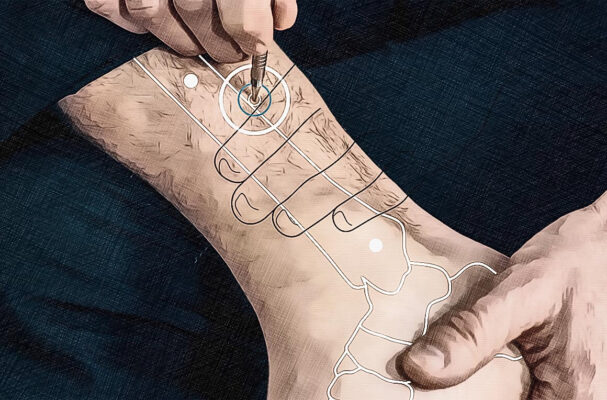
- Meeting point of the three Yin meridians (spleen, liver, kidney)
- Nourishes blood and yin at the same time
- Strengthens the spleen as a source of blood formation
- Regulates menstruation
- Calms the mind and promotes sleep
Location: Four finger widths above the highest point of the inner ankle, directly behind the shin.
Application:
Massage in a circular motion twice a day for 2-3 minutes per side with medium pressure. Ideal in the morning and evening. DO NOT use during pregnancy!
ACUPUNCTURE POINT: MP 10
Spleen-pancreas 10
Sea of Blood - Xue Hai
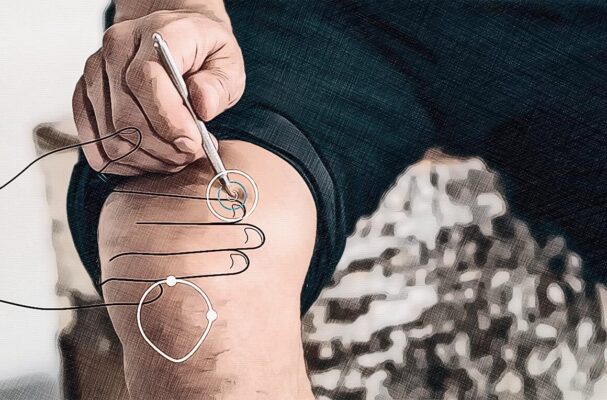
- Main point for nourishing and revitalizing the blood
- Regulates menstruation
- Cools the blood for skin problems
- Helps with anemia and pallor
- Relieves itching due to dry blood
Location: With the knee bent, two thumb widths above the upper inner corner of the kneecap, on the vastus medialis muscle.
Application:
Press twice daily for 2-3 minutes per side with medium pressure or massage in a circular motion. Particularly effective together with MP 06.
ACUPUNCTURE POINT: Ma 36
Stomach 36
Three miles of the leg - To San Li
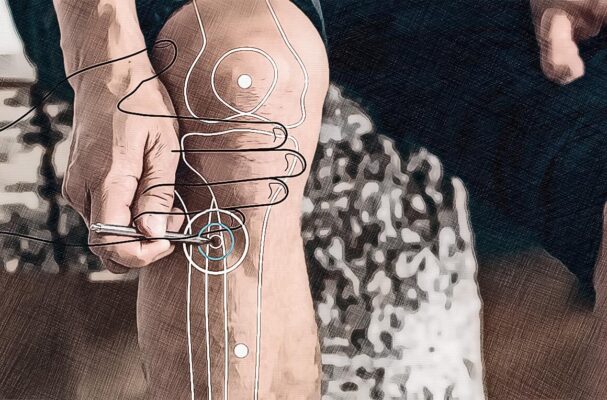
- Most important point for strengthening Qi and blood
- Strengthens the spleen and stomach
- Promotes blood formation from food
- Gives energy and stamina
- Strengthens the immune system
Location: One hand's width below the kneecap, one thumb's width outwards to the side of the shin.
Application:
Press firmly twice a day for 2-3 minutes per side or massage with small circles. Can also be warmed with moxibustion (especially for cold signs).
Our App Recommendation
Atemraum: Your App for Mindful Breathing


Breathing is the foundation of physical and mental well-being—and is usually COMPLETELY underestimated in everyday life. Yet hardly anything has such a direct impact: the way we breathe shapes the way we feel.
That's why we created Atemraum: an app with guided breathing exercises that you can take with you anywhere. Wolfgang put together these exercises—along with a 35-day course, quick tips for the moment, and breathing tests that let you track your progress.
Just a few minutes a day is enough. And anyone who uses our personal support If you use it, it already comes with breathing space.


You can try the app for free for 7 days.
Qi Gong
Qi Gong is moving meditation — sanfte, fließende Übungen, die deinen Energiefluss harmonisieren und dein Blut nähren. Bei einem Blut Mangel helfen diese Übungen, deine Milz zu stärken, das Qi aufzubauen und damit die Grundlage für neue Blutbildung zu schaffen.
Regular practice of qigong (as little as 10–15 minutes a day) has been shown to have positive effects on blood formation, relaxation, and overall well-being.
QI GONG: Exercise 1
Warm the center
Strengthens the spleen, promotes blood formation

Particularly helpful for:
- Fatigue and exhaustion
- Digestive weakness
- Pallor and anemia
- Feeling cold in the stomach
Effect:
This earth element exercise warms and strengthens the center - the spleen as the source of blood formation. The gentle, circular movements activate the digestive power and the spleen can better fulfill its transformation function.
QI GONG: Exercise 2
Collect Qi
Builds up Qi, calms the mind
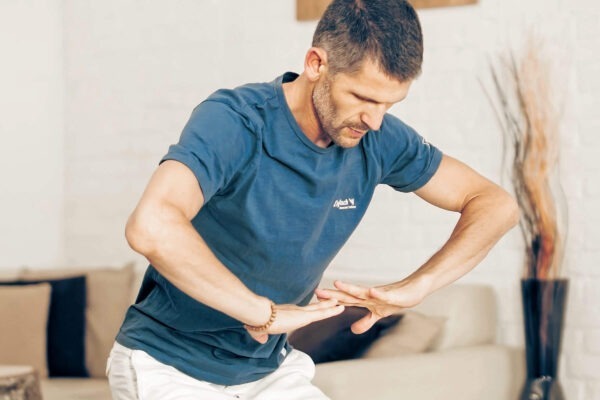
Particularly helpful for:
- General weakness and weakness
- Inner restlessness and nervousness
- Sleep problems
- Exhaustion after illness
Effect:
This exercise gathers vital energy from all directions and stores it in the body. As „Qi is the commander of the blood“, strong Qi supports blood formation and blood flow. Perfect for calming down and recharging your batteries.
QI GONG: Exercise 3
Open heart
Calms the Shen, opens the chest
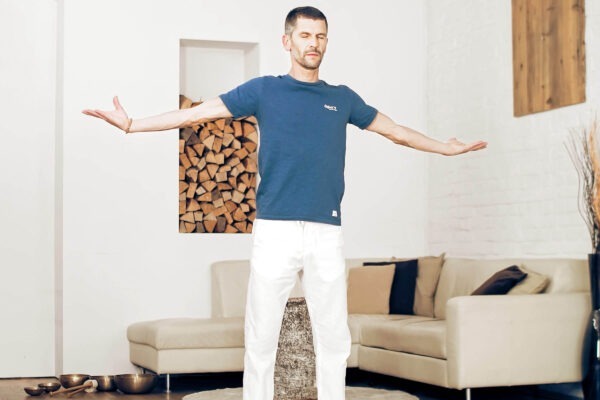
Particularly helpful for:
- Inner restlessness and restlessness
- Sleep problems and dreams
- Palpitations
- Anxiety
Effect:
This exercise expands the chest and calms the Shen (mind). In the case of blood deficiency, the mind cannot find an anchor in the heart-blood - this exercise helps to calm the Shen and anchor it in the heart. Particularly helpful for sleep problems caused by blood deficiency.
These Qi Gong exercises sind speziell für den Aufbau des Blutes ausgewählt. Sie stärken die Milz als Quelle der Blutbildung, bauen Qi auf und beruhigen den Geist.
All exercises work particularly well if you practise them between 9 and 11 a.m. - this is the peak of the spleen in the organ clock. Late afternoon is also a good time to gather energy.
QI GONG:
When and how often?
In the morning or in the morning (ideal):
- All 3 exercises as a sequence: approx. 15–20 min.
- Or just 1–2 exercises: approx. 5–10 min.
- Preferably between 9 and 11 am (spleen time)
In between:
- Einzelne Übungen bei Bedarf (z. B. bei Müdigkeit)
- „Collect Qi“ for a quick supply of energy
Regularity is more important than duration:
- It is better to exercise for 10 minutes every day than for 60 minutes once a week.
- After 2–3 weeks, you will notice the first changes.
- After 2–3 months of regular practice: significantly more energy
Pro tip: Gentle, slow movements are ideal for blood deficiency. Avoid intense physical exertion and heavy sweating - this depletes Qi and blood. Qi gong is the perfect balance of movement and rest.
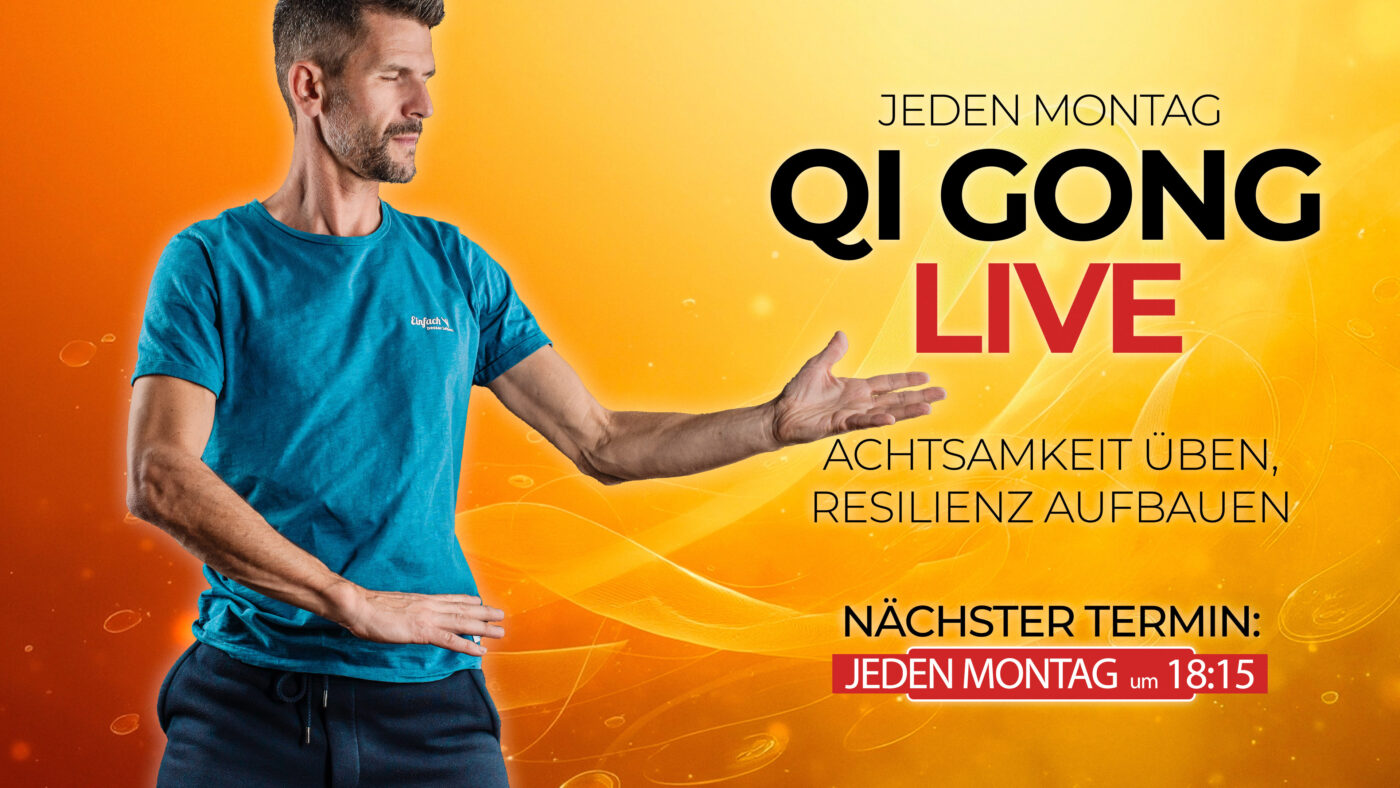
LIVE EVERY MONDAY: QI GONG WITH WOLFGANG
Every Monday at 6:00 p.m. Let's practice together live on YouTube. Among other things, Wolfgang will guide you through a complete qigong sequence — free of charge and suitable for all levels.
Why participate live? ✓ Working out together keeps you motivated ✓ Wolfgang explains the exercises in detail ✓ You can ask questions in the live chat ✓ A set time helps keep your routine on track
More about Qi Gong LiveMeridian Yoga — The Yoga of TCM
Meridian Yoga combines yoga with traditional Chinese medicine. The result is a holistic exercise concept for better health and more energy.
The following exercises specifically activate the heart meridian - because the heart governs the blood and gives the spirit (Shen) a home. If there is a blood deficiency, the anchoring of the spirit in the heart-blood is disturbed, which leads to sleep problems and inner restlessness.
MERIDIAN YOGA: Exercise 1
Open heart for the heart meridian
Opens the chest, calms the mind

Particularly helpful for:
- Cardiovascular problems
- Cardiac arrhythmias
- Breathing problems
- Stress, restlessness and nervousness
Effect:
This exercise opens the heart meridian, which runs along the inside of the arm. It expands the chest and gives the heart space. In case of blood deficiency, it helps to anchor the Shen (spirit) in the heart-blood and to find inner peace.
MERIDIAN YOGA: Exercise 2
Shell stretch for the heart meridian
Stretches the heart meridian gently while lying down
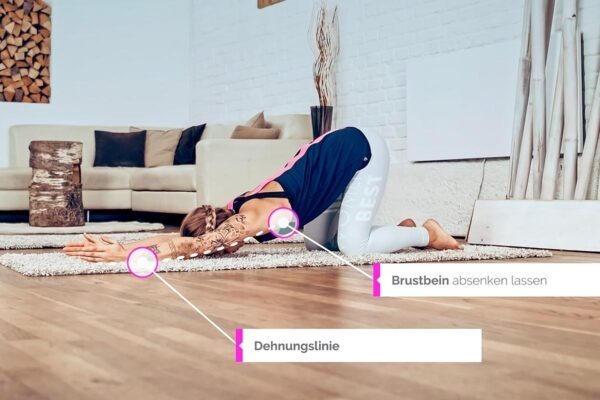
Particularly helpful for:
- Cardiovascular problems
- Cardiac arrhythmias
- Breathing problems and blood pressure problems
- Stress, restlessness and nervousness
Effect:
The Shell Stretch is a gentle, relaxing exercise that stretches the heart meridian while lying down. It calms the nervous system and promotes restful sleep - particularly valuable in cases of blood deficiency when the mind cannot rest at night.
Both exercises activate the heart meridian, which runs along the inside of the arm and is connected to the heart. The heart governs the blood and houses the Shen - by activating this meridian you support both blood circulation and mental calmness.
Particularly effective: Hold each position for 3-5 breaths, visualizing nourishing, red energy filling your heart-blood and calming your mind.
MERIDIAN YOGA:
When and how often?
Best time:
- Midday between 11 a.m. and 1 p.m. (heart time)
- Or in the evening before going to bed for better sleep
Duration:
- Hold each position for 3–5 breaths.
- Complete sequence: 10–15 minutes
- 3–5 times per week for best results
Important:
- Practice in a calm, warm atmosphere
- Breathe deeply and slowly during the positions
- Stretching should be comfortable, never painful.
Pro tip: Combine Meridian Yoga with gentle Qi Gong exercises such as „Warming the Center“ or „Gathering Qi“. If you have a blood deficiency, it is important to take it easy - avoid strenuous yoga styles and prefer gentle, nourishing practices.
Nutrition according to TCM
„Let food be your medicine.“ - This principle has been valid in TCM for thousands of years. If you have a blood deficiency, the right diet is particularly important for building up your blood.
Blood belongs to the elements Earth (spleen) and fire (heart) and needs warm, nourishing, easily digestible food, to be formed. Red foods have a special relationship with the blood.
What you eat, HOW you eat and WHEN you eat - all of this affects your blood and your energy.
The golden rules for strong blood
What is good for you:
Blood-nourishing red foods
- Beets (Top—Blood-nourishing!)
- Red dates (Da Zao) - eat daily
- Goji berries - nourish blood and yin
- Cherries, pomegranate, grapes
Red is the color of blood - red food nourishes the blood!
Blood-building proteins
- Beef - warms and nourishes the blood
- Liver (chicken, beef, pork) - powerful blood tonic
- Eggs - nourish blood and yin
- Chicken soup with dates
Animal protein is particularly effective at building blood
Green leafy vegetables
- Spinach - rich in iron and folic acid
- Swiss chard and kale
- Nettle (as a tea or vegetable)
- Petersilie — in großen Mengen
Chlorophyll has a similar structure to hemoglobin
Cereals and pulses
- Black beans - nourish kidneys and blood
- Red beans (adzuki) - support spleen and blood
- Oatmeal - strengthens the spleen
- Wholegrain rice - provides sustainable energy
Complex carbohydrates are the basis of blood formation
What you should avoid:
Raw food in large quantities
- Salads as a main meal
- Smoothies with raw fruit
- Raw food diets
- Too many raw vegetables
Raw food weakens the spleen and hinders blood formation!
Cold drinks and food
- Iced drinks and ice cream
- Cold water from the fridge
- Yoghurt (cold and moist)
- Frozen fruit
Cold weakens the digestive power!
Dairy products in excess
- Milk (produces moisture)
- Cheese (especially soft)
- Cream and quark
- Yogurt
Dairy products strain the spleen and block blood formation!
Sugar and sweets
- White Sugar
- Candy and Cake
- Soft drinks
- Too much fruit
Sugar weakens the spleen and produces moisture!
HOW YOU SHOULD EAT:
Cooked and warm
- Prefer hot meals
- Soups and stews - easy to digest
- Vegetables steamed or boiled
- Also breakfast warm (porridge!)
Regularly and at rest
- 3 fixed meals a day
- Biggest meal at lunchtime
- Light and early in the evening (before 7 pm)
- Eat in peace, chew well
The spleen loves regularity and warmth!
Drink properly
- Warm water
- Date tea (boil 3-5 dates in water)
- Goji tea (eat the berries too!)
- Do not drink with meals
Cold while drinking weakens digestion
IDEAL MENU FOR ONE DAY:
Breakfast (7–9 a.m.):
- Warm porridge with goji berries and dates
- In addition: Date tea or warm water
Lunch (12–1 p.m.):
- Beef with spinach and beetroot
- In addition: Whole grain rice or potatoes
- Or: Chicken soup with red dates
Dinner (6–7 p.m.):
- Light vegetable soup with egg
- Or: Steamed fish with vegetables
- In addition: Small portion of rice
Snack if needed:
- 3-5 red dates
- Or: Handful of goji berries
- Or: 1 boiled egg
The most important rule when changing your diet is:
Start with ONE step!
Don't change everything at once.
Our suggestion for getting started:
- Eat 3–5 red dates daily — 2 weeks
- Introduce hot breakfast (porridge) - 2 weeks
- Reduce raw food and cold drinks - 2 weeks
Step by step you will notice how your blood is rebuilt and you get more energy.
Your blood will thank you!
RECIPE: BEETROOT SOUP WITH DATES
Ingredients:
For 4 portions
- 500 g beet (fresh)
- 5 red dates (pitted)
- 1 small onion
- 2 tbsp olive oil or ghee
- 1 l vegetable or chicken stock
- Salt, pepper, a piece of ginger
- Optional: Sour cream to serve
Preparation:
- Peel the beet and cut into cubes
- Finely chop the onion and ginger
- Heat the oil in a pan, sauté the onion and ginger
- Add the beet and dates and sweat briefly
- Mit Brühe aufgießen, 30–40 Min. köcheln lassen
- Puree until creamy
- Season with salt and pepper to taste
Effect:
Nourishes and builds up the blood
Strengthens the spleen and promotes digestion
Warms from the inside and provides energy
2-3 times a week - perfect for building up blood!
REZEPT: HÜHNERSUPPE MIT DATTELN UND GOJI
Ingredients:
For 4-6 portions
- 1 organic chicken (approx. 1.5 kg) or 500 g chicken drumsticks
- 10 red dates (pitted)
- 2 tbsp goji berries
- 3 slices of fresh ginger
- 2 L water
- salt to taste
- Optional: 10 g Huang Qi (Astragalus)
Preparation:
- Huhn waschen, in große Stücke teilen
- Place the chicken in cold water, heat slowly
- Skim off the foam, add the ginger and dates
- Optional: Boil the Huang Qi in a tea bag
- Simmer over low heat for 1.5–2 hours
- 20 minutes before the end: add the goji berries
- Season with salt, serve warm
Effect:
Powerful Qi and blood tonic
Strengthens the spleen and builds up energy
Ideal after illness, childbirth or exhaustion
1–2x pro Woche — der TCM–Klassiker für Blut–Aufbau!
Breathing
Breathing is the bridge between body and mind. In TCM, it is said: „The lungs govern the qi“—according to this concept, through conscious breathing you can directly influence your qi flow and find a deeper sense of calm.
Breathe calmly and slowly: Deep abdominal breathing noticeably calms many people—their breathing becomes deeper, their shoulders relax, and their minds become clearer. The good news: Just 5–10 minutes a day can make a difference in your well-being.
Recommended breathing techniques
ABDOMINAL BREATHING — The basis for every breathing technique
Natural breathing
Abdominal breathing is the most natural and calm form of breathing. According to the teachings of TCM, with every breath you bring qi into your body’s center (Dantian).
Wolfgang shows you step by step, How to learn abdominal breathing correctly—lying down to start with, then later also sitting and standing.
Duration: 9 minutes

4–7–8 BREATHING — Find Peace
Calm Breathing for the Evening
With the 4–7–8 breathing technique, you inhale for 4 seconds, hold your breath for 7 seconds, and exhale for 8 seconds. This steady rhythm helps many people wind down in the evening—ideal when your mind won’t shut off at night.
Perfect for the evening or whenever you want to calm down quickly.
Duration: 9 minutes
To the interactive videoBOX BREATHING — For inner coherence
Professional breathing for focus and calmness
Box Breathing (4 seconds on, 4 seconds hold, 4 seconds off, 4 seconds hold) combines activation and relaxation in perfect balance. This method is used by elite soldiers, athletes, and executives to remain calm and focused even in extremely stressful situations.
A steady 4–4–4–4 rhythm A balance of activity and stillness—many people find it clarifying and grounding.
Duration: 9 minutes
To the interactive videoCOHERENT BREATHING — Brings Body and Mind into Harmony
Calm Breathing for Balance
With coherent breathing Breathe in for 5.5 seconds and out for 5.5 seconds. This rhythm brings your heart and breathing into a steady rhythm—a state known as „coherence.“ Many people use it as a regular breathing break in their daily lives.
A nice side effect: The heart and breath settle into a calm, synchronized rhythm.
Duration: 14 minutes
To the interactive video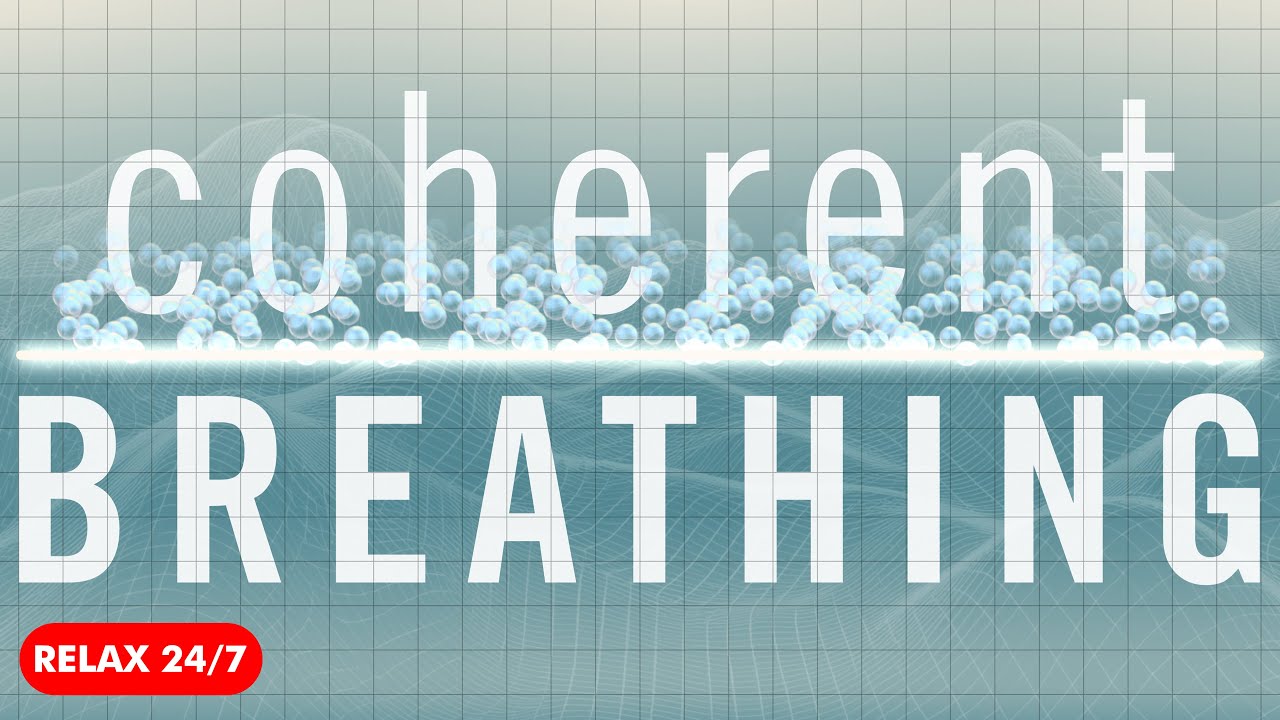
COHERENT BREATHING Around the clock
Our 24/7 livestream on coherent breathing runs non-stop. You can tune in at any time and join in right away.
Perfect for:
✓ Spontaneous breaks to catch your breath in between
✓ If you'd like some gentle breathing guidance
✓ As background while working
✓ For the evening and to wind down
✓ For regular daily practice
relaxation
When your body is relaxed, Things tend to flow more easily. Persistent tension keeps you in a constant state of stress. By using specific relaxation techniques, you signal to your body to calm down and recharge.
Progressive muscle relaxation It is one of the best-known relaxation methods and has been practiced for over 100 years. It helps you become aware of tension, actively let go of it, and achieve a state of deep relaxation—whenever you want.
Recommended relaxation technique
PROGRESSIVE MUSCLE RELAXATION (PMR)
The Classic Relaxation Method
Progressive muscle relaxation according to Jacobson is one of the best-known relaxation techniques worldwide. By deliberately tensing and relaxing individual muscle groups, you learn to consciously recognize tension and release it.
That's what it feels like:
Step by step, the body becomes heavier and calmer, and the breathing more even. Many people make this a regular part of their evening routine to help them fall asleep easily.
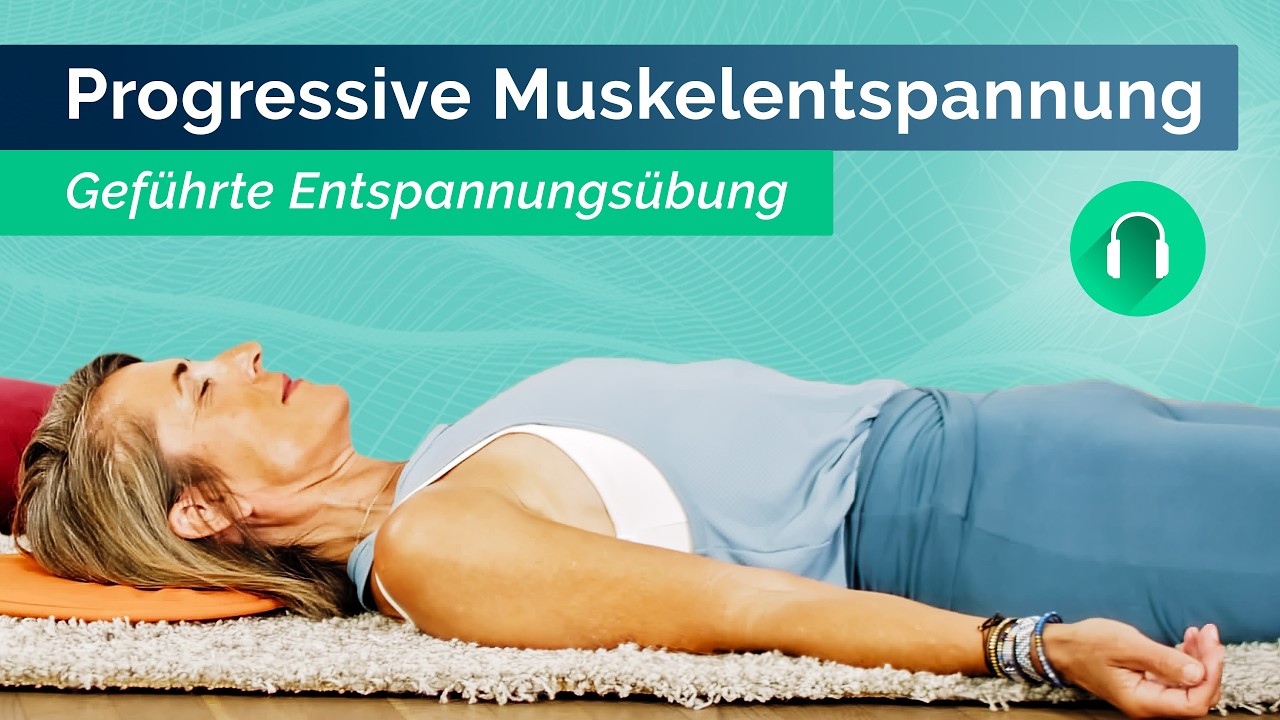
Maria guides you step by step through the entire exercise—perfect for beginners and advanced practitioners alike.
Duration: 23-minute complete guide
To the guided PMRMeditation
Meditation calms the mind — and a calm mind is good for your whole being. In TCM, it is said that every emotion affects a specific organ. Through regular meditation, you’ll learn to step away from racing thoughts, find emotional balance, and strengthen your inner center.
Just 10 minutes a day can do a lot to help you find inner peace. As a result, many people find that their daily lives become more relaxed and clear.
Recommended meditations
GUIDED MEDITATIONS FOR EVERY DAY
Your personal meditation library
We have a complete Playlist with over 60 guided meditations, breathing exercises, and relaxation techniques—from short 5-minute meditations for in between to deep 30-minute sessions for intensive practice.
In the playlist you will find:
- Morning meditations for a mindful start to the day
- Meditations for restful sleep
- Breathing meditations for inner peace
- Meditations for Moments of Calm Amid Stress and Worry
- TCM standing meditations for all 5 elements
- Body scan and body journeys
- Meditations for Peace of Mind and Body
- Special breathing techniques (4–7–8, coherent breathing, bee breathing)
Perfect for beginners and advanced practitioners. Choose the right meditation for you depending on your time, the time of day, and your needs.
To the meditation playlistOhne ausreichend Blut verliert der Körper seine Substanz und der Shen findet keine Ruhe.
— From the HUANG DI NEI JING
(The Yellow Emperor's Classic of Internal Medicine)
More tips for your everyday life
In addition to traditional TCM treatment methods there are many small everyday habits that can strengthen your blood. In TCM, blood is the nourishing substance of the body - with the right habits, you can build and maintain it effectively.
Sleep and rest
Sufficient sleep
The blood regenerates during sleep:
- 7–8 hours of sleep per night is ideal
- More sleep may also be necessary in case of blood deficiency
- The blood returns to the liver at night and regenerates itself
- Go to bed before 11 pm - the best time for blood regeneration
- Quality is more important than quantity - deep sleep nourishes the blood
Midday rest
Short rest during the day supports blood formation:
- 10-20 minutes midday rest is ideal
- Even just closing your eyes and relaxing helps
- Between 1 and 3 pm is heart time - good for the mind
- No longer than 30 minutes - otherwise your night's sleep will be disturbed
Avoid revision
Exhaustion drains the blood:
- Avoid long working hours
- Schedule regular breaks — every 90 minutes
- Don't „power through“ when tired - tiredness is a warning signal
- If you have a blood deficiency: do less, but do it consistently
- Plan sufficient vacation and relaxation
Strengthening the spleen - the source of blood
Hot meals
The spleen loves warmth:
- Prefer cooked food - it is easier to digest
- Also eat breakfast warm (porridge, congee)
- Raw food only as a side dish, not as a main meal
- Avoid cold drinks, even in summer
- Soups and stews are ideal for building up blood
Eat regularly
The spleen likes rhythm:
- 3 meals at fixed times
- Largest meal at lunchtime (when digestive power is at its strongest)
- Eat light and early in the evening (before 7 pm)
- Reduce snacks between meals
- Don't eat too late - the spleen needs rest at night
Avoid brooding
Worries weaken the spleen:
- Excessive thinking depletes the spleen energy
- Don't work or watch the news while eating
- Breaking through spirals of worry - through exercise or distraction
- Meditation and mindfulness help to calm the mind
- Solve problems instead of endlessly pondering
Gentle movement - not too much, not too little
The right intensity
Balance is important for blood deficiency:
- Gentle, regular exercise is ideal
- Walks in the fresh air
- Qi Gong and Tai Chi - exercise without exhaustion
- Swimming (in warm water)
- Gentle yoga without overexertion
What you should avoid
Intense exertion consumes blood:
- Intensive endurance sports (marathon, HIIT)
- Heavy sweating depletes body fluids
- Strength training to exhaustion
- Sport for tiredness or weakness
- Competitive sport during the recovery phase
Exercise after eating
A short walk aids digestion:
- 10-15 minutes of slow walking after eating
- Helps the spleen to transform food
- Do not lie down immediately after eating
- Light housework is also good
For women: Menstruation and blood
During menstruation
Take extra care of yourself:
- More rest and sleep than usual
- Hot food and drinks - no raw food
- No intensive sports units
- Hot water bottle on the stomach if you feel cold
- No cold water - not even for washing your hands
After menstruation
Rebuild blood:
- Especially a lot of blood-nourishing food
- Chicken soup with dates - the classic
- Beet, spinach, liver
- Extra rest and sleep in the first few days
Important to know
Many women develop a chronic blood deficiency over the years due to monthly blood loss. Especially during heavy menstruation, after childbirth or during the menopause, targeted blood rebuilding is important. TCM methods help to break the cycle and build up the blood in the long term.
Important to know
Strengthening the blood takes time and patience. Building up the blood is like filling a reservoir - it happens step by step. Pay attention to your body's signals: tiredness, paleness and dizziness show that you need more nourishment and rest. With consistent care, you will feel your energy and zest for life return.
When to see a doctor? Bei starker Müdigkeit, ausgeprägter Blässe, Kurzatmigkeit oder anderen besorgniserregenden Symptomen solltest du einen Arzt aufsuchen und deine Blutwerte (Hämoglobin, Ferritin, Vitamin B12) überprüfen lassen. TCM und westliche Medizin ergänzen sich hier optimal.
For optimal treatment progress
TCM is not a quick fix for symptoms., but rather a holistic healing process. You will achieve the best results if you consistently integrate the treatment into your daily routine and give your body time to regenerate.
Integration into everyday life
Start with ONE step
Don't try to change everything at once! That's overwhelming and leads to
usually leads to you giving up. Instead:
- Woche 1–2: Blutnährende Lebensmittel täglich integrieren (Datteln, Goji, rote Beete)
- Woche 3–4: Akupressur MP 06 und MP 10 täglich
- Week 5-6: Qi Gong „Warming the center“ daily 10 min.
- Weeks 7–8: Add your TCM herbal blend
- From week 9: Add further methods as required
Realistic expectations
After 2–3 weeks: First improvements noticeable
- Less fatigue
- Better complexion
- More energy
After 6–8 weeks: Significant improvements
- Less dizziness
- Better sleep
- Stronger nails and hair
After 2–4 months: Sustainable healing
- Blood is noticeably built up
- Body feels nourished and strong
- Vitality and joie de vivre are back
TCM vs. Western medicine
TCM and Western medicine are not mutually exclusive—they complement each other!
When Western medicine is important:
- In case of severe anemia (hemoglobin below 10 g/dl)
- In case of unexplained blood loss
- If serious illnesses are suspected
- For precise diagnoses (blood count, ferritin, B12)
Where TCM has its strengths:
- For mild to moderate blood deficiency
- To support iron supplementation
- For sustainable blood build-up
- Bei wiederkehrendem Blut–Mangel (z. B. nach Menstruation)
Ideal: Beide Systeme kombinieren! Lass deine Blutwerte regelmäßig kontrollieren und nutze TCM für nachhaltigen Aufbau und Stärkung der Selbstheilungskräfte.
Important: Never stop taking prescribed iron supplements or medication without authorization!
Talk to your doctor when you start TCM treatment.
Do you have any questions?

Wolfgang from meine-tcm.com
TCM is a broad field. Much of it sounds unfamiliar at first glance, and often the real question doesn't arise until you start putting some of it into practice in your daily life.
That's exactly what I'm here for. Write to me—no matter how big or small your question is, whether it’s related to this page or to something else entirely in TCM. I read every message myself and will get back to you. Calmly, clearly, and without any sales pitch.
P.S.: There are no stupid questions. So write to me.
Ask your questionEvery step counts
Your body strives for balance—you just need to create the right conditions for it.
Remember:
👣 Every little step counts
You don't have to be perfect. Even one warm meal a day is better than none. Even 5 minutes of qigong is better than no exercise at all.
⏳ Patience pays off
It took your body years to get to this point. Give it time to regain its balance. Change takes time, but it will happen.
🎯 Focus on what you can DO
Don't concentrate on what you are doing „wrong". Focus on every positive step you take.
💚 Be good to yourself
Perfection does not exist. It is acceptable to have an off day occasionally. Tomorrow is a new day when you can continue.
🤝 You are not alone
Thousands of people are walking this path with you. For over 2,000 years, TCM has been guiding people like you on their journey toward greater well-being.
Track Your Progress

To track your progress, we recommend that you repeat the TCM analysis after about 3 months.
Why does this make sense?
- You can see how your pattern has changed
- You can adjust your group as needed
- It motivates you to keep going
- You'll figure out which steps work best for you
⚠️ Important: Your answers from today will be stored in encrypted form using a code that you received via email. ONLY with this code will you be able to track your progress later. Be sure to keep the email in a safe place!
🔒 YOUR DATA IS SAFE
We store:
✓ Only your email address for reminders
✓ The date for shipping
We do NOT store:
✗ Your analysis results
✗ Your personal information
✗ The connection between email and the sample
All analysis data is completely anonymous and is not linked to your email address.
Newsletter
Stay up to date with our newsletter. Besides useful tips and tricks for training and your everyday life, you won't miss any of our new releases.